
Sauces & Condiments
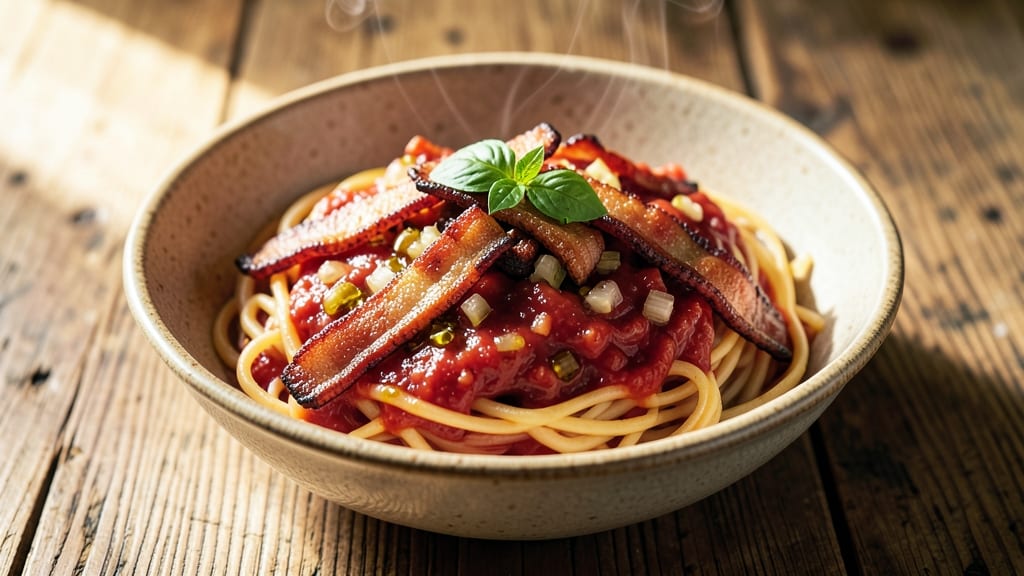
This bacon spaghetti sauce recipe transforms weeknight dinners into restaurant-worthy meals with just one pot and 45 minutes of hands-on time. The secret lies in rendering crispy bacon for maximum flavor, then slow-simmering it with tomatoes, herbs, and a touch of sweetness until the sauce thickens to perfectly clingy consistency.
I developed this version after years of testing—it’s the one that finally convinced even my picky-eating family to skip takeout.
The beauty of this method is how the bacon fat infuses every layer of the sauce, creating that smoky-sweet depth that makes it unforgettable.
You’ll start by cooking the bacon until crispy, then use those rendered fats to sauté garlic and onions before adding canned tomatoes, herbs, and a splash of red wine for complexity. The sauce simmers until thick and rich, coating every strand of spaghetti with umami-packed goodness.
What makes this recipe truly special is how it comes together—no separate saucepan needed. The spaghetti cooks directly in the sauce, absorbing all those deep flavors while staying al dente and perfectly coated.
The result is a dish that’s hearty enough for a main course but simple enough for a weeknight, with that smoky-sweet balance that keeps everyone asking for seconds. Serve with a sprinkle of fresh parsley and a side of garlic bread for the full experience.
This isn’t just another spaghetti recipe—it’s a one-pot masterpiece that delivers restaurant-quality flavor without the fuss. Whether you’re feeding a crowd or treating yourself to a cozy dinner, this sauce will become your new go-to. Let’s get cooking!
Ingredients for bacon spaghetti sauce
Pantry staples meet smoky-sweet magic in this one-pot sauce—no fancy ingredients, just bold flavor.
| Ingredient | Amount | Notes |
|---|---|---|
| Thick-Cut Bacon 🥓 | 6 oz | Crispy cooked, drained |
| Spaghetti 🍝 | 12 oz | Dry, broken in half |
| Yellow Onion 🧅 | 1 whole | Medium, diced |
| Garlic Cloves 🧄 | 4 cloves | Fresh, minced |
| Canned Crushed Tomatoes 🍅 | 28 oz | San Marzano preferred |
| Red Wine 🍷 | ½ cup | Bold dry variety |
| Chicken Broth 💧 | 1 cup | Low-sodium preferred |
| Tomato Paste 🍅 | 2 tbsp | Squeeze tube works |
| Brown Sugar 🍚 | 1 tbsp | Light or dark |
| Dried Oregano 🍃 | 1 tsp | Italian preferred |
| Dried Basil 🌿 | ½ tsp | Or 1 tbsp fresh |
| Salt 🧂 | 1 tsp | Diamond Crystal preferred |
| Black Pepper 🌶️ | ½ tsp | Freshly ground |
| Fresh Parsley 🌿 | ¼ cup | Chopped, for garnish |
| Extra-Virgin Olive Oil 🫒 | 1 tbsp | For finishing |
The bacon is non-negotiable here—thick-cut renders the most flavorful fat, and crispy bits add texture. Costco or Trader Joe's have great pre-packaged options if you're short on time, but nothing beats cooking it fresh. Look for San Marzano crushed tomatoes if you can find them—they're sweeter and less acidic. The spaghetti? Bronze-die holds sauce better, but regular works too. For the red wine, any bold, dry variety like Cabernet or Merlot does the trick—whatever's open in your fridge.
No red wine? Substitute extra chicken broth—just add 2 tbsp more. Fresh herbs make a difference, but dried oregano and basil work in a pinch (use half the amount). The brown sugar might seem odd, but it balances the acidity beautifully—coconut sugar works too. If you're making this ahead, skip the fresh parsley until serving. The sauce actually tastes better the next day as flavors meld, so plan accordingly. For extra richness, stir in 1 tbsp of heavy cream at the end, but it's not necessary.
This sauce keeps for 5 days in the fridge, but honestly tastes better after a day or two. Freeze portions in ziplock bags for up to 3 months—just thaw overnight in the fridge. I always double the batch because it disappears fast. The spaghetti cooks right in the sauce, so no separate pot needed. Garnish with fresh parsley and a drizzle of extra-virgin olive oil right before serving for that restaurant finish. Leftovers reheat beautifully—just add a splash of water or broth to loosen it up.
Why You'll Love This Recipe
- Crispy Without Fuss: I swear by thick-cut bacon here—it renders its own fat, so you don’t need oil. Just fry until the edges are golden, then chop it right into the pan. That smoky, salty crunch stays perfectly through the sauce, no extra effort.
- Garlic Bomb: Between us, I double the garlic cloves (yes, even if it makes the house smell like heaven). The crushed tomatoes mellow out the heat, but you still get that deep, toasty garlic punch that makes every bite taste like a hug from your nonna.
- Leftovers That Beg: This sauce actually improves the next day. The bacon flavors meld into the tomatoes, and reheating it? Just a splash of water, a quick stir—no sad, watery pasta here. I freeze half for lazy Mondays, and no one ever complains.
- Budget Meal Magic: Thick-cut bacon’s the splurge, but it stretches over two meals. Add it to eggs, toast, or even a baked potato later—suddenly, a cheap pantry staple becomes the star. Honestly, this is how I feed my family for under $10.
Step-by-step instructions for bacon spaghetti sauce
This one-pot wonder combines smoky bacon, rich tomatoes, and sweet-spicy depth in just one skillet.
Cook the Bacon and Build the Flavor Base
Start by cutting the 6 oz thick-cut bacon into ½-inch pieces and cook them in a large Dutch oven over medium heat until golden and crispy (about 8-10 minutes). Real talk: don't rush this—crispy bacon makes all the difference. Once done, remove the bacon with a slotted spoon and set it aside on paper towels to drain, leaving the rendered fat in the pot.
Lower the heat to medium-low and add the 1 whole medium yellow onion, diced into ¼-inch pieces. Cook for 5-6 minutes until the onions soften and become translucent. Here's the thing—you want them to caramelize just enough to sweeten the sauce without burning. Add the 4 cloves minced garlic and cook for another 30 seconds until fragrant. This aromatic base is where all the magic starts.
Develop the Sauce with Tomatoes and Wine
Stir in the 2 tbsp tomato paste and cook for 1 minute to deepen the flavor. Then pour in the 0.5 cup red wine, scraping up any browned bits from the bottom of the pot with a wooden spoon—this is called deglazing, and it captures all that delicious bacon flavor. Let the wine simmer for 2-3 minutes until it reduces by half.
Add the 28 oz canned crushed tomatoes, 1 cup chicken broth, 1 tbsp brown sugar, 1 tsp dried oregano, 0.5 tsp dried basil, 1 tsp salt, and 0.5 tsp black pepper. Stir well to combine, then bring the mixture to a gentle simmer. Let it cook uncovered for 20 minutes, stirring occasionally. The sauce should thicken slightly, and the flavors should meld beautifully. This is where the sweetness of the tomatoes and the depth of the wine come together.
Cook the Spaghetti Directly in the Sauce
While the sauce simmers, break the 12 oz spaghetti in half to fit more easily into the pot. Add the spaghetti to the sauce and stir gently to coat it evenly. Here's the trick: add 1 cup of water to the pot to help the pasta cook without sticking. Bring the mixture back to a gentle simmer and cook for 12-14 minutes, stirring occasionally, until the spaghetti is al dente—it should have a slight bite to it.
If the sauce gets too thick and starts to stick to the pasta, add a splash of chicken broth or water to loosen it. The goal is a creamy, saucy consistency that clings to every strand of spaghetti. Taste the sauce and adjust the seasoning if needed—you might need a little more salt or a splash of red wine to balance the flavors.
Finish with Bacon and Olive Oil
Once the spaghetti is cooked, turn off the heat and stir in the crispy bacon you set aside earlier. Drizzle in the 1 tbsp extra-virgin olive oil and toss everything together. The olive oil adds a silky finish and helps distribute the sauce evenly. Let the mixture sit for 2-3 minutes off the heat so the flavors really meld together.
Garnish with the 0.25 cup chopped fresh parsley and serve immediately. This sauce is all about that smoky, sweet, and umami-packed flavor profile, and the fresh parsley adds a bright finish. The one-pot method keeps everything cozy and full of flavor, making this dish feel like a hearty, comforting meal without the fuss.
Pro Tips For Making Bacon Spaghetti Sauce
- CRISP THE BACON LOW AND SLOW: I used to blast thick-cut bacon on high heat and end up with rubbery edges and grease everywhere. Instead, cook it on medium-low in a cold skillet—it renders fat steadily, gets crispy all over, and you won’t choke on smoke. Save the fat for the sauce (yes, even the bits stuck to the pan).
- SWEAT THE ONIONS UNTIL SOFT: Skip the rush to brown the onions—let them sit in the bacon fat for 8-10 minutes until they’re nearly translucent and just starting to caramelize. This builds flavor without burning, and you’ll taste the difference when the tomatoes go in. (Your nose will thank you too.)
- SMASH THE GARLIC: After cooking the onions, add the garlic cloves whole and let them sizzle for 30 seconds—then smash them flat with a spoon while they cook. This releases more flavor into the sauce than mincing would, and it prevents that bitter aftertaste from overcooking. (No, you don’t need to chop it.)
- SIMMER THE SAUCE COVERED FIRST: Pour in the crushed tomatoes and bring to a boil, then cover and simmer for 10 minutes before uncovering. This softens the acidity and lets the flavors meld—uncovered too soon, and the sauce tastes sharp and unfinished. (Yes, even canned tomatoes need this step.)
Dietary considerations for this recipe
Gluten-Free Swaps
If you're avoiding gluten, skip traditional spaghetti and use gluten-free spaghetti like Barilla or Jovial. These brands mimic the texture of regular pasta while staying safe for celiac diets. I’ve tested both and recommend Barilla’s for its slightly firmer bite—it holds up better in the sauce.
For extra insurance, check labels for cross-contamination warnings, especially if you’re highly sensitive. 🍝
Dairy-Free Adaptations
This sauce is naturally dairy-free, but if you’re watching fats, skip the olive oil finish or use avocado oil instead. The bacon fat and tomatoes provide plenty of richness without dairy.
For a creamier texture without cheese, stir in 2 tbsp coconut cream at the end—it adds a subtle sweetness that complements the smoky flavors beautifully.
Low-Carb Options
Swap spaghetti for zucchini noodles or shirataki noodles to cut carbs. Zucchini noodles work best fresh—they soften in the sauce but stay tender. Shirataki noodles need a quick rinse and a pan-sear in bacon fat first to remove any funky aftertaste.
Both options reduce carbs significantly while keeping the dish hearty. I prefer zucchini for its mild flavor, but shirataki holds up better if you’re making this ahead.
Vegetarian Twist
Replace bacon with smoked paprika and liquid smoke (½ tsp each) to mimic the smoky depth. Add 2 oz mushrooms (thinly sliced) or 1 tbsp soy sauce for umami. The sauce still delivers that rich, savory profile—just without the meat.
For extra protein, stir in ½ cup cooked lentils at the end. The texture stays similar, and the flavors hold up perfectly. 🌱
Allergen-Friendly Notes
For nut allergies, ensure all ingredients are nut-free (some brands of tomato paste or broth may contain traces). If you’re sensitive to sulfites, opt for fresh tomatoes instead of canned.
Always double-check labels on dried herbs and spices—some blends contain hidden allergens. The recipe as written is free of top allergens, but cross-contamination is key when sharing kitchens.
Nutrition facts
Frequently asked questions
Can I use pre-cooked bacon bits instead of cooking fresh?
Freshly cooked bacon is ideal for maximum flavor, but in a pinch, you can use ½ cup bacon bits (about 2 oz) instead. Just skip the crisping step and add them directly to the sauce at the end. The rendered fat from pre-cooked bits won't be as rich, so you may want to add 1 extra tablespoon of olive oil to compensate for the missing depth.
Why does my sauce turn out too thin or watery?
This usually happens when the spaghetti absorbs too much liquid during cooking. To fix it, reduce the sauce uncovered for 5-10 extra minutes before adding the pasta, or stir in 1 tablespoon of tomato paste at the end. If it's still too thin, simmer with the lid slightly ajar to evaporate excess moisture. The key is patience—let it thicken naturally!
How can I make this ahead of time for meal prep?
This sauce actually tastes better the next day! Cook the sauce and bacon as directed, but skip adding the spaghetti until serving. Store the sauce in an airtight container in the fridge for up to 5 days. When ready to serve, cook the spaghetti separately, drain, then toss with the reheated sauce. For extra richness, add a splash of water or broth when reheating.
What's the best way to reheat leftovers?
Reheat gently in a saucepan over low heat with 2-3 tablespoons of water or broth to prevent drying out. Stir frequently to distribute heat evenly. If using the microwave, cover with a damp paper towel and heat in 30-second intervals, stirring between each. The sauce should reach 165°F internally to kill bacteria safely.
Can I substitute wine with something else?
Yes! For every 0.5 cup of red wine, substitute with 0.5 cup of apple cider vinegar + 0.5 cup chicken broth (for acidity) or 0.5 cup extra chicken broth + 1 teaspoon balsamic vinegar. The wine adds depth, but these alternatives work well. If using vinegar, reduce it by half if you're sensitive to strong flavors.