
Sauces & Condiments
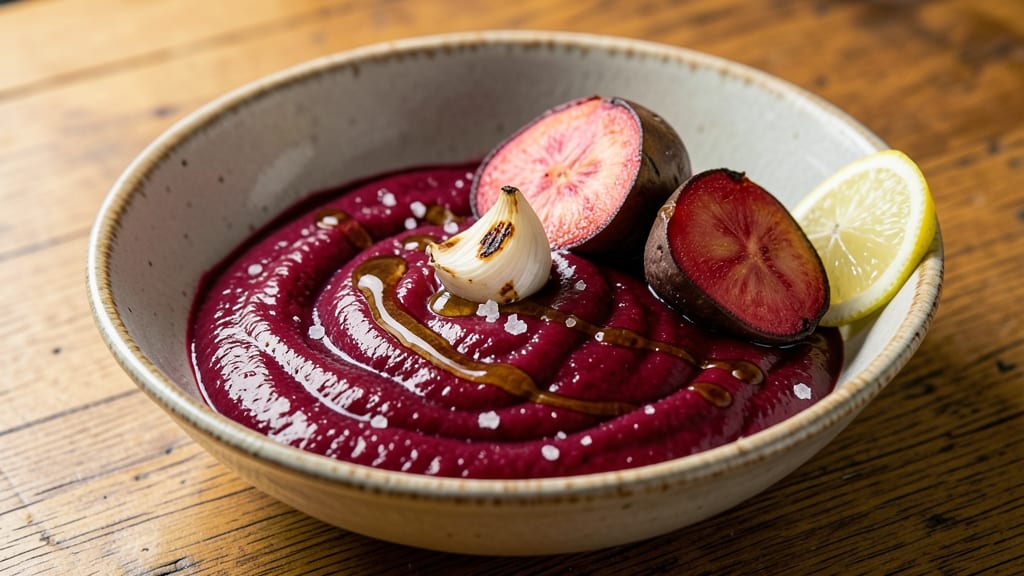
This beetroot sauce transforms humble roasted beets into a velvety, deep purple condiment that elevates everything from roasted meats to creamy mashed potatoes. The secret lies in slow-cooking beets until tender, then blending them with vinegar and oil to create a smooth, tangy sauce with natural sweetness and earthy depth.
What makes this recipe stand out is its versatility—use it as a dip, drizzle, or dressing, and enjoy its vibrant color and rich flavor without any artificial additives.
The process begins with roasting or boiling beets until they’re fork-tender, then pureeing them with a touch of vinegar and olive oil for balance. A fine-mesh strainer ensures a silky texture, while a pinch of salt and black pepper rounds out the flavor.
The result is a luminous, restaurant-quality sauce that’s vegan-friendly and packed with nutrients, making it perfect for both everyday meals and special occasions.
What you’ll end up with is a smooth, vibrant sauce that pairs beautifully with roasted lamb, mashed sweet potatoes, or even as a dip for crudités. The deep purple hue adds visual appeal, while the tangy-sweet flavor enhances any dish it touches.
This isn’t just a condiment—it’s a flavor booster that turns simple meals into something extraordinary.
Best of all, the sauce keeps well in the refrigerator for up to a week, so you can make a batch ahead and enjoy it throughout the week.
Whether you’re drizzling it over a hearty roast or using it as a marinade, this beetroot sauce is a game-changer for any kitchen. Let’s get started!
Ingredients for beetroot sauce
Eight simple ingredients create this restaurant-quality beetroot sauce for dipping and drizzling.
| Ingredient | Amount | Notes |
|---|---|---|
| Medium Beets 🍠 | 1 ½ lb | Roasted or boiled until tender |
| Extra-Virgin Olive Oil 🫒 | ½ cup | High quality, fruity variety |
| Apple Cider Vinegar 🍎 | ¼ cup | For tangy balance |
| Fresh Garlic Cloves 🧄 | 3 cloves | Peeled and minced |
| Fresh Lemon Juice 🍋 | 2 tbsp | Brightens the flavor |
| Sea Salt 🧂 | 1 ½ tsp | Adjust to taste |
| Freshly Ground Black Pepper 🌶️ | ½ tsp | Enhances depth |
| Water 💧 | ¼ cup | For blending consistency |
The beets are the star—organic from Trader Joe's or your local farmers market have the deepest color. Look for firm, unblemished beets with vibrant purple skins. Baby beets work great too, but medium-sized ones give you more sauce. Roasting brings out their natural sweetness, but boiling works in a pinch. Just make sure they're fork-tender before blending. The olive oil should be extra-virgin—cheap oil will make the sauce taste flat. Apple cider vinegar adds that perfect tang, but balsamic works if you're out.
No fresh garlic? Garlic powder at half the amount gets you close, but fresh is ideal. Short on vinegar? Lemon juice works 1:1, though it's more assertive. The sauce needs that silky texture, so if your beets are fibrous, strain them through a fine-mesh sieve. For extra richness, add a tablespoon of tahini when blending. Want it sweeter? A touch of maple syrup balances the acidity beautifully. This sauce is naturally vegan, but if you're worried about additives, check your vinegar—some brands add sugar or preservatives.
Store in an airtight jar in the fridge for up to 1 week. The color gets more vibrant after a day, so make it ahead if you can. Freezes beautifully for 3 months—just thaw in the fridge overnight. I like to portion mine into small jars so I can grab just what I need. The sauce thickens as it chills, so add a splash of water if it gets too stiff. Perfect for drizzling over roasted meats, mixing into mashed potatoes, or serving as a dip with veggie sticks—game-changer for any meal.
Why You'll Love This Recipe
- No Chopping Needed: I roast whole beets straight from the fridge—peel them after, no knife skills required. The oven does all the work while I sip coffee, and those caramelized edges? Pure reward for zero effort.
- Bright & Tangy Magic: That lemon juice and apple cider vinegar cut through the earthy sweetness like a breath of fresh air. One taste and you’ll understand why I keep a jar in the fridge—it’s the perfect balance of rich and zingy.
- Dress-Up Any Plate: Slather it on grilled chicken, drizzle over roasted potatoes, or use it as a dip for crusty bread. Honestly, I’ve even poured it into pasta for a showstopper that takes 10 minutes to make.
- Budget-Friendly Pantry Hero: Beets last forever, olive oil stretches, and garlic/lemon are cheap staples. I make a big batch and keep it for weeks—no waste, no stress, just flavor whenever I need it. (Yes, even on a Tuesday night.)
Step-by-step instructions for beetroot sauce
This velvety sauce transforms humble beets into a rich, vibrant dip perfect for roasts or mashed potatoes.
Cook the Beets Until Fork-Tender
Preheat your oven to 400°F and wrap the 1.5 lb medium beets tightly in aluminum foil. Roast for 45-60 minutes until completely tender when pierced with a knife. I like to test them by sliding a fork through—if it glides in easily, they're ready. Alternatively, you can boil them for 20-25 minutes in salted water until soft.
Let the beets cool slightly before peeling. I usually run them under cool water first to make peeling easier. Once peeled, cut them into ½-inch cubes—this size ensures they blend smoothly without requiring excessive liquid later. The skin should slip off easily if they're properly cooked.
Blend the Base Ingredients
Transfer the cubed beets to a food processor along with the 0.25 cup apple cider vinegar, 2 tbsp fresh lemon juice, 3 cloves minced fresh garlic, and 0.25 cup water. Pulse until everything is combined, then blend continuously for 1-2 minutes until completely smooth. You want a velvety texture with no visible chunks—this is where the magic happens.
Taste the mixture and adjust seasoning with 1.5 tsp sea salt and 0.5 tsp freshly ground black pepper. The vinegar and lemon juice brighten the earthy beets, while the garlic adds depth. If it tastes too acidic, add a pinch more salt to balance it out. This is your flavor foundation.
Incorporate the Olive Oil for Richness
With the food processor running, slowly drizzle in the 0.5 cup extra-virgin olive oil through the feed tube. This creates an emulsified sauce rather than a separated one. Keep blending until the sauce is completely smooth and glossy, about 1-2 minutes. The oil should be fully incorporated, giving the sauce a luxurious texture.
Taste again and make any final adjustments. The sauce should be vibrant purple with a velvety consistency—almost like a thick, rich dip. If it's too thick, add 1 teaspoon water at a time until it reaches your desired consistency. Too thin? Add a splash more olive oil. This sauce should coat the back of a spoon but still pour smoothly.
Rest and Serve
Transfer the sauce to a serving bowl and let it rest at room temperature for 10-15 minutes. This allows the flavors to meld together perfectly. The sauce will thicken slightly as it cools, which is ideal for dipping or drizzling over roasted meats and vegetables.
Serve immediately while warm for the best texture, or refrigerate for up to 5 days if you prefer it chilled. The flavor actually improves with time as the ingredients marry together. This sauce pairs beautifully with roasted lamb, mashed potatoes, or even as a vibrant dip for crudités. Enjoy the deep, earthy sweetness with every bite!
Pro Tips For Making Beetroot Sauce
- ROAST BEETS UNTIL TENDER: I learned this the hard way—beets need to be actually soft, not just slightly cooked. Wrap them in foil with a drizzle of olive oil and roast at 400°F (200°C) for 45-60 minutes, flipping halfway. A fork should slide in like butter; if it fights you, they’re not ready.
- PEEL WHEN COOL: Hot beets are slippery devils. Let them sit in the roasting pan for 10 minutes before peeling—no more burnt fingers or uneven skin. The peel will slide off in sheets, and you’ll save time scrubbing.
- SALT THE GARLIC: Fresh garlic cloves straight from the jar? Toss them in a pinch of salt first. It mellows their bite and prevents that harsh, raw edge in the sauce. Crush them lightly after—just enough to bruise, not turn them into paste.
- STRAIN THE EXTRA GOODNESS: After blending, resist the urge to skip straining. Push the mixture through a fine-mesh sieve to remove skin and fiber—it makes the sauce silky, not gritty. (Yes, it’s extra work, but your sauce will taste like it came from a fancy restaurant.)
Flavor customization for this recipe
Sweet-Tangy Balance
Adjust the sweetness level by adding 1-2 teaspoons of maple syrup or agave nectar if your beets are tart. For extra tang, increase the apple cider vinegar by 1 tablespoon—this works especially well if you're using it as a salad dressing.
I often taste as I blend to find the perfect equilibrium between sweet and acidic. 🍯
Herb Variations
Swap out the garlic for 1 teaspoon of dried thyme or 1 tablespoon of fresh dill for a Mediterranean twist. A pinch of smoked paprika adds depth, while fresh rosemary pairs beautifully with roasted meats.
For a brighter profile, add ½ teaspoon of grated ginger—it cuts through the earthiness of the beets beautifully.
Creamy Upgrades
For a richer texture, blend in 2 tablespoons of tahini or 1 tablespoon of cashew butter after adding the olive oil. This creates a velvety, almost hummus-like consistency that’s perfect for dipping.
If you prefer a lighter version, stir in ¼ cup of coconut yogurt just before serving—it adds creaminess without overpowering the beet flavor.
Spicy Kick
Add ½ teaspoon of red pepper flakes or 1 teaspoon of sriracha for heat lovers. For a smoky-spicy combo, mix in ½ teaspoon of chipotle powder or a dash of hot sauce.
I like to serve this version with roasted chicken or as a dip for tortilla chips—it’s a crowd-pleaser at parties. 🌶️
Nutty Crunch
Top your beetroot sauce with toasted walnuts or pecans for texture contrast. Toast 2 tablespoons of chopped nuts in a dry pan until fragrant, then sprinkle over the sauce just before serving.
This adds a satisfying crunch that balances the sauce’s smoothness, especially when drizzled over mashed potatoes or roasted vegetables.
Global Flavors
Transform this sauce into a Moroccan-inspired version by adding ½ teaspoon of ground cumin and ¼ teaspoon of cinnamon. For a Japanese twist, blend in 1 teaspoon of soy sauce and a pinch of sesame oil.
These variations turn your beetroot sauce into a versatile global condiment that can elevate any dish. 🌍
Nutrition facts
Frequently asked questions
Can I make this beetroot sauce without a food processor?
Yes! If you don't have a food processor, use an immersion blender to puree the cooked beets with the vinegar, lemon juice, garlic, and water until completely smooth. For an even smoother texture, strain the blended mixture through a fine-mesh sieve. The sauce will be slightly thicker but still delicious!
How do I store beetroot sauce to keep it vibrant?
Transfer the sauce to an airtight container and store it in the refrigerator for up to 5 days. To maintain its deep purple color, cover the surface with a thin layer of olive oil before sealing. For longer storage, freeze the sauce in ice cube trays or small jars for up to 3 months. Thaw overnight in the fridge before using.
What are the best ways to use this beetroot sauce?
This versatile sauce works as a dip for veggie sticks, a drizzle over roasted meats like lamb or chicken, or a dressing for grain bowls. Try mixing it into mashed potatoes for a vibrant twist, or use it as a marinade for tofu or tempeh. The possibilities are endless—get creative!
Why did my beetroot sauce turn out too thick or too thin?
If your sauce is too thick, thin it with 1 teaspoon of water at a time until it reaches a pourable consistency. For a thicker sauce, simmer it gently in a saucepan for 5-10 minutes to reduce the liquid. Too thin? Stir in 1 tablespoon of olive oil or blend in a spoonful of tahini to add body. Adjust gradually to avoid overcorrecting.
Can I substitute balsamic vinegar for apple cider vinegar?
Yes, you can use balsamic vinegar as a 1:1 substitute. It adds a deeper, slightly sweeter flavor that pairs beautifully with the earthy beets. For a lighter taste, opt for white balsamic. Just remember that balsamic vinegar has a thicker consistency, so you may need to thin it slightly with water before blending.