
Main Courses
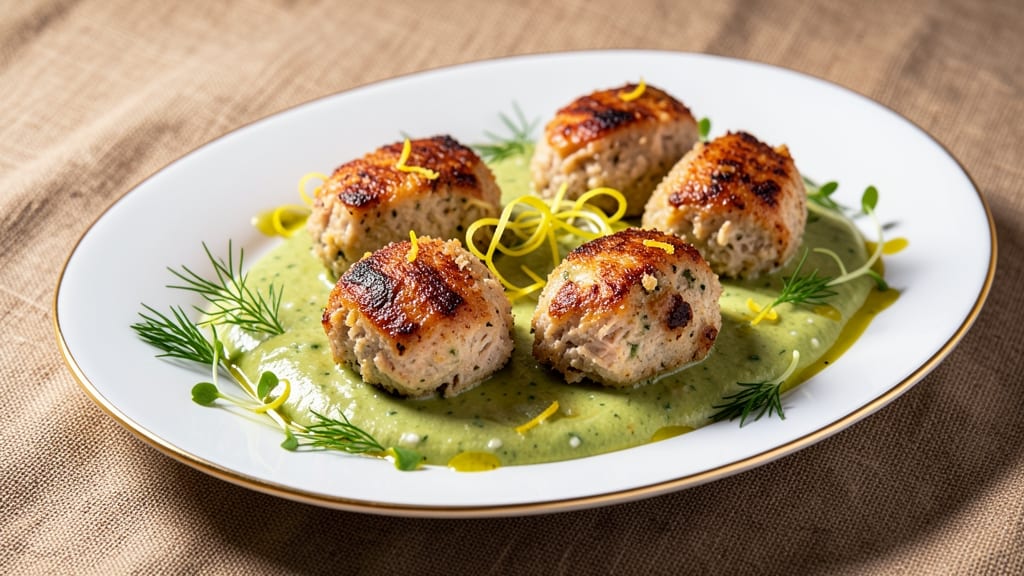
This baked salmon meatballs with creamy avocado sauce recipe redefines seafood appetizers by combining tender, flaky salmon with a rich, dairy-free sauce that’s both elegant and effortless. The secret lies in binding the delicate salmon with breadcrumbs and egg whites—no heavy fillers here—while baking until just set for maximum tenderness.
What sets this apart is the avocado sauce, silky and tangy, replacing traditional mayo with a fresh, vibrant twist that pairs perfectly with the salmon’s natural richness.
The beauty of this dish is in its balance: creamy without heaviness, flaky without dryness, and packed with omega-3s for a meal that’s as nutritious as it is indulgent.
The meatballs hold their shape beautifully, thanks to a precise ratio of binding ingredients, while the avocado sauce—blended to perfection—adds a velvety contrast that elevates every bite. No frying, no mess, just a dish that delivers restaurant-quality results at home.
Serve these salmon bites over a bed of quinoa or with crisp lettuce cups for a modern, bite-sized meal that’s perfect for gatherings or a light yet satisfying dinner. The avocado sauce isn’t just a topping—it’s the star, transforming simple ingredients into something extraordinary.
Ready in under 30 minutes, this recipe proves healthy eating can be both delicious and impressive.
For extra flair, garnish with lime zest or fresh cilantro, and don’t skip the toasted breadcrumbs on top of the meatballs—they add a satisfying crunch that rounds out the dish beautifully. Whether you’re hosting or treating yourself, this recipe delivers a foolproof method for salmon that’s anything but ordinary.
Ingredients for baked salmon meatballs with creamy avocado sauce
Fourteen ingredients transform delicate salmon into restaurant-worthy bites with velvety avocado sauce.
| Ingredient | Amount | Notes |
|---|---|---|
| Fresh Atlantic Salmon Fillet 🐟 | 1 ¼ lb | Skinless, boneless, cut into 1-inch cubes |
| Panko Breadcrumbs 🍞 | ¾ cup | Toasted for enhanced texture |
| Large Egg Whites 🥚 | 2 whole | Room temperature for best binding |
| Fresh Dill 🌿 | ¼ cup | Finely chopped, stems removed |
| Garlic Cloves 🧄 | 3 cloves | Minced for aromatic depth |
| Lemon Zest 🍋 | 1 tbsp | Freshly grated for bright flavor |
| Diamond Crystal Kosher Salt 🧂 | 1 ½ tsp | Adjust to taste |
| Ground Black Pepper 🌶️ | ½ tsp | Freshly cracked for intensity |
| Extra-Virgin Olive Oil 🫒 | 2 tbsp | For light coating |
| Ripe Avocados 🥑 | 2 whole | Pitted, peeled, for sauce |
| Fresh Lime Juice 🍋 | ½ cup | Strained for smooth texture |
| Plain Greek Yogurt 🥛 | ¼ cup | Non-fat for lighter sauce |
| Fresh Cilantro 🌿 | ¼ cup | Chopped for garnish and sauce |
| Red Bell Pepper 🌶️ | ¼ cup | Diced for sauce texture |
| Unsalted Butter 🧈 | 1 tbsp | For avocado sauce richness |
The salmon quality makes or breaks this dish. Sushi-grade Atlantic salmon from Whole Foods Market or a trusted fishmonger ensures tender, flaky texture—avoid pre-cut pieces with exposed flesh. For the avocado sauce, Hass avocados are ideal, but any ripe variety works. The Greek yogurt should be thick and tangy—Fage or Siggi's brands deliver consistent results. Toast your panko breadcrumbs in a dry pan for 2-3 minutes before mixing; this enhances their crunch and prevents sogginess in the meatballs. Fresh dill and cilantro are non-negotiable for that bright, herby brightness—Trader Joe's carries excellent frozen alternatives if fresh isn't available.
No panko? Crushed cornflakes or matzo meal work in a pinch, though texture differs slightly. Substitute egg whites with 1 tbsp ground flaxseed + 3 tbsp water per egg for vegan adaptation. For the avocado sauce, vegan Greek yogurt replaces dairy versions, and cashew cream adds richness if needed. The red bell pepper can be swapped for jalapeño for heat or cucumber for mildness. If avocados brown too quickly, toss the sauce with 1 tsp lemon juice before serving. For extra flakiness in the meatballs, add 1 tbsp mayonnaise to the binding mixture—it acts as a natural tenderizer.
Salmon meatballs keep 3 days in the fridge, covered tightly with plastic wrap. Reheat gently in a 350°F oven for 10-12 minutes to maintain moisture. The avocado sauce should be made fresh—it oxidizes quickly—but you can prep components separately. Store sauce ingredients in airtight containers: avocado with plastic wrap pressed directly on its surface, lime juice in a small sealed jar. For meal prep, assemble meatballs and sauce separately, then combine just before serving. Freeze meatballs for up to 2 months—thaw overnight in the fridge before reheating. The sauce reheats beautifully but loses some creaminess; blend again briefly if needed.
Why You'll Love This Recipe
- Here’s what sold me: the salmon’s natural richness gets balanced by the avocado sauce’s cool, creamy bite, and the crispy panko crust adds texture without heaviness. The dill and garlic make every bite taste like a fancy restaurant dish, but somehow it’s lighter than takeout. My husband devours these cold too—no joke.
- I’ll be real: salmon can be pricey, but these meatballs stretch it further than you’d think. The panko and egg whites keep the cost down while making them feel special, and the avocado sauce uses one ripe fruit instead of expensive cream. Plus, leftovers reheat like a dream—no dry, sad fish here. It’s the kind of dish that makes you feel like you’re treating yourself without breaking the bank.
Step-by-step instructions for baked salmon meatballs with creamy avocado sauce
Here's the precise method for achieving perfectly flaky salmon meatballs with a velvety avocado sauce.
Prepare the Salmon Mixture
In a food processor, pulse the 1.25 lb fresh Atlantic salmon fillet (cut into 1-inch cubes) until it forms a coarse, chunky texture—think of it like finely ground meat. This ensures tender meatballs without losing the natural flakiness of the salmon.
Transfer the salmon to a large mixing bowl and add the 0.75 cup toasted Panko breadcrumbs, 2 whole large egg whites, 0.25 cup finely chopped fresh dill, 3 minced garlic cloves, 1 tbsp lemon zest, 1.5 tsp Diamond Crystal kosher salt, and 0.5 tsp ground black pepper. Using your hands, gently fold everything together until just combined—overmixing will make the meatballs dense.
Here's the thing—salmon is delicate, so handle it gently. You want the ingredients to cling together without developing gluten. The mixture should be moist but not sticky; if it feels too wet, add a splash more of the egg whites.
Form and Bake the Meatballs
Preheat your oven to 400°F and line a baking sheet with parchment paper. Using a lightly oiled spoon, roll the salmon mixture into 1-inch meatballs—about 16 total for even baking. Place them on the prepared baking sheet, spacing them about 1 inch apart for proper air circulation.
Lightly brush each meatball with 1 tbsp of the extra-virgin olive oil to promote browning. Bake for 12-15 minutes until the edges are golden brown and the internal temperature reaches 145°F when measured with an instant-read thermometer. The meatballs should hold their shape but still feel tender when pressed gently.
Don't walk away during this step. Salmon cooks quickly, and overbaking will turn them dry. If you see the edges browning too fast, tent the pan with foil to prevent burning while allowing the centers to cook through.
Prepare the Creamy Avocado Sauce
While the meatballs bake, combine 2 ripe avocados, 0.5 cup fresh lime juice, 0.25 cup plain Greek yogurt, 0.25 cup diced red bell pepper, 1 tbsp unsalted butter, 1 tbsp lemon zest, 0.25 cup chopped fresh cilantro, 0.5 tsp kosher salt, and 0.25 tsp black pepper in a food processor or blender.
Pulse until smooth but slightly textured—you want a creamy yet vibrant sauce that coats the meatballs beautifully. Taste and adjust the seasoning; the lime juice should brighten the richness of the avocados, while the yogurt adds a tangy depth. If the sauce is too thick, thin it with 1-2 tablespoons of water or reserved lime juice.
This sauce is where the magic happens. The avocado provides a luxurious texture, while the lime and yogurt keep it from feeling too heavy. The red bell pepper adds a subtle crunch and freshness that balances the richness of the salmon.
Assemble and Serve
Once the meatballs are baked, transfer them to a serving platter. Spoon the avocado sauce over the top, allowing it to drizzle down the sides for an elegant presentation. Garnish with an additional sprinkle of fresh cilantro and a pinch of black pepper for a pop of color and freshness.
Serve immediately while the meatballs are still warm and the sauce is at its peak texture. The contrast of the flaky, baked salmon with the silky avocado sauce creates a dish that's both comforting and sophisticated. For extra flair, serve with a side of lemon wedges or a simple mixed greens salad to cut through the richness.
Real talk: This dish is perfect for meal prep. The meatballs can be baked ahead and reheated gently in the oven, while the sauce is best made fresh. Just assemble and serve when ready to enjoy.
Pro Tips For Making Baked Salmon Meatballs With Creamy Avocado Sauce
- USE COLD SALMON: Fresh Atlantic salmon is best when chilled—it holds shape better and mixes more evenly with egg whites and panko. Take it straight from the fridge, pat it dry, and cut it into small, uniform cubes (about 1-inch) so they cook through without falling apart. (Yes, even if you’re impatient like me.)
- MINCE THE DILL FINE: Fresh dill is the star here, but too many stems or large chunks make the meatballs taste uneven. Pulse it in a food processor for 2–3 seconds—just until it’s finely chopped, not paste. This distributes flavor perfectly without turning the mixture into dill soup.
- DON’T OVERMIX THE BATTER: Once you combine salmon, egg whites, panko, and garlic, stop mixing after 10–12 strokes. Overworking the mixture makes the meatballs dense and dry. Gently fold in the dill at the end—just until incorporated. (I learned this the hard way after making hockey pucks instead of tender bites.)
- BAKE IN TWO BATCHES: Crowding the tray leads to soggy meatballs and uneven cooking. Spread them in a single layer with at least ½ inch between each, and bake the second batch on the same sheet after rotating the first. The residual heat from the first batch helps the second cook faster—no extra pans needed.
Health benefits of baked salmon meatballs with creamy avocado sauce
Omega-3 Powerhouse
These salmon meatballs deliver a massive omega-3 boost—a 6-ounce serving provides about 2,500mg of EPA and DHA, supporting heart health and reducing inflammation. The baking method preserves these beneficial fats better than frying, making this a heart-smart choice. 💪
Protein Without Guilt
With 30 grams of high-quality protein per serving, these meatballs satisfy hunger while keeping you lean. Salmon protein digests more efficiently than many red meats, and the avocado sauce adds healthy fats that help stabilize blood sugar levels. Perfect for post-workout meals or high-protein diets!
Dairy-Free Creaminess
The avocado sauce replaces traditional mayo with healthy fats from avocados and Greek yogurt, offering a creamy texture without dairy. Avocados provide monounsaturated fats that support brain health, while the yogurt contributes probiotics for gut health. This makes the dish both indulgent and nutrient-dense.
Vitamin Boost
You'll get a vitamin C punch from the lime juice and red bell pepper, plus vitamin K from the avocado—great for bone health. The fresh dill and cilantro add antioxidant-rich herbs that fight cellular damage. It's like a vitamin cocktail in every bite! 🌿
Low-Calorie Luxury
At just 280 calories per serving, these meatballs deliver restaurant-quality flavor without the guilt. The baking method keeps them lighter than fried versions, while the avocado sauce adds richness without excessive calories. Ideal for weight-conscious eaters who still want indulgence.
Meal Prep Friendly
The ingredients store well, letting you prep components ahead. Salmon meatballs keep 3 days refrigerated and freeze beautifully for up to 2 months, while sauce ingredients can be prepped separately. This makes it perfect for busy weeks while maintaining nutritional value. 📅
Nutrition facts
Frequently asked questions
Can I use frozen salmon for these meatballs?
Fresh salmon is ideal for this recipe, but you can use frozen if thawed properly. Place frozen salmon in the fridge overnight or use the cold water thaw method (sealed in a bag, submerged in cold water for 30 minutes). Never microwave or use warm water—this cooks the outer layer while leaving the center frozen. Pat the salmon completely dry before processing to prevent a watery mixture.
Why did my salmon meatballs fall apart when baking?
Overmixing the salmon mixture is the most common cause. Handle the ingredients gently—just combine until everything clings together. Also, ensure your egg whites are room temperature (cold whites won't bind properly) and use toasted Panko (untosted breadcrumbs absorb too much moisture). If the mixture feels too wet, add 1-2 tablespoons more Panko before forming meatballs.
How can I make the avocado sauce thicker or thinner?
For a thicker sauce, reduce the lime juice by 1 tablespoon or add 1 ripe banana to the blend (it adds creaminess without changing flavor). For a thinner consistency, stir in 1-2 tablespoons of water or reserved lime juice after blending. The sauce should coat the back of a spoon but still drizzle smoothly—aim for a pudding-like texture that clings to the meatballs.
Can I bake these meatballs ahead of time?
Bake the meatballs up to 2 days ahead and store them in an airtight container in the fridge. Reheat in a 350°F oven for 10-12 minutes until warmed through. For best texture, reheat the sauce separately and blend briefly before serving. The meatballs will lose some moisture when refrigerated, so reheat with a splash of water or olive oil to restore juiciness.
What's the best way to serve these salmon bites?
These meatballs shine as appetizers on toasted baguette slices or as a main course over quinoa or farro. For a modern twist, serve in endive or butter lettuce cups with extra sauce for dipping. Pair with a crisp arugula salad (tossed with lemon and olive oil) or roasted asparagus to balance the richness. The sauce also works as a dip for veggie sticks or crackers!