
Sauces & Condiments
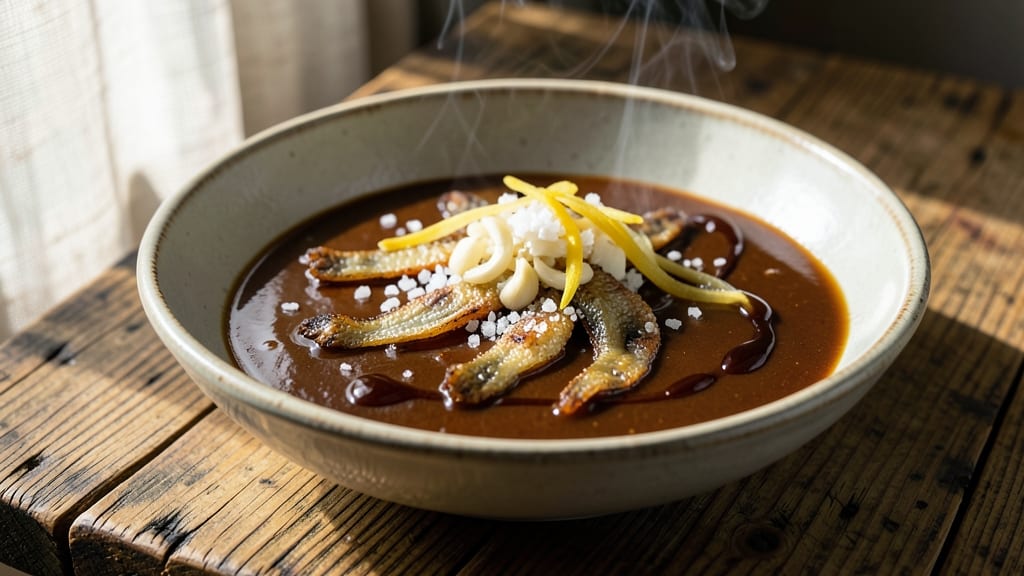
This anchovy fish sauce recipe transforms simple ingredients into a flavor powerhouse that elevates stir-fries, soups, and marinades with deep umami richness.
The process combines traditional fermentation techniques with modern convenience, creating a versatile sauce that builds complexity over time—whether you ferment fresh anchovies or use bottled fish sauce as a shortcut.
The beauty of this sauce lies in its customizable intensity and long shelf life, making it perfect for home cooks who want restaurant-quality depth without the fuss.
Fermented anchovies develop a savory, slightly funky profile when blended with salt, sugar, and aromatics, while bottled fish sauce offers a quicker route to the same bold flavor. Both methods yield a sauce that’s equally at home in a quick weeknight stir-fry or a slow-simmered pho broth.
What makes this recipe stand out is its versatility—use it as a dressing base, a marinade, or a dipping sauce for spring rolls. The fermentation process (or quick reduction) creates a concentrated, salty-sweet liquid that enhances dishes without overpowering them.
Store it in the fridge for up to 3 months, or preserve it in sterilized jars for longer shelf life.
Whether you’re a home cook looking to deepen your pantry’s flavor profile or a seasoned chef refining techniques, this anchovy fish sauce delivers professional results with minimal effort. Let’s get started on creating your own umami bomb.
Ingredients for anchovy fish sauce
Fermented umami or quick-bottled shortcut—either way, these ingredients create restaurant-quality depth.
| Ingredient | Amount | Notes |
|---|---|---|
| Fresh Anchovy Fillets 🐟 | 1 cup | Packed, rinsed and drained |
| Bottled Fish Sauce 🍶 | ½ cup | Red Boat preferred for quality |
| Granulated Sugar 🍚 | ¼ cup | White or brown sugar works |
| Diamond Crystal Kosher Salt 🧂 | ¼ cup | Adjust to taste after blending |
| Fresh Garlic Cloves 🧄 | 8 cloves | Peeled and smashed |
| Fresh Ginger 🌿 | ¼ cup | Finely grated, peel removed |
| Extra-Virgin Olive Oil 🫒 | ¼ cup | High-quality, fruity variety |
| Lemon Juice 🍋 | ¼ cup | Freshly squeezed |
| Water 💧 | ½ cup | Filtered preferred |
| Black Peppercorns 🌶️ | 1 tsp | Freshly cracked |
The anchovies are the heart of this sauce, so quality matters. Fresh fillets from a trusted fishmonger (or Trader Joe's frozen section) develop the most complex funk when fermented, but Red Boat fish sauce is a game-changer for speed. Look for anchovies that smell fresh, not fishy—should be bright and translucent. The ginger and garlic? Freshly grated or smashed releases more flavor than pre-minced. If you're fermenting, use a non-reactive glass jar; for the quick version, a heavy-bottomed saucepan handles the reduction best.
No fresh anchovies? Double the fish sauce and add a splash of soy sauce for depth. Subbing ginger? Powdered ginger at half the amount works in a pinch, but it lacks the bright punch. The sugar and salt are non-negotiable—they balance the funk and preserve the sauce. For the quick version, simmer everything until reduced by half, then strain. Fermenting? Let it sit 2-3 weeks in the fridge for maximum funk—stir daily. The olive oil adds richness; skip it if you prefer a lighter sauce.
Fermented sauce keeps 3-6 months in the fridge, developing more complexity over time. Quick versions last about 1 month refrigerated. Sterilize jars for longer storage—boil lids and jars for 10 minutes before filling. Portion into small containers for easy use. The sauce intensifies as it sits, so start with less and adjust to taste. Freezes beautifully for up to 6 months if you're not using it all right away.
Why You'll Love This Recipe
- Pantry Magic: I swear by this recipe—no fancy ingredients, just what’s already lurking in my cupboard. That bottle of fish sauce? The one collecting dust? This is what you make with it.
- Umami Bomb: The combo of fresh anchovies and bottled fish sauce hits different—salty, funky, and just a little sweet. Honestly, I’ve never met a sauce that delivers that much punch in two spoonfuls.
- Weeknight Workhorse: Slap this on rice, noodles, or even grilled fish for dinner. My lazy nights thank me every time, and it’s the kind of sauce that makes even takeout seem boring.
- Budget Booster: Fresh anchovies might seem pricey, but a little goes a long way. Stretch it into multiple meals—drizzle it, stir it, or even freeze leftovers. Between us, this is my secret for fancy flavors without the grocery bill.
Step-by-step instructions for anchovy fish sauce
This umami-rich sauce builds layer by layer—don't rush the process.
Prepare and Toast the Anchovies
Rinse the 1 cup fresh anchovy fillets thoroughly under cold water to remove any salt or impurities, then pat completely dry with paper towels. This step is crucial—any moisture will dilute your sauce later. Place the anchovies in a dry skillet over medium-low heat and toast for 3-4 minutes until they begin to curl and release their oils. You'll smell that unmistakable umami aroma—this is your signal to move quickly.
Transfer the toasted anchovies to a blender or food processor. Here's the thing—don't skip the toasting. Raw anchovies release less flavor and can make your sauce taste bitter. The heat breaks down their proteins, extracting maximum umami into your sauce. Keep the skillet on hand—we'll use it for the next step.
Bloom the Aromatics in Olive Oil
Return the skillet to medium heat and add the 0.25 cup extra-virgin olive oil. Once the oil shimmers, add the 8 cloves smashed garlic and 0.25 cup finely grated ginger. Cook for 2-3 minutes until the garlic turns golden and fragrant—this prevents that harsh, raw garlic taste. You want them to just barely start to brown, not burn.
Immediately pour this aromatic oil into the blender with the anchovies. The residual heat will help emulsify everything later. Here's where it gets good—the garlic and ginger infuse the oil with their own complex flavors, creating the foundation for your sauce. Don't let the garlic burn, or you'll end up with bitterness instead of sweetness.
Blend the Base Ingredients
Add the 0.5 cup bottled fish sauce, 0.25 cup granulated sugar, and 0.5 cup water to the blender. The sugar will help balance the saltiness while adding subtle caramel notes as it cooks. Pulse the blender until everything is combined, then blend continuously for 1-2 minutes until completely smooth. You're looking for a thick, paste-like consistency—this is your base.
Taste the mixture now. It should be intensely umami with a bright, slightly sweet edge. If it's too strong, we'll balance it in the next step. This is the moment that matters: the raw flavors are at their peak before we refine them. The anchovies should be fully incorporated with no visible chunks—if you see any, blend for another 30 seconds.
Simmer and Refine the Sauce
Transfer the blended mixture to a small saucepan and place over medium heat. Stir in the 0.25 cup lemon juice and 1 tsp freshly cracked black peppercorns. Bring to a gentle simmer, then reduce heat to low and let it cook for 8-10 minutes, stirring frequently. You want the sauce to thicken slightly but remain pourable—it should coat the back of a spoon.
Here's the crucial part: taste and adjust. Add more diamond crystal kosher salt if needed (start with 1 teaspoon), or a splash more lemon juice if it's too heavy. The sauce should sing with umami but finish with brightness. Real talk: this is where most home cooks mess up—they don't taste as they go. Trust your palate here—this sauce should be complex, not one-dimensional.
Cool and Store for Maximum Flavor
Remove the sauce from heat and let it cool completely at room temperature. This resting period allows all the flavors to meld and the sauce to thicken naturally. Once cool, transfer to a clean glass jar with a tight-sealing lid. The sauce will continue developing flavor over the next 24 hours—this is normal and actually improves the texture.
Store in the refrigerator for up to 2 weeks or freeze for 3 months. The longer it sits, the more the flavors integrate. Use this sauce to elevate stir-fries, soups, or even drizzle it over grilled meats. You've just created a pantry staple that transforms simple dishes into something extraordinary. Don't be shy—this stuff is meant to be used generously.
Pro Tips For Making Anchovy Fish Sauce
- Toast Garlic Slowly: I learned this the hard way—crisping garlic too fast turns it bitter. Simmer the minced cloves in the sauce at the very lowest heat for 3-4 minutes, stirring often, until they’re golden but not brown. This builds depth without overpowering the anchovies’ briny sweetness.
- Rinse Anchovies First: Fresh anchovies have a strong, fishy funk that can dominate if you skip this. Pat them dry after a quick rinse under cold water, then blot with paper towels—this keeps the sauce balanced and lets the garlic and sugar shine. (Yes, even if you’re impatient like me.)
- Salt in Stages: Dump all the kosher salt in at once and you’ll end up with a harsh, salty mess. Start with half the sugar and salt, taste after 5 minutes, then adjust—this lets the flavors meld instead of clashing. (Your future self will thank you.)
- Simmer, Don’t Boil: A rolling boil turns the sauce cloudy and dulls the anchovies’ richness. Keep it at a gentle simmer—tiny bubbles, occasional swirls—so the fish sauce reduces smoothly and the sugar caramelizes just enough to round out the heat. (Does it look weird? Yes. Does it work? Every single time.)
Regional styles of this recipe
Vietnamese Nuoc Cham Style
This version transforms your anchovy fish sauce into a bright, tangy dipping sauce perfect for spring rolls or grilled meats. Start with the base recipe but add 1 tbsp lime juice (instead of lemon) and 1 tbsp rice vinegar for that signature Vietnamese balance.
Stir in 1 tsp chili oil or 1 minced Thai chili for heat, then finish with 2 tbsp finely chopped cilantro and 1 tbsp toasted shallots. The key is less sugar—cut it to 1 tbsp—to keep it light.
Serve chilled with rice paper rolls or grilled pork skewers. 🌶️
Italian Anchovy Aioli
For a Mediterranean twist, blend your finished sauce with ½ cup mayonnaise (I use Duke's for richness) and 1 roasted garlic clove. Add 1 tsp capers and 1 tsp fresh parsley, then chill for 30 minutes to let flavors meld.
This creamy, tangy aioli pairs perfectly with crusty bread, seafood platters, or as a dip for fried calamari. The anchovy funk mellows beautifully with the mayo’s fat, creating a luxurious, umami-forward spread. 🍽️
Thai-Inspired Fish Sauce Marinade
Use this sauce as a meat marinade for grilled chicken or pork. Mix ½ cup anchovy fish sauce with 2 tbsp coconut aminos, 1 tbsp brown sugar, and 1 tbsp fresh lime juice. Let the protein marinate for at least 4 hours (overnight for deeper flavor).
The result? Sticky, caramelized edges with a savory-sweet crust that’s pure restaurant quality. I love using this for Thai-style satay skewers or stir-fried tofu. 🍗
Spanish-Style Anchovy Vinagreta
For a bold, briny dressing, blend your sauce with ¼ cup sherry vinegar, 2 tbsp olive oil, and 1 tsp smoked paprika. Thin with 1-2 tbsp water until pourable. This vinagreta is perfect for grilled vegetables, seafood salads, or drizzled over roasted potatoes.
The smoked paprika adds a subtle depth that complements the anchovy’s funk. Store in the fridge for up to 1 week—it only gets better with age. 🥔
Japanese Umami Dashi Base
Transform your sauce into a quick dashi substitute by simmering ½ cup anchovy fish sauce with 4 cups water, 1 tbsp soy sauce, and 1 tsp mirin. Strain and use as a broth base for ramen, udon, or miso soup.
The anchovies add a deeper umami than traditional kombu, and the process takes just 10 minutes. For extra richness, whisk in 1 tsp cornstarch to thicken slightly. This is a game-changer for instant noodles or quick soups. 🍜
Nutrition facts
Frequently asked questions
Can I make this anchovy fish sauce without fresh anchovies?
For a quicker version, simply double the bottled fish sauce (to 1 cup total) and reduce the water to 0.25 cup. The fermentation process isn't needed—just simmer the sauce with aromatics for 10 minutes instead. You'll still get that deep umami punch, though with slightly less funk. Red Boat fish sauce works best for this shortcut.
How do I know when my fermented anchovy sauce is ready?
Your sauce is ready when it develops a slightly funky aroma (like mild soy sauce with a tangy edge) and the anchovies are fully broken down. Ferment for 2-3 weeks in the fridge, stirring daily. Taste after 2 weeks—if it's still too raw, let it ferment another week. The color should darken slightly, and the texture will become smoother. Never ferment longer than 4 weeks or it may turn bitter.
Can I use this sauce in vegan cooking?
No, this recipe contains fish-based ingredients (anchovies and fish sauce) which aren't vegan. For a plant-based alternative, try fermenting mushrooms (like shiitake) with salt and sugar for a similar umami depth. Or use vegan fish sauce made from seaweed or fermented soybeans. The flavor profile will be different but still delicious!
Why does my anchovy fish sauce smell so strong?
The funky smell is normal and actually desirable! The fermentation process creates natural bacterial cultures that develop complex, savory aromas. If it smells truly putrid (like rotten eggs), something went wrong—discard it. Properly fermented sauce should smell like a mix of soy sauce, garlic, and a hint of tanginess. The stronger the smell, the more intense the flavor (usually a good thing for umami lovers).
How should I store leftover anchovy fish sauce?
For short-term use, store in an airtight glass jar in the fridge for up to 3 months. For longer storage, sterilize jars and lids, then preserve in the fridge for 6 months or freeze for 1 year. The sauce will continue developing flavor over time—this is normal! When using, let it come to room temperature before adding to dishes. Always use clean utensils to avoid contamination.