
Sauces & Condiments
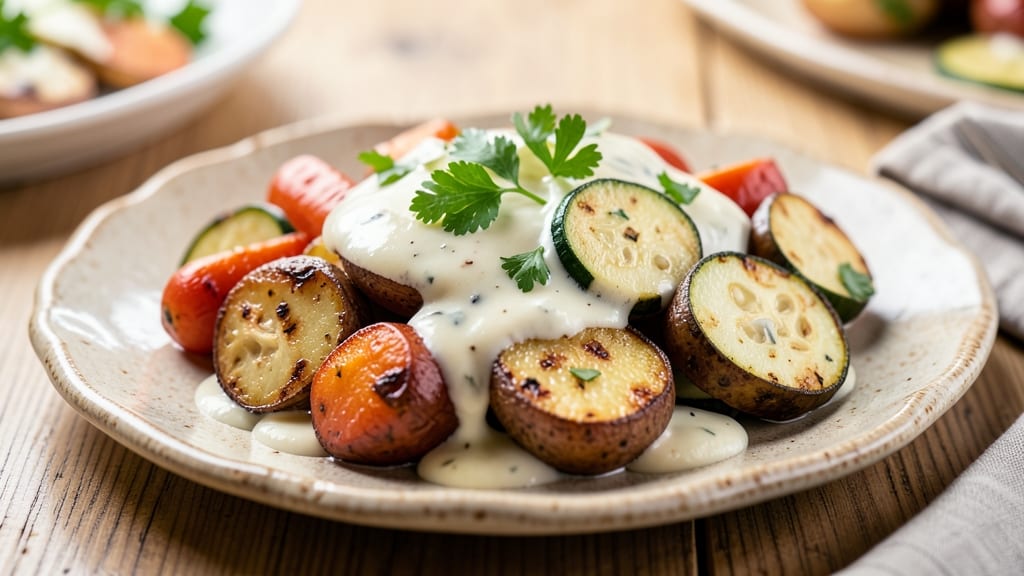
This baked vegetables in white sauce recipe transforms simple roasted veggies into a restaurant-worthy dish with just 15 minutes of prep and 45 minutes in the oven. The secret lies in a velvety white sauce—creamy yet light—that clings perfectly to tender, caramelized vegetables.
I developed this method after realizing how often home-cooked sides fall short of restaurant quality, and this technique delivers that same velvety finish without the fuss.
The process begins with a simple white sauce base—just butter, flour, milk, and a touch of garlic powder—that comes together in 5 minutes on the stovetop. While the sauce thickens, you'll roast your choice of vegetables (carrots, potatoes, or zucchini) until tender and golden.
The sauce then gets poured over the hot vegetables, creating a silky, creamy coating that's impossible to resist.
What makes this dish truly special is its versatility—serve it as a side for steak or chicken, or let it stand as a light main course when paired with crusty bread.
The sauce remains rich yet balanced, thanks to the natural sweetness of roasted vegetables and the subtle depth of garlic. Every bite delivers that perfect harmony of texture and flavor that turns ordinary vegetables into something extraordinary.
This recipe is designed to be adaptable, so feel free to swap vegetables based on seasonality or preference. The sauce can also be made ahead and reheated, making this a foolproof option for meal prep or last-minute dinners. Let's create this creamy, comforting dish that will elevate your weeknight meals.
Ingredients for baked vegetables in white sauce
Pantry staples and seasonal vegetables create this restaurant-worthy white sauce dish with velvety perfection.
| Ingredient | Amount | Notes |
|---|---|---|
| Unsalted Butter 🧈 | ½ cup | Cold, cubed for even browning |
| All-Purpose Flour 🌾 | ½ cup | Sifted for smooth sauce |
| Whole Milk 🥛 | 2 cups | Full-fat for creaminess |
| Garlic Powder 🧄 | 1 tsp | Freshly ground preferred |
| Medium Carrots 🥕 | 4 whole | Cut into even chunks |
| Medium Russet Potatoes 🥔 | 4 whole | Cut into 1-inch cubes |
| Medium Zucchini 🍆 | 2 whole | Sliced into half-moons |
| Diamond Crystal Kosher Salt 🧂 | 1 tsp | For seasoning vegetables |
| Freshly Ground Black Pepper 🌶️ | ½ tsp | For sauce seasoning |
| Extra-Virgin Olive Oil 🫒 | 2 tbsp | For roasting vegetables |
| Fresh Parsley 🌿 | ¼ cup | Chopped, for garnish |
| Nutritional Yeast 🍄 | 1 tbsp | Optional for umami depth |
The butter and flour form the sauce's foundation—European-style butter adds richness, while sifted flour prevents lumps. For the vegetables, organic carrots and potatoes from the grocery store's produce section work beautifully, but farmers market finds often have superior texture. Zucchini should be firm with no soft spots—Trader Joe's carries excellent organic varieties. The key to even roasting lies in consistent cutting: aim for 1-inch chunks across all vegetables. If you're short on time, pre-cut frozen vegetables (like carrots or potatoes) work in a pinch—just thaw and pat dry thoroughly before roasting.
No garlic powder? Fresh garlic minced at half the amount delivers superior flavor, though powder works fine for convenience. Substituting milk? Heavy cream creates an even richer sauce, but unsweetened almond milk works for a lighter version. For the vegetables, sweet potatoes add natural sweetness, while cauliflower florets provide a different texture contrast. The nutritional yeast is optional but adds that cheesy umami depth that elevates the dish—Bob's Red Mill is my go-to brand. If you're using pre-cut frozen vegetables, ensure they're completely thawed and patted dry to prevent a watery sauce.
Roasted vegetables keep their texture best when refrigerated in an airtight container for up to 3 days. The white sauce, once made, reheats beautifully—simply warm on the stovetop with a splash of milk to restore creaminess. For meal prep, I recommend assembling the dish completely (veggies + sauce) and refrigerating—it reheats in 10 minutes in a 350°F oven, maintaining that velvety coating. The parsley garnish can be added fresh after reheating, or store it separately to keep the greens vibrant. Portion into individual containers for easy grab-and-go lunches, or freeze the entire dish for up to 3 months—just add a splash of milk when reheating to restore moisture.
Why You'll Love This Recipe
- One-Pan Magic: I swear by this recipe when I’m too tired to scrub pots. Toss chopped carrots (and whatever veggies you have) on a sheet pan, drizzle with butter, and let the oven do the work. The flour and milk make that velvety sauce right in the pan—no strainers, no extra bowls.
- Creamy Carrot Hug: That white sauce? It’s ridiculously good—like a hug for your taste buds. The butter and milk create a rich, slightly thick texture that clings to the carrots, while the garlic powder adds just enough warmth to make it feel fancy. (Yes, even on a Tuesday night.)
- Leftover Goldmine: Between us, this dish tastes better the next day. The sauce thickens just enough to coat everything perfectly, and it reheats like a dream. Pack it for lunch or freeze portions—it’s my go-to for lazy mornings or post-work cravings.
- Budget-Friendly Luxury: You’re basically making a gourmet dish for pennies. Butter and flour are pantry staples, milk is cheap, and carrots are always on sale. It’s the kind of meal that feels special without breaking the bank—honestly, my kids ask for it more than takeout.
Step-by-step instructions for baked vegetables in white sauce
Master this technique for restaurant-quality roasted vegetables with a velvety white sauce coating.
Prep and Roast the Vegetables
Preheat your oven to 400°F. Line two rimmed baking sheets with parchment paper for easy cleanup. Cut the 4 whole medium carrots into even 1-inch chunks, the 4 whole medium russet potatoes into 1-inch cubes, and the 2 whole medium zucchini into half-moons. Toss all vegetables together with 2 tablespoons extra-virgin olive oil, 1 teaspoon diamond crystal kosher salt, and 0.5 teaspoon freshly ground black pepper until evenly coated.
Spread the vegetables in a single layer on the prepared baking sheets, leaving space between each piece for even browning. Roast for 25-30 minutes, stirring once halfway through, until the edges are golden brown and tender when pierced with a fork. The vegetables should caramelize slightly while maintaining their shape—this is key for texture contrast with the creamy sauce.
Make the White Sauce
While the vegetables roast, melt the 0.5 cup unsalted butter in a medium saucepan over medium heat. Once the butter has fully melted and begins to foam, whisk in the 0.5 cup all-purpose flour all at once. Cook for 1-2 minutes, stirring constantly, until the mixture forms a smooth, pale roux with no raw flour taste. This step is critical—don't rush it or the sauce will taste grainy.
Gradually whisk in the 2 cups whole milk, about ½ cup at a time, allowing each addition to be fully incorporated before adding more. Continue whisking until the sauce thickens enough to coat the back of a spoon, which should take about 5-7 minutes. Stir in the 1 teaspoon garlic powder and 1 tablespoon nutritional yeast, then reduce heat to low to maintain a gentle simmer. The sauce should be velvety with a slight sheen—this indicates proper emulsification.
Combine and Finish
Once the vegetables are roasted to perfection, transfer them to a large serving dish. Pour the warm white sauce over the vegetables, tossing gently to coat each piece evenly. The sauce should cling to the vegetables without pooling at the bottom—if it's too thick, whisk in 1-2 tablespoons hot water to reach a creamy consistency. Return the dish to the oven (no need to preheat) and bake for an additional 5-7 minutes to let the flavors meld and the sauce set slightly.
Remove from the oven and garnish immediately with 0.25 cup chopped fresh parsley. The vegetables should be tender yet hold their shape, with a glossy, creamy coating that's neither too thick nor too thin. Serve warm, accompanied by crusty bread or a simple green salad to balance the richness of the dish.
Pro Tips For Making Baked Vegetables In White Sauce
- PREP CARROTS UNIFORMLY: Cut them into even ½-inch chunks—no thick ends or thin slivers. I learned this the hard way when my first batch had some overcooked to mush and others still crunchy; consistency is everything when baking.
- STIR SAUCE CONSTANTLY: Once you add the milk to the butter-flour roux, keep stirring like your life depends on it for the first 2-3 minutes. I used to walk away, and the sauce would either split or turn grainy—no one wants to salvage that.
- SALT THE SAUCE LAST: Hold off on adding salt until after the sauce thickens and cools slightly. Unsalted butter and flour already have minimal salt, so adding it early will make you guess later whether the dish needs more—better to taste and adjust at the end.
- BAKE AT 375°F, NOT HIGHER: This isn’t a sear-and-char dish—375°F (190°C) is the sweet spot for even cooking without burning the sauce or drying out the carrots. I cranked it to 400°F once and ended up with a sad, overcooked mess. Trust the lower temp.
Creative variations of baked vegetables in white sauce
Cheesy Twist Version
Add ½ cup shredded Gruyère or sharp cheddar to the warm white sauce before pouring it over the vegetables. The cheese melts into the sauce, creating a rich, velvety coating with a subtle nutty depth.
For extra decadence, top with toasted breadcrumbs and bake for an additional 3-5 minutes until golden. This version works especially well with potatoes and carrots. 🧀
Herb-Infused Sauce
Swap the garlic powder for 1 tbsp fresh thyme and 1 tbsp fresh rosemary (finely chopped) when making the sauce. The herbs add an aromatic complexity that pairs beautifully with roasted vegetables.
For a stronger flavor, infuse the milk with herbs by simmering it with the thyme and rosemary for 5 minutes before using it in the sauce. Garnish with extra herbs before serving. 🌿
Spicy Kick Option
Add ½ tsp smoked paprika and ¼ tsp cayenne pepper to the white sauce for a subtle smoky heat. The spices complement the creamy texture and caramelized vegetables perfectly.
For a more pronounced kick, stir in 1 tsp hot sauce (like Cholula) or a pinch of red pepper flakes at the end. This variation works especially well with zucchini and potatoes. 🌶️
Vegetarian Protein Boost
Transform this dish into a hearty vegetarian main by adding 1 cup cooked chickpeas or ½ cup crumbled feta cheese to the roasted vegetables before adding the sauce.
Chickpeas add a satisfying texture and plant-based protein, while feta brings a tangy contrast. Serve with crusty bread or a side salad for a complete meal. 🍲
Seasonal Swaps
Adjust the vegetable selection based on what's in season. In fall, try butternut squash and beets for natural sweetness. In spring, swap zucchini for asparagus or green beans. Summer calls for bell peppers and eggplant, while winter works well with brussels sprouts and turnips.
Each seasonal veggie brings a unique texture and flavor to the dish. 🍂
Meal Prep Adaptation
For easy meal prep, roast the vegetables ahead of time and store them separately from the sauce. When ready to serve, reheat the vegetables in the oven at 350°F for 10 minutes, then warm the sauce on the stovetop with a splash of milk.
Toss together just before serving to maintain the creamy texture. This approach saves time while keeping the dish restaurant-quality. ⏰
Nutrition facts
Frequently asked questions
Can I use this recipe with frozen vegetables instead of fresh?
Yes, but with one key adjustment: thaw and thoroughly pat dry frozen vegetables before roasting. The moisture can make the sauce watery if left in. For best results, use 1-inch chunks of frozen carrots or potatoes and roast them for 5-7 minutes longer than fresh to ensure they're fully tender.
How do I prevent the white sauce from getting lumpy?
Whisk constantly when adding milk to the butter-flour mixture, and use cold butter for a smoother roux. If lumps appear, blend the sauce briefly with an immersion blender. For extra insurance, sift the flour before adding it to the butter. The sauce should be silky smooth with no graininess.
Can I make this ahead of time for meal prep?
Roast the vegetables up to 3 days ahead and store them separately from the sauce. When ready to serve, reheat the veggies at 350°F for 10 minutes, then warm the sauce on the stovetop with a splash of milk. Toss together just before serving to maintain that creamy texture. The sauce reheats beautifully but may need thinning with extra milk.
What's the secret to getting that perfect creamy coating?
The magic happens when you pour the warm sauce over hot vegetables and return them to the oven for 5-7 minutes. The heat helps the sauce cling perfectly while the vegetables stay tender. For extra richness, add 1 tablespoon nutritional yeast or ½ cup shredded cheese to the sauce before combining.
Can I use this sauce on other proteins or grains?
Yes! This versatile sauce works beautifully with grilled chicken, baked fish, or even cooked quinoa. For grains, use about ½ cup sauce per cup of cooked quinoa or rice. The creamy texture pairs well with proteins, while the subtle garlic flavor complements grains perfectly.