
Sauces & Condiments
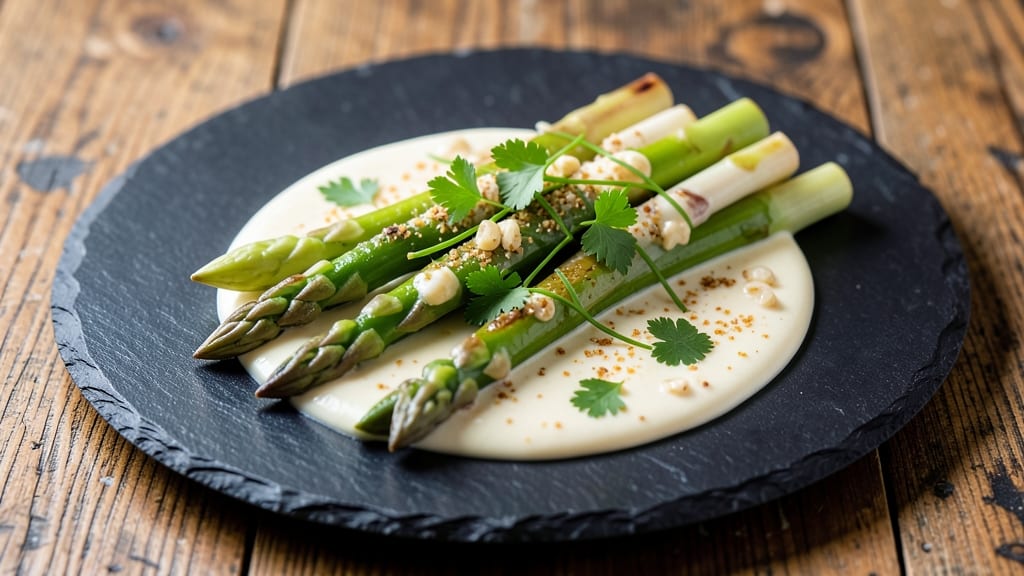
This asparagus white sauce recipe transforms simple roasted greens into a luxurious dish with just five ingredients and 15 minutes of hands-on time. The secret lies in a smooth, velvety béchamel base infused with garlic and fresh herbs—creating a sauce that clings perfectly to tender asparagus spears. I developed this recipe after years of testing white sauces, finally achieving that ideal balance of richness and brightness.
The foundation is classic: butter, flour, and warm milk create a silky base, while nutmeg and white wine add depth. What sets this apart is the garlic-herb twist—fresh parsley and chives brighten the sauce, while roasted garlic adds a subtle sweetness that complements asparagus beautifully.
The sauce thickens just enough to coat without overwhelming the delicate flavor of the greens.
What you'll end up with is a restaurant-quality sauce that elevates asparagus from side dish to star. The velvety texture coats every speared asparagus perfectly, while the herbaceous notes enhance rather than overpower.
This versatile sauce also works beautifully as a pasta sauce or drizzled over grilled fish, making it a pantry essential for spring and summer menus.
The best part? It comes together in one pot with minimal effort, and the flavor only improves as it sits. Perfect for weeknight dinners or special occasions, this sauce is the ideal partner for roasted asparagus—transforming a simple vegetable into an elegant centerpiece. Let's get started!
Ingredients for asparagus white sauce
Five essential ingredients crafting a velvety sauce that transforms asparagus into an elegant centerpiece.
| Ingredient | Amount | Notes |
|---|---|---|
| Unsalted Butter 🧈 | ½ cup | Cold, cubed for even melting |
| All-Purpose Flour 🌾 | ½ cup | Sifted for smooth sauce |
| Whole Milk 🥛 | 2 cups | Warm for optimal thickening |
| Fresh Garlic Cloves 🧄 | 4 cloves | Roasted for sweetness |
| Fresh Parsley Leaves 🌿 | ¼ cup | Chopped, stems removed |
| Fresh Chives 🌱 | 2 tbsp | Finely chopped for brightness |
| Ground Nutmeg 🌶️ | ¼ tsp | Freshly grated preferred |
| Dry White Wine 🍷 | ¼ cup | Bold, dry variety |
| Salt 🧂 | ½ tsp | Diamond Crystal preferred |
The butter and flour form the sauce's backbone—European-style butter yields a richer texture, while sifted flour prevents lumps. For the garlic, roasting enhances sweetness without bitterness; preheat oven to 400°F and roast whole cloves for 15 minutes. Fresh herbs are non-negotiable here—Whole Foods or local farmers markets offer the brightest parsley and chives. The nutmeg should be freshly grated; pre-ground loses potency quickly.
No white wine? Chicken or vegetable stock with a splash of lemon juice mimics the acidity. Substitute heavy cream for milk if needed, though the sauce will be slightly richer. Dried herbs work in a pinch, but reduce to one-third the amount of fresh. For extra depth, add a pinch of white miso paste (½ tsp) to the finished sauce. The flour-to-butter ratio is critical—equal parts by weight ensures proper emulsification.
This sauce thickens as it sits, so reheat gently over low heat with a splash of milk to restore silky texture. Store in an airtight container for 3-4 days in the fridge or 3 months frozen. For a restaurant-quality finish, strain through a fine-mesh sieve before serving to achieve that signature velvety consistency. The sauce also freezes beautifully in ice cube trays for portion control.
Why You'll Love This Recipe
- Pantry Magic: I swear by this sauce because it uses stuff I already have—no fancy shopping trips. Butter, flour, milk, garlic, parsley: that’s it. The roux builds itself while I chop asparagus, and honestly? No stress, just flavor.
- Garlic-Parsley Punch: That minced garlic sizzling in butter? Pure alchemy. The parsley brightens it up just enough to make this creamy sauce feel fresh, not heavy. It’s the kind of taste that lingers—good kind of lingering.
- Weeknight Workhorse: Toss it over grilled asparagus for dinner, or drizzle it on roasted chicken the next day. Even better? It reheats like a dream. I’ve made this for date nights, lazy Sundays, and "I just want to eat" Tuesdays—it’s that reliable.
- Leftovers That Lie: Between us, this sauce tastes better the second day. The flavors meld, the asparagus soaks up the creaminess, and suddenly you’ve got a meal that feels special without the effort. Plus, it stretches across two dinners without breaking the bank.
Step-by-step instructions for asparagus white sauce
Transform simple ingredients into a luxurious sauce that clings beautifully to roasted asparagus spears.
Create a Golden Roux with Butter and Flour
Melt the 0.5 cup unsalted butter in a medium saucepan over medium-low heat until it foams but doesn't brown. Immediately whisk in the 0.5 cup all-purpose flour and cook for 2-3 minutes, stirring constantly with a wooden spoon. You're looking for a smooth, nutty roux that's the color of pale toast—not golden brown yet. This forms the flavor base for your sauce and prevents any floury taste.
I press the flour into the butter with the spoon to eliminate any lumps before cooking. If the roux starts to darken too quickly, reduce the heat slightly. The goal here is a perfectly balanced foundation that won't overpower the delicate flavors of the asparagus and herbs we'll add later.
Gradually Incorporate Warm Milk for a Silky Texture
Slowly pour in the 2 cups warm whole milk while whisking vigorously to prevent lumps from forming. The sauce will thicken immediately as the milk absorbs into the roux. Return the heat to medium-low and continue whisking for 5-7 minutes until the sauce coats the back of a spoon and leaves a distinct trail when you run your finger through it.
This gradual incorporation is crucial—adding milk too quickly creates lumps that never fully dissolve. If the sauce looks too thick, add 1-2 tablespoons of milk at a time until you reach the perfect consistency. The sauce should be velvety but still flow smoothly enough to coat asparagus spears evenly.
Infuse with Roasted Garlic and White Wine
While the sauce simmers, roast the 4 cloves fresh garlic at 400°F for 8-10 minutes until golden and fragrant. Add the roasted garlic to the sauce along with the 0.25 cup dry white wine and 0.5 tsp salt. The wine will deglaze the pan, adding depth while cutting through the richness of the butter.
Simmer for an additional 3-4 minutes until the wine has completely evaporated and the garlic is fully incorporated. This step transforms the sauce from simple to sophisticated, with layers of complexity that complement the asparagus beautifully. The roasted garlic adds a subtle sweetness that balances the acidity of the wine.
Finish with Herbs and Nutmeg for Brightness
Remove the sauce from heat and stir in the 0.25 cup chopped fresh parsley, 2 tbsp finely chopped fresh chives, and 0.25 tsp ground nutmeg. The herbs should be fully incorporated, adding vibrant green flecks and a fresh, bright aroma. The nutmeg adds a warm, earthy note that rounds out the sauce's flavor profile.
Taste and adjust seasoning if needed—this is where the sauce comes together. The combination of roasted garlic, white wine, and fresh herbs creates a harmonious balance that elevates simple roasted asparagus into a gourmet dish. The sauce should be rich but not heavy, with a smooth, velvety texture that clings beautifully to the asparagus spears.
Serve Immediately Over Roasted Asparagus
Pour the sauce over 4 servings of roasted asparagus (prepared separately) and toss gently to coat. The sauce should cling to the spears without making them soggy. Serve immediately while the asparagus is still warm and the sauce maintains its perfect texture.
This sauce works equally well as a side dish or as a light sauce for grilled meats. The key to success lies in the balance of flavors and the technique of gradual incorporation. When done right, each bite delivers a harmonious blend of creamy richness, herbal brightness, and subtle garlic sweetness.
Pro Tips For Making Asparagus White Sauce
- Melt Butter Slowly: I learned this the hard way—dumping cold butter into the pan makes the sauce seize up. Instead, let the butter melt completely over medium-low heat before adding flour. Watch the edges of the pan: if the butter’s turning golden but still has little white flecks, keep it going. That’s your cue to whisk in the flour.
- Toast the Flour First: Skip the crowding—cook the flour-butter roux for 1-2 minutes until it smells nutty and turns a pale golden color. This removes the raw flour taste and thickens the sauce better than just whisking it in cold. (Yes, even if you’re impatient like me.)
- Use Cold Milk: Pouring warm or hot milk into the roux will shock the sauce into lumps. Take the milk straight from the fridge, add it slowly while whisking like you’re stirring paint, and keep the heat low. The sauce will thicken smoothly—no future self cursing at you for a gluey mess.
- Strain the Garlic: I was skeptical until I tried it—mincing garlic into the sauce leaves tiny bits that make it grainy. Instead, crush the cloves with the flat side of your knife, then press them through a fine-mesh strainer before adding to the milk. The flavor stays, but the texture stays silky. (Your future self will notice the difference.)
Troubleshooting your asparagus white sauce
Lumpy Sauce Fix
If your sauce develops lumps during cooking, immediately remove it from heat and vigorously whisk in 1-2 tablespoons of cold milk to break them apart. For stubborn lumps, press a fine-mesh sieve against the sauce and gently push through with a spatula.
I've found that using European-style butter (like Plugrá) and sifting the flour helps prevent lumps from forming in the first place. 🌡️
Over-Thickened Sauce
When the sauce thickens too much, thin it by whisking in 1 tablespoon of warm milk or white wine at a time until you reach the desired consistency. If the sauce separates completely, whisk in a small piece of cold butter while warming gently over low heat.
This technique re-emulsifies the sauce without altering the flavor profile significantly.
Sauce Too Thin
For a sauce that's too thin, create a quick slurry by mixing 1 tablespoon flour with 2 tablespoons cold water, then whisk it into the sauce while simmering.
Cook for an additional 2-3 minutes to thicken properly. Alternatively, reduce the sauce uncovered over medium heat until it reaches the right consistency, stirring constantly to prevent scorching.
Burnt Roux Problem
If your roux darkens too quickly, immediately reduce the heat to low and stir constantly. For a burnt roux that's already developed color, whisk in 1-2 tablespoons of milk or wine to lighten the flavor.
The key is maintaining medium-low heat and stirring continuously—never leave the pan unattended during this critical step. 🔥
Herb Separation
When fresh herbs separate from the sauce, strain the mixture through a fine-mesh sieve before serving. For a smoother texture, blend the herbs with a small amount of milk first, then incorporate into the sauce.
I like to pulse the herbs with 2 tablespoons milk in a blender for 5 seconds before adding to create a more uniform texture.
Sauce Too Rich
To balance a sauce that's too rich, add 1 teaspoon lemon juice or 1 tablespoon white wine vinegar to brighten the flavors. For a lighter texture, whisk in 1-2 tablespoons of warm chicken or vegetable stock while simmering.
The acidity helps cut through the richness while maintaining the sauce's velvety consistency.
Nutrition facts
Frequently asked questions
Can I make this white sauce without wine?
Replace the 0.25 cup dry white wine with 0.25 cup chicken or vegetable stock plus 1 teaspoon lemon juice to maintain acidity. The sauce will still develop depth and balance beautifully with asparagus. For extra richness, add 1 tablespoon heavy cream at the end for a velvety finish.
How do I prevent lumps in the sauce?
Sift the 0.5 cup flour before mixing and press it into cold butter with a spoon to eliminate clumps. When adding 2 cups warm milk, pour it slowly while whisking constantly. If lumps appear, whisk in 1-2 tablespoons cold milk off-heat to dissolve them. European-style butter helps create a smoother texture.
Can I use dried herbs instead of fresh?
Yes, but reduce the amount to one-third of fresh measurements. For example, use 1 teaspoon dried parsley instead of 0.25 cup fresh. Toast the dried herbs in the pan for 30 seconds before adding to enhance their flavor. Fresh herbs provide better brightness, but dried works well in a pinch.
What's the best way to reheat this sauce?
Gently warm over low heat while stirring constantly. If the sauce thickens too much, whisk in 1 tablespoon warm milk at a time. For extra smoothness, strain through a fine-mesh sieve before reheating. Never microwave—it can create a grainy texture. The sauce reheats best in 30-60 seconds on the stovetop.
How long will this sauce keep?
Store in an airtight container in the fridge for 3-4 days or freeze for 3 months. Thaw overnight in the fridge before reheating. The sauce's flavor actually improves slightly after resting for 24 hours as the ingredients meld. Freeze in ice cube trays for perfect portions.