
Sauces & Condiments
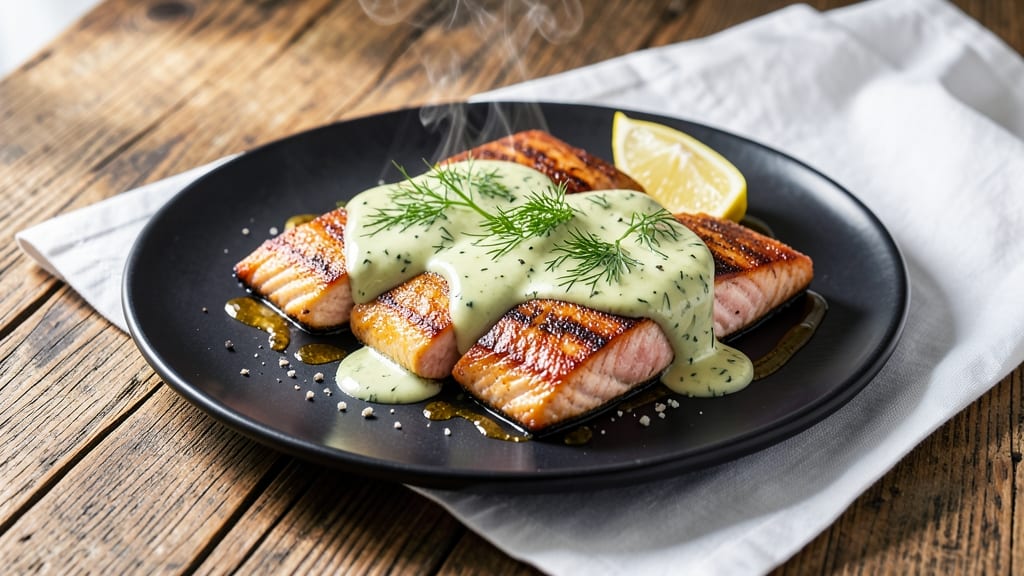
This baked salmon with sour cream dill sauce delivers restaurant-quality results with minimal effort—tender, flaky fillets topped with a bright, herby sauce that elevates every bite.
The secret lies in the herb-infused crust that locks in moisture while creating a golden, crisp finish, paired with a tangy sour cream dill sauce that balances richness and freshness.
After years of perfecting this technique, I’ve developed a method that ensures foolproof results, whether you’re cooking for a weeknight dinner or a special occasion.
The dish begins with a simple yet effective preparation: salmon fillets seasoned with salt, pepper, and a blend of fresh dill, lemon zest, and garlic—all pressed into the flesh to create that signature crust.
While the salmon bakes at 375°F, the sauce comes together in minutes, combining sour cream, fresh dill, lemon juice, and a touch of Dijon mustard for depth. The sauce isn’t just a topping; it’s the star, cutting through the richness of the salmon with its bright, herby tang.
By the time it’s done, you’ll have perfectly baked salmon with a crispy, golden crust and a sauce that’s creamy yet light, infused with fresh herbs and a zesty kick. The texture contrast—tender salmon against the cool, velvety sauce—makes this dish impossible to resist.
It’s the kind of meal that feels indulgent but is actually simple to prepare, proving that elegant dining doesn’t require complicated techniques.
Serve this dish with roasted asparagus or a fresh salad to round out the meal, or pair it with crusty bread to soak up every last bit of that tangy dill sauce.
The recipe scales effortlessly, making it perfect for feeding a crowd or treating yourself to a luxurious solo dinner. Here’s how to make it—foolproof, flavorful, and foolhardy to skip.
Ingredients for baked salmon with sour cream dill sauce
Restaurant-quality salmon with a crispy herb crust and velvety dill sauce—just eight ingredients transform simple fillets into an elegant meal.
| Ingredient | Amount | Notes |
|---|---|---|
| Salmon Fillets 🐟 | 4 whole | Center-cut, skin-on preferred |
| Plain Sour Cream 🥛 | ½ cup | Full-fat for creaminess |
| Fresh Dill 🌿 | ½ cup | Chopped, stems removed |
| Lemon Juice 🍋 | 2 tbsp | Freshly squeezed |
| Dijon Mustard 🍯 | 1 tbsp | For depth of flavor |
| Extra-Virgin Olive Oil 🫒 | 1 tbsp | For crust and sauce |
| Garlic Cloves 🧄 | 2 cloves | Minced for crust |
| Lemon Zest 🍋 | 1 tbsp | From 1 large lemon |
| Kosher Salt 🧂 | 1 tsp | For seasoning |
| Freshly Ground Black Pepper 🌶️ | ½ tsp | For seasoning |
| All-Purpose Flour 🌾 | 1 tbsp | For crust texture |
| Unsalted Butter 🧈 | 1 tbsp | Melted for crust |
| Fresh Lemon 🍋 | 1 whole | For garnish and zest |
The salmon fillets make all the difference here. Center-cut pieces stay together better during baking, and leaving the skin on creates a beautiful finish. Look for fillets with a vibrant pink color and minimal bruising—Trader Joe's and Whole Foods typically carry high-quality fresh salmon. If you're unsure about freshness, ask the fishmonger for their recommendation. The dill should be bright green, not wilted or yellowing—fresh is non-negotiable for that signature herby flavor. For the lemon, grab one that feels heavy for its size; it'll yield the most zest and juice.
No fresh dill? Dried dill at half the amount works in a pinch, but the flavor won't be as bright. Substituting sour cream with Greek yogurt gives a slightly tangier sauce, though it won't be quite as creamy. Running short on Dijon? Yellow mustard at double the amount gets you close, but you'll lose some depth. For the crust, if you don't have flour, crushed cornflakes or panko work beautifully. The butter in the crust can be swapped for olive oil if you prefer, though it'll give a slightly different texture. And if you're feeling adventurous, a splash of white wine or fish stock in the sauce adds an extra layer of complexity.
Salmon fillets should be used within 2 days of purchase for best texture. Store them on a bed of ice in the fridge until ready to use. Fresh dill keeps for 5 days wrapped in damp paper towels, while the zest and juice from the lemon can be stored separately in the fridge for 1 week. The sauce can be made ahead and stored for 3 days, though the texture will be slightly thicker after refrigeration—just whisk in a splash of milk or water when ready to serve. For a restaurant-worthy presentation, garnish with extra lemon zest and a sprinkle of fresh dill right before serving.
Why You'll Love This Recipe
- Same recipe, different vibes: toss it on a sheet pan for a lazy Tuesday, or plate it elegantly with asparagus for date night. The sauce keeps well, so I often double it—leftovers reheat like a dream, and it’s way cheaper than takeout.
- No-Chop Needed: I swear by this—just pat the salmon dry, sprinkle salt, and bake. The dill sauce comes together in three swirls of a spoon, no knife skills required. That lemon juice brightens everything up while you’re still scrolling through your phone, waiting for the timer.
- Creamy-Tangy Magic: The sour cream and Dijon mustard make this sauce ridiculously good—thick, tangy, and just herby enough to cut through the richness of the salmon. That crispy skin? Pure satisfaction. (Yes, even if you’re not a salmon snob.)
- Weeknight to Dinner Party: Same recipe, different vibes: toss it on a sheet pan for a lazy Tuesday, or plate it elegantly with asparagus for date night. The sauce keeps well, so I often double it—leftovers reheat like a dream, and it’s way cheaper than takeout.
Step-by-step instructions for baked salmon with sour cream dill sauce
Here's how to achieve perfectly baked salmon with a golden crust and creamy herb sauce.
Prepare the Herb-Infused Crust
Preheat your oven to 400°F and line a baking sheet with parchment paper. Pat the 4 whole salmon fillets dry with paper towels—this ensures a crispy crust rather than steamed skin. Place the fillets skin-side down on the prepared sheet.
In a small bowl, mix together 1 tbsp all-purpose flour, 1 tbsp melted unsalted butter, 1 tbsp extra-virgin olive oil, 1 tbsp lemon zest, 2 cloves minced garlic, 1 tsp kosher salt, and 0.5 tsp freshly ground black pepper. Spoon this mixture evenly over each fillet, pressing gently to adhere. Let them sit for 5 minutes while the oven preheats fully.
Bake the Salmon to Perfect Doneness
Transfer the salmon to the preheated oven and bake for 12-15 minutes, depending on thickness. You'll know it's done when the flesh flakes easily with a fork and the internal temperature reaches 145°F at the thickest part. The crust should be golden brown and crispy.
I like to check at the 12-minute mark—the salmon should release cleanly from the skin without sticking. If it needs more time, return it to the oven for 1-2 minutes increments. Remove from oven and let rest for 5 minutes before serving—this prevents the fish from overcooking.
Make the Sour Cream Dill Sauce
While the salmon bakes, whisk together 0.5 cup plain sour cream, 0.5 cup chopped fresh dill, 2 tbsp lemon juice, and 1 tbsp Dijon mustard in a bowl. The sauce should be smooth but still slightly textured from the dill. Taste and adjust seasoning with additional salt or pepper if needed.
For extra brightness, add 1 tsp lemon zest from the whole fresh lemon (save the rest for garnish). Cover and refrigerate until ready to serve. This sauce keeps well for 2 days in the fridge, making it perfect for meal prep.
Plate and Garnish for Presentation
Carefully transfer the baked salmon to serving plates, skin-side up. Spoon the chilled sour cream dill sauce over each fillet, letting it cascade down the sides. Garnish with additional chopped fresh dill and a sprinkle of lemon zest for a pop of color and freshness.
Serve immediately with steamed vegetables or a fresh salad. The contrast between the crispy salmon crust and velvety sauce creates a perfect balance of textures and flavors. Each bite delivers tender fish, bright citrus, and herby creaminess in every forkful.
Pro Tips For Making Baked Salmon With Sour Cream Dill Sauce
- Preheat Pan, Not Just Oven: I learned this the hard way—salmon sticks to cold pans like glue. Slide your baking sheet (or skillet, if pan-searing) into a hot oven for 5 minutes before adding the salmon. The extra heat jumpstarts the crust, and you’ll avoid flipping a sad, flat fish later.
- Dry That Salmon Like It’s 1985: Pat those fillets thoroughly with paper towels—no wet spots. I used to skip this, and my salmon would steam instead of brown. For extra insurance, let them air-dry on a rack for 10 minutes in the fridge (yes, even if you’re impatient like me).
- Skip the Overmixed Sauce: The dill sauce needs texture, not a smoothie. Mix the sour cream, lemon juice, and Dijon just until combined—then fold in chopped dill roughly. Overworking it turns the sauce into a paste, and you lose that fresh, herby bite.
- Test with a Fork, Not Time: Salmon’s done when it flakes easily with a fork at the thickest part, not when the recipe says “12 minutes.” Ovens vary, and thick-cut fillets need more time. If it’s still springy, return it for another 2–3 minutes—undercooking is a crime here.
Essential equipment for great baked salmon with sour cream dill sauce
Baking Sheet Essentials
Start with a rimmed baking sheet that fits your oven racks snugly—I use a 10x15-inch half-sheet pan from Nordic Ware for even heat distribution. Line it with parchment paper (not aluminum foil) to prevent sticking and ensure easy cleanup.
The parchment also helps create a crispier crust by allowing steam to escape during baking. 🌡️
Crust-Making Tools
A small mixing bowl (8-10 oz capacity) is perfect for combining your crust ingredients—flour, butter, olive oil, lemon zest, garlic, salt, and pepper. I like using glass or stainless steel bowls because they keep ingredients cooler longer.
A small offset spatula helps spread the crust mixture evenly over the salmon fillets without tearing the skin.
Precision Thermometer
Invest in a meat thermometer with a thin probe—I recommend the ThermoWorks Smoke—to check the salmon’s internal temperature at the thickest part. The USDA safe temp for salmon is 145°F, but I pull mine at 140°F for extra tenderness.
This tool prevents overcooking and ensures perfect doneness every time. 💡
Sauce Prep Gear
For the sour cream dill sauce, a medium mixing bowl (12-16 oz) and a whisk are essential. I prefer silicon whisks because they’re gentle on delicate ingredients like sour cream.
A fine-mesh strainer (optional) helps remove any tough dill stems if you’re using loosely packed herbs. Store-bought dill blends often contain stems, so straining ensures a smoother texture.
Serving Presentation
For plating, use shallow serving dishes or individual plates with a slight lip to contain the sauce. A small spoon (like a melon baller) helps distribute the sauce evenly without overloading the salmon.
Garnish with tweezers for precise placement of lemon zest and dill—it makes your dish look restaurant-worthy with minimal effort. ✨
Optional Upgrades
For extra crispiness, try a mini food processor to finely chop the garlic and lemon zest into a paste—this distributes flavor more evenly. A small digital scale ensures precise measurements for the crust ingredients, especially if you’re scaling the recipe up or down.
For presentation, edible flowers or microgreens add a gourmet touch without overpowering the dish’s natural flavors.
Nutrition facts
Frequently asked questions
Can I use frozen salmon for this recipe?
Fresh salmon works best for this dish, but you can use frozen fillets if thawed properly. Place frozen salmon in a sealed bag and submerge in cold water for 30 minutes, changing the water every 10 minutes. Never thaw at room temperature—this can promote bacterial growth. Pat completely dry before seasoning to ensure a crispy crust.
How do I know when the salmon is fully cooked?
The salmon is perfectly done when it reaches an internal temperature of 145°F at its thickest part. Use a meat thermometer to check—insert it horizontally into the center of the fillet. The flesh should also flake easily with a fork and appear opaque throughout, not translucent. For skin-on fillets, the skin should be crispy and golden brown.
Can I make the sauce ahead of time?
The sour cream dill sauce can be prepared up to 2 days in advance and stored in an airtight container in the fridge. When ready to serve, give it a quick whisk to restore its creamy texture. If it thickens too much, thin it with 1 tsp milk or water. The sauce actually develops deeper flavor when chilled overnight.
What if my salmon sticks to the baking sheet?
This usually happens if the salmon wasn't properly dried or the baking sheet wasn't lined with parchment paper. Next time, pat the fillets completely dry with paper towels and ensure your baking sheet is well-oiled or lined with parchment. If it sticks during baking, gently slide a thin metal spatula between the salmon and sheet to release it. For extra insurance, chill the salmon for 10 minutes in the fridge before baking.
Can I use this sauce for other proteins?
Yes! This tangy dill sauce pairs beautifully with grilled chicken, roasted potatoes, or even as a dip for crusty bread. For chicken, bake at 400°F for 20-25 minutes until the internal temperature reaches 165°F. The sauce's bright flavor complements the richness of roasted vegetables too—try it with asparagus or Brussels sprouts for a complete meal.