
Sauces & Condiments
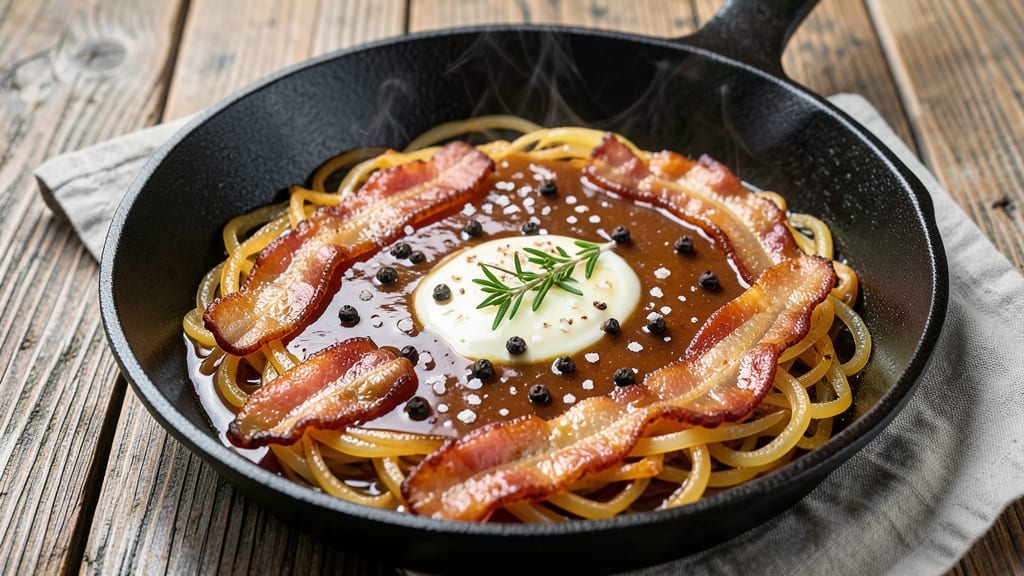
This bacon onion sauce recipe transforms simple ingredients into a smoky, caramelized masterpiece that elevates everything from burgers to pasta. The secret lies in slow-cooking onions until deeply sweetened, then finishing with crispy bacon and a touch of richness—all in just 15 minutes.
No fancy techniques, just layers of flavor built one step at a time. What sets this sauce apart is the balance: sweet caramelized onions meet salty, crispy bacon, then a splash of cream or broth to tie it all together. The result?
A sauce that’s rich enough for drizzling but light enough to coat without overwhelming. It’s the kind of condiment that makes even the simplest meal feel like a restaurant dish. The best part?
This sauce keeps beautifully in the fridge for up to 5 days or freezes for months, so you can make a big batch and have it ready whenever cravings strike.
Whether you’re smothering fries, topping a steak, or stirring into mashed potatoes, this sauce delivers bold, savory depth with minimal effort. Ready to turn pantry staples into something extraordinary? Let’s get started—your taste buds will thank you.
Ingredients for bacon onion sauce
Nine simple ingredients for a sauce that tastes like it simmered all day.
| Ingredient | Amount | Notes |
|---|---|---|
| Yellow Onions 🧅 | 2 whole | Thinly sliced for even cooking |
| Bacon 🥓 | 6 oz | Thick-cut, chopped into bits |
| Unsalted Butter 🧈 | 4 tbsp | Full-fat for richness (trust me) |
| Heavy Cream 🥛 | ½ cup | Or substitute with whole milk |
| Chicken Broth 💧 | ¼ cup | Low-sodium preferred for balance |
| Granulated Sugar 🍚 | 1 tbsp | Enhances caramelization |
| Apple Cider Vinegar 🍎 | 1 tsp | Brightens the sauce (optional) |
| Diamond Crystal Kosher Salt 🧂 | ½ tsp | Adjust to taste at the end |
| Freshly Ground Black Pepper 🌶️ | ¼ tsp | Freshly cracked for best flavor |
Onions are the foundation here—yellows caramelize better than reds, but reds add color if you're serving this over white dishes. Thinly sliced means even cooking, so no one piece gets tough. For bacon, thick-cut gives you crispy edges without too much grease. I grab mine from Costco when I can, but any grocery store bacon works—just chop it into small, even pieces. The butter? Full-fat is non-negotiable—it’s what gives that rich, velvety finish. If you’re worried about dairy, swap it for olive oil, but you’ll lose some of that deep flavor.
No heavy cream? Whole milk or half-and-half works in a pinch, though the sauce will be slightly lighter. Chicken broth can be swapped for vegetable broth if you're vegetarian, but the flavor will lean more savory than smoky. Sugar might seem odd, but it’s what kickstarts that deep caramelization—brown sugar works too. The vinegar is optional but adds a nice tang that balances the richness. For a vegan version, use coconut cream instead of heavy cream and skip the butter, adding extra olive oil for richness. And if you’re in a rush, pre-chopped onions save time, though fresh always tastes better.
This sauce tastes even better the next day as the flavors meld. Store it in an airtight container in the fridge for up to 5 days, or freeze for 3 months—it reheats beautifully. I like to portion it into small jars so I can grab exactly what I need. If it thickens too much after chilling, just stir in a splash of warm water or broth. And if you make extra? Drizzle it on everything—eggs, roasted veggies, even ice cream (yes, really).
Why You'll Love This Recipe
- One-Pan Magic: I swear by this recipe because it’s literally one pan, one spatula, and zero dishes in the sink. The onions caramelize right alongside the bacon—no chopping boards, no stress—just rich, smoky goodness melting into butter like it was meant to.
- Salty-Sweet Crunch: That first bite? Crispy bacon bits floating in creamy, golden sauce with onions so tender they melt. It’s the kind of flavor that makes you pause mid-bite and think, "Wait, how long did this take?" (Answer: 20 minutes.)
- Leftovers That Shine: This sauce doubles as a weeknight hero—dump it over pasta, stir it into mashed potatoes, or slather it on steak. Honestly, I’ve even used it to rescue sad takeout chicken. It’s the unsung MVP of my fridge, and it keeps for days without losing its magic.
- Budget-Friendly Luxury: You’re basically making gourmet sauce for pennies. Bacon and onions stretch across multiple meals, the broth adds depth without costing a fortune, and that heavy cream? It’s the secret weapon that makes everything feel fancy. My wallet and my taste buds thank me every time.
Step-by-step instructions for bacon onion sauce
Here's how to create a rich, caramelized sauce that balances smoky bacon and sweet onions perfectly.
Cook the Bacon Until Crispy
Place the 6 oz bacon in a large skillet over medium heat. Let it cook undisturbed for 5-6 minutes until the fat begins to render and the bacon starts to crisp. This initial rendering creates the flavor base for your sauce—don't rush it.
Once the bacon is golden brown and crispy, use tongs to transfer it to a paper towel-lined plate, leaving all the rendered fat in the skillet. You should have about 3-4 tablespoons of bacon fat remaining—this is your cooking medium. If you need more fat, add 1 tablespoon of the unsalted butter to the skillet and let it melt completely.
Caramelize the Onions
Add the 2 whole yellow onions, thinly sliced, to the skillet with the bacon fat. Cook over medium-low heat for 10-12 minutes, stirring occasionally. The onions should soften and begin to release their moisture, which will evaporate as they cook.
As the onions cook, they'll gradually turn from translucent to deep golden brown—this is when they're properly caramelized. Here's the thing: don't walk away. Watch carefully after 8 minutes because once they start browning, it happens quickly. If they brown too fast, reduce the heat slightly to prevent burning.
Add Sugar and Vinegar for Depth
Sprinkle the 1 tablespoon granulated sugar evenly over the onions and stir to distribute it. Cook for another 2-3 minutes until the sugar dissolves and the onions take on a rich amber hue. This step enhances the caramelization and adds a subtle sweetness that balances the smokiness.
Next, pour in the 1 teaspoon apple cider vinegar and stir well. The vinegar will brighten the flavors and help deglaze the pan, lifting all those delicious browned bits from the bottom. Let it simmer for 1 minute to allow the acidity to mellow slightly and integrate with the onions.
Build the Sauce with Cream and Broth
Pour in the 0.25 cup chicken broth and scrape up any browned bits from the bottom of the skillet with a wooden spoon. These bits are packed with flavor—don't miss them. Let the mixture simmer for 2-3 minutes until the broth reduces slightly and the onions are fully tender.
Reduce the heat to low and gradually whisk in the 0.5 cup heavy cream. Stir continuously to prevent curdling. The sauce should begin to thicken as it simmers gently for 3-4 minutes. If it becomes too thick, add 1 tablespoon of water or broth to reach your desired consistency.
Season and Finish
Return the crispy bacon to the skillet and stir to combine. Taste the sauce and adjust the seasoning with the 0.5 teaspoon diamond crystal kosher salt and 0.25 teaspoon freshly ground black pepper. The sauce should be rich, slightly sweet, and perfectly balanced between smoky and tangy.
Let the sauce sit off the heat for 2-3 minutes to allow the flavors to meld. Serve immediately over pasta, mashed potatoes, or grilled meats. This sauce keeps well in the refrigerator for up to 3 days, and it reheats beautifully—just warm it gently on the stove and stir occasionally to prevent scorching.
Pro Tips For Making Bacon Onion Sauce
- CUT BACON IN HALF: Thick-cut bacon takes forever to render fat—skip the wait. Slice each strip in half lengthwise before cooking. The fat melts faster, and you’ll have that golden, crispy edge sooner. (Yes, it looks weird, but it’s worth the extra 30 seconds of prep.)
- SWEAT ONIONS LOW AND SLOW: I used to rush this step, and my onions turned to mush. Instead, cook them over medium-low heat with a pinch of salt, stirring occasionally. It takes 8-10 minutes, but the result is caramelized, not sad. Cover the pan for the last 2 minutes if they’re browning too fast—steam helps soften them without burning.
- SKIP THE BROTH BOIL: Dumping cold chicken broth into hot cream? That’s a recipe for curdling. Warm the broth first—just heat it until it’s barely simmering, then whisk it into the cream. Your sauce will stay silky, not lumpy. (Trust me, I’ve seen the aftermath.)
- FINISH WITH A SPLASH OF ACID: The sauce tastes rich and heavy? A tablespoon of apple cider vinegar or lemon juice brightens it up instantly. Add it off the heat, stir, and taste—it balances the cream and bacon fat without overpowering. (I keep a small bottle of vinegar by the stove just for this.)
Make-ahead tips for this recipe
Prep Ahead for Efficiency
Slice the 2 yellow onions thinly and store them in an airtight container in the fridge for up to 3 days. I like to use a Glasslock container because it keeps them crisp. This saves 10 minutes of prep time when you're ready to cook.
Chop the bacon into bits and store it in the freezer if you're not using it right away—just thaw it in the fridge overnight. 🧅
Slow-Cooker Option
For hands-off cooking, combine all ingredients (except bacon and cream) in a 3-quart slow cooker on low heat for 4-5 hours. Stir in the bacon and cream during the last 30 minutes to finish.
This method works perfectly for meal prep—just reheat gently on the stove. The slow cooker keeps flavors deep and onions perfectly caramelized without watching the stove. ⏰
Freezer-Friendly Batches
Double the recipe and freeze half in quart-sized mason jars for future use. When ready to use, thaw overnight in the fridge, then reheat on the stove with 1 tablespoon water to loosen the sauce.
I label my jars with the date and "Bacon Onion Sauce" so I don't forget what's inside. Freezing preserves the rich flavors beautifully—it tastes even better after thawing! ❄️
Reheat Like a Pro
For best results, reheat the sauce in a small saucepan over low heat with a splash of water or broth to prevent scorching. Stir constantly and keep the heat gentle—this sauce thickens as it cools.
If it separates slightly, whisk vigorously until smooth. I avoid microwaving because it can make the cream separate and the onions turn rubbery. 🔥
Sauce Storage Hacks
Store leftovers in small glass jars (like Weck jars) for easy portioning. The sauce actually improves overnight as the flavors meld. If it thickens too much after refrigeration, thin it with 1 tablespoon warm water or broth.
I keep a jar in my fridge at all times—it's perfect for quick meals like fried eggs or grilled cheese sandwiches. 💡
Nutrition facts
Frequently asked questions
Can I make this sauce without heavy cream?
For a lighter version, substitute with 1/2 cup whole milk or 1/4 cup half-and-half. For a dairy-free option, use 1/2 cup coconut cream (full-fat) or olive oil to maintain richness. The sauce will be slightly thinner but still packed with flavor. If using coconut cream, add 1 teaspoon cornstarch mixed with 1 tablespoon water to thicken it properly.
How do I prevent the onions from burning while caramelizing?
Keep the heat at medium-low and stir frequently—especially after 8 minutes when they start browning. If they darken too quickly, reduce heat to low and add 1 tablespoon water to steam them gently. Never walk away! The key is patience—deep caramelization takes 10-12 minutes, not rushing. A splatter screen helps too if your pan gets too hot.
What’s the best way to use this sauce?
This versatile sauce elevates everything! Drizzle it over mac and cheese, steak or burgers, or mashed potatoes. Stir it into fried rice or pasta for instant richness. Even grilled corn or fried chicken become gourmet with a spoonful. For extra flair, mix 1 tablespoon into mayo for a smoky sandwich spread, or dollop it on baked potatoes with cheese.
Why did my sauce turn grainy or separate?
This usually happens from too-high heat or sudden temperature changes. To fix it, whisk in 1 tablespoon cold water or broth while stirring constantly over low heat. For future batches, add the cream gradually while whisking vigorously to prevent curdling. If using store-bought broth, choose low-sodium to avoid over-salting, which can also cause separation.
Can I make this sauce in an Instant Pot?
Yes! Cook the bacon first in the Instant Pot’s sauté function until crispy, then remove it. Sauté the onions on medium-high for 5 minutes, add sugar and vinegar, then pour in broth. Seal the lid and cook on high pressure for 2 minutes. Quick-release the pressure, stir in cream, and return the bacon. The sauce will be thinner but still delicious—reduce it further on the stove if needed.