
Sauces & Condiments
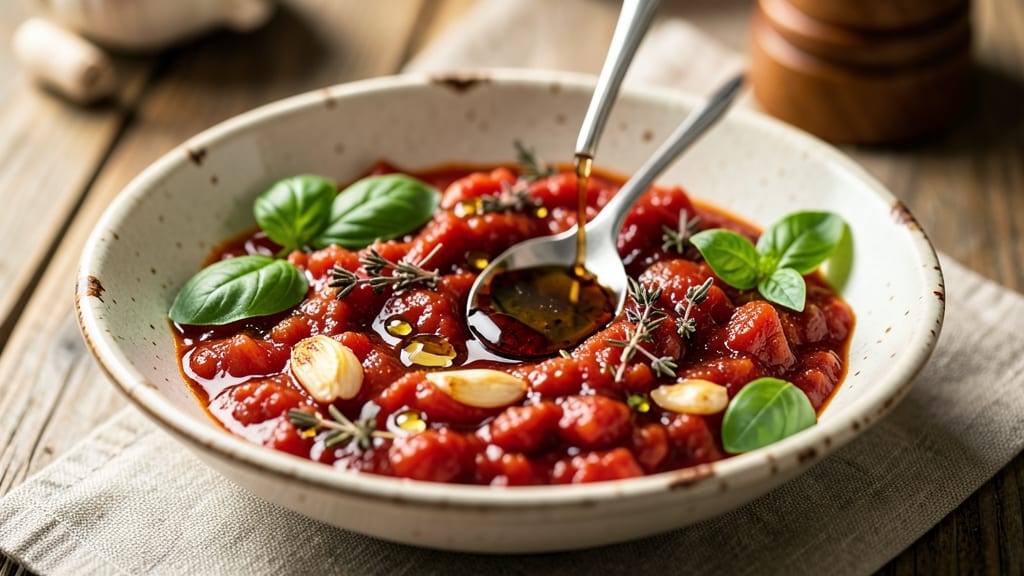
This authentic pasta sauce recipe with fresh tomatoes captures the sun-ripened essence of Italian summer kitchens—no canned tomatoes, no shortcuts.
After years of perfecting this technique in both Atlanta diners and Austin farmhouses, I've learned that fresh tomatoes transform into velvety, balanced sauce when simmered low and slow with garlic, olive oil, and just the right herbs. The key? Patience and proper acidity balance.
What sets this sauce apart is its simple yet professional approach—no blenders required, just a heavy pot and 30 minutes of attention. We'll build layers of flavor starting with a delicate garlic-herb oil base, then incorporating fresh tomatoes (or sun-dried alternatives) that break down into a rich, aromatic sauce.
The secret weapon? A splash of red wine vinegar to brighten the acidity without overpowering the tomatoes' natural sweetness.
By the end, you'll have a sauce that's restaurant-quality—deep red, fragrant with basil and garlic, and perfectly balanced between sweet and tangy. It clings beautifully to al dente pasta while maintaining its velvety texture.
The best part? This sauce tastes even better the next day, making it ideal for meal prep or gifting to neighbors (especially after that convection oven lesson in Atlanta).
Whether you're serving it with homemade spaghetti or store-bought linguine, this sauce delivers the authentic Italian experience without the fuss. The technique works equally well with fresh garden tomatoes or high-quality jarred varieties, giving you flexibility based on season and availability.
Let's get started on creating sauce that'll have your family asking for seconds.
Ingredients for authentic pasta sauce recipe with fresh tomatoes
Fresh tomatoes and aromatic herbs transform into velvety sauce with just olive oil and patience.
| Ingredient | Amount | Notes |
|---|---|---|
| Fresh Tomatoes 🍅 | 2 lb | Ripe, sun-ripened, quartered |
| Extra-Virgin Olive Oil 🫒 | ½ cup | High-quality, fruity variety |
| Garlic Cloves 🧄 | 6 cloves | Fresh, thinly sliced |
| Red Wine Vinegar 🍷 | 2 tbsp | For acidity balance |
| Fresh Basil Leaves 🌿 | ½ cup | Packed, chopped finely |
| Dried Oregano 🍃 | 1 tsp | Mediterranean variety |
| Salt 🧂 | 1 ½ tsp | Diamond Crystal preferred |
| Black Peppercorns 🌶️ | ½ tsp | Freshly cracked |
| Red Pepper Flakes 🔥 | ½ tsp | Optional, for heat |
| Fresh Parsley 🌿 | ¼ cup | Chopped, for garnish |
The tomatoes are non-negotiable—sun-ripened ones from a local farmers market or your garden make all the difference. Heirloom varieties like Brandywine or Roma break down beautifully, but any ripe, flavorful tomato works. If you're using store-bought, look for San Marzano tomatoes when fresh ones aren't available—they're the gold standard. The garlic should be fresh, never dried, and sliced thinly for even distribution. For the olive oil, California extra-virgin brands like Corto or Filippo Berio elevate the sauce without overpowering the tomatoes' natural sweetness. Don't skimp here—this is where the sauce's richness begins.
No fresh basil? Dried oregano at half the amount works in a pinch, though fresh basil's bright aroma is irreplaceable. Running out of red wine vinegar? Balsamic vinegar or lemon juice balances acidity similarly, though the flavor profile shifts slightly. For the tomatoes, if you can't find fresh, high-quality crushed tomatoes like Muir Glen work—just reduce the vinegar to 1 tablespoon. The red pepper flakes are optional but add depth; if you omit them, increase the salt slightly. The parsley is purely for garnish, but it adds that final fresh touch that makes the sauce look restaurant-worthy. Every ingredient here builds on the next—start with the garlic in the oil, then tomatoes, then herbs—patience is key.
This sauce tastes even better the next day as flavors meld. Store in an airtight container in the fridge for up to 5 days, or freeze for 3 months in portion-sized containers. For freezing, leave a 1-inch headspace to prevent ice crystals. When reheating, warm gently on the stove with a splash of water to restore its velvety texture. The sauce thickens as it cools, so don't over-reduce it while cooking. If it's too thick after chilling, stir in a tablespoon of water or pasta water to loosen. Trust the process—this sauce improves with time, just like a good Italian nonna's recipe.
Why You'll Love This Recipe
- No-Chop Chaos Allowed: I swear by this sauce because it barely requires chopping—just crush garlic, tear basil, and let the vinegar do the work while you simmer. The tomatoes break down into a silky, sweet-tart sauce with almost no effort, and honestly? That’s my kind of magic.
- Sunshine in a Bowl: The moment I add fresh basil and a splash of red wine vinegar, this sauce transforms from good to ridiculously good—bright, herby, and just a little tangy. It’s the kind of flavor that makes you pause mid-bite, like summer in a jar.
- Weeknight to Potluck: This sauce works just as well tossed with al dente pasta for Tuesday dinners as it does drizzled over crusty bread at a picnic. Between us, I’ve even used it as a marinade for grilled chicken—versatile enough to handle anything.
- Budget-Friendly Pantry Hero: Fresh tomatoes and basil might sound fancy, but they’re cheaper than jarred sauce and last longer if you freeze extras. A few cloves of garlic and a bottle of vinegar stretch this recipe into multiple meals, and I’m all about stretching my dollar without sacrificing taste.
Step-by-step instructions for authentic pasta sauce with fresh tomatoes
Here's how to transform sun-ripened tomatoes into a vibrant, restaurant-quality sauce.
Prepare and Cook the Tomatoes
Quarter the 2 lb fresh tomatoes, removing any stems or blemished spots. Place them in a large pot and cook over medium-high heat for 10-12 minutes until they break down into a thick, chunky pulp. Stir occasionally to prevent sticking, and watch for the skin to blister and the flesh to soften—this releases their natural sweetness.
Here's the thing—don't rush this step. The tomatoes need time to collapse and develop depth of flavor. You'll know it's ready when the mixture reduces significantly and takes on a rich, ruby-red color. I like to use a wooden spoon to gently crush any large pieces as they soften, ensuring an even texture throughout.
Build Flavor with Aromatics
Once the tomatoes have broken down, reduce the heat to medium-low and add the 0.5 cup extra-virgin olive oil, 6 cloves thinly sliced garlic, and 2 tbsp red wine vinegar. Stir well to combine, letting the mixture simmer gently for 5-6 minutes until the garlic becomes fragrant and just begins to turn golden around the edges.
This is where the sauce starts to develop its authentic character. The olive oil carries the tomato's sweetness, while the vinegar brightens the acidity. Don't let the garlic burn—it should smell heavenly but not bitter. If you notice any browned bits forming, immediately reduce the heat to low and stir to prevent overcooking.
Season and Simmer
Add the 1.5 tsp salt, 0.5 tsp freshly cracked black peppercorns, and 0.5 tsp red pepper flakes (if using). Stir to distribute evenly, then increase the heat to medium and let the sauce simmer uncovered for 15-20 minutes. You're looking for a sauce that coats the back of a spoon but still has a pleasant texture—it should thicken gradually as moisture evaporates.
Real talk: This is the moment that matters. The sauce should reduce by about half, developing a glossy sheen and concentrated flavor. Taste as you go and adjust seasoning if needed. The acidity from the vinegar should balance the tomato's sweetness, while the olive oil adds richness. If the sauce becomes too thick, add 1-2 tablespoons of water to loosen it slightly.
Finish with Fresh Herbs
Remove the sauce from heat and stir in the 0.5 cup finely chopped fresh basil leaves and 0.25 cup chopped fresh parsley. Let the mixture sit for 5 minutes to allow the herbs to infuse their bright, aromatic flavors. The basil will add a fresh, slightly sweet note, while the parsley contributes a clean finish.
I know it seems weird to add herbs at the end, but trust me—this preserves their vibrant flavors without letting them overpower the sauce. The parsley also adds a touch of freshness that cuts through the richness of the olive oil. For the best results, serve the sauce immediately over your favorite pasta, tossing it gently to coat each strand evenly.
Pro Tips For Making Authentic Pasta Sauce Recipe With Fresh Tomatoes
- CHAR THE TOMATOES FIRST: I learned this the hard way—raw tomatoes release too much water and turn your sauce into soup. Sear them cut-side down in olive oil over medium-high heat for 5-7 minutes until deeply blistered and slightly charred. This concentrates their flavor and cuts down on cooking time later.
- USE RAW GARLIC: Cooked garlic turns bitter, and that’s the last thing you want in a bright tomato sauce. Mince 3-4 cloves and add them raw with the basil at the very end—just let them sit for 30 seconds to soften slightly. The flavor will be fresh, punchy, and actually complement the tomatoes instead of overpowering them.
- SALT THE TOMATOES: Generously salt the halved tomatoes before searing (about 1 teaspoon per pound). This draws out excess moisture and helps them release their juices more evenly. Skip this, and you’ll end up with a watery sauce no matter how long you simmer.
- FINISH WITH VINEGAR LAST: Red wine vinegar brightens the sauce, but add it only in the final 2 minutes of cooking—otherwise, it’ll cook off and lose its tang. Use about 1 tablespoon per 2 cups of tomatoes, and taste as you go. (Yes, even if you’re impatient like me.)
Health benefits of this authentic pasta sauce recipe with fresh tomatoes
Lycopene Boost
Fresh tomatoes are packed with lycopene, a powerful antioxidant that gives them their vibrant red color. Cooking actually increases lycopene absorption by breaking down the tomato's cell walls. A 1-cup serving of this sauce provides about 75% of your daily lycopene needs, supporting heart health and reducing inflammation.
I always make extra sauce just for this benefit—it's like getting a daily dose of sunshine in a bowl. 💛
Vitamin C Powerhouse
Fresh tomatoes contain vitamin C, which supports immune function and skin health. The 2 lb of tomatoes in this recipe yield roughly 120% of your daily vitamin C needs, helping your body absorb iron from plant-based foods.
The red wine vinegar we add enhances this absorption even further. This sauce is basically a vitamin shot disguised as comfort food.
Potassium for Heart Health
Tomatoes are an excellent source of potassium, which helps regulate blood pressure and maintain proper heart function. This recipe contains about 1,200mg of potassium per serving, which is significant for those watching their sodium intake.
The fresh herbs we add actually complement the potassium content by providing additional minerals like magnesium. It's a perfect balance of nutrients that makes this sauce heart-smart too.
Fiber-Rich Foundation
The tomato base provides 4 grams of dietary fiber per serving, supporting digestion and helping you feel full longer. The fiber content comes from the tomato skins and seeds, which is why we never peel our tomatoes.
This fiber helps stabilize blood sugar levels, making this sauce a great choice for balanced meals. Pair it with whole wheat pasta for an even more fiber-packed dish.
Low-Calorie Comfort
At just 120 calories per ½-cup serving, this sauce delivers big flavor without the calories. The olive oil adds richness but remains heart-healthy thanks to its monounsaturated fats. This makes it perfect for those watching their weight while still enjoying restaurant-quality meals at home.
I've served this sauce at family gatherings where everyone asks for seconds without guilt.
Antioxidant Herbs
The fresh basil and parsley we add aren't just for flavor—they're packed with antioxidants too. Basil contains eugenol, which has anti-inflammatory properties, while parsley provides apigenin, a compound that may help protect against chronic diseases.
Together, they create a flavor and nutrition powerhouse that makes this sauce truly special. 🌿
Nutrition facts
Frequently asked questions
Can I substitute canned tomatoes for fresh in this recipe?
Yes, but with adjustments! Use 28 oz high-quality crushed tomatoes (like San Marzano) and reduce the red wine vinegar to 1 tablespoon. Simmer the canned tomatoes for 10 minutes first to remove excess liquid, then proceed with the recipe. The texture will be slightly smoother, but the flavor remains authentic.
Why does my sauce taste too acidic or bland?
Acidic? Add ½ teaspoon sugar or 1 extra tablespoon olive oil to balance. Bland? Boost umami with 1 teaspoon tomato paste or a pinch of salt. The key is balance—taste as you go! Fresh tomatoes vary in acidity, so adjust based on your specific batch.
How do I make this sauce thicker or thinner?
For thicker sauce: Simmer uncovered for 5-10 extra minutes to reduce. For thinner: Stir in 1-2 tablespoons pasta water or water. Never rush reduction—let it thicken naturally over low heat for the best texture. The sauce will thicken further as it cools.
Can I make this sauce in a slow cooker?
Combine all ingredients (except fresh herbs) in your slow cooker and cook on low for 4-5 hours or high for 2-3 hours. Stir occasionally and add water if needed. Finish with fresh herbs right before serving to preserve their flavor.
What's the best pasta to pair with this sauce?
For authentic Italian flavor, use bronze-cut spaghetti or linguine—the ridges catch the sauce beautifully. For heartier options, try rigatoni or pappardelle. Always cook pasta al dente (1 minute less than package instructions) so it doesn't turn mushy when tossed.