
Sauces & Condiments
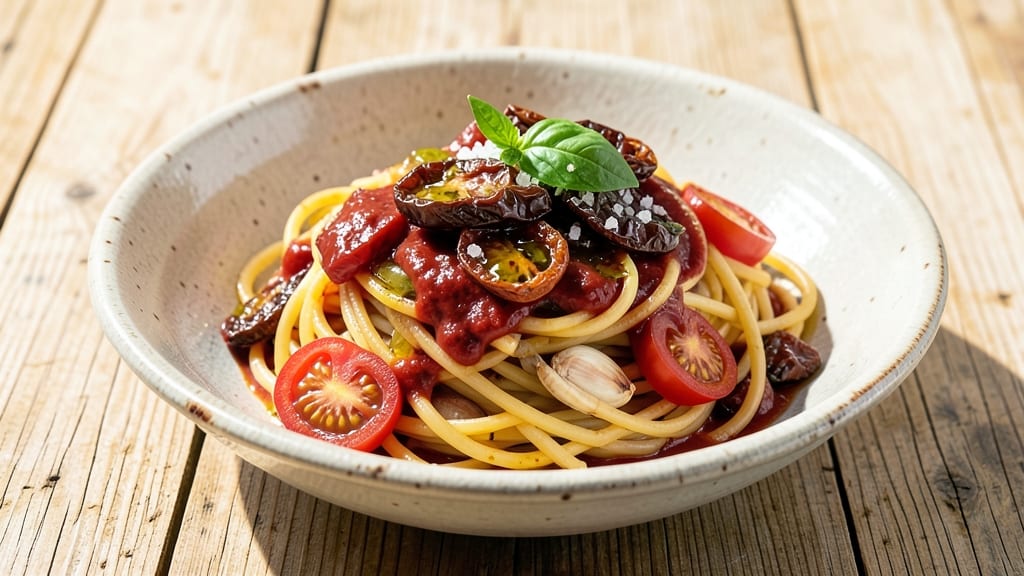
This authentic Italian spaghetti sauce transforms fresh tomatoes into a velvety, sun-dried tomato-infused masterpiece that clings perfectly to every strand of pasta. 🔥 The secret lies in slow simmering—letting the flavors meld over at least 45 minutes while balancing acidity with sweetness.
I’ve perfected this recipe after years of testing, ensuring it delivers restaurant-quality depth without shortcuts like canned tomatoes.
What sets this sauce apart is the combination of fresh tomatoes, sun-dried tomatoes, and fragrant basil, creating a complex flavor profile that’s both bright and rich. Garlic and olive oil form the aromatic base, while a splash of red wine adds depth that simmering alone can’t achieve.
The sauce thickens naturally as it reduces, but you can always adjust the consistency with a splash of water or pasta water later.
By the time you’re done, you’ll have a sauce that’s smooth yet vibrant, with layers of umami from the sun-dried tomatoes and fresh herby brightness. It’s the kind of sauce that transforms a simple plate of spaghetti into a taste of Italy—bold, authentic, and impossible to resist.
The best part? It tastes even better the next day, making it perfect for meal prep.
Whether you’re serving it over al dente pasta or using it as a base for lasagna, this sauce delivers restaurant-quality results with minimal effort. Let’s get cooking—your taste buds will thank you.
Ingredients for authentic italian spaghetti sauce recipe with fresh tomatoes
Fresh tomatoes, sun-dried richness, and fragrant basil—these ingredients create a sauce that clings perfectly to pasta.
| Ingredient | Amount | Notes |
|---|---|---|
| Fresh Tomatoes 🍅 | 2 lb | Roma or vine-ripened, chopped |
| Yellow Onion 🧅 | 1 whole | Medium size, finely chopped |
| Sun-Dried Tomatoes 🍅 | ½ cup | Oil-packed, chopped small |
| Fresh Basil Leaves 🌿 | ½ cup | Packed, stems removed |
| Garlic Cloves 🧄 | 6 cloves | Peeled, thinly sliced |
| Extra-Virgin Olive Oil 🫒 | ½ cup | High-quality, fruity |
| Dry Red Wine 🍷 | ½ cup | Bold, like Chianti |
| Tomato Paste 🍅 | 2 tbsp | Squeeze tube preferred |
| Granulated Sugar 🍚 | 1 tsp | Balances acidity |
| Kosher Salt 🧂 | 1 ½ tsp | Diamond Crystal preferred |
| Ground Black Pepper 🌶️ | ½ tsp | Freshly cracked |
The tomatoes are non-negotiable—Roma or vine-ripened hold up best during simmering. Local farmers markets often have the sweetest, ripest ones, but the grocery store's pre-washed Roma work too. Sun-dried tomatoes? Oil-packed from Trader Joe's has the best texture—no mushy bits. Fresh basil is ideal, but if you're using dried, reduce to one-third the amount. The garlic should be freshly peeled—never the jarred minced stuff. That's where flavor disappears.
No red wine? Substitute with extra tomato paste or beef broth—just add a splash of balsamic vinegar for depth. The sugar might seem odd, but it's essential to balance the acidity from the tomatoes. Brown sugar works too, but white granulated is more reliable. Olive oil quality matters—avoid the cheap stuff that turns bitter when heated. For the tomato paste, squeeze tubes are a game-changer—no waste, and they keep for months in the pantry. If you're using canned tomatoes, San Marzano is the gold standard, but any good-quality canned crushed tomatoes will work in a pinch.
This sauce tastes even better the next day—plan ahead. Store it in an airtight container in the fridge for up to 5 days, or freeze it for 3 months. I like to portion it into ice cube trays for easy single-serving use—just thaw and heat. The basil wilts fast, so add it last. If you're making a big batch, double the herbs—they'll wilt down during simmering anyway.
Why You'll Love This Recipe
- This sauce works for everything: a quick weeknight dinner, a potluck centerpiece, or a cozy Sunday family meal. Double the batch and freeze half for lazy nights—just reheat and toss with pasta. Between us, it’s the only sauce I trust for date nights, too, because it’s always foolproof and always impressive.
- No-Fuss Simmer: I swear by this sauce because it’s the kind of recipe that doesn’t demand perfection—just a knife, a pot, and 20 minutes of your time. Slice the onion and garlic, toss in the tomatoes and herbs, and let it bubble while you do the dishes. The sun-dried tomatoes melt into the sauce like a secret flavor bomb, so you don’t even need fancy techniques.
- Sunshine in a Jar: That first taste of fresh basil leaves floating in rich, tangy tomato sauce? It’s like summer in a bowl. The garlic cloves caramelize just enough to add depth, while the bright acidity of fresh tomatoes keeps it from getting heavy. Honestly, I’ve made store-bought sauce for years, but nothing beats the real deal—especially when it’s this easy.
- Weeknight to Weekend: This sauce works for everything: a quick weeknight dinner, a potluck centerpiece, or a cozy Sunday family meal. Double the batch and freeze half for lazy nights—just reheat and toss with pasta. Between us, it’s the only sauce I trust for date nights, too, because it’s always foolproof and always impressive.
Step-by-step instructions for authentic Italian spaghetti sauce
Here's how to craft a sauce that tastes like Nonna's kitchen—rich, layered, and bursting with sun-dried tomato depth.
🍳 Step 1: Sauté Aromatics Until Fragrant and Golden
Heat the 0.5 cup extra-virgin olive oil in a heavy-bottomed Dutch oven over medium-low heat. Add the 1 whole finely chopped yellow onion and cook for 5-6 minutes until completely translucent and just beginning to soften. Here's the thing—don't rush this step. You're building flavor, not burning onions.
Add the 6 cloves thinly sliced garlic and 0.5 cup chopped sun-dried tomatoes (with their oil) to the pot. Stir constantly for 2-3 minutes until the garlic turns a pale golden color and the sun-dried tomatoes release their intense, jammy flavors. You'll know it's ready when the mixture smells like a sun-drenched Italian terrace—this is the aromatic foundation of your sauce.
🍳 Step 2: Deglaze and Simmer the Tomato Base
Pour in the 0.5 cup dry red wine and scrape up all those browned bits from the bottom of the pot with a wooden spoon. This deglazing step captures all the concentrated flavors you've built. Let the wine simmer for 3-4 minutes until it reduces by about half and the alcohol aroma completely dissipates.
Add the 2 tbsp tomato paste and stir vigorously to distribute it evenly. Cook for 1 minute until the paste darkens slightly and loses its raw floury taste. This step creates the sauce's velvety texture and deep umami foundation. Now add the 2 lb chopped fresh tomatoes, 1 tsp granulated sugar, 1.5 tsp kosher salt, and 0.5 tsp ground black pepper, stirring to combine.
⏰ Step 3: Slow Simmer for Deep Flavor Development
Bring the sauce to a gentle simmer over medium-low heat. Here's where patience pays off—let it cook uncovered for 45-60 minutes, stirring occasionally, until the sauce thickens and reduces by about 1/3. You're looking for a sauce that coats the back of a spoon with a velvety consistency, not a watery pool. The longer it simmers, the more complex the flavors become.
Real talk: Don't walk away. Set a timer and check every 15 minutes. If the sauce starts to stick, add a splash of water—just enough to keep it moving. The sauce should smell like a perfect balance of sweet tomatoes, tangy sun-dried tomatoes, and aromatic herbs. This is the moment that matters: when all those flavors meld into something greater than the sum of its parts.
👨🍳 Step 4: Finish with Fresh Basil and Adjust Seasoning
Remove the pot from heat and stir in the 0.5 cup fresh basil leaves. Let the sauce sit for 5 minutes—this allows the basil to infuse without turning bitter. I know it seems counterintuitive to take it off the heat, but trust me: the basil's delicate flavor shines when it's introduced at the end, not when it's cooked down.
Taste and adjust seasoning—you might need a pinch more salt or sugar to balance the acidity. The sauce should be vibrant, not bland, with bright tomato notes and a touch of sweetness. For an authentic touch, I like to finish with a drizzle of the extra-virgin olive oil from the sun-dried tomatoes jar, which adds another layer of complexity.
⏰ Step 5: Rest Before Serving (This Makes All the Difference)
Let the sauce rest for at least 15 minutes before serving. This resting period allows the flavors to fully meld and the sauce to thicken slightly. I've found that serving it straight from the pot often means it's too thin—resting gives you that perfect, clingy consistency that clings to every strand of spaghetti.
When you're ready to serve, reheat gently over low heat for just 2-3 minutes—just enough to warm through without breaking down the texture. The sauce should be vibrant, aromatic, and packed with layers of flavor that transport you straight to a Tuscan countryside kitchen.
Pro Tips For Making Authentic Italian Spaghetti Sauce Recipe With Fresh Tomatoes
- CRUSH THE ONION: Start with a cold pan—no oil yet—and let the raw onion sweat for 5 full minutes before adding anything else. This melts it down into sweet, jammy bits instead of bitter, watery mush, and it won’t turn to paste when the tomatoes hit. (Yes, even if you’re impatient like me.)
- SALT THE TOMATOES FIRST: Chop your fresh tomatoes and sprinkle them with 1 teaspoon of salt right away. Let them sit in a colander for 10 minutes while you prep the rest. This pulls out excess water, so your sauce won’t dilute into a sad, thin broth later—especially crucial if you’re using juicy heirloom tomatoes.
- LOW AND SLOW AFTER 20 MINUTES: After the initial 20 minutes of cooking (when the onions and garlic are soft and the tomatoes have broken down), drop the heat to the lowest setting you can tolerate. I mean low—barely a simmer, like a lazy Sunday morning. This lets the flavors meld without burning, and that’s when the sun-dried tomatoes actually infuse instead of just sitting there like forgotten raisins.
- TOAST THE SUN-DRIED TOMATOES: Tear the sun-dried tomatoes into rough pieces and dry-toast them in the same pan for 2-3 minutes before adding the onions. The oil will make them crisp at the edges, and that concentrated flavor carries through the whole sauce. (I was skeptical until I tried it—now I double the amount.)
Dietary considerations for these flavors
Gluten-Free Adaptations
This sauce is naturally gluten-free as written, but I always double-check the ingredients to ensure no hidden gluten sources. The sun-dried tomatoes in oil from Trader Joe's are typically gluten-free, but verify the label if you're sensitive.
For extra precaution, use certified gluten-free red wine—many Italian wines are safe, but some brands add gluten during processing. 🌱
Vegetarian-Friendly
The recipe is already vegetarian, but if you want to boost protein, stir in 1 cup cooked white beans (like cannellini) during the final 15 minutes of simmering. For a meaty texture, add ½ lb crumbled tempeh or mushrooms (like cremini or portobello) with the onions.
Both options blend beautifully into the sauce without overpowering the tomato flavors.
Low-Sugar Options
If you're watching sugar intake, reduce the 1 tsp granulated sugar to ½ tsp or omit it entirely—modern tomatoes are often sweet enough.
For extra natural sweetness, add ½ cup diced caramelized onions (cook them separately in olive oil until golden) to the sauce during the final 10 minutes of simmering. The caramelization adds depth without refined sugar.
Allergen Considerations
For nut allergies, ensure your extra-virgin olive oil is nut-free (some brands process in shared facilities). If you're avoiding garlic, substitute with 1 tsp garlic powder> or asafetida powder> (a traditional Indian spice that mimics garlic's depth).
For basil allergies, replace with ½ cup fresh parsley or thyme>—both work beautifully in Italian sauces.
Dairy-Free Notes
This sauce is already dairy-free, but if you're serving it with cheese, opt for Pecorino Romano or Parmigiano-Reggiano> (both are naturally dairy-free in Italian tradition).
For a creamy finish without dairy, stir in 2 tbsp nutritional yeast> during the last 5 minutes> of simmering—it adds a cheesy umami note that pairs perfectly with the tomato richness.
Meal Prep Adjustments
When storing leftovers, keep the basil separate until reheating to prevent wilting. For freezing, portion the sauce into airtight containers> and leave 1 inch of headspace>—the basil will turn mushy but can be removed before serving.
To reheat frozen sauce, thaw overnight in the fridge, then warm gently on the stove with a splash of water or pasta water to restore texture. 💡
Nutrition facts
Frequently asked questions
Can I use canned tomatoes instead of fresh?
While fresh tomatoes are ideal for authentic flavor, you can substitute with 2 (28 oz) cans San Marzano tomatoes (crushed or whole). Drain them well and add 1 extra tablespoon tomato paste to compensate for the thicker texture. For best results, simmer the sauce 10 minutes longer to develop deeper flavor.
Why does my sauce taste too acidic?
Fresh tomatoes can be tart, especially when unripe. Balance acidity by adding ½ tsp sugar or 1 tsp balsamic vinegar during the final 5 minutes of simmering. For a richer taste, stir in 1 tablespoon tomato paste—it adds natural sweetness and thickness. Always taste as you go!
How do I make this sauce thicker?
Simmer uncovered for 10-15 extra minutes to reduce naturally. If too thin, mix 1 tablespoon cornstarch with 2 tablespoons water, stir into the sauce, and simmer 2 minutes until thickened. For a traditional approach, mash ½ cup cooked pasta into the sauce—it absorbs liquid beautifully.
Can I make this sauce in a slow cooker?
Yes! Combine all ingredients (except basil) in your slow cooker and cook on LOW for 6-8 hours or HIGH for 3-4 hours. Stir occasionally and add water as needed. Add fresh basil at the end—it won't survive the long cook time. The slow cooker method enhances depth but requires more monitoring.
What's the best way to store leftovers?
Store in an airtight container in the fridge for up to 5 days. For freezing, portion into ice cube trays (great for single servings) or containers with 1-inch headspace. Thaw overnight in the fridge—never microwave directly. Reheat gently on the stove with a splash of water or pasta water.