
Sauces & Condiments
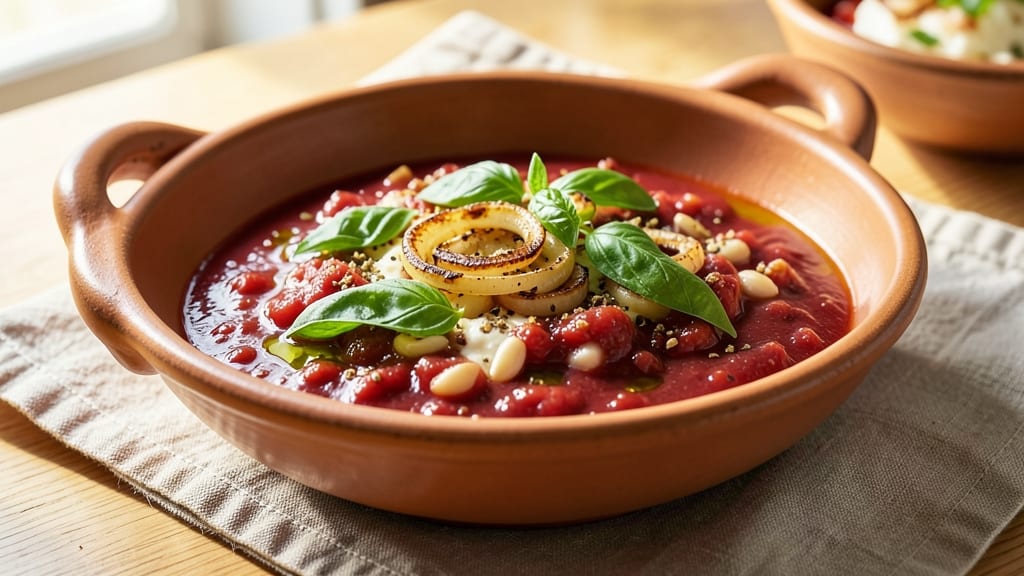
This authentic Italian red pasta sauce transforms simple ingredients into the kind of sauce that makes every bite of pasta feel like a trip to Rome. The secret lies in slow simmering—allowing the flavors to develop depth and complexity without overpowering the natural sweetness of the tomatoes.
I've perfected this recipe over years of testing, ensuring it delivers the rich, velvety texture and balanced acidity that defines classic Italian cuisine.
What sets this sauce apart is the use of San Marzano tomatoes, known for their sweetness and low acidity, paired with fresh basil and garlic for that unmistakable Italian flavor profile.
The sauce simmers low and slow, breaking down the tomatoes into a luscious, thick consistency that clings perfectly to pasta. No shortcuts—just time and patience, which is exactly what makes it taste so authentic.
The result is a sauce that's bold yet balanced, with layers of tomato sweetness, aromatic garlic, and bright basil notes. It's the kind of sauce that elevates even the simplest pasta dish into something extraordinary.
Whether you're serving it with spaghetti, penne, or your favorite pasta shape, this sauce will bring a taste of Italy straight to your kitchen.
Ready in about 45 minutes, this sauce is perfect for meal prep—it tastes even better the next day as the flavors continue to meld. Store it in the fridge for up to a week or freeze for longer storage.
Here's how to make it—step by step—for that restaurant-quality taste at home.
Ingredients for authentic italian red pasta sauce
Simple ingredients that transform into restaurant-quality Italian red sauce.
| Ingredient | Amount | Notes |
|---|---|---|
| San Marzano Tomatoes 🍅 | 28 oz | Canned, whole or crushed |
| Extra-Virgin Olive Oil 🫒 | ½ cup | High quality, fruity |
| Garlic Cloves 🧄 | 4 cloves | Peeled, roughly chopped |
| Yellow Onion 🧅 | 1 whole | Medium size, finely chopped |
| Fresh Basil Leaves 🌿 | ½ cup | Packed, stems removed |
| Dried Oregano 🍃 | 1 tsp | Italian or Mediterranean blend |
| Red Wine Vinegar 🍷 | 1 tbsp | Bold, dry variety |
| Kosher Salt 🧂 | 1 ½ tsp | Diamond Crystal preferred |
| Black Pepper 🌶️ | ½ tsp | Freshly ground preferred |
| Sugar 🍬 | 1 tsp | Optional, balances acidity |
San Marzano tomatoes are non-negotiable here—their sweetness and low acidity make all the difference. Trader Joe's and Whole Foods carry them year-round, but Italian markets have the best selection. If you can't find them, whole peeled tomatoes work too, but you'll need to peel and crush them yourself. The olive oil should be fruity and peppery—California Early Harvest or Colavita are my go-tos. Garlic? Fresh is a must, but if you're in a pinch, powdered garlic at half the amount won't ruin it, just won't be as aromatic.
No red wine vinegar? Balsamic vinegar at half the amount works, but it'll add a slightly sweeter note. Fresh basil is ideal, but dried basil at one-third the amount gets you close in a bind. The dried oregano should be Italian-style if possible—Penzeys or La Bella brands have the best flavor. Want to skip the sugar? The tomatoes' natural sweetness might need a pinch of honey instead, though it's not traditional. The onions can be swapped for shallots if you're feeling fancy, but regular yellow onions are totally fine.
This sauce tastes even better the next day as the flavors meld. Store it in an airtight container in the fridge for up to 1 week, or freeze for 6 months in portions. I like to freeze it in ice cube trays for easy single-use portions—just pop one into your pasta water to thaw. The sauce thickens as it cools, so add a splash of water or pasta water when reheating if it's too thick. Always taste before serving—adjust salt and pepper as needed.
Why You'll Love This Recipe
- No Chopping Hassle: I swear by this sauce because it’s that simple—just dice one onion and crush a few garlic cloves. The San Marzano tomatoes do all the heavy lifting, so you’re really just simmering while you sip your wine. (Yes, even on a Tuesday night.)
- Taste Like Nonna’s: That first spoonful? Chef’s kiss. The San Marzano tomatoes melt into a velvety sweetness, while the garlic and olive oil sing in harmony. Fresh basil at the end isn’t just garnish—it’s the little secret that makes this sauce feel like a hug in a bowl.
- Weeknight & Holiday: Throw it over spaghetti for a quick dinner, or use it as the base for lasagna when company’s coming. It’s my go-to for meal prep because it freezes like a dream—just reheat and serve. (Between us, I’ve even used it to dress up a sad sandwich.)
- Budget-Friendly Magic: A single jar of San Marzano tomatoes and a bulb of garlic stretch this sauce far—enough for three meals, easy. No fancy ingredients, no wasted leftovers. Honestly, it’s the kind of recipe that makes me feel like I’m feeding a crowd without breaking the bank.
Step-by-step instructions for authentic Italian red pasta sauce
Here's how to create a rich, traditional tomato-basil sauce that captures the heart of Italian cooking.
Sauté Onion and Garlic to Build Flavor
Heat the 0.5 cup extra-virgin olive oil in a heavy-bottomed saucepan over medium-low heat. Add the finely chopped yellow onion and cook for 5-6 minutes until softened but not browned. This gentle cooking prevents bitterness and creates a sweet base for your sauce.
Add the 4 cloves roughly chopped garlic and cook for another 1 minute until fragrant but not golden. Garlic burns quickly—watch it carefully. Here's the thing: the onion should be translucent, and the garlic should smell like heaven but not look brown. If it starts to color, reduce the heat immediately.
Add Tomatoes and Simmer Low and Slow
Pour in the 28 oz San Marzano tomatoes, crushing any large pieces with your hands. Stir well to combine with the onion and garlic. Add the 1 tbsp red wine vinegar, 1 tsp dried oregano, 1.5 tsp kosher salt, 0.5 tsp black pepper, and 1 tsp sugar if using. The vinegar brightens the tomatoes while balancing their natural acidity.
Bring the mixture to a gentle simmer over medium-low heat. Let it cook uncovered for 30-40 minutes, stirring occasionally. You're looking for a sauce that thickens naturally as the moisture evaporates. The sugar helps balance the acidity while the oregano adds that classic Italian depth. Don't rush this step—patience is key for authentic flavor development.
Finish with Fresh Basil for Brightness
After the sauce has thickened, remove the pan from heat. Stir in the 0.5 cup fresh basil leaves, stems removed. The heat from the sauce will release the basil's essential oils, infusing the sauce with its signature freshness. Let the sauce sit off the heat for 5 minutes—this resting period allows all the flavors to meld together perfectly.
Taste and adjust seasoning if needed. For an authentic Italian touch, I like to finish with a pinch of salt and a crack of black pepper. The sauce should be rich but not overly thick—it should coat the back of a spoon but still be smooth enough to cling beautifully to pasta. This is where the magic happens: the balance of sweet, tangy, and herbal notes that define classic Italian red sauce.
Serve Immediately with Fresh Pasta
Keep the sauce warm over low heat until ready to serve. The best way to enjoy this sauce is with freshly cooked pasta—al dente spaghetti or tagliatelle work perfectly. Toss the hot pasta with the sauce, reserving a little pasta water to adjust consistency if needed. The sauce should cling to each strand like a silky blanket.
This sauce tastes best when served immediately, but you can store any leftovers in the refrigerator for up to 5 days or freeze for 3 months. The flavors actually deepen over time, making it perfect for meal prep. For an extra touch, garnish with additional fresh basil leaves before serving—it adds that final pop of color and aroma that makes this sauce truly authentic.
Pro Tips For Making Authentic Italian Red Pasta Sauce
- Sweat the Onion First: Chop the yellow onion into thin half-moons and cook it in the olive oil over medium-low heat until it’s translucent but not browned—about 8-10 minutes. I learned this the hard way: rushing it turns the sauce bitter, and that’s the last thing you want in a bright, tomato-forward dish.
- Crush Garlic Lightly: Smash the garlic cloves with the flat of your knife before adding them to the pot—no need to mince. This releases more flavor without burning, and you’ll avoid that harsh, overcooked garlic taste that ruins a simple sauce.
- Crush Tomatoes by Hand: Skip the blender. Use your fingers to break open the San Marzano tomatoes in the pot, then stir them in with a wooden spoon. This keeps the sauce chunky and lets the natural juices meld into the oil and aromatics—no seeds, no pulp waste, just pure flavor.
- Simmer, Don’t Boil: Once the tomatoes are broken down, reduce the heat to the lowest setting and let the sauce bubble gently for at least 45 minutes. I used to walk away after 20, but that’s how you end up with a thin, one-dimensional sauce. Patience here makes all the difference.
Regional styles of this recipe
Roman Ragù Style
In Rome, red pasta sauce takes on a heartier form called ragù alla romana, where the tomatoes are simmered with pancetta (Italian cured pork belly) instead of just garlic and onion.
I like to add ½ cup finely diced pancetta when sautéing the onion—it renders beautifully and adds a smoky depth that pairs perfectly with bucatini pasta. For authenticity, use San Marzano tomatoes and let the sauce cook for at least 1 hour on low heat, stirring occasionally.
The result is a rich, meaty sauce that clings to pasta like a dream. 🍝
Neapolitan Marinara
Southern Italy’s marinara is simpler but equally vibrant—just tomatoes, garlic, olive oil, and basil. For a true Neapolitan touch, I skip the onion and add 1 minced anchovy fillet to the oil before the garlic. This tiny addition adds umami depth that balances the tomatoes beautifully.
Use whole peeled tomatoes instead of crushed, and simmer uncovered for 25-30 minutes to let the flavors concentrate. Serve with spaghetti and finish with a sprinkle of fresh basil and a crack of black pepper.
Sicilian Arrabbiata
Sicily’s fiery arrabbiata sauce brings heat to the table with red chili flakes and a touch of garlic. Start with the same base—San Marzano tomatoes, olive oil, and garlic—but add 1 tsp red chili flakes when sautéing the garlic.
For extra kick, I toss in 2-3 thinly sliced fresh red chili peppers (like ‘Napoletano’ or ‘Cayenne’) along with the tomatoes. Simmer for 20-25 minutes until the sauce thickens slightly, then finish with fresh basil. This sauce is bold and bright, perfect for penne pasta or linguine.
Tuscan Pesto-Tomato Fusion
Tuscany blends its famous pesto with tomatoes for a unique twist. After simmering the tomatoes with garlic and onion, stir in ¼ cup fresh basil pesto (store-bought or homemade) and let it cook for 5-10 minutes to meld the flavors.
The pesto adds a nutty, herby richness that pairs perfectly with the tomatoes. I like to finish with grated Pecorino Romano for a salty tang. This sauce works beautifully with trofie pasta or fettuccine.
Northern Italian Bolognese
While not a traditional red sauce, ragù bolognese from Emilia-Romagna uses tomatoes as a base but builds depth with ground beef, pancetta, and milk.
Start with the same tomato base, then add ½ lb ground beef, ½ cup finely diced pancetta, and ½ cup whole milk to tenderize the meat. Simmer for at least 2 hours until the sauce is thick and rich.
Serve with tagliatelle or lasagna noodles for a true Northern Italian experience. 💛
Nutrition facts
Frequently asked questions
Can I substitute regular canned tomatoes for San Marzano?
Regular canned tomatoes will work, but they're more acidic and less sweet. For best results, use whole peeled tomatoes (like Muir Glen) and crush them yourself. If using crushed tomatoes, add ½ tsp sugar extra to balance the acidity. The texture will be slightly different but still delicious.
How do I prevent my sauce from becoming too thick?
Keep the heat medium-low and stir occasionally to prevent sticking. If it thickens too much, add 1-2 tablespoons of water or pasta water while simmering. The sauce should coat the back of a spoon but still be smooth enough to cling to pasta.
What's the difference between this sauce and marinara?
This recipe is a classic tomato-basil sauce with a balanced sweet-tangy profile, while marinara is typically simpler—just tomatoes, garlic, olive oil, and basil. The slow simmering here develops deeper flavor, while marinara cooks faster for a brighter taste. Both are delicious, but this version has more complexity.
Can I make this sauce in a slow cooker?
Yes! Sauté the onion and garlic first, then transfer everything to the slow cooker on low for 6-8 hours. The texture will be smoother, and the flavors will meld beautifully. Add fresh basil just before serving to preserve its freshness. Perfect for meal prep!
Why does my sauce taste bitter?
Overcooking or using too much garlic can cause bitterness. Keep the heat low and remove the pan from heat as soon as you see the garlic starting to brown. For extra sweetness, add ½ tsp sugar or a pinch of honey. If the sauce is already bitter, stir in 1 tbsp red wine vinegar to balance the flavors.