
Sauces & Condiments
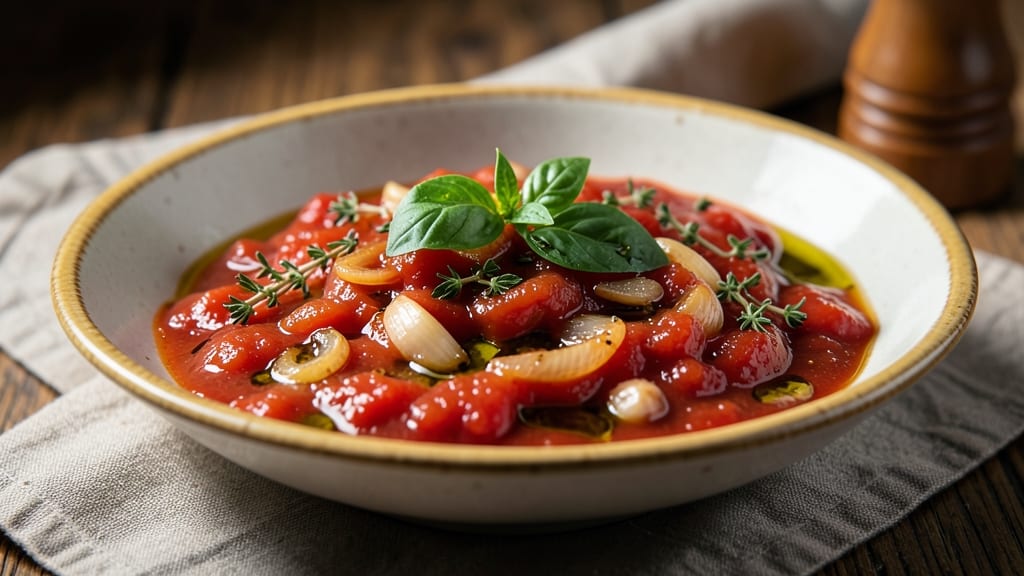
This authentic Italian pasta sauce recipe from scratch transforms simple ingredients into a rich, slow-simmered masterpiece that captures the soul of Italian cooking. The secret lies in patience—letting tomatoes caramelize and herbs infuse deeply over 45 minutes on the stove.
I developed this version after years of testing, ensuring every spoonful delivers the depth you’d expect from a trattoria kitchen, not just a recipe book.
What sets this sauce apart is the balance: fresh basil and oregano brighten the acidity of tomatoes, while garlic and onion build a savory foundation. No shortcuts here—just quality ingredients simmered until the flavors meld into something irresistible.
The sauce thickens naturally as it cooks, creating that perfect cling to al dente pasta without needing thickeners.
By the time you’re done, you’ll have a sauce that’s restaurant-quality—deep red, fragrant, and packed with layers of flavor. It’s the kind of sauce that makes homemade pasta feel like a five-star meal.
Store it in the fridge for up to 5 days or freeze for months, so you always have this taste of Italy at your fingertips.
Pair it with spaghetti, fettuccine, or pappardelle for a classic match, or use it as a base for other Italian dishes. The possibilities are endless, but the foundation is always the same: slow, deep, and authentic. Let’s get cooking.
Ingredients for authentic italian pasta sauce recipe from scratch
These ten ingredients come together to create restaurant-quality Italian pasta sauce.
| Ingredient | Amount | Notes |
|---|---|---|
| San Marzano Tomato Crushed 🍅 | 28 oz | Canned, whole peeled tomatoes |
| Extra-Virgin Olive Oil 🫒 | ½ cup | High-quality, fruity variety |
| Yellow Onion 🧅 | 1 whole | Medium size, finely chopped |
| Garlic Cloves 🧄 | 4 cloves | Fresh, peeled, minced finely |
| Fresh Basil Leaves 🌿 | ½ cup | Packed, stems removed |
| Fresh Oregano Leaves 🍃 | ¼ cup | Packed, stems removed |
| Dried Red Pepper Flakes 🌶️ | ½ tsp | Adjust for heat preference |
| Sea Salt 🧂 | 1 ½ tsp | Diamond Crystal preferred |
| Black Peppercorns 🌶️ | ½ tsp | Freshly cracked preferred |
| Red Wine 🍷 | ¼ cup | Dry, bold variety (optional) |
The tomatoes are non-negotiable—San Marzano delivers that perfect sweetness and acidity. Grab a can from Whole Foods or any Italian market—they’ll have the best quality. Fresh basil and oregano are the soul of this sauce, so don’t skimp. Farmers markets often have the freshest, most fragrant herbs. If you can’t find fresh oregano, dried works at one-third the amount, but it won’t have that same vibrant punch. The olive oil should be extra-virgin—anything less and you’re compromising on flavor. California Olive Ranch or Colavita are solid choices if you want to splurge.
No red wine? Substitute with 0.25 cup beef broth—it won’t be identical, but it’ll work in a pinch. Fresh herbs wilt fast, so if you’re prepping ahead, store them in a jar of water in the fridge like flowers. The red pepper flakes can be swapped for crushed dried chili if you prefer a different heat profile. For the onion, yellow or red will work—just make sure it’s sweet and not bitter. Garlic should be fresh, not that pre-minced stuff in jars. If you’re feeling fancy, roast the garlic cloves first for a deeper flavor, but it’s not required.
This sauce tastes even better the next day as flavors meld. Store in an airtight container in the fridge for up to 5 days. For longer storage, freeze in ice cube trays—perfect for single portions. Thaw overnight in the fridge or microwave for 30 seconds. The sauce thickens as it cooks, but if you prefer it thicker, simmer uncovered for 5-10 minutes to reduce. If it’s too thick, stir in a splash of water or pasta water. Always make extra—it disappears faster than you think.
Why You'll Love This Recipe
- One-Pot Magic: I swear by this sauce because it’s all in one pot—no extra bowls, no mess. Just crush those San Marzano tomatoes right in the pan, let the onion and garlic mellow in olive oil, and boom: zero cleanup except the dish.
- Sunshine in a Jar: That first spoonful of sauce—bright, tangy, with garlic kissing the basil—tastes like summer in Italy. The crushed tomatoes give it a depth canned sauce can’t touch, and the fresh basil? It’s the secret weapon that makes it ridiculously good.
- Weeknight to Dinner Party: Make a big batch on Sunday, and you’ve got sauce for pasta, bruschetta, or even pizza toppings all week. Honestly, my freezer’s full of jars of this stuff—I just reheat and serve. It’s my lazy-day hero.
- Cheap Thrills: A can of San Marzano tomatoes, a bulb of garlic, and a bunch of basil? That’s it. No fancy ingredients, just pure flavor that makes you feel fancy. Plus, it stretches across three meals without breaking the bank.
Step-by-step instructions for slow-simmered tomato depth with fresh herbs
Here's how to build an authentic Italian sauce layer by layer—where every ingredient earns its place.
Sweat the Onion Until Translucent
Heat the 0.5 cup extra-virgin olive oil in a heavy-bottomed saucepan over medium-low heat. Add the finely chopped yellow onion and cook gently for 8-10 minutes, stirring occasionally. You're looking for the onions to soften and turn translucent—not browned, just tender. This foundational step develops sweetness that carries through the entire sauce.
I press the onions down with a wooden spoon every few minutes to ensure even cooking. If the onions start to color, reduce the heat slightly—you want them to melt into the oil without developing bitterness. This patience pays off in the final depth of flavor.
Add Garlic and Wine for Depth
Once the onions are translucent, increase heat to medium and add the 4 minced garlic cloves. Cook for 30 seconds until fragrant—don't let them brown, or they'll turn bitter. Immediately pour in the 0.25 cup red wine and stir vigorously to deglaze the pan, scraping up any browned bits from the bottom. This step captures all the concentrated flavors that would otherwise burn.
The wine should reduce by half in about 3-4 minutes, leaving a glossy sheen in the pan. If it reduces too quickly, lower the heat slightly. This reduction is crucial—it forms the sauce's backbone and prevents a watery final product.
Build the Tomato Base
Add the 28 oz San Marzano tomato crushed and 0.5 tsp dried red pepper flakes to the pan. Stir well to combine, then bring the mixture to a gentle simmer. Partially cover the pan and let it cook for 20 minutes over medium-low heat, stirring occasionally. The sauce should thicken noticeably as it simmers, but it shouldn't boil vigorously—this prevents the tomatoes from breaking down too quickly.
Here's the thing—San Marzano tomatoes are naturally sweet and low-acid, so they need time to develop complexity. I stir every 5 minutes to prevent sticking, but I don't rush this step. The sauce should reduce to about 3 cups by the end, with a thick, syrupy consistency.
Season and Finish with Herbs
Add the 1.5 tsp sea salt and 0.5 tsp freshly cracked black peppercorns. Taste the sauce at this point—it should be seasoned but still need the fresh herbs to brighten it. Reduce heat to low and stir in the 0.5 cup fresh basil leaves and 0.25 cup fresh oregano leaves. Let the sauce simmer uncovered for an additional 10 minutes, allowing the herbs to infuse their vibrant flavors without turning bitter.
The basil and oregano should be added at the end—their delicate flavors would cook off if introduced earlier. After 10 minutes, the sauce should be deep red, glossy, and properly balanced between sweet, acidic, and herbal notes. If it's too thick, add 1-2 tablespoons of water to reach your desired consistency.
Rest and Serve
Remove the sauce from heat and let it rest for 10 minutes before serving. This resting period allows the flavors to meld completely and the sauce to thicken slightly as it cools. The herbs will settle, and the texture will become even more cohesive.
For the most authentic experience, toss the sauce with freshly cooked al dente pasta immediately before serving. The residual heat from the pasta will help distribute the herbs evenly. Each bite should deliver layers of sweet tomatoes, bright herbs, and a subtle wine depth that makes this sauce unforgettable.
Pro Tips For Making Authentic Italian Pasta Sauce Recipe From Scratch
- Sweat, Don’t Burn, Onions: I learned this the hard way—sautéing onions too fast in olive oil turns them bitter. Instead, keep the heat medium-low and stir often. You’re not racing; you’re building flavor, and a slow, even cook keeps them sweet and translucent.
- Crush Garlic, Don’t Mince: Minced garlic burns instantly and turns acrid. Smash 2-3 cloves with the flat side of your knife first, then finely chop—this releases flavor without scorching. Add it last, just before the tomatoes, so it infuses without turning bitter.
- Salt the Tomatoes Early: Skip waiting until the end. Sprinkle crushed San Marzano tomatoes with a pinch of salt as soon as they hit the pot. This softens them faster and draws out excess water, giving you a richer, less watery sauce by the time you’re done simmering.
- Stir in Basil Late (But Not Too Late): Tossing in fresh basil too soon wilts it into oblivion. Add it just before serving—rip the leaves, not chop, so they stay vibrant. If you must prep ahead, store the basil separately and fold it in at the very end.
Common mistakes when making great authentic italian pasta sauce recipe from scratch
Overcooking the Onions
I’ve seen this happen more times than I can count—onions turning brown instead of staying sweet and translucent. When onions caramelize too early, they develop a bitter edge that ruins the sauce’s balance. The key is medium-low heat and constant stirring—keep them moving so they cook evenly without color.
If they start to brown, immediately reduce the heat or remove the pan from the burner for a minute. Trust me, this small detail makes a huge difference in the final flavor. 🧅
Skipping the Deglaze
The deglaze step—where you add wine to scrape up browned bits—isn’t optional. Those bits are packed with flavor, and skipping them means losing depth in your sauce. Use dry red wine (like Chianti or Sangiovese) for the best results, as it adds complexity.
If you’re avoiding alcohol, substitute with beef broth, but the flavor won’t be as rich. Always stir vigorously and let the wine reduce by half before moving on. This step is the backbone of a flavorful sauce. 🍷
Rushing the Tomato Simmer
One of the biggest mistakes is rushing the 20-minute tomato simmer. This is where the magic happens—tomatoes caramelize and develop a deep, sweet flavor. If you rush it, the sauce will taste flat and watery. Keep the heat medium-low and stir occasionally to prevent sticking.
The sauce should reduce to about 3 cups—if it’s still too thin after 20 minutes, let it simmer uncovered for another 5-10 minutes. Patience here is everything. 🍅
Adding Herbs Too Early
Fresh basil and oregano are delicate and should be added only at the end of cooking. If you add them too soon, they’ll turn bitter and lose their bright, aromatic qualities. I always wait until the sauce has simmered for 30 minutes total before stirring them in.
Let them infuse for just 10 minutes—any longer, and they’ll overpower the dish. The result? A sauce that’s fresh, vibrant, and full of life. 🌿
Ignoring the Resting Time
Skipping the 10-minute rest after cooking is a rookie mistake. This step allows the flavors to meld and the sauce to thicken slightly as it cools. If you serve it immediately, the herbs will disperse unevenly, and the texture won’t be as cohesive.
Let the sauce sit off the heat—it’ll thank you with a richer, more balanced flavor. This is one of those little tricks that elevates homemade sauce to restaurant quality. ✨
Using Low-Quality Tomatoes
Not all tomatoes are created equal, and using non-San Marzano canned tomatoes is a surefire way to end up with a bland sauce. San Marzano tomatoes are sweeter, lower in acidity, and have a perfect texture for sauces.
If you can’t find them, look for whole peeled tomatoes labeled "Italian-style." Avoid sauces or crushed tomatoes with added salt or preservatives—they’ll compromise the flavor. Invest in quality here, and your sauce will shine. 💯
Nutrition facts
Frequently asked questions
Can I make this sauce without red wine?
The wine adds depth, but you can substitute with 0.25 cup beef broth or even apple cider vinegar (1 tablespoon) for acidity. Just reduce it by half first—this step is crucial for building flavor. The sauce will taste different but still delicious. For a vegetarian version, use vegetable broth instead.
What's the best pasta to pair with this sauce?
This rich, slow-simmered sauce pairs perfectly with spaghetti, fettuccine, or pappardelle—any pasta with a flat surface to catch the sauce. For extra authenticity, try bronze-cut rigatoni or troffie (Emilian egg pasta). Avoid thin strands like angel hair—they won't hold the sauce as well. Always cook pasta al dente and toss immediately before serving.
How do I adjust the heat level? Start with the 0.5 tsp red pepper flakes as written for mild heat. For medium spice, add 1 tsp. For extra heat, swap in 1-2 fresh chili peppers (like jalapeño or serrano)
, minced with the garlic. Remove seeds for less heat. Always taste before serving—you can reduce spice by adding more fresh basil or a pinch of sugar to balance.Can I make this sauce in a slow cooker?
Yes! Follow the same steps for onions and garlic, then transfer everything to the slow cooker. Cook on low for 6-8 hours or high for 3-4 hours. The texture will be slightly thicker, so add 1-2 tablespoons of water if needed. The slow cooker method actually enhances the tomatoes' sweetness, making it perfect for meal prep.
Why does my sauce taste watery even after simmering?
Watery sauce usually means one of three things: not enough reduction time, too many tomatoes, or not enough cooking. First, ensure you're simmering uncovered for at least 30 minutes—this lets excess moisture evaporate. If it's still thin, simmer uncovered for another 10-15 minutes or stir in 1 tablespoon of tomato paste to thicken. Never add flour or cornstarch—it's not traditional!