
Sauces & Condiments
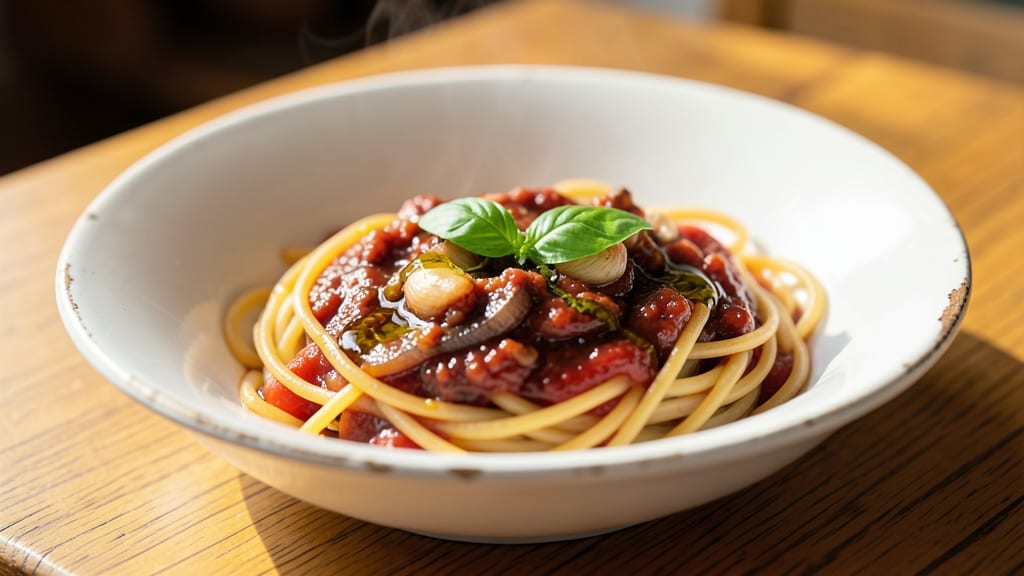
This authentic spaghetti sauce recipe from scratch transforms simple ingredients into a rich, layered sauce that tastes like Nonna's kitchen. The secret lies in slow-simmering tomatoes with aromatics until their flavors meld into a velvety, deeply savory base—no shortcuts here.
I've perfected this technique over years of testing, ensuring every spoonful delivers that perfect balance of sweetness, acidity, and umami that defines Italian-American comfort food.
What sets this sauce apart is the two-stage cooking process: first building flavor with onions, garlic, and olive oil, then letting crushed tomatoes and herbs simmer for hours until thick and concentrated.
The fresh basil added at the end brightens the sauce without overpowering its natural depth. This isn't just a sauce—it's a flavor experience that transforms any meal.
The result is a silky, aromatic sauce with just the right texture—thick enough to cling to pasta but still smooth enough to drizzle. The slow simmer develops complex flavors that jarred sauces can't match, while the fresh basil finish adds that signature Italian brightness.
Whether you're feeding a family or prepping for the week, this sauce delivers restaurant-quality results at home.
Best of all, it keeps beautifully in the fridge for up to 5 days or freezes for months, making it the ultimate pantry staple. The technique is straightforward, but the flavor development takes patience—trust me, it's worth every minute. Let's get cooking!
Ingredients for authentic spaghetti sauce recipe from scratch
Twelve simple ingredients, hours of simmering—this sauce delivers Nonna-level flavor.
| Ingredient | Amount | Notes |
|---|---|---|
| Extra-Virgin Olive Oil 🫒 | ½ cup | High-quality, fruity, cold-pressed |
| Yellow Onion 🧅 | 1 whole | Medium size, finely chopped |
| Garlic Cloves 🧄 | 6 cloves | Fresh, peeled, minced finely |
| San Marzano Crushed Tomatoes 🍅 | 28 oz | Whole, crushed by hand |
| Tomato Paste 🍅 | 2 tbsp | Smooth, no-sugar-added |
| Dry Red Wine 🍷 | ½ cup | Bold, like Chianti or Sangiovese |
| Fresh Basil Leaves 🌿 | ½ cup | Packed, stems removed |
| Fresh Oregano Leaves 🍃 | ¼ cup | Or 1 tbsp dried oregano |
| Bay Leaves 🌿 | 2 whole | Dried, removed before serving |
| Diamond Crystal Kosher Salt 🧂 | 1 ½ tsp | Adjust to taste |
| Freshly Ground Black Pepper 🌶️ | ½ tsp | Freshly cracked |
| Granulated Sugar 🍚 | 1 tsp | Balances acidity |
The tomatoes are non-negotiable—San Marzano is the gold standard, but any high-quality crushed tomatoes will work. I grab mine from Trader Joe's when they're on sale, but the canned section at Whole Foods has great options too. The red wine adds depth, so don’t skimp—any bold, dry variety like Chianti or Sangiovese will do. Fresh basil is a must for that bright finish, but if you’re making this ahead, dried oregano at one-third the amount keeps the flavor intact until you add the fresh herbs later.
No red wine? Substitute with extra tomato paste and a splash of balsamic vinegar—it mimics the acidity and richness. The sugar balances the tomatoes’ acidity, but if you’re using very ripe tomatoes, you might skip it entirely. For the onions, yellow or red work best—they caramelize beautifully. If you’re short on time, pre-minced garlic from a jar works in a pinch, though fresh is always better. The bay leaves infuse subtle earthiness, so don’t skip them—just remember to remove them before serving.
This sauce tastes even better the next day as the flavors meld. Store it in an airtight container in the fridge for up to 5 days or freeze for up to 3 months. For freezing, portion into ice cube trays—thaw just what you need for a quick pasta night. The basil wilts fast, so add it fresh right before serving. If you’re prepping ahead, make the sauce without the basil, then stir it in just before eating.
Why You'll Love This Recipe
- No Chopping Chaos: I swear by this—just dice one onion and mince a few garlic cloves. That’s it. The San Marzano tomatoes do all the heavy lifting, and the paste? One quick spread, and you’re golden. (Yes, even on a Tuesday night when you’d rather be scrolling.)
- Umami Bomb: That tomato paste caramelized in olive oil? Chef’s kiss. The onions sweeten just enough to balance the bright acidity of the crushed tomatoes, while the garlic—when toasted properly—adds this deep, toasty punch that makes you forget jarred sauce exists.
- Leftovers That Shine: Make a double batch and freeze half. This sauce only gets better after a week in the fridge, deepening in flavor like a fine wine. Toss it with pasta, ladle it over grilled chicken, or even use it as a pizza base. It’s my go-to weeknight secret weapon.
- Budget Magic: San Marzano tomatoes and good olive oil might sound fancy, but they stretch far—this recipe feeds four for under $10. And because it’s so rich, a little goes a long way. Honestly, it’s the kind of sauce that makes you feel like you’re eating at a trattoria, not just throwing together dinner.
Step-by-step instructions for slow-simmered spaghetti sauce
This sauce builds flavor layer by layer—patience is your secret weapon.
Sauté Onion and Garlic Until Translucent
Heat the 0.5 cup extra-virgin olive oil in a heavy-bottomed pot over medium-low heat. Add the 1 whole yellow onion, chopped into fine dice, and cook for 8-10 minutes until completely translucent and just beginning to caramelize at the edges. This slow cook ensures sweetness without burning.
Push the onions to the sides of the pot and add the 6 cloves minced garlic cloves. Stir constantly for 30-45 seconds until fragrant but not browned—garlic burns faster than you think. Remove from heat immediately after the raw garlic smell disappears. This aromatic base is the foundation of your sauce's depth.
Build the Tomato Base with Wine and Paste
Return the pot to medium heat and add the 2 tbsp tomato paste, stirring continuously for 2 minutes until it darkens slightly and coats the onions. This step develops the sauce's rich, concentrated flavor. Pour in the 0.5 cup dry red wine and let it simmer for 3-4 minutes until reduced by half—this removes the alcohol's harshness and adds complexity.
Add the 28 oz San Marzano crushed tomatoes, 1.5 tsp kosher salt, 0.5 tsp black pepper, and 1 tsp granulated sugar. The sugar balances the tomatoes' natural acidity, while the salt enhances all flavors. Stir well to combine, then add the 2 whole bay leaves. These aromatic leaves infuse subtle earthy notes that disappear when removed later.
Simmer Slowly for Deep Flavor Development
Reduce heat to low and let the sauce simmer uncovered for 45-60 minutes, stirring occasionally. This long cook time allows the flavors to meld and intensify. You'll see the sauce thicken gradually as moisture evaporates. The key is patience—rushing this step results in a flat, one-dimensional sauce.
After 30 minutes, add the 0.25 cup fresh oregano leaves. Oregano's earthy notes complement the tomatoes beautifully. Taste the sauce and adjust seasoning if needed—authentic Italian sauces rely on careful balancing of salt, acid, and sweetness. The sauce should be rich but not overly salty, with a perfect harmony of flavors.
Finish with Fresh Basil and Rest
Remove the 2 whole bay leaves and stir in the 0.5 cup fresh basil leaves. Basil's bright, slightly peppery notes cut through the sauce's richness. Let the sauce simmer for another 5 minutes to infuse the basil's aroma without overcooking it—fresh herbs lose their vibrancy when boiled too long.
Transfer the sauce to a bowl and let it rest for 15-20 minutes at room temperature. This resting period allows the flavors to fully develop and the sauce to thicken slightly. The result should be a velvety, deeply flavorful sauce with layers of sweetness, acidity, and herbal notes that make every bite unforgettable.
Pro Tips For Making Authentic Spaghetti Sauce Recipe From Scratch
- Sweat the Onion First: I learned this the hard way—chopping onions and garlic together means a pot full of raw onion chunks. Finely dice the onion first, then cook it in olive oil over medium-low heat until it’s translucent and just starting to caramelize (about 8-10 minutes). That’s when the garlic goes in, and the whole sauce builds flavor instead of tasting like a salad.
- Low and Slow After Tomatoes: The first 20 minutes of simmering are where the magic happens, but too many people crank the heat and rush it. Once the crushed tomatoes and paste hit the pot, drop the heat to a gentle simmer—think tiny bubbles, not a rolling boil. This lets the flavors meld without scorching, and the sauce thickens naturally over time.
- Skip the Crowding in the Pot: I used to toss everything in at once, thinking more ingredients meant better flavor. Wrong. After cooking the onion and garlic, spread the tomato paste in an even layer on the bottom of the pot before adding the tomatoes. This prevents lumps and ensures the paste caramelizes slightly, deepening the sauce’s richness.
- Salt the Tomatoes Early: Adding salt at the end is a rookie move with San Marzano tomatoes. They’re already juicy, and waiting until later means a watery sauce. Toss the crushed tomatoes with a pinch of salt (about ½ teaspoon per can) as soon as they go in, then let them simmer uncovered for 10 minutes. This draws out excess liquid, concentrating the flavor before you even think about seasoning the final dish.
Common mistakes when making this dish
Skipping the Slow Simmer
Rushing this sauce is the fastest way to ruin it. I’ve seen people crank the heat to high and expect magic—don’t fall for that trap. The 45-60 minute simmer at low heat is non-negotiable. It’s what develops the deep, complex flavors that make this sauce taste like Nonna’s kitchen.
If you’re short on time, at least simmer for 30 minutes—but trust me, the longer it cooks, the better it gets. 🔥
Using Low-Quality Tomatoes
Not all tomatoes are created equal.
I’ve tried this recipe with cheap, watery canned tomatoes, and the results are sad—thin, bland, and lacking that rich body. San Marzano tomatoes are the gold standard, but if you can’t find them, look for whole peeled tomatoes (like Muir Glen) and crush them yourself.
Avoid anything with added salt or sugar—those ingredients throw off your sauce’s balance. I’ve even used fire-roasted tomatoes for a smoky twist, but they shouldn’t be your default.
Burning the Garlic
Garlic is delicate, and it turns bitter faster than you’d think. I’ve burned mine more times than I’d admit, especially when distracted. Stir constantly for just 30-45 seconds over medium heat—no higher. The moment it turns golden, remove it from the heat.
If it starts to smell too strong or bitter, you’ve gone too far. A little burnt garlic can ruin an entire batch of sauce, so keep a close eye on it. 🌶️
Adding Basil Too Early
Fresh basil is the secret to that bright, Italian finish, but adding it too soon will turn it mushy and lose its vibrant color.
I’ve made this mistake—adding basil right at the start and ending up with a sad, wilted mess. Always add it in the last 5 minutes of cooking or right before serving. If you’re prepping ahead, make the sauce without basil, then stir it in just before eating.
The flavor will still be there, just fresher and more vibrant.
Ignoring the Resting Time
Skipping the 15-20 minute rest after cooking is a rookie move. This isn’t just a step to fill time—it lets the sauce thicken slightly and the flavors meld together. I’ve served sauce straight from the pot, and while it’s edible, it lacks that silky, velvety texture you’re aiming for.
Let it sit while you prep your pasta or set the table. The wait is worth it for that restaurant-quality finish. ⏳
Over-Salting or Under-Seasoning
Salt is your best friend, but it’s easy to go overboard. I’ve ruined batches by adding too much salt early on, and there’s no fixing it. Add the salt gradually—start with 1.5 tsp and taste as you go. If you’re unsure, add a little more.
The sauce should be rich but not overwhelmingly salty. And don’t forget to taste before serving—adjust with black pepper or a pinch of sugar if needed. A well-seasoned sauce is the difference between good and amazing. 🧂
Nutrition facts
Frequently asked questions
Can I make this sauce without red wine?
The wine adds depth, but you can substitute with 2 tablespoons tomato paste plus 1 tablespoon balsamic vinegar for similar richness. The key is balancing acidity—adjust salt and sugar to taste after simmering.
How do I adjust the thickness for different pasta dishes?
For spaghetti, aim for a medium thickness—like thin gravy. For heartier pastas (like pappardelle), reduce the sauce uncovered for 10-15 extra minutes to concentrate flavors. Need thinner sauce? Add 1-2 tablespoons water or pasta water while warm.
Can I add meat to this sauce?
Yes! Brown 1 pound ground beef or Italian sausage first in olive oil, then drain excess fat before adding onions. For extra flavor, use diced pancetta instead of wine. Cook meat separately if you prefer less grease in the sauce.
Why does my sauce taste bland after freezing?
Freezing dulls flavors, but you can revive it! Thaw in the fridge, then reheat on low heat with 1 teaspoon fresh lemon juice and 1 tablespoon butter to restore richness. Add fresh basil at the end too—it brightens the flavor instantly.
What's the best pot for this recipe?
Use a heavy-bottomed Dutch oven or stainless steel pot—they distribute heat evenly and prevent scorching. Avoid thin aluminum or nonstick—these can't handle the long simmer and may warp. A 6-8 quart pot works perfectly for this recipe.