
Sauces & Condiments
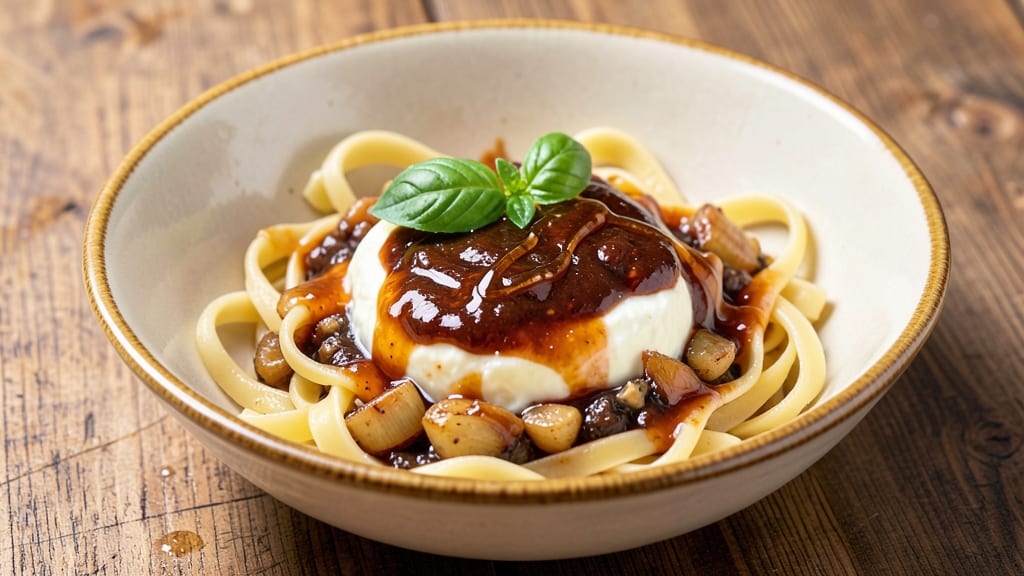
This balsamic vinegar pasta sauce recipe delivers a rich, caramelized glaze that elevates any dish from ordinary to extraordinary. The secret lies in slow reduction of balsamic vinegar with butter and a touch of honey, creating a glossy sauce with layers of tangy-sweet complexity.
I developed this sauce after years of testing—it’s the perfect balance of depth and brightness that clings beautifully to pasta, vegetables, or even grilled proteins.
The process is straightforward but requires patience: simmering the vinegar until it transforms into a deep amber syrup creates that signature glossy finish. A splash of cream at the end adds richness without overpowering the balsamic’s bold character.
This sauce isn’t just for pasta—it’s equally at home drizzled over salads, roasted vegetables, or as a dipping sauce for crusty bread.
What sets this sauce apart is its versatility and shelf stability. Once reduced, it keeps in the refrigerator for up to two weeks, allowing you to make a big batch for the week ahead.
The caramelized edges and tangy depth make it a standout, whether you’re tossing it with al dente pasta or using it as a finishing touch for roasted meats.
Ready in just 20 minutes, this sauce requires minimal ingredients but maximum flavor impact. The key is letting the vinegar reduce slowly—don’t rush it. The result is a sauce that’s restaurant-quality and far more complex than store-bought alternatives. Let’s get started!
Ingredients for balsamic vinegar pasta sauce
Nine simple ingredients transform into a restaurant-quality sauce with glossy depth and tangy sweetness.
| Ingredient | Amount | Notes |
|---|---|---|
| Balsamic Vinegar 🍷 | 1 cup | High-quality aged balsamic preferred |
| Unsalted Butter 🧈 | 4 tbsp | Cold, cut into small cubes |
| Honey 🍯 | 2 tbsp | Light or clover variety |
| Heavy Cream 🥛 | ¼ cup | Full-fat for best texture |
| Garlic Cloves 🧄 | 2 cloves | Minced for depth |
| Shallots 🧅 | 2 whole | Finely minced, or substitute onion |
| Kosher Salt 🧂 | ½ tsp | Diamond Crystal preferred |
| Freshly Ground Black Pepper 🌶️ | ¼ tsp | For subtle heat |
| Extra-Virgin Olive Oil 🫒 | 1 tbsp | For finishing drizzle |
The balsamic vinegar is the star—aged balsamic from Italy (like San Marzano brand) has that complex, caramelized depth you can't get from regular vinegar. Trader Joe's and Whole Foods carry good options, but if you're in a pinch, even a high-quality grocery store balsamic works. Look for bottles labeled 'aged' or 'extra aged'—they're worth the splurge. The butter should be cold when you add it; this creates those beautiful caramelized bits that give the sauce its texture. As for honey, local raw honey adds subtle floral notes, but any light honey will do.
No aged balsamic? Regular balsamic vinegar plus 1 tbsp brown sugar mimics the depth. Swap honey for maple syrup or agave nectar if you prefer. The shallots can be replaced with onion or leek, but shallots have a milder, sweeter flavor. Heavy cream can be subbed with half-and-half or coconut cream for a lighter version. Fresh garlic and shallots are ideal, but powdered garlic and onion in a pinch (use half the amount). The olive oil at the end? Don't skip it—it adds that final glossy sheen and richness.
This sauce thickens as it cools, so thin with warm water if needed. Store in an airtight container in the fridge for up to 2 weeks, or freeze for 3 months. I like to make a big batch—it's perfect for drizzling over pasta, roasted veggies, or even grilled chicken. The flavors actually improve after a day or two, so make extra. If it separates, just stir and reheat gently. The caramelized bits at the bottom? That's the good stuff—stir them back in before serving.
Why You'll Love This Recipe
- Five-Ingredient Magic: I swear, this sauce comes together with barely any effort—just melt butter, toss in garlic, and let the balsamic and honey do their thing. No chopping, no fuss, just chef’s kiss simplicity.
- Sweet-Savory Balance: That honey and balsamic combo? It’s like a grown-up dessert sneaking into your pasta. The creamy butter softens the tang, and the garlic—oh, the garlic—makes every bite feel like a hug.
- Weeknight & Dinner Party: Honestly, I make this for lazy Tuesdays and when my in-laws visit. The same sauce works for spaghetti or tossing with roasted veggies—no need to reinvent the wheel.
- Leftovers That Don’t Suck: Between us, most pasta sauces turn into glue after day two. Not this one. The cream keeps it rich, and the balsamic adds depth, so it tastes just as good reheated as it does fresh—even better, if you ask me.
Step-by-step instructions for balsamic vinegar pasta sauce
Here's how to transform simple ingredients into a luxurious, caramelized balsamic sauce with perfect balance.
Caramelize Shallots and Garlic
Heat the 1 tablespoon extra-virgin olive oil in a heavy saucepan over medium-low heat. Add the 2 whole shallots, finely minced, and cook for 8-10 minutes until they turn a rich golden brown and their moisture has completely evaporated. This slow cooking develops deep sweetness and prevents burning.
Push the shallots to the sides of the pan and add the 2 cloves garlic, also minced. Cook for just 30 seconds until fragrant—garlic burns quickly, so watch closely. Remove the pan from heat temporarily while you prepare the butter mixture to avoid overcooking.
Create the Butter-Honey Base
In a separate bowl, combine the 4 tablespoons cold unsalted butter, cut into small cubes, with the 2 tablespoons honey. Whisk vigorously until the butter melts and the mixture becomes smooth and pale yellow. This butter-honey blend will form the creamy foundation of your sauce.
Return the pan with shallots and garlic to medium heat. Pour in the butter-honey mixture and stir constantly for 2-3 minutes until it begins to bubble gently. The butter should coat the shallots completely, creating a silky base. Here's the thing—don't rush this step. The butter needs to fully incorporate to prevent a grainy texture later.
Reduce the Balsamic Vinegar
Pour in the 1 cup balsamic vinegar all at once. Increase heat to medium-high and let it simmer vigorously, uncovered, for 10-12 minutes. You'll see the liquid reduce dramatically and develop an intense aroma—this is where the magic happens. The vinegar will darken to a deep amber color as it caramelizes.
Real talk: the sauce will look alarmingly thick at this point, but trust the process. When it's reduced by about half, remove from heat. The sauce should coat the back of a spoon with a glossy sheen. If it's not quite thick enough yet, return it to low heat for another 1-2 minutes to evaporate any remaining liquid.
Finish with Cream and Season
Reduce heat to low and stir in the ¼ cup heavy cream. Let it warm through for 1-2 minutes—just enough to heat the cream without curdling it. The sauce should become silky and velvety. Taste and adjust seasoning with the ½ teaspoon kosher salt and ¼ teaspoon freshly ground black pepper.
For that restaurant-quality finish, return the sauce to medium heat and let it simmer gently for 1 more minute. This final step ensures all flavors meld together perfectly. The sauce should now have a beautiful gloss and balance of sweet, tangy, and savory notes.
Toss with Pasta and Serve
Cook your pasta in well-salted boiling water until 1 minute before al dente. Reserve ½ cup pasta water before draining. Toss the drained pasta immediately with the balsamic sauce, adding reserved pasta water as needed to reach your desired consistency.
Serve immediately while the sauce is still warm and glossy. The sauce should cling beautifully to each strand of pasta, offering layers of flavor with every bite. For extra richness, drizzle with a bit more extra-virgin olive oil before serving. This sauce pairs perfectly with creamy pastas like fettuccine or pappardelle, but works with any shape you prefer.
Pro Tips For Making Balsamic Vinegar Pasta Sauce
- Bloom the Garlic: Mince those cloves super fine—almost like paste—and cook them in the butter on low heat for 3-4 minutes until they’re golden, not browned. I learned this the hard way: charred garlic turns bitter, and you’ll taste it in every bite of that creamy sauce.
- Reduce the Vinegar: Don’t just dump the balsamic vinegar in at the end. Simmer it in the pan with the butter first for 2-3 minutes until it thickens slightly—this cuts the sharpness and deepens the flavor. (Yes, even if you’re impatient like me.)
- Temper the Cream: Warm the heavy cream in a separate saucepan until it’s just steaming (not boiling) before adding it to the vinegar-butter mix. Cold cream can curdle the sauce faster than you can say “disaster,” and nobody wants to salvage that.
- Sweeten Last: Add the honey after the sauce is off heat—it burns faster than you’d think. Stir it in, taste, and adjust immediately; the sauce will thicken as it cools, so don’t overdo it. (I once ruined a batch by letting it sit too long.)
Troubleshooting your balsamic vinegar pasta sauce
Sauce Too Thin?
If your sauce ends up too thin after reduction, don’t panic—this happens when the vinegar doesn’t reduce enough or you used a lower-quality vinegar that evaporates less. Simmer uncovered for 5-10 more minutes on medium-high heat, stirring occasionally.
For a quicker fix, mix 1 teaspoon cornstarch with 1 tablespoon cold water, stir into the sauce, and simmer for 2 minutes until thickened. 🌡️
Sauce Too Thick?
Over-reducing is the most common mistake. If your sauce is too thick, stir in 1-2 tablespoons of warm water or reserved pasta water while reheating. For a smoother texture, whisk in 1 tablespoon heavy cream and heat gently.
Pro tip: Always taste as you go—the sauce should coat the back of a spoon but still glide easily. 🍲
Grainy Texture?
A grainy texture usually means the butter didn’t fully melt before adding vinegar. To fix it, strain the sauce through a fine-mesh sieve to remove any butter lumps.
For prevention, whisk the butter and honey together thoroughly before adding to the pan, and ensure the heat is medium-low when combining. 🥄
Sauce Separates When Stored?
If the sauce separates in the fridge, it’s likely due to the cream separating from the vinegar. Stir vigorously to recombine, then reheat gently on low heat. To prevent separation, cool the sauce completely before refrigerating, and store it in an airtight glass container (plastic can absorb odors).
The sauce will thicken further in the fridge—thin with water or pasta water when reheating. ❄️
Lacks Depth of Flavor?
If your sauce tastes flat, it likely didn’t reduce enough or lacked proper caramelization. Next time, use aged balsamic vinegar (like San Marzano) and reduce it longer (up to 15 minutes) for deeper flavor.
For extra richness, add 1 teaspoon balsamic glaze at the end or a pinch of smoked salt for complexity. 💫
Burnt Garlic or Shallots?
Garlic and shallots burn quickly—watch them closely! If they darken too much, remove the pan from heat immediately and strain out the burnt bits. For prevention, keep heat at medium-low and don’t walk away during the caramelization step.
A quick fix is to add 1 teaspoon lemon juice to brighten the flavor after burning occurs. 🧄
Nutrition facts
Frequently asked questions
Can I use regular balsamic vinegar instead of aged?
Regular balsamic vinegar will work, but the flavor won't be as deep or complex. For best results, use aged balsamic vinegar (like San Marzano) which has a richer, caramelized taste. If you only have regular, add 1 tablespoon brown sugar to mimic the depth during reduction. The difference is noticeable but not deal-breaking!
How long does this sauce keep in the fridge?
This sauce stays fresh in an airtight container in the refrigerator for up to 2 weeks. The flavors actually improve as it sits! For longer storage, freeze it for up to 3 months. Just thaw overnight in the fridge before using. The sauce may thicken when chilled—thin with warm water or pasta water when reheating.
Can I make this sauce without dairy?
Skip the butter and heavy cream, and replace them with 2 tbsp olive oil and ¼ cup coconut cream (or unsweetened almond milk). The sauce will still have that glossy finish, though it'll be slightly lighter. For extra richness, add 1 tbsp nutritional yeast at the end for a cheesy flavor.
What's the best pasta shape for this sauce?
This sauce works beautifully with creamy, wide pasta shapes that can hold onto the glossy coating. Try fettuccine, pappardelle, or tagliatelle for the best experience. For heartier options, rigatoni or penne also work well. Avoid tiny shapes like orzo—the sauce will get lost!
Why does my sauce look too thick after reducing?
That's normal! The balsamic vinegar reduces dramatically into a thick syrup. If it's too thick for your taste, simply stir in 1-2 tbsp warm water or reserved pasta water while reheating. The sauce should coat the back of a spoon but still glide easily. Think of it like syrup—it thickens as it cools, so don't worry if it looks intense right after cooking.