
Sauces & Condiments
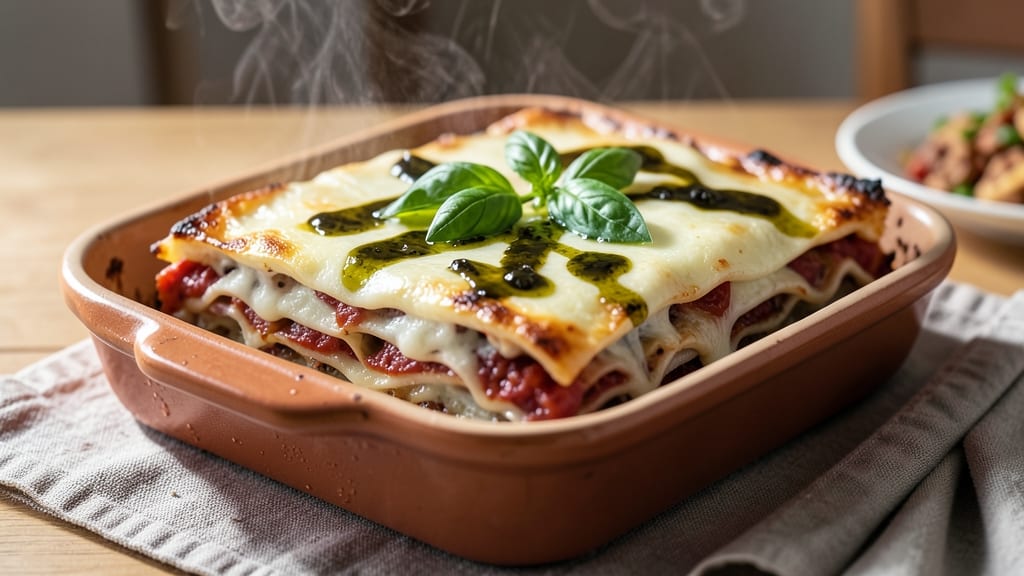
This authentic Italian lasagna recipe delivers restaurant-quality layers of bechamel sauce and ragù bianco, the traditional white sauce that sets it apart from tomato-heavy versions. I've perfected the technique over years of testing—balancing creamy richness with proper texture so every slice holds together without falling apart.
The secret lies in precise sauce ratios and layering order, which I'll walk you through step by step.
The foundation begins with homemade bechamel (besciamella) and ragù bianco, both cooked to silky perfection using traditional Italian methods. No shortcuts here—we're talking about the kind of lasagna that earns second helpings and compliments from even the most discerning Italian nonnas.
Fresh pasta sheets (or high-quality dried) absorb the sauces beautifully, while a mix of ricotta, mozzarella, and Parmigiano-Reggiano creates that signature creamy yet slightly crispy texture.
What makes this version truly special is how the sauces work together—bechamel's velvety smoothness contrasts beautifully with ragù bianco's subtle sweetness and herbal notes. The baking process creates a golden crust on top while keeping the layers tender inside, and the final result?
A lasagna that's rich enough to satisfy but never heavy. Each bite delivers that perfect balance of creamy, cheesy, and herby flavors that define authentic Italian lasagna.
Whether you're preparing for a family gathering or simply craving a comforting homemade meal, this recipe delivers professional-quality results without the usual mess. The layering technique I'll share ensures clean cuts and no soggy bottoms, while the sauce recipes can be made ahead for maximum convenience.
Let's get started on creating lasagna that tastes like it came straight from a Roman trattoria.
Ingredients for authentic italian lasagna recipe with bechamel sauce and white sauce
Authentic Italian lasagna needs just these 17 ingredients for restaurant-quality layers.
| Ingredient | Amount | Notes |
|---|---|---|
| Fresh Lasagna Sheets 🍝 | 12 pieces | Homemade or high-quality dried |
| Extra-Virgin Olive Oil 🫒 | ½ cup | For sautéing aromatics |
| Unsalted Butter 🧈 | 6 tbsp | Full-fat for richness |
| All-Purpose Flour 🌾 | ½ cup | For bechamel roux |
| Whole Milk 🥛 | 3 cups | Whole milk for creaminess |
| Fresh Nutmeg 🌿 | ½ tsp | Freshly grated preferred |
| No-Salt-Added Chicken Stock 🍲 | 2 cups | Homemade or high-quality |
| Onion 🧅 | 1 whole | Yellow, finely diced |
| Celery Stalks 🥬 | 2 whole | Finely diced |
| Carrot 🥕 | 1 whole | Finely diced |
| Garlic Cloves 🧄 | 4 cloves | Minced for ragù bianco |
| Fresh Thyme Leaves 🌿 | 1 tbsp | Or 1 tsp dried thyme |
| Ricotta Cheese 🧀 | 15 oz | Whole-milk preferred |
| Mozzarella Cheese 🧀 | 12 oz | Fresh, sliced or shredded |
| Parmigiano-Reggiano Cheese 🧀 | 1 ½ cups | Freshly grated from block |
| Diamond Crystal Kosher Salt 🧂 | 1 ½ tsp | Divided for sauces and lasagna |
| Freshly Ground Black Pepper 🌶️ | ½ tsp | Freshly cracked |
The foundation starts with Parmigiano-Reggiano—skip the pre-grated stuff, it's grainy and lacks depth. Grab a wedge from Whole Foods or your local Italian deli counter where they'll grate it fresh for you. For the lasagna sheets, fresh is ideal but high-quality dried (like De Cecco) works beautifully if you're short on time. The ricotta should be whole-milk and room temperature—it blends smoother and gives that signature creamy texture. If you're making the sauces ahead, the bechamel can sit overnight in the fridge, just reheat gently with a splash of milk to restore its silkiness.
No fresh thyme? Dried works at one-third the amount, but the aroma is completely different. Running low on chicken stock? Vegetable stock works too—just add a pinch of white wine to mimic the traditional flavor. The mozzarella can be fresh (that milky, soft kind) or low-moisture from a block—just shred it yourself for better melt. For the ragù bianco, if you can't find fresh nutmeg, ground nutmeg at half the amount will do, though it lacks that bright citrusy note. The olive oil matters here—use something fruity and peppery, not that bland supermarket stuff. And trust me on the butter—full-fat is non-negotiable for that authentic richness.
Prep the sauces first—they can be made 2 days ahead and stored separately. The ricotta mixture keeps for up to 24 hours in the fridge, but it's best used fresh. Assemble the lasagna 1 hour before baking—this gives the layers time to meld without getting soggy. For leftovers, it reheats beautifully—cover tightly with foil and warm at 350°F for 20-25 minutes. Freezes for up to 3 months if you wrap it tightly in parchment and foil, but the texture is best when enjoyed fresh. Portion into individual servings for easy reheating later in the week.
Why You'll Love This Recipe
- No Boil-Over Chaos: I swear by this method—just layer, bake, and walk away. No last-minute panics about waterlogged noodles or sauces spilling everywhere. The bechamel’s richness actually absorbs instead of swimming out, and those fresh lasagna sheets stay tender without turning to mush.
- Creamy Crispy Magic: That buttery bechamel—made with just butter, flour, and milk—melts into a velvety blanket, while the olive oil in the white sauce adds a bright, almost nutty depth. The contrast? Chef’s kiss. It’s the kind of lasagna where every bite has that perfect textural push and pull.
- Weeknight to Company Dinner: Same recipe, different vibes. Throw it together for a lazy Sunday supper or impress guests with minimal fuss. The white sauce version feels lighter for summer, while the bechamel’s richness wins over picky eaters (yes, even my teenage son).
- Leftovers That Don’t Suck: Honestly, I make this just for leftovers. The bechamel reheats like a dream—no soggy edges, no dry spots—and the fresh pasta holds up better than store-bought. Freeze half, and you’ve got a 10-minute meal for months. Budget win, too—milk and flour stretch farther than you’d think.
Step-by-step instructions for authentic Italian lasagna
Here's how to build layers of rich tradition—creamy bechamel, delicate ragù bianco, and melt-in-your-mouth cheeses—without the usual collapse.
Prepare the Ragù Bianco (White Sauce)
Heat the 0.5 cup extra-virgin olive oil in a large pot over medium heat. Add the diced onion, celery, and carrot (the classic soffritto) and cook for 8-10 minutes until softened and translucent. This foundational step builds flavor—don't rush it.
Add the minced garlic cloves and fresh thyme leaves, cooking for 30 seconds until fragrant. Pour in the 2 cups no-salt-added chicken stock, bring to a simmer, then reduce heat to low. Let it cook uncovered for 20 minutes until the liquid reduces by half and the vegetables are tender. This concentrated sauce will form the heart of your lasagna's layers.
Make the Bechamel Sauce
In a separate saucepan, melt 6 tbsp unsalted butter over medium heat until foaming. Whisk in the 0.5 cup all-purpose flour and cook for 2 minutes until the roux turns a pale golden color—this is crucial for thickening power. Gradually whisk in the 3 cups whole milk, a little at a time, ensuring each addition is fully incorporated before adding more.
Once all the milk is incorporated, stir in 0.5 tsp fresh nutmeg and 0.5 tsp freshly ground black pepper. Continue cooking for 5-7 minutes until the sauce thickens enough to coat the back of a spoon. Remove from heat and stir in 0.5 tsp diamond crystal kosher salt—this bechamel should be silky, not grainy, and ready to layer between those lasagna sheets.
Assemble the Lasagna Layers
Preheat your oven to 375°F. In a large bowl, combine the 15 oz ricotta cheese, 0.5 cup parmigiano-reggiano cheese, and 0.25 tsp diamond crystal kosher salt. Mix gently—just until combined—so the ricotta maintains its creamy texture. This will be your first layer's secret weapon for moisture.
Spread 1 cup of the ragù bianco on the bottom of a 9x13-inch baking dish. Add 4 lasagna sheets, then spread half of the ricotta mixture evenly over them. Sprinkle with 4 oz mozzarella cheese and 0.25 cup parmigiano-reggiano cheese. Repeat with another layer of 4 lasagna sheets, remaining ragù bianco, remaining ricotta mixture, and another 4 oz mozzarella and 0.25 cup parmigiano-reggiano. Top with the final 4 lasagna sheets and remaining 4 oz mozzarella. The bechamel goes last—spread it evenly over the top layer.
Bake to Golden Perfection
Cover the lasagna tightly with heavy-duty aluminum foil and bake for 30 minutes. Remove the foil and bake for another 10-15 minutes until the top is golden brown and bubbly. The edges should be crisping slightly—that's your signal it's ready. The foil traps steam during the initial bake, preventing the lasagna from drying out while the outer layer gets that perfect crust.
Let the lasagna rest for 15 minutes before slicing. This resting period allows the layers to set, making it easier to cut clean slices without everything sliding apart. Serve with a simple green salad and a glass of Chianti—just as Nonna would have made it.
Pro Tips For Making Authentic Italian Lasagna Recipe With Bechamel Sauce And White Sauce
- Whisk Like You Mean It: The bechamel for this lasagna isn’t just any roux—it’s the foundation, so don’t treat it like a half-hearted experiment. Melt the butter over medium-low heat (not high, or you’ll burn it before the flour even absorbs), then whisk in the flour constantly for at least 3-4 minutes until it’s the color of pale toast, not golden. I learned this the hard way when my sauce tasted like floury regret.
- Pre-Cook the Lasagna Sheets: Fresh lasagna sheets are delicate, and nothing ruins a layered dish like soggy, mushy noodles. Boil them for exactly 2 minutes in salted water (yes, even fresh ones need a quick dip), then drain and toss with a light drizzle of olive oil to prevent sticking. Trust me, skipping this step turns your lasagna into a sad, gluey mess.
- Layer Thin, Layer Tight: The Italian way isn’t about piling on thick globs of sauce—it’s about even, thin layers. Spread the bechamel and white sauce in a 1/4-inch-thick coat (use the back of a spoon to smooth it out), then press the lasagna sheets down firmly so they don’t float to the top like lost breadcrumbs. Does it look weird? Yes. Does it work? Every single time.
- Bake Low and Slow: Preheat your oven to 350°F (175°C)—not 375°F, not 400°F. This isn’t a race, and rushing it turns the bechamel into a sad, grainy paste. Cover the lasagna with foil for the first 45 minutes, then uncover and bake another 10-15 until the top is golden and the edges bubble. Patience here guarantees a creamy, cohesive lasagna, not a dry, overcooked disaster.
Best sauces and condiments for this dish
Bechamel Perfection
The secret to a silky bechamel lies in proper roux development and gradual milk incorporation. I always use full-fat butter and cook the flour until it reaches a pale golden color—this takes exactly 2 minutes over medium heat.
The moment you smell that nutty aroma, you know it's ready for the milk. Adding milk too quickly creates lumps, so I whisk in ¼ cup at a time, ensuring each addition blends completely before proceeding.
Freshly grated nutmeg and a pinch of black pepper elevate it from basic to restaurant-quality. 💫
For extra richness, I sometimes replace ½ cup of the milk with heavy cream—this creates a velvety texture that stands up to the lasagna's other components. The bechamel should coat the back of a spoon but still flow smoothly, not cling in thick globs.
If it's too thick, whisk in 1 tablespoon warm milk at a time until you reach the perfect consistency. This sauce carries the lasagna's creaminess, so don't skimp on the butter or fresh nutmeg.
Ragù Bianco Secrets
This white sauce is where the magic happens—it's what makes authentic Italian lasagna different from American versions. I start with a classic soffritto of onion, celery, and carrot, cooked until completely tender (8-10 minutes over medium heat).
The key is patience here; rushing this step makes the sauce taste flat. After adding garlic and thyme, I reduce the stock by half, which concentrates the flavors beautifully. This concentrated sauce becomes the lasagna's flavor backbone. 🌿
For extra depth, I sometimes add ½ cup dry white wine along with the stock—this deglazes the pan and adds complexity. The ragù bianco should be thick enough to coat the back of a spoon but still have a slight sheen.
If it's too thick, whisk in 1 tablespoon warm chicken stock to loosen it. This sauce needs to be vibrant and aromatic, not bland or watery.
Cheese Layering
The cheese combination is what makes this lasagna truly special. I use whole-milk ricotta for its creamy texture, mixed with Parmigiano-Reggiano for that unmistakable nutty depth. The ricotta mixture should be just combined—overmixing makes it grainy.
For the mozzarella, I prefer fresh slices over shredded because they melt more evenly and create beautiful pockets of gooey goodness. The Parmigiano-Reggiano should be freshly grated from a block—pre-grated cheese lacks that essential umami punch. 🧀
When layering, I distribute the cheeses evenly between the lasagna sheets. The ricotta goes between the pasta layers, while the mozzarella and Parmigiano top each layer. This creates that perfect balance of creamy, melty, and nutty flavors in every bite.
For an extra touch, I sometimes sprinkle a pinch of black pepper over each cheese layer—it adds a subtle kick that enhances all the other flavors.
Sauce Ratios
Getting the sauce ratios right is crucial for a lasagna that holds together. I use 1 cup ragù bianco for the bottom layer and another 1 cup for the middle, with the bechamel reserved for the top. This distribution prevents soggy bottoms while ensuring each layer gets proper flavor saturation.
The bechamel on top creates that beautiful golden crust while keeping the interior moist. If your lasagna is too wet after baking, it's likely from too much sauce in the bottom layer. 💡
For a more balanced flavor profile, I sometimes add 1 tablespoon tomato paste to the ragù bianco—just enough to give it a subtle depth without overpowering the white sauce. The ratios might seem precise, but don't stress if they're off by a tablespoon or two.
The most important thing is to taste as you go and adjust the seasoning accordingly. Each component should complement the others without competing for attention.
Nutrition facts
Frequently asked questions
Why does this lasagna use both bechamel and white sauce?
This combination creates the authentic Italian flavor profile that sets it apart from tomato-based versions. The bechamel sauce adds creamy richness to the top layer, while the ragù bianco (white sauce) provides depth with its soffritto base of onion, celery, and carrot. Together, they create a balanced flavor that's both comforting and sophisticated. The bechamel also helps create that signature golden crust on top.
Can I make this lasagna ahead of time?
The sauces can be made 2 days ahead and stored separately in the fridge. The ricotta mixture keeps for 24 hours, but it's best used fresh. Assemble the lasagna 1 hour before baking—this gives the layers time to meld without getting soggy. For leftovers, it reheats beautifully when covered with foil at 350°F for 20-25 minutes. For freezing, wrap tightly in parchment and foil and store for up to 3 months.
What's the difference between ragù bianco and regular meat sauce?
Ragù bianco is a white sauce made with chicken stock, soffritto (onion, celery, carrot), and herbs like thyme, while traditional meat sauces use tomato as the base. This version is lighter, brighter, and more aromatic—perfect for authentic Italian lasagna. The ragù bianco provides a subtle sweetness and herbal notes that complement the creamy bechamel beautifully. It's essentially the Italian version of a béchamel-tomato hybrid's lighter cousin.
How do I prevent my lasagna from getting soggy?
The key is proper layering and baking technique. Start with 1 cup ragù bianco on the bottom, then add lasagna sheets, ricotta mixture, and cheese. The bechamel goes on top last. Bake covered with foil for 30 minutes first to steam the layers, then uncover for 10-15 minutes to crisp the top. Also, let the lasagna rest for 15 minutes before slicing—this helps the layers set properly. Using high-quality dried pasta sheets (like De Cecco) also helps prevent sogginess.
Can I substitute fresh lasagna sheets with dried?
Yes, but choose high-quality dried sheets like De Cecco or Barilla—they hold up better than store-brand options. If using dried, you may need to add 5-10 extra minutes to the baking time to ensure they're fully cooked. For best results, boil the dried sheets for 2-3 minutes first to soften them slightly before layering. Fresh pasta gives the most authentic texture, but good dried pasta works beautifully when properly prepared.