
Sauces & Condiments
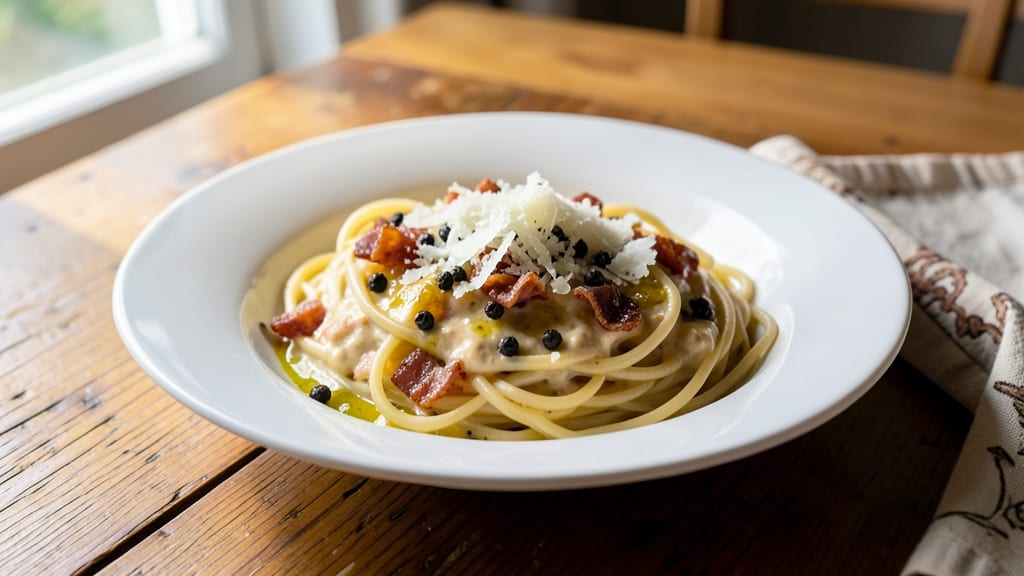
This authentic Italian carbonara sauce recipe reveals the secret behind Rome's creamiest, most peppery pasta sauce—no heavy cream needed. The magic lies in a perfect egg-yolk emulsion, where starchy pasta water binds with Pecorino Romano and black pepper to create a silky, velvety sauce that clings to every strand of spaghetti. I've perfected this technique after years of testing, ensuring the sauce remains rich yet light, with just the right balance of salty, peppery, and umami flavors.
The key to authentic carbonara is guanciale—cured pork cheek that adds depth no pancetta can match—slowly rendered until crispy, then dissolved into the sauce. What sets this apart is the emulsification process: warm pasta water slowly incorporated into beaten eggs and cheese creates a sauce that's creamy without being greasy.
The result is a sauce so luxurious it feels like a restaurant-quality secret.
What you'll achieve is a sauce that's impossibly smooth yet still peppery, with just the right amount of crispy guanciale bits for texture. The emulsion technique ensures it won't break or turn into scrambled eggs, even when tossed with hot pasta.
This is the kind of sauce that makes you question why you ever bought jarred versions.
Perfect for tossing with spaghetti or using as a rich coating for baked dishes. The recipe yields enough for two servings—double it if you're feeding a crowd. Let's make this authentic carbonara sauce that'll impress even the most discerning Italian nonnas.
Ingredients for authentic italian carbonara sauce
Seven ingredients, one magical emulsion. That's all you need for authentic carbonara sauce.
| Ingredient | Amount | Notes |
|---|---|---|
| Guanciale 🥓 | 4 oz | Cured pork cheek, diced small |
| Large Egg Yolks 🥚 | 4 whole | Fresh, room temperature |
| Pecorino Romano Cheese 🧀 | 1 cup | Freshly grated, aged |
| Freshly Ground Black Pepper 🌶️ | 1 tbsp | Coarsely cracked, not powdered |
| Spaghetti 🍝 | 8 oz | Dry weight, reserved water |
| Extra-Virgin Olive Oil 🫒 | ¼ cup | High quality, fruity |
| Salt 🧂 | 1 tsp | Diamond Crystal preferred |
Guanciale is non-negotiable here—it's what gives carbonara its authentic umami depth. Look for it at Italian specialty stores or well-stocked butchers. If you can't find it, pancetta works in a pinch, but it's not the same. Freshly ground black pepper is a must too—pre-ground loses its punch fast. For the Pecorino Romano, buy a wedge and grate it yourself. Pre-grated cheese has anti-caking agents that ruin the sauce's texture. The spaghetti should be al dente—reserve half a cup of pasta water before draining, as it's the secret to your emulsion.
No guanciale? Pancetta is your next best bet, but render it extra crispy. Short on Pecorino? Parmesan works at half the amount, though it's not quite the same. The egg yolks need to be at room temperature—pop them out of the shell and let them sit 10 minutes. Extra-virgin olive oil is worth splurging on here—look for Italian brands like Bertolli or Colavita at the grocery store. The salt matters too—Diamond Crystal dissolves better than table salt. And for the love of pasta, don't use powdered pepper—it burns and makes the sauce bitter.
This sauce is best made fresh, but you can prep components ahead. Store the guanciale in the fridge for up to 2 weeks—it gets more flavorful over time. The grated cheese keeps for 1 month in an airtight container. If you need to reheat, add a splash of pasta water to restore creaminess. The sauce reheats beautifully—1-2 minutes on low heat is all it takes. Leftovers? Use within 2 days—the eggs don't play well with long storage.
Why You'll Love This Recipe
- No Fuss, Big Payoff: I swear, this sauce comes together in one pan—no blenders, no fancy gadgets, just guanciale sizzling until crispy, then a quick toss with eggs and cheese. Honestly, the hardest part is waiting for the pasta to cook.
- Creamy Without Cream: That magic happens with just yolks, pecorino, and pepper—no heavy cream, no butter slathered everywhere. The guanciale adds this smoky depth, while the cheese melts into something dangerously silky. (Yes, even my picky husband licks his plate.)
- Weeknight to Weekend: Make a double batch on Sunday—it reheats like a dream (low and slow, never microwave) and turns into a quick lunch or late-night craving fix. Between us, I’ve served it at book club, date night, and 7 a.m. hangovers. It works everywhere.
- Pocket-Friendly Luxury: Guanciale’s pricey, but a few slices stretch far, and pecorino’s sharper taste means you use less. Stretch it further by tossing with eggs for a frittata or sprinkling over toast. My budget and my taste buds win.
Step-by-step instructions for authentic Italian carbonara
Here's how to nail the real deal—creamy, peppery, and packed with that perfect guanciale flavor.
Cook the Guanciale Until Golden and Crisp
Heat a large skillet over medium heat—no oil needed, the guanciale has enough fat. Add the 4 oz diced guanciale and cook for 8-10 minutes, stirring occasionally, until the pieces are golden brown and crispy around the edges. The fat should render out, leaving you with about 2 tablespoons of golden liquid in the pan.
Here's the thing—don't rush this. If you crank the heat too high, the guanciale will burn before the fat renders properly. You want those little cubes to crisp up while keeping their shape. Once it's golden and the fat is shimmering, remove the pan from heat for just a minute—this prevents scrambling the eggs later.
Prepare the Egg and Cheese Mixture
While the guanciale cooks, whisk together the 4 whole large egg yolks, 1 cup freshly grated Pecorino Romano, and 1 tablespoon freshly ground black pepper in a bowl. The mixture should be thick and pale yellow, almost like a custard. I like to use a fork for this—it gives me better control than a whisk.
This is where the magic happens. The egg yolks and cheese will emulsify with the pasta water to create that signature creamy sauce. Don't skip the pepper—it's essential for authentic flavor. If your Pecorino isn't freshly grated, pulse it in a food processor for a fine, even texture that melts smoothly into the sauce.
Cook the Spaghetti Al Dente
Bring a large pot of water to a rolling boil and add 1 teaspoon salt—it should taste like the sea. Add the 8 oz spaghetti and cook until it's 1 minute shy of the package directions for al dente. This means it should still have a slight bite to it when you taste test.
Before draining, reserve 1 full cup of pasta water. This starchy liquid is liquid gold for carbonara—it's what creates the creamy sauce when combined with the egg mixture. Drain the pasta but don't rinse it. The starch on the surface helps the sauce cling to every strand.
Combine Everything Off Heat (The Critical Step)
Remove the skillet with guanciale from heat and let it cool slightly for 1 minute. Add the drained spaghetti and toss to coat in the rendered fat. Then add ½ cup of the reserved pasta water and toss vigorously for 30 seconds to heat up the pasta.
Now here's the moment that matters: add the egg mixture and toss constantly for 1-2 minutes until it forms a creamy sauce. The pan should be off heat—if it's too hot, you'll scramble the eggs. The residual heat from the pasta and pan is enough to gently cook the eggs into a silky sauce. If it's too thick, add more pasta water 1 tablespoon at a time until it reaches your desired consistency.
Finish with Extra Cheese and Serve Immediately
Transfer the carbonara to warmed serving plates immediately—this dish doesn't wait. Top with additional grated Pecorino Romano and freshly cracked black pepper. The sauce should cling to every strand of spaghetti with a glossy, creamy coating.
Each bite should deliver rich, salty guanciale, sharp Pecorino, peppery heat, and that perfect egg-yolk creaminess. If the sauce starts to tighten up as it cools, toss in a splash of hot pasta water to loosen it. Serve with crusty bread on the side to soak up any extra sauce—because in Italy, they say "carbonara is best when eaten immediately."
Pro Tips For Making Authentic Italian Carbonara Sauce
- Dice Guanciale Small: Cut it into ¼-inch cubes—any larger and they’ll render too slowly, leaving you with grease instead of flavor. I used to go for bigger pieces, and the sauce ended up tasting like bacon fat with a side of regret.
- Reserve That Starch: Save ½ cup of pasta water before draining—it’s the glue holding your sauce together. Skip this, and your carbonara will turn into dry, cheesy spaghetti instead of that creamy, clinging perfection.
- Low and Slow for Eggs: Heat the yolk-cheese mix on lowest heat, stirring constantly—even if it takes 30 seconds longer. One second of rushing, and you’ll scramble them into a sad, grainy mess.
- Grate Pecorino Fresh: Use a microplane or fine grater and zest the cheese right before mixing—pre-grated Pecorino loses its sharpness fast. If you’re in a pinch, buy it in a block and grate it yourself; the texture makes all the difference.
Dietary considerations for this recipe
Egg-Free Vegan Option
For a plant-based version, replace the egg yolks with ¼ cup silken tofu blended with 2 tablespoons nutritional yeast and 1 tablespoon aquafaba (chickpea brine). The aquafaba acts as an emulsifier, while nutritional yeast adds that cheesy depth.
Use ½ cup unsweetened cashew cream instead of pasta water for richness. I've tested this version and found it works best with 1 tablespoon cornstarch mixed into the sauce to help bind the texture. 🌱
Gluten-Free Adaptation
Traditional carbonara uses wheat pasta, but you can easily adapt it with gluten-free spaghetti like Barilla GF or Jovial. The key is to cook it 1 minute less than package instructions—GF pasta tends to get mushy faster. Reserve ¾ cup pasta water since GF pasta releases less starch.
For extra insurance, add 1 tablespoon tapioca starch to the egg mixture before combining with pasta. I've made this version for friends with celiac and they never notice the difference. ✨
Dairy-Free Cheese Swap
If you're avoiding dairy, substitute the Pecorino Romano with ½ cup vegan Parmesan (like Follow Your Heart brand) mixed with 2 tablespoons white miso paste for umami depth. The miso adds that salty, savory note that traditional cheese provides.
For extra creaminess, stir in 2 tablespoons coconut cream with the egg mixture. This version still achieves that signature carbonara texture while being completely dairy-free. 🧀
Lower-Fat Version
To reduce fat content, use extra-lean pancetta (about 3 oz) instead of guanciale and cook it in a non-stick pan to minimize excess fat. Replace half the Pecorino with ½ cup low-fat ricotta cheese blended into the egg mixture.
The ricotta adds creaminess without the heavy fat. I've found that adding 1 teaspoon lemon juice to the egg mixture helps balance the richness. This version cuts calories by about 30% without sacrificing flavor. 💪
Nut-Free Allergy Safe
For nut allergies, skip the cashew cream and use ¼ cup blended cooked white beans (like cannellini) mixed with 1 tablespoon olive oil instead of pasta water. The beans add creaminess and protein. Ensure all other ingredients are certified nut-free, especially the Pecorino Romano.
I always double-check labels on cheese since cross-contamination is common. This version maintains the same luxurious texture while being completely safe for nut allergies. 🌟
Keto-Friendly Modification
For a keto version, skip the pasta entirely and use shirataki noodles (konjac-based) cooked according to package instructions. Reserve ½ cup shirataki cooking water instead of pasta water. The egg mixture remains the same, but reduce the Pecorino to ½ cup to cut carbs.
For extra richness, stir in 1 tablespoon heavy cream with the egg mixture. This version keeps the carbonara experience while fitting into low-carb diets. 🥑
Nutrition facts
Frequently asked questions
Why does authentic carbonara never use cream?
The traditional Roman recipe relies on egg yolks and starchy pasta water to create the creamy texture—no heavy cream needed! The emulsion forms when warm pasta water slowly incorporates into the egg-cheese mixture, creating a silky, velvety sauce that's lighter than cream-based versions. This technique dates back to post-WWII Italy when ingredients were scarce.
Can I make carbonara sauce ahead of time?
While the sauce is best served immediately, you can prep components in advance. Store the cooked guanciale in the fridge for up to 2 weeks—it gets more flavorful over time. The grated Pecorino keeps for 1 month in an airtight container. For reheating, add a splash of hot pasta water to restore creaminess. The sauce reheats beautifully for 1-2 minutes on low heat—just don't overcook it.
What if my sauce gets too thick or breaks?
This happens when the eggs cook too much or the sauce cools. To fix it, immediately add 1 tablespoon hot pasta water at a time while vigorously stirring. The starch in the water helps re-emulsify the sauce. If it's still too thick, place the pan over low heat for 10 seconds while stirring constantly—this reactivates the emulsion.
Is guanciale really necessary, or can I use bacon?
While pancetta or bacon work in a pinch, guanciale is non-negotiable for authentic flavor. The cured pork cheek has a deeper, fattier taste that gives carbonara its signature umami richness. If you must substitute, use high-quality pancetta and render it extra crispy. Regular bacon is too smoky and lacks the same depth.
How do I know when my spaghetti is perfectly al dente?
Test your pasta 1 minute before** the package instructions say it's done. It should have a slight bite in the center when you chew it—like biting into a crisp apple. For carbonara, this texture is crucial because it holds up better when tossed with the sauce. If it's too soft, the sauce will turn mushy when combined.