
Sauces & Condiments
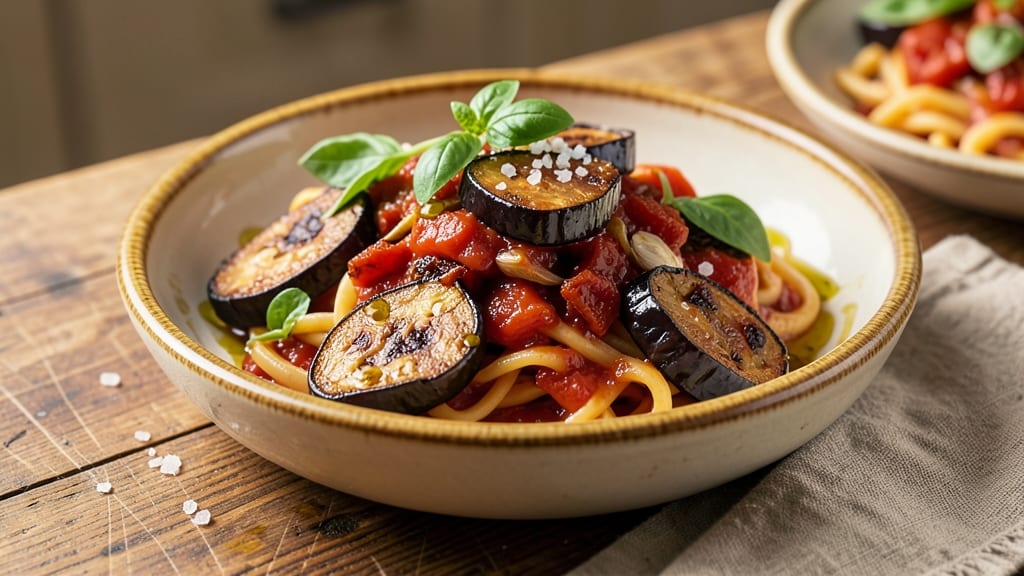
This aubergine pasta sauce recipe transforms humble eggplant into a rich, smoky tomato-eggplant harmony that clings perfectly to al dente pasta. The secret lies in properly salting and roasting the eggplant first—this removes bitterness and creates that signature tender-crisp texture that elevates the dish.
I developed this recipe after realizing how often eggplant gets overlooked in vegetarian pasta, and the results speak for themselves: a sauce so flavorful it makes even meat lovers reach for seconds.
What sets this sauce apart is the balance of smoky depth from roasted eggplant and bright acidity from sun-dried tomatoes, all simmered with garlic and fresh basil until the flavors meld into something truly cohesive.
The process is straightforward: salt the eggplant, roast it until caramelized, then blend it with canned tomatoes, garlic, and herbs for a sauce that's both vibrant and complex. The key to perfect execution is patience—letting the eggplant release its moisture before cooking ensures the sauce remains velvety rather than watery.
When combined with your choice of pasta, this sauce delivers a restaurant-quality vegetarian meal that's hearty enough for a main course but simple enough for weeknight dinners. The eggplant's natural sweetness pairs beautifully with the tangy tomatoes, while the garlic and basil add aromatic layers that make every bite satisfying.
Serve with a sprinkle of fresh basil and a drizzle of olive oil for an elegant finish that feels both comforting and refined.
The best part? This recipe scales effortlessly—double the sauce for leftovers that reheat beautifully, or adjust the eggplant-to-tomato ratio to suit your taste.
Whether you're feeding a family or treating yourself to a vegetarian indulgence, this dish proves that eggplant can be the star of the meal without any compromise on flavor. Let's get cooking—your taste buds will thank you.
Ingredients for aubergine pasta sauce
Pantry staples meet garden-fresh herbs for this restaurant-quality eggplant sauce that transforms humble ingredients into a flavor-packed vegetarian masterpiece.
| Ingredient | Amount | Notes |
|---|---|---|
| Eggplant 🍆 | 2 lbs | Medium-sized, organic preferred |
| Canned San Marzano Tomatoes 🍅 | 2 cans | 28 oz each, crushed by hand |
| Sun-Dried Tomatoes 🍅 | ½ cup | Oil-packed, chopped finely |
| Extra-Virgin Olive Oil 🫒 | ½ cup | For roasting and finishing |
| Garlic Cloves 🧄 | 6 cloves | Fresh, peeled, minced |
| Fresh Basil Leaves 🌿 | 1 cup | Packed, stems removed |
| Diamond Crystal Kosher Salt 🧂 | 2 tbsp | For salting eggplant |
| Ground Black Pepper 🌶️ | 1 tsp | Freshly cracked |
| Red Pepper Flakes 🌶️ | ½ tsp | For smoky depth |
| Al Dente Pasta 🍝 | 12 oz | Penne or spaghetti |
| Reserved Fresh Basil 🌿 | ¼ cup | For garnish |
The eggplant is your canvas here. Organic from Whole Foods or your local market has the best texture, but any firm, glossy-skinned eggplant works. Skip the pre-sliced—cutting your own ensures even cooking. The salting step is non-negotiable: 2 tablespoons of kosher salt per pound draws out bitterness and creates that signature tender-crisp texture. Pro tip: Pat them dry after salting so they caramelize properly in the oven. For the tomatoes, San Marzano is a game-changer—their natural sweetness balances the eggplant's earthiness perfectly. If you can't find them, any high-quality crushed tomatoes will do, but avoid the watery brands.
Sun-dried tomatoes add that bright acidity that makes this sauce sing. Oil-packed from Trader Joe's are my go-to—they're consistent and keep well. No fresh basil? Dried works at one-third the amount, but the flavor won't be the same. The garlic can be roasted with the eggplant for extra depth (just toss whole cloves in the oil before roasting). For the pasta, penne holds the sauce best, but spaghetti works too if you prefer. Want more smokiness? Add a pinch of smoked paprika to the sauce. The red pepper flakes are optional but recommended—they add just enough heat to wake up the flavors without overpowering. Freshly cracked black pepper always tastes better than pre-ground, so invest in a pepper mill if you don't have one.
This sauce keeps beautifully—3-4 days in the fridge covered with olive oil on top to preserve freshness. For longer storage, freeze portions in ice cube trays for perfect single servings later. The eggplant releases moisture as it cooks, so if your sauce seems too thick after blending, add a splash of pasta water. Always taste as you go: the eggplant's natural sweetness develops more as it cooks, so adjust salt accordingly. Garnish with fresh basil and a drizzle of that extra-virgin olive oil right before serving—trust me on this—it makes all the difference.
Why You'll Love This Recipe
- I swear by this rule: if you’re not using San Marzano tomatoes and sun-dried tomatoes, you’re missing out. That sweet-tart balance from the cans—paired with the deep, chewy richness of roasted eggplant—does all the heavy lifting. Honestly, I’ve tried fancy sauces with 10 ingredients, and this one still wins.
- Fewer Ingredients, Bigger Impact: I swear by this rule: if you’re not using San Marzano tomatoes and sun-dried tomatoes, you’re missing out. That sweet-tart balance from the cans—paired with the deep, chewy richness of roasted eggplant—does all the heavy lifting. Honestly, I’ve tried fancy sauces with 10 ingredients, and this one still wins.
- Garlic-Confident Flavor: Between us, I used to burn garlic. But here’s the trick: sauté those cloves in olive oil until they’re golden, not black. That crispy edge with the creamy center? Chef’s kiss. The sauce gets this umami punch from the eggplant and sun-dried tomatoes that makes it taste like you simmered it for hours—even if you didn’t.
- Weeknight to Dinner Party: This sauce is my secret weapon for when I’m too tired to think but still want to impress. Toss it with pasta for a weeknight dinner, or drizzle it over grilled fish for a fancier spread. (Yes, even on a Tuesday night.) The eggplant soaks up flavors like a sponge, so it’s forgiving—just don’t skip the olive oil.
Step-by-step instructions for smoky eggplant and tomato pasta
This method transforms humble eggplant into a rich, velvety sauce that clings perfectly to pasta.
Salt and Roast the Eggplant for Deep Flavor
Slice the 2 lbs eggplant into ½-inch thick rounds. Arrange them on a baking sheet in a single layer, sprinkling with 1 tablespoon of the 2 tbsp Diamond Crystal Kosher Salt between each layer. Let them sit for 30 minutes to draw out excess moisture—this ensures crispy edges when roasted.
Preheat your oven to 425°F. Drizzle the eggplant with ¼ cup of the 0.5 cup Extra-Virgin Olive Oil and toss gently to coat. Roast for 25-30 minutes, flipping halfway, until the edges are golden brown and the flesh yields slightly when pierced with a knife. The skin should be crisp while the inside remains tender—this contrast is key to the sauce's texture.
Build the Tomato-Basil Base
While the eggplant roasts, heat the remaining ¼ cup Extra-Virgin Olive Oil in a large Dutch oven over medium heat. Add the 6 cloves minced garlic and cook for just 30 seconds until fragrant—don't let it brown or it'll turn bitter. Add the 0.5 cup chopped sun-dried tomatoes and cook for 2 minutes to soften slightly.
Pour in the 2 cans crushed San Marzano tomatoes, stirring to combine. Season with the remaining 1 tablespoon Diamond Crystal Kosher Salt, 1 tsp Ground Black Pepper, and 0.5 tsp Red Pepper Flakes. Bring to a gentle simmer, then reduce heat to low and let it cook uncovered for 20 minutes. The sauce should thicken slightly and develop a rich, concentrated tomato flavor.
Blend the Eggplant into Silky Perfection
Transfer the roasted eggplant to the Dutch oven with the tomato sauce. Using a wooden spoon, mash the eggplant against the pot's sides to break it down. Add the 1 cup fresh basil leaves and stir everything together. Let it simmer for another 10 minutes, allowing the flavors to meld completely.
For a silky texture, carefully transfer half the mixture to a blender (or use an immersion blender in the pot). Blend until completely smooth, then return it to the pot. Stir well to combine the smooth and chunky elements—this creates that restaurant-quality sauce with both texture and depth. Taste and adjust seasoning if needed; the eggplant's natural sweetness should balance the acidity of the tomatoes.
Cook the Pasta and Finish the Sauce
Bring a large pot of well-salted water to a boil and cook the 12 oz al dente pasta according to package instructions until 1 minute before al dente. Reserve ½ cup of pasta water before draining. Add the drained pasta to the eggplant sauce in the Dutch oven and toss gently to coat.
If the sauce seems too thick, add reserved pasta water 1 tablespoon at a time until it reaches your desired consistency—it should cling lightly to the pasta without being watery. Return the sauce to a gentle simmer for 2 minutes to meld all the flavors together. The pasta should be perfectly coated with sauce that's rich, smoky, and vibrant from the eggplant's natural sweetness.
Pro Tips For Making Aubergine Pasta Sauce
- SALT THE EGPLANT BEFORE COOKING: I learned this the hard way—skipping the salt step means watery, bitter eggplant in your sauce. Sprinkle it generously with coarse salt, let it sit 20 minutes, then pat dry. The texture changes from spongy to silky, and the bitterness fades.
- ROAST THE AUBERGINE FIRST: This isn’t just a shortcut—it’s the thing that matters most. Roast the eggplant at 400°F (200°C) for 25-30 minutes until collapsed and caramelized. The flavor deepens, and you avoid the soggy mess of boiling or pan-frying. (Yes, even if you’re impatient like me.)
- CRUSH THE SUN-DRIED TOMATOES: Whole sun-dried tomatoes stay stubbornly chewy. Pulse them in a food processor for 2-3 seconds—just until they break into tiny pieces. They’ll melt into the sauce instead of turning into a pasta garnish. (Your future self will thank you.)
- LOW AND SLOW WITH THE TOMATOES: After adding the San Marzanos, resist the urge to simmer hard. Keep it at a gentle bubble for at least 20 minutes—this lets the acidity mellow and the flavors marry. Skim any foam that rises, or it’ll make your sauce taste dull. (I know, I know, but trust the process.)
Common mistakes when making your aubergine pasta sauce
Skipping the Salting Step
Eggplant's natural bitterness is the #1 reason sauces turn out bland or watery. I've made this mistake too many times—skipping the 30-minute salt treatment leaves the eggplant tasting soapy and releasing too much moisture when roasted. This dilutes your sauce and makes it watery.
The 2 tbsp kosher salt per pound is non-negotiable for drawing out moisture and mellowing the flavor. Pro tip: Pat the eggplant dry after salting to ensure proper caramelization in the oven. 🍆
Overcooking the Eggplant
Roasting eggplant until it's completely soft creates a mushy sauce with no texture. The key is stopping when the edges are golden and the flesh yields slightly to a knife—about 25-30 minutes at 425°F.
I once left mine in for 45 minutes, and the sauce turned into a sad, gray paste. Keep an eye on it, especially if your oven runs hot. The skin should be crisp while the inside remains tender for that perfect contrast in texture.
Burning the Garlic
Garlic is delicate—cooking it for more than 30 seconds turns it bitter and overpowering. I've ruined sauces by letting it brown, which creates a harsh, medicinal flavor that dominates the dish.
Sauté it just until fragrant over medium heat, then immediately add the sun-dried tomatoes. For extra depth without risk, try roasting whole garlic cloves with the eggplant and mincing them afterward.
Using Low-Quality Tomatoes
Not all canned tomatoes are created equal. I used store-brand crushed tomatoes once and ended up with a watery, flavorless sauce. San Marzano tomatoes are worth the investment—they're naturally sweet and have fewer seeds, creating a richer base.
If you can't find them, look for "whole peeled" tomatoes and crush them yourself. Avoid brands with added salt or preservatives that can alter your sauce's balance.
Blending Everything Too Smooth
While a completely smooth sauce might look impressive, it loses the beautiful texture contrast that makes this dish special. The half-and-half blending technique (blending half and leaving half chunky) creates that restaurant-quality sauce with both silky and rustic elements.
I've seen home cooks blend everything, resulting in a sauce that lacks depth and body. Keep some texture—it's what makes the dish feel authentic and satisfying. 💫
Ignoring Pasta Water
This is a cardinal sin in Italian cooking. I've made sauces too thick because I didn't reserve pasta water, forcing me to add random liquids that ruined the flavor balance. Always reserve ½ cup of starchy pasta water before draining.
Add it 1 tablespoon at a time to the sauce while tossing with pasta—it's the secret to a silky, clinging sauce that doesn't turn gluey. The starch in the water helps emulsify the sauce naturally.
Nutrition facts
Frequently asked questions
Can I substitute roasted eggplant with grilled or sautéed?
Roasting gives the best caramelization and deep smoky flavor, but grilling works too! Just grill the eggplant slices over medium-high heat for 4-5 minutes per side until charred. Sautéing won't develop the same depth—it's better for quick dishes than this rich sauce. The key is achieving that tender-crisp texture that makes the sauce sing.
What pasta shapes work best with this sauce?
Penne, rigatoni, or fusilli are ideal—their ridges catch the sauce beautifully. For something lighter, try spaghetti or linguine. Avoid delicate shapes like farfalle or orecchiette—they can break when tossing with the chunkier eggplant pieces. The sauce's richness pairs perfectly with hearty, textured pasta that can hold up to its velvety texture.
How can I make this sauce spicier?
Add ½ teaspoon of crushed red pepper flakes when sautéing the garlic, or stir in 1 teaspoon of hot sauce at the end. For a smoky kick, char a whole red chili pepper with the eggplant and blend it into the sauce. Start with small amounts—eggplant's natural sweetness balances heat well, but you can always add more.
Can I make this sauce ahead of time?
The sauce actually improves overnight. Store it in an airtight container in the fridge for up to 3 days, or freeze for 3 months. Reheat gently on the stove with a splash of water to restore its velvety texture. The flavors meld beautifully, making it perfect for meal prep. Just add fresh basil and a drizzle of olive oil before serving.
What if my eggplant sauce tastes bitter?
This usually means you didn't salt the eggplant long enough or didn't rinse after salting. Next time, let it sit for 30 minutes with salt, then pat dry thoroughly. If it's already cooked, balance the bitterness by adding a pinch more salt, a splash of lemon juice, or a spoonful of sweetened tomato paste. The eggplant's natural sweetness should shine through—don't be afraid to taste and adjust!