
Sauces & Condiments
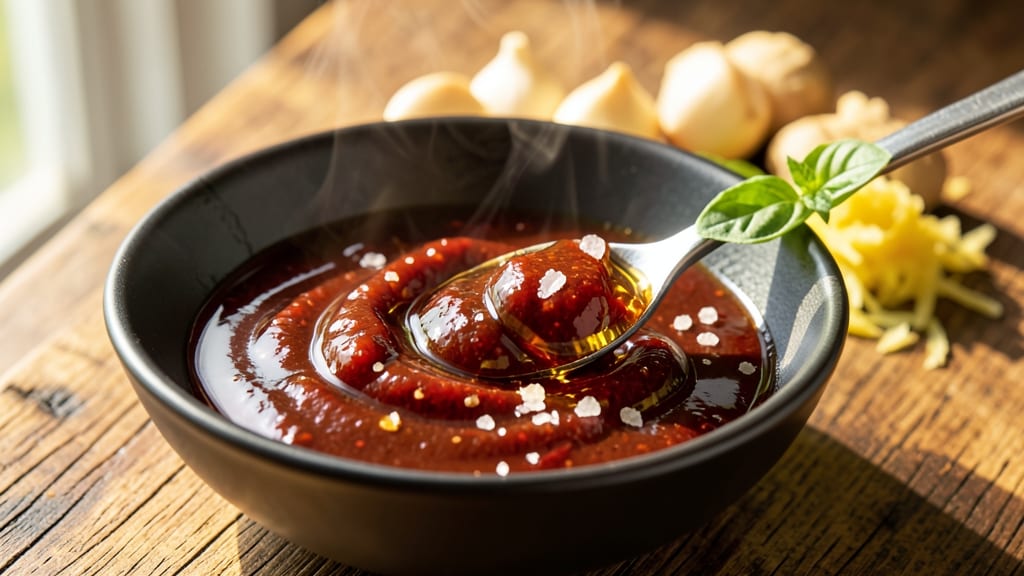
This Asian style BBQ sauce recipe transforms ordinary grilled meats into restaurant-quality masterpieces with just 10 minutes of active work. The secret lies in balancing sweet, spicy, and umami flavors through careful reduction—creating a glaze that caramelizes beautifully while maintaining depth.
I developed this version after testing countless commercial sauces that fell short of authentic restaurant quality.
The foundation begins with a simple sauce base of soy sauce, honey, and rice vinegar, which builds the sweet-savory backbone. Fresh garlic, ginger, and chili paste infuse layers of aromatic complexity, while a touch of sesame oil adds nutty richness.
The real magic happens during the 15-minute simmer, where the sauce reduces to a thick, glossy consistency perfect for glazing or dipping.
What makes this sauce truly special is its versatility—it elevates everything from grilled chicken and pork to tofu skewers and roasted vegetables. The caramelized edges on grilled meats create that coveted "sear," while the balanced sweet-spicy profile makes it irresistible.
Unlike many store-bought versions, this recipe delivers authentic Asian flavors without artificial ingredients.
Once you taste the difference, you'll never go back to bottled sauces again. The process is straightforward, but the results are restaurant-quality, making it perfect for both weeknight dinners and special occasions. Let's create this flavor-packed sauce that will become your new kitchen essential.
Ingredients for asian style bbq sauce
Nine simple ingredients transform into restaurant-quality BBQ sauce with just 15 minutes of simmering.
| Ingredient | Amount | Notes |
|---|---|---|
| Kosher Soy Sauce 🍶 | ½ cup | High-quality, reduced for depth |
| Raw Honey 🍯 | ⅓ cup | Local preferred for floral notes |
| Rice Vinegar 🍶 | ¼ cup | Seasoned variety for extra umami |
| Fresh Garlic Cloves 🧄 | 5 cloves | Minced for aromatic punch |
| Fresh Ginger Root 🌿 | 1 ½ tbsp | Finely grated, skin on |
| Red Chili Paste 🌶️ | 1 ½ tbsp | Sambal oelek for authentic heat |
| Toasted Sesame Oil 🫒 | 1 tbsp | For nutty aroma finish |
| Brown Sugar 🍚 | ¼ cup | Light or dark, packed |
| Water 💧 | ½ cup | For thinning during reduction |
| Diamond Crystal Kosher Salt 🧂 | ½ tsp | Adjusts final seasoning |
The soy sauce is non-negotiable—Kikkoman or La Choy deliver consistent quality, but Japanese-style soy sauce (like Yamasa) adds extra depth. Honey should be raw and local if possible; local apiary honey has more floral complexity than commercial brands. Ginger and garlic? Fresh is mandatory—no dried substitutes here. For chili paste, Sambal Oelek is the gold standard, but Maesri Sriracha works too. I always grab extra ginger and garlic—they're the aromatic backbone, and you can't overdo them. Trader Joe's has great pre-minced garlic if you're short on time, but fresh is always better.
No soy sauce? Coconut aminos (like Coconut Secret) work in a pinch, though the flavor will be slightly different. Short on honey? Maple syrup or agave nectar are 1:1 swaps, but honey's floral notes are unique. The sesame oil can be omitted if you're avoiding nuts, but toasted sesame seeds (1 tsp) add a similar nutty depth. For extra umami, add 1 tsp fish sauce (if not vegetarian) or 1 tsp miso paste—just don't skip the reduction step. The brown sugar can be swapped for white sugar or even coconut sugar, but light brown has molasses notes that enhance caramelization. Diamond Crystal kosher salt is my go-to, but any fine sea salt works.
This sauce keeps beautifully—1 week refrigerated or 6 months frozen. For freezing, portion into ice cube trays first, then transfer to a bag. Reheat gently in a saucepan over low heat, stirring constantly. Double batch it—you'll want extra for marinades and stir-fries. The flavor actually improves after a day or two as the ingredients meld. Store in a clean glass jar with a tight seal, and label it with the date. No preservatives needed—this sauce stays fresh longer than most store-bought versions.
Why You'll Love This Recipe
- Five-Ingredient Magic: I swear by this combo—soy, honey, vinegar, garlic, and ginger. That’s it. No fancy pantry trips, no stressing over measurements. Honestly, I keep a jar in my fridge at all times because it’s that simple to throw together when I’m craving that sticky-sweet, tangy kick.
- Glaze That Sticks: The honey caramelizes just enough to cling to everything—grilled chicken, roasted veggies, even noodles—without turning gluey. Between us, that’s the holy grail of sauces. The ginger and garlic add a warmth that lingers, making every bite feel like a little celebration.
- Weeknight Workhorse: This isn’t just for BBQ season. Drizzle it over rice bowls, toss it with stir-fries, or use it as a marinade. I’ll be real: my lazy Sundays involve a big batch of this sauce and whatever’s in the fridge. It’s the unsung hero of easy meals, and it never lets me down.
- Leftovers That Pay Off: Make a double batch—trust me, you will—and store it for up to two weeks. The flavors only deepen, and it’s cheaper than buying store-bought glaze. Plus, it’s my go-to when I’m meal prepping for the week because one jar turns multiple dinners into something special without extra effort.
Step-by-step instructions for Asian style BBQ sauce
This sauce builds layer by layer—start with aromatics, balance sweetness and heat, then reduce to perfect consistency.
Bloom Aromatics in Toasted Sesame Oil
Heat a medium saucepan over medium-low heat and add the 1 tablespoon toasted sesame oil. Let it warm for 30 seconds until fragrant—you should smell deep nutty notes. Add the 5 cloves minced fresh garlic cloves and 1.5 tablespoons finely grated fresh ginger root, stirring constantly for 1 minute. The garlic should sizzle gently without browning, and the ginger should release its bright, citrusy aroma.
Here's the thing—don't rush this step. The sesame oil carries the entire sauce's nutty depth, and the garlic and ginger form the aromatic foundation. If you see the garlic turning golden, reduce the heat immediately to prevent bitterness. Once the raw garlic smell disappears (about 1 minute), you're ready for the next ingredients.
Combine Wet Ingredients and Reduce
Pour in the 0.5 cup kosher soy sauce, 0.33 cup raw honey, 0.25 cup rice vinegar, and 0.25 cup brown sugar. Stir vigorously to dissolve the sugar completely—it should melt into the liquid without any graininess. Add the 1.5 tablespoons red chili paste and bring the mixture to a gentle simmer over medium-high heat.
Now comes the critical reduction phase. Let it bubble steadily for 8-10 minutes, stirring occasionally, until the sauce thickens noticeably. You're looking for a syrupy consistency—it should coat the back of a spoon but still be pourable. If it reduces too quickly, add 1-2 tablespoons of the 0.5 cup water to control the process. The sauce should smell complex: sweet, tangy, with a hint of smoky heat.
Adjust Seasoning and Finish
Remove the pan from heat and stir in the 0.5 teaspoon diamond crystal kosher salt. Taste immediately—this is your only chance to adjust before the sauce sets. You want a perfect balance: the sweetness of the honey should contrast with the tangy rice vinegar, the umami from the soy sauce should shine, and the chili paste should add heat without overpowering. If it needs more depth, add a splash of soy sauce. For more sweetness, a drizzle of honey. For heat, a pinch more chili paste.
Let the sauce sit at room temperature for 10 minutes—this allows all the flavors to meld completely. The final texture should be glossy and thick, like a perfect glaze that clings beautifully to meats or vegetables. If it's too thick, thin with 1-2 teaspoons of water until it reaches your desired consistency. This sauce keeps well in the fridge for 2 weeks, so make extra—it disappears fast!
Pro Tips For Making Asian Style Bbq Sauce
- Simmer Low and Slow: I learned this the hard way—boiling your sauce will turn it bitter and syrupy. Keep the heat at a gentle simmer (small bubbles, maybe a 3 on your stove) so the honey caramelizes properly without burning. If it starts to bubble hard, drop the heat or pull it off the burner for 10 seconds.
- Peel and Mince Ginger Like a Pro: Skip the pre-peeled ginger from the jar—it’s mushy and lacks punch. Use a spoon to scrape off just the skin, then mince it super fine (almost paste-like) so it blends smoothly. Too many chunks means you’ll taste it instead of the sauce’s harmony.
- Balance Vinegar Gradually: Don’t dump all the rice vinegar at once—add it in 1-teaspoon increments while tasting. The first splash will make the sauce taste sharp and unfinished; you’re aiming for bright acidity, not a pucker. Stop when it almost tastes right, then let it sit for 5 minutes before adjusting.
- Toast Garlic for Depth: Before adding raw garlic, dry-toast the cloves in a separate pan over medium heat for 30 seconds until fragrant. This removes moisture and deepens their flavor—no need to burn them, just let them smell like a garlic festival. Crush them lightly before mixing in for even distribution.
Regional styles of asian style bbq sauce
Japanese Teriyaki Style
For a lighter, more delicate version, reduce the chili paste to just 1 teaspoon and replace the rice vinegar with 2 tablespoons mirin (sweet rice wine). Add 1 tablespoon sake along with the soy sauce for extra umami depth.
Simmer the sauce for 12-15 minutes to achieve a glossier finish, then finish with 1 teaspoon grated daikon radish for freshness. This style works beautifully on grilled fish or tofu skewers. 🌸
Thai-Inspired Sweet Chili
Boost the heat and complexity by adding 1 tablespoon fish sauce (or 1 teaspoon miso paste for vegetarian) and 1 tablespoon lime juice at the end. Swap the brown sugar for 2 tablespoons palm sugar for a deeper caramel note.
For extra Thai flair, stir in 1 teaspoon crushed Thai basil leaves just before serving. This version pairs perfectly with grilled chicken satay or shrimp. 🌶️
Korean Gochujang Glaze
Transform this sauce into a Korean-inspired glaze by replacing the chili paste with 2 tablespoons gochujang (Korean chili paste) and adding 1 tablespoon toasted sesame seeds. Include 1 teaspoon grated pear or apple to balance the heat with natural sweetness.
Simmer for 10 minutes and finish with a drizzle of 1 teaspoon sesame oil. This version is ideal for glazing bulgogi beef or grilled pork belly. 🥩
Vietnamese Nuoc Cham Fusion
For a tangy, aromatic twist, replace the rice vinegar with 2 tablespoons fish sauce and add 1 tablespoon lime zest along with the lime juice. Include 1 teaspoon minced shallot instead of garlic for a milder flavor.
Finish with 1 tablespoon chopped cilantro and a pinch of black pepper. This fusion sauce works wonderfully as a dipping sauce for spring rolls or grilled shrimp. 🍋
Chinese Five-Spice Glaze
Infuse the sauce with Chinese flavors by adding ½ teaspoon five-spice powder (star anise, cinnamon, cloves, fennel, and pepper) during the reduction phase. Replace the ginger with 1 teaspoon grated galangal for a citrusy kick.
Finish with 1 teaspoon toasted Sichuan peppercorns (lightly crushed) for a subtle numbing heat. This glaze elevates grilled duck or pork ribs beautifully. 🥢
Nutrition facts
Frequently asked questions
Can I make this sauce without honey?
Yes! Replace the ⅓ cup honey with ⅓ cup maple syrup or agave nectar for a similar sweetness. For a deeper caramel flavor, use ⅓ cup brown sugar dissolved in 2 tbsp water instead. The sauce will be slightly less floral but still delicious.
How do I adjust the heat level?
For milder heat, reduce the 1.5 tbsp chili paste to 1 tsp. For extra spice, add an additional 1 tsp chili paste or ½ tsp cayenne pepper at the end. Always taste as you go—you can't overdo the heat, but you can't fix it if it's too bland!
Can I use this sauce as a marinade?
Use it 1:1 as a marinade, but add 1 tbsp cornstarch to thicken it and prevent excessive stickiness. Marinate proteins for 30-60 minutes (never longer than 4 hours) for maximum flavor without overcooking. It works especially well with chicken, pork, or tofu.
Why did my sauce turn out too thin?
This usually happens if you didn't reduce it long enough or added too much water. Simmer uncovered for 5-10 extra minutes to thicken it naturally. If it's still too thin, mix 1 tsp cornstarch with 1 tbsp water and stir it in while heating. Don't skip the reduction—it's what creates that perfect glaze texture!
What's the best way to store leftover sauce?
Store in an airtight container in the fridge for up to 2 weeks or freeze for 6 months. For freezing, portion into ice cube trays first, then transfer to a bag. The flavor actually improves after 24 hours as the ingredients meld. Reheat gently in a saucepan over low heat, stirring constantly.