
Sauces & Condiments
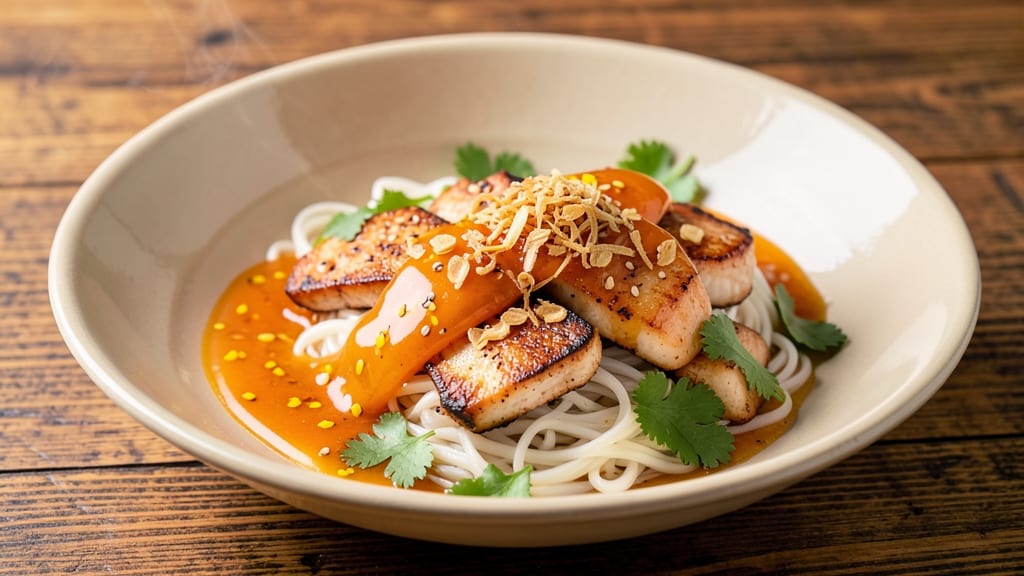
This Asian orange ginger sauce recipe transforms ordinary dishes into vibrant, flavor-packed meals with just a few simple ingredients. The bright citrus and fiery ginger create a perfect balance that elevates stir-fries, marinades, and even grilled proteins.
I developed this sauce after years of experimenting with Asian flavors, and it's now a staple in my kitchen—versatile enough for weeknight dinners yet impressive enough for gatherings.
The sauce combines fresh ginger and orange juice for that signature zesty kick, while soy sauce and honey add depth and sweetness. What makes this recipe special is the simmering process, which reduces the sauce to a rich, concentrated consistency without losing its freshness.
The result is a glossy, aromatic sauce that clings beautifully to noodles, vegetables, or meats, delivering a burst of flavor in every bite.
With just five ingredients and 15 minutes of active prep, you'll have a sauce that lasts for up to a week in the fridge. It's the kind of condiment that turns simple meals into something extraordinary—think tender chicken, crisp vegetables, or fresh rice all bathed in this bright, tangy sauce.
The balance of sweet, sour, and spicy flavors makes it irresistible, and the versatility means you'll reach for it again and again.
Perfect for drizzling over stir-fries, tossing with noodles, or using as a marinade, this sauce is a game-changer for home cooks. The secret lies in the fresh ingredients and the right reduction technique, which ensures the sauce stays vibrant and flavorful.
Let's get started on creating this foolproof, restaurant-worthy condiment that will become a kitchen essential.
Ingredients for asian orange ginger sauce
Five vibrant ingredients transform into this restaurant-worthy sauce that elevates every dish.
| Ingredient | Amount | Notes |
|---|---|---|
| Fresh Ginger Root 🧄 | ½ cup | Finely grated, peel removed |
| Fresh Orange Juice 🍊 | ½ cup | From ripe navel or Valencia oranges |
| Light Soy Sauce 🥢 | ¼ cup | Kikkoman preferred for balance |
| Honey 🍯 | 2 tbsp | Wildflower for floral notes |
| Rice Vinegar 🍶 | 2 tbsp | Seasoned variety for depth |
| Sesame Oil 🫒 | 1 tbsp | Toasted, for aromatic finish |
| Garlic Cloves 🧄 | 2 cloves | Minced for subtle depth |
| Red Chili Flakes 🌶️ | 1 tsp | Adjust for heat preference |
| Salt 🧂 | ½ tsp | Diamond Crystal preferred |
The ginger and orange juice form the sauce's vibrant foundation. Fresh ginger should have a sharp, pungent aroma—avoid dried substitutes for this recipe. For the best orange juice, use freshly squeezed navel or Valencia oranges (the bright, sweet varieties work best). Trader Joe's or Whole Foods carry excellent quality ginger roots, while local farmers markets often have superior citrus. The garlic and chili flakes should be freshly minced and toasted—pre-minced garlic loses its potency quickly. Store fresh ginger in the fridge to maintain its sharpness, and oranges at room temperature until ripe.
No fresh ginger? Dried ginger powder at half the amount works in a pinch, though it lacks the same bright punch. Substitute orange juice with a mix of grapefruit juice and a splash of lime for a similar tartness. For a sweeter profile, agave nectar replaces honey one-to-one. The soy sauce can be swapped for coconut aminos for a gluten-free option. If you prefer less heat, reduce the chili flakes to half a teaspoon or use Sichuan peppercorns for a numbing spice instead. The sesame oil should be added last—its nutty aroma enhances the sauce's finish without overpowering.
This sauce reaches peak flavor after 24 hours of refrigeration, allowing the ingredients to meld. Store in an airtight glass jar in the fridge for up to 1 week, or freeze for 3 months in ice cube trays for portion control. The sauce thickens as it cools, so stir before using. For a smoother texture, blend briefly before drizzling. Double the batch—it disappears faster than you'd expect, especially when paired with grilled salmon or stir-fried bok choy
Why You'll Love This Recipe
- Here’s the kicker: this sauce keeps for weeks in the fridge, and it only gets better as the flavors meld. I’ll be real—sometimes I make a big batch just to have it on hand for when I’m too tired to improvise. And because it’s mostly pantry staples, it’s cheap enough to make without guilt.
- Few Ingredients, Big Payoff: I swear by this sauce because it’s the kind of recipe where you don’t need a pantry full of obscure spices—just ginger, orange juice, soy sauce, and honey. That’s it. Honestly, I’ve made it with whatever citrus I had on hand (grapefruit even works), and it still hits the spot every time.
- Bright and Tangy Magic: The moment I peel that ginger and squeeze in fresh orange juice, my kitchen smells like a sunlit market. That zingy honey-soy balance? It’s the kind of flavor that turns bland rice or grilled chicken into something you’ll fight over at dinner—no exaggeration.
- Dresses Up Anything: Between us, this sauce is my lazy-day secret weapon. Drizzle it over noodles, toss it with roasted veggies, or use it as a marinade for tofu. I’ve even poured it into a jar for quick takeout nights—it lasts forever and always saves me from takeout regret.
Step-by-step instructions for Asian orange ginger sauce
This vibrant sauce comes together with precision—each ingredient plays a role in balancing sweet, tangy, and spicy notes.
Grate and Extract Maximum Flavor from Ginger
Use a microplane or fine grater to finely grate the 0.5 cup Fresh Ginger Root, removing any peel. You should end up with about 2 tablespoons of bright yellow ginger—this is crucial for that signature zing. I like to press the grated ginger through a fine-mesh sieve to remove any fibrous bits, ensuring a silky texture in the final sauce.
The reason we start with ginger is that its compounds need time to meld with the other ingredients. If you add it later, the raw heat can overwhelm the delicate balance of citrus and sweetness. Set the grated ginger aside in a small bowl while you prepare the other components.
Combine Wet Ingredients for Balanced Flavor
In a medium mixing bowl, whisk together the 0.5 cup Fresh Orange Juice, 0.25 cup Light Soy Sauce, 2 tbsp Honey, and 2 tbsp Rice Vinegar. Start with the orange juice to build the bright citrus foundation, then add the soy sauce for umami depth. The honey and vinegar should be stirred in last—they'll create a subtle effervescence when combined.
Taste the mixture at this stage—it should be tangy with a touch of sweetness. If it tastes too sharp, add a teaspoon more honey; if it's too flat, add a splash more rice vinegar. This balance ensures your sauce won't be one-dimensional. The mixture should look like a pale amber liquid with no visible separation.
Infuse with Aromatics and Heat
Add the minced 2 cloves Garlic Cloves, 1 tsp Red Chili Flakes, and 0.5 tsp Salt to the wet mixture. Stir well to distribute the garlic evenly—you want subtle depth, not overpowering bite. The chili flakes should be sprinkled in gradually; start with half if you prefer mild heat, then adjust to taste.
Now, slowly drizzle in the 1 tbsp Sesame Oil while whisking continuously. This step is where the sauce transforms from simple to complex. The sesame oil carries nutty, toasty notes that elevate the citrus and ginger. Let the mixture sit for 5 minutes at room temperature—this allows the garlic and chili to infuse properly without cooking.
Blend for Silky Texture and Uniform Heat
Transfer the mixture to a blender or food processor. Blend on high speed for 15-20 seconds until completely smooth. You're looking for a sauce with no visible texture—this ensures every spoonful delivers the same balanced flavor. If the sauce seems too thick, add 1-2 tablespoons of water and blend again.
Taste again now—this is your final flavor checkpoint. The sauce should sing with bright citrus, a hint of ginger heat, and underlying sweetness. The sesame oil should add a subtle aroma when you smell it. If it's too sharp, add a touch more honey; if it's too mild, add a pinch more chili flakes. The sauce should coat the back of a spoon without being syrupy.
Rest and Adjust for Perfect Balance
Cover the blended sauce and let it rest at room temperature for 10 minutes. This resting period allows the flavors to fully integrate. After resting, give it one final taste—flavor profiles often deepen during this time. The sauce should now have a harmonious balance where no single component dominates.
For best results, use the sauce immediately over stir-fries, grilled meats, or as a marinade. If storing, transfer to an airtight container and refrigerate for up to 5 days. The sauce will keep its vibrant color and flavor, though the ginger's freshness will gradually mellow. For serving, drizzle generously over dishes or reduce slightly by simmering for 3-5 minutes to intensify the flavors.
Pro Tips For Making Asian Orange Ginger Sauce
- PEEL GINGER FIRST: Scrape off the skin before slicing—it’s easier to handle and less messy. I used to try to peel after cutting, and half the ginger ended up in the trash. A spoon works better than a knife for this step.
- STRAIN THE ORANGE JUICE: Use a fine-mesh sieve or cheesecloth to remove pulp—it keeps the sauce silky smooth. Skipping this means a gritty texture that’ll make you wince. (Yes, even if you’re lazy—just blend it first if you’re short on time.)
- LOW HEAT FOR SOY SAUCE: Simmer the sauce on low heat or you’ll burn the soy sauce before the flavors meld. I learned this after one batch turned bitter—now I keep it under 180°F (82°C) and stir often.
- SWEETEN WITH HONEY LAST: Add honey after the sauce has reduced slightly—it balances acidity better. Dump it in too early, and you’ll end up with a cloyingly sweet mess. (Taste as you go; adjust in 1-tbsp increments.)
Pro cooking tips for great asian orange ginger sauce
Ginger Extraction Mastery
For maximum flavor, I recommend using a microplane to grate the ginger—it yields finer, more aromatic shreds than a box grater. Press the grated ginger through a fine-mesh sieve to remove any fibrous bits, which can make your sauce gritty.
The key is to use fresh ginger with no green shoots or soft spots, as these indicate it's past its prime. Store your ginger root in the fridge to preserve its sharpness for up to 2 weeks. 🧄
Balancing Sweet and Tang
The honey and rice vinegar are your secret weapons for balancing the citrus and ginger. I always taste the wet ingredients before adding anything else—this is your flavor baseline. If the mixture tastes too sharp, add ½ teaspoon more honey at a time until it mellows.
For extra tang, a splash of rice vinegar (I prefer Kikkoman seasoned) adds depth without overpowering. The goal is a pale amber color with no separation—this means your sauce is ready for the next step.
Infusion Technique
Let the garlic and chili flakes sit with the wet ingredients for 5 minutes before blending. This allows the garlic to soften slightly and release its oils, while the chili flakes disperse evenly.
When adding the sesame oil, do it slowly while whisking—this emulsifies the sauce and prevents the oil from separating. For an extra aromatic boost, I like to toast 1 teaspoon of whole sesame seeds in a dry pan for 30 seconds before adding them to the sauce. 🌶️
Blending for Perfection
Use a high-speed blender (like a Ninja or Vitamix) to achieve a completely smooth texture. If your sauce is too thick after blending, add 1 tablespoon of water at a time until it reaches a light syrup consistency.
The sauce should coat the back of a spoon but still be pourable. For a smoother finish, strain through a fine-mesh sieve to remove any lingering garlic bits. This step is critical for a restaurant-quality result.
Resting for Depth
Never skip the 10-minute rest—this is when the flavors truly meld. The ginger's heat mellows slightly, the citrus brightens, and the sesame oil's aroma becomes more pronounced. After resting, give it one final taste.
If it needs more balance, a pinch of salt or a drop of honey can adjust it perfectly. The sauce will continue to improve for up to 24 hours in the fridge, so make it ahead if you can. ✨
Heat Adjustments
If you love heat, add the red chili flakes gradually—start with ½ teaspoon and taste before adding more. For a different kind of spice, try Sichuan peppercorns (toasted and crushed) for a numbing, citrusy kick. If you prefer no heat at all, simply omit the chili flakes entirely.
The sauce's versatility means it can be mild or fiery, depending on your preference. Always adjust to taste at the end—this is the pro move! 🔥
Nutrition facts
Frequently asked questions
Can I substitute orange juice with another citrus?
Yes! For a similar tangy brightness, use grapefruit juice (add a splash of lime) or yuzu juice if available. Avoid lemon—it's too sharp and can overpower the ginger's warmth. For a sweeter profile, blend 1 cup orange juice with 2 tbsp honey before using.
How do I adjust the heat level?
Start with ½ teaspoon chili flakes for mild heat, or increase to 1½ teaspoons for spicy. For a different spice profile, replace chili with 1 teaspoon toasted Sichuan peppercorns (crushed) for a numbing citrusy kick. Always taste before adding more—you can't remove heat once it's in!
Can I make this sauce without a blender?
Whisk all ingredients together thoroughly, then press the mixture through a fine-mesh sieve to remove any garlic or ginger fibers. For extra smoothness, use a fork to mash any remaining chunks in the bowl. The texture will be slightly rustic but still delicious—just stir well before using.
What's the best way to store leftovers?
Transfer to an airtight glass jar and refrigerate for up to 5 days. The sauce thickens when cold, so stir before using. For longer storage, freeze in ice cube trays—thaw overnight in the fridge. The ginger's freshness mellows over time, but the sauce remains flavorful. Label with the date to track freshness.
How can I use this sauce beyond stir-fries?
Drizzle over grilled shrimp or chicken, use as a marinade for tofu or pork (30 minutes max), or toss with cold noodles for a refreshing dish. It also works as a dipping sauce for spring rolls or a glaze for baked salmon. The possibilities are endless—let your creativity flow!