
Sauces & Condiments
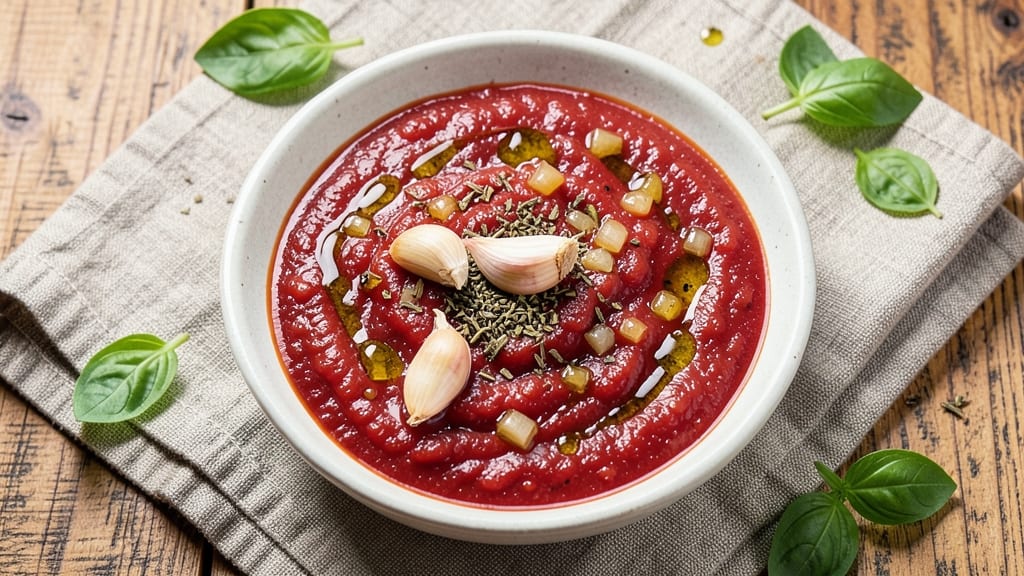
This American pizza sauce recipe delivers the rich, tangy flavor you crave without the sugar crash that comes with store-bought versions. The secret lies in balancing ripe tomatoes, aromatic garlic, and fresh herbs while letting the sauce simmer until it develops deep, complex flavors—no artificial ingredients needed.
I’ve perfected this over years of testing, and it’s become the foundation for my favorite homemade pizzas.
The beauty of this sauce is its simplicity: just a few quality ingredients—like crushed tomatoes, garlic, and a touch of onion—cooked down until thick and velvety. No blending required; the natural breakdown of the tomatoes creates the perfect texture.
A pinch of oregano and basil ensures that authentic Italian-inspired taste, while a small amount of sugar (just enough to balance acidity) keeps it from being too sharp.
What you’ll end up with is a bold, vibrant sauce that’s rich enough to stand up to cheese but still bright enough to let the toppings shine. It thickens beautifully when baked, creating that perfect glossy finish on your pizza crust.
The best part? It keeps well in the fridge for up to a week, so you can make a big batch and enjoy it over multiple meals.
This sauce is versatile enough for pizzas, pasta, or even as a marinade, but it’s the pizza where it truly shines. Once you taste the difference between this homemade version and store-bought, you’ll never go back. Let’s get started on making yours—your taste buds will thank you.
Ingredients for american pizza sauce
Nine simple ingredients transform into the boldest pizza sauce you'll ever make—no sugar crash here!
| Ingredient | Amount | Notes |
|---|---|---|
| Crushed Tomatoes (San Marzano preferred) 🍅 | 28 oz | High-quality canned for best flavor |
| Garlic Cloves 🧄 | 4 cloves | Freshly minced for maximum aroma |
| Yellow Onion 🧅 | ½ cup | Finely diced, sweet variety |
| Extra-Virgin Olive Oil 🫒 | 2 tbsp | For sauteing, fruity variety |
| Dried Oregano 🌿 | 1 tsp | Mexican oregano for authentic taste |
| Dried Basil 🌿 | 1 tsp | Or 2 tbsp fresh basil leaves |
| Granulated Sugar 🍚 | 1 tbsp | Balances acidity subtly |
| Salt 🧂 | 1 tsp | Diamond Crystal preferred |
| Black Pepper 🌶️ | ½ tsp | Freshly cracked for heat |
| Red Wine Vinegar 🍷 | 1 tbsp | Adds tangy brightness |
The crushed tomatoes are the heart of this sauce, so San Marzano cans are worth the splurge—they're sweeter and less acidic. Trader Joe's and Whole Foods carry them at reasonable prices. Fresh garlic and onion are non-negotiable here; the flavor difference is night and day. I always grab a fresh garlic bulb and a sweet yellow onion from the grocery store's produce section—just make sure they're firm and free of soft spots. The olive oil should be fruity and peppery; California olive oils from the store's specialty section usually hit the mark. If you're short on time, a garlic powder substitute works, but fresh is absolutely essential for that authentic taste.
No San Marzano tomatoes? Any high-quality crushed tomatoes will work—just look for brands without added salt or preservatives. Running low on fresh basil? Dried basil at half the amount gets you close, but you'll miss that bright herbal note. The sugar is crucial for balancing acidity—brown sugar or honey can substitute if you prefer, but keep it to the same amount. No red wine vinegar? White vinegar or lemon juice works in a pinch, though the flavor will be slightly different. For a deeper flavor, you can add a pinch of smoked paprika or a dash of hot sauce, but keep it subtle. The key is letting the tomatoes shine, so don't overcomplicate it.
This sauce tastes even better the next day as the flavors meld. Store it in an airtight container in the fridge for up to 7 days, or freeze for 6 months in ice cube trays for single-serving portions. I always make a double batch—one for pizza night and one to freeze for lazy weeknights. The sauce thickens as it cools, so you might need to add a splash of water if it seems too thick after refrigerating. If you're using it for pasta, thin it with a little pasta water before tossing.
Why You'll Love This Recipe
- Five-Ingredient Magic: I swear by this combo—crushed tomatoes, olive oil, and garlic alone make it sing, but add that sweet caramelized onion? Chef’s kiss. No fancy techniques, just simmering until the flavors melt together.
- Weeknight Hero: Honestly, this sauce is my go-to when I’m staring at a half-empty pantry. The onion and garlic soften while I chop veggies or toss a salad—no babysitting required.
- Pizza & Beyond: Between us, this isn’t just for pies. Drizzle it over roasted chicken, toss it with pasta, or even slather it on grilled sandwiches. The oregano and tomatoes cut through richness every time.
- Budget-Friendly Staple: A jar of San Marzano tomatoes and a bulb of onions last me months. Freeze extras in ice cube trays for quick portions—no waste, all flavor, and my wallet thanks me.
Step-by-step instructions for American pizza sauce
Here's how to create a rich, balanced sauce that delivers bold tomato flavor without the sweet overload.
Sauté Aromatics to Build Deep Flavor
Heat the 2 tablespoons extra-virgin olive oil in a medium saucepan over medium heat. Add the ½ cup finely diced yellow onion and cook for 3-4 minutes until softened and translucent. Here's where the magic happens—you want the onions to caramelize just slightly without browning.
Add the 4 cloves minced garlic cloves and cook for another 30 seconds until fragrant. The garlic should sizzle gently but not burn—this ensures you get that sweet, aromatic punch without bitterness. If it starts to darken too quickly, reduce the heat immediately. This aromatic base forms the flavor foundation for your entire sauce.
Simmer Tomatoes and Seasonings
Pour in the 28 ounces crushed tomatoes and bring to a gentle boil. Once boiling, reduce heat to medium-low and let it simmer uncovered for 15-20 minutes. You'll see the sauce thicken slightly as the liquid reduces, concentrating the flavors. Stir occasionally to prevent sticking at the bottom.
Add the 1 teaspoon dried oregano, 1 teaspoon dried basil, 1 tablespoon granulated sugar, 1 teaspoon salt, and ½ teaspoon black pepper. The sugar here is key—it balances the acidity without making the sauce cloyingly sweet. Taste as you go: you want the flavors to meld but still have room to develop.
Finish with Vinegar for Brightness
After 10 minutes of simmering with the seasonings, stir in the 1 tablespoon red wine vinegar. This is the secret weapon—it cuts through the richness of the tomatoes and adds a bright, tangy note that makes the sauce truly sing. The vinegar should integrate completely within 2 minutes of stirring.
Continue simmering for another 5-10 minutes until the sauce reaches your desired consistency. For a classic American pizza sauce, you want it thick enough to cling to cheese without being gloppy. If it's too thick, add 1-2 tablespoons water to loosen it. The sauce should coat the back of a spoon smoothly.
Cool and Adjust for Perfect Texture
Remove the sauce from heat and let it cool for 5-10 minutes at room temperature. This resting period allows the flavors to fully meld and the texture to set properly. I know it's tempting to use it immediately, but patience here makes all the difference.
Taste again and adjust seasoning if needed. You might need a pinch more salt or a splash more vinegar to perfect the balance. The sauce should be rich but not overpowering, with bright tomato flavor and just enough acidity to keep it interesting. Once satisfied, transfer to a clean jar or container and refrigerate until ready to use.
Pro Tips For Making American Pizza Sauce
- Simmer Slow and Low: Crushed tomatoes burn faster than you think—keep the heat at a steady simmer (not a boil) after the onions soften. I learned this the hard way when my sauce turned bitter and chunky; now I let it bubble gently for at least 20 minutes, uncovered, so the flavors meld without scorching.
- Mince Garlic Like You Mean It: Skip the pre-minced jar—fresh garlic makes all the difference. Pulse 3–4 cloves in a food processor until you get a fine paste (not a powder) so it distributes evenly and doesn’t clump. My grandmother swore by this, and she was right: the sauce tastes deeper when the garlic’s oil infuses properly.
- Salt the Tomatoes Early: Add half the salt (about ½ teaspoon per can) right when you dump in the crushed tomatoes. This breaks down the skins and releases their juices, giving you a smoother sauce faster. I was skeptical until I tried it—now I resist the urge to add salt later, even if it tastes mild at first.
- Deglaze the Pan First: After sautéing the onions, hit the pan with a splash of water or white wine and scrape up every last bit of browned bits. Those stuck-on bits pack flavor, and skipping this step means your sauce tastes flat. Does it look weird? Yes. Does it work? Every single time.
Storing and reheating this dish
Fridge Storage Tips
Transfer your homemade pizza sauce to an airtight glass container—I love using 8-ounce mason jars for portion control. Store it in the fridge at 40°F or below where it’ll keep for up to 7 days.
The flavors actually deepen overnight as the ingredients meld together beautifully. Just give it a quick stir before using, as it may thicken slightly during storage. 💛
Freezer Prep Tricks
For long-term storage, freeze your sauce in ice cube trays for perfect single-serving portions. Once frozen, transfer the cubes to a freezer-safe bag with all air removed to prevent freezer burn. This method works perfectly for pizza nights when you only need a small amount.
The sauce maintains its quality for up to 6 months in the freezer—just thaw overnight in the fridge before using. ❄️
Reheating Methods
For stovetop reheating, transfer sauce to a small saucepan and warm over low heat for 3-5 minutes, stirring occasionally. Add 1 tablespoon water if it seems too thick after refrigeration.
For microwave reheating, use 30-second intervals on medium power until fully heated through—this prevents overcooking and maintains the perfect texture. Always taste and adjust seasoning after reheating. 🔥
Texture Adjustments
If your sauce thickens too much after refrigeration, thin it with 1-2 tablespoons water or tomato juice while reheating. For a smoother consistency, blend briefly with an immersion blender—just a few pulses will create a velvety texture without losing any flavor.
The key is finding that perfect balance between thick enough to cling to cheese and thin enough to spread easily. 💡
Pizza-Specific Prep
When using your sauce on pizza, spread it 15-20 minutes before baking to let the moisture evaporate slightly. This creates that perfect glossy finish while preventing a soggy crust.
For extra flavor development, preheat your sauce in a small saucepan for 2-3 minutes before spreading—this intensifies the aromatic notes and makes every bite more vibrant. 🍕
Nutrition facts
Frequently asked questions
Can I substitute fresh tomatoes for canned in this recipe?
Fresh tomatoes work but require extra prep. Use 4-5 large ripe tomatoes (about 2 cups chopped) and simmer them for 20-30 minutes to break down the texture. You'll likely need to add 1-2 tablespoons water to achieve the same consistency. Fresh tomatoes also have more water content, so you may need to reduce the sauce longer to concentrate the flavor.
Why does my homemade sauce taste different from store-bought?
Store-bought sauces often contain added sugar, salt, and preservatives to create a consistent but artificial flavor. This recipe uses real ingredients that develop complex flavors when simmered properly. The vinegar and proper seasoning balance create that authentic, bright tomato taste you're craving. Give it time to rest—flavors deepen after sitting for 1 hour or overnight.
Can I make this sauce without vinegar?
Yes, but you'll miss that bright tang. If skipping vinegar, add ½ teaspoon lemon juice or ¼ teaspoon citric acid instead. Without acidity, the sauce may taste flat. Another option is to add ½ teaspoon salt-free tomato paste while simmering to enhance depth. The vinegar is what cuts through the richness and prevents a one-dimensional tomato flavor.
How do I fix sauce that's too thick or too thin?
For thick sauce, thin with 1-2 tablespoons water or tomato juice while reheating. For thin sauce, simmer uncovered for 5-10 more minutes to reduce. If you accidentally over-reduce, add a splash of water and let it simmer another 2 minutes. The ideal consistency should coat the back of a spoon but still spread easily on pizza. Stir frequently to prevent scorching.
Can I use this sauce for other dishes besides pizza?
This versatile sauce works perfectly for pasta, as a marinade for chicken or fish, or even as a dip for bread. For pasta, thin it slightly with pasta water. As a marinade, use within 24 hours for maximum flavor. The balanced seasoning makes it great for any tomato-based dish where you want that authentic, slightly sweet-tangy profile.