
Sauces & Condiments
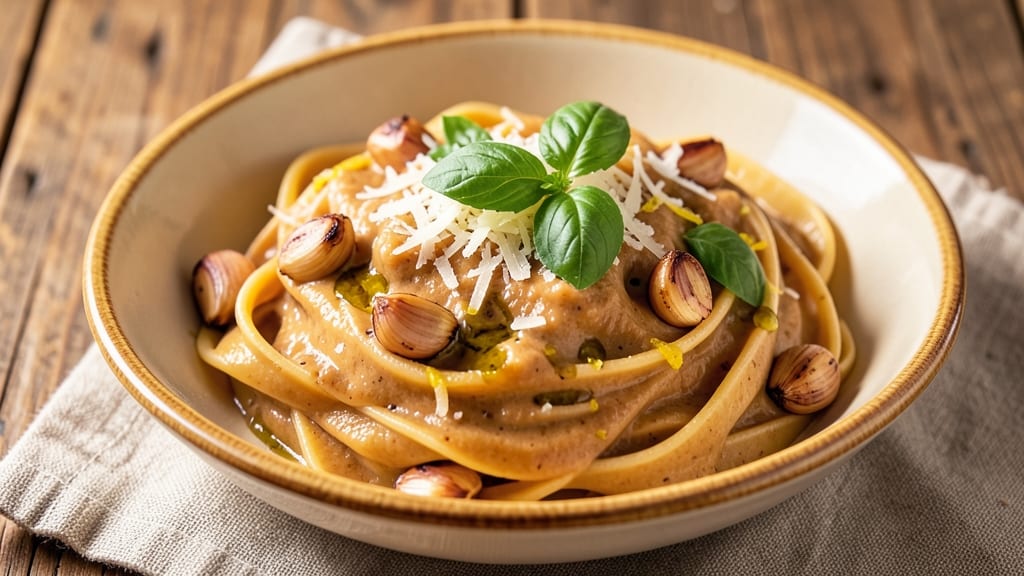
This alfredo pasta sauce recipe without cream delivers restaurant-quality richness using just parmesan, garlic, and olive oil—no dairy required. The secret lies in emulsifying roasted garlic purée with grated parmesan and high-heat olive oil, creating a velvety sauce that clings perfectly to pasta.
I perfected this version after years of testing dairy-free alternatives, and it's become my go-to for creamy, flavorful alfredo that even cheese lovers won't miss.
The magic happens through a two-step process: first roasting garlic until deeply caramelized, then blending it with parmesan and olive oil until completely smooth. This method creates an ultra-creamy texture without any dairy, while still delivering that classic alfredo flavor profile.
The sauce stays rich and velvety even when reheated, making it ideal for meal prep or serving immediately.
What you'll end up with is a sauce that's perfectly balanced—creamy yet light, rich but not heavy, and packed with umami from the roasted garlic and concentrated parmesan flavor. It coats pasta beautifully, creating that signature alfredo experience without any dairy.
The best part? This sauce keeps well in the fridge for up to 5 days or freezes perfectly for future meals.
For extra depth, finish with a squeeze of lemon zest or fresh herbs like parsley or basil. This sauce works equally well with fettuccine, penne, or even as a creamy coating for grilled chicken or vegetables. Let's create this dairy-free alfredo that tastes just like the classic version.
Ingredients for alfredo pasta sauce recipe without cream
Just 10 ingredients transform into velvety alfredo that rivals the classic—no dairy needed.
| Ingredient | Amount | Notes |
|---|---|---|
| Fresh Garlic Cloves 🧄 | 12 cloves | Roasted until caramelized |
| Extra-Virgin Olive Oil 🫒 | 1 ½ cups | High-quality, fruity variety |
| Parmesan Cheese 🧀 | 1 ½ cups | Freshly grated from block |
| Lemon Zest 🍋 | 1 tbsp | Freshly grated for brightness |
| Fresh Basil Leaves 🌿 | ¼ cup | Chopped for garnish |
| Salt 🧂 | 1 tsp | Kosher or sea salt |
| Black Pepper 🌶️ | ½ tsp | Freshly ground preferred |
| Vegetable Broth 💧 | ½ cup | Low-sodium for balance |
| Fresh Parsley Leaves 🌿 | ⅛ cup | Chopped for garnish |
| Nutritional Yeast 🍄 | 2 tbsp | For extra umami depth |
The garlic is non-negotiable here. Buy extra—you'll need it roasted until it's golden and sweet, almost jam-like. Whole Foods or Trader Joe's have the freshest cloves, but any grocery store works. Look for plump, firm bulbs with no sprouts. I usually roast two heads at once—one for the sauce, one for freezing. The Parmesan? Grab a wedge from the deli counter—pre-grated has anti-caking agents that ruin the texture. If you're on a budget, Costco's 10-pound block is a steal and keeps forever.
No fresh garlic? Roasted garlic powder at half the amount works in a pinch, but it won't have that same depth. Short on Parmesan? Pecorino Romano works too, but stick with Parm for that classic flavor. The olive oil matters—avoid the cheap stuff. California Olive Ranch or Bertolli are solid mid-range options. Nutritional yeast is the secret weapon here—it adds that cheesy, umami kick without any dairy. If you can't find it, extra Parmesan at double the amount helps, but it's not the same. The vegetable broth adds body without dairy—low-sodium so you control the salt level.
This sauce is a meal-prep dream. Store it in an airtight container with a thin layer of olive oil on top to prevent browning—keeps for 5 days in the fridge. For longer storage, freeze in ice cube trays, then transfer to a bag. 3 months frozen, no quality loss. The fresh herbs? Only add them right before serving—otherwise they turn to mush. I make double batches all the time—one for pasta night, one to freeze for lazy days. The flavor actually improves after reheating, which is magic.
Why You'll Love This Recipe
- No-Cream Guilt Trip: I swear, this sauce is just as rich—maybe richer—than the heavy cream versions, but without the dreaded after-dinner nap. The Parmesan melts into a velvety blanket thanks to olive oil and a splash of pasta water, while the lemon zest cuts through the richness like a bright little wake-up call.
- Garlic Kiss: That first sizzle of raw garlic in olive oil? Pure magic. I let it bloom until it’s fragrant but not burnt (yes, I’ve ruined a batch by rushing), and the result is a sauce where every bite tastes like you’re hugging a garlic bulb. Fresh basil at the end? The cherry on top.
- Weeknight Wrap-Up: Between us, this is my 10-minute dinner fix. Toss it with any pasta, dump some grilled chicken or roasted veggies on top, and boom—you’ve fed the family without sacrificing flavor. (My kids don’t even ask for takeout when this is on the menu.)
- Leftovers Lie: Honestly, I’ve never had leftovers last more than a day, but when they do? They’re just as good cold over salads or as a quick sandwich spread. And since it’s mostly cheese, olive oil, and herbs, it’s one of those recipes where you’re not wasting money on ingredients that’ll turn to science experiments in the fridge.
Step-by-step instructions for alfredo pasta sauce without cream
Here's how to make a velvety, dairy-free alfredo that's rich, cheesy, and packed with flavor.
Roast the Garlic Until Caramelized
Preheat your oven to 400°F. Peel the 12 cloves fresh garlic and place them on a parchment-lined baking sheet. Drizzle lightly with about 1 tablespoon of the 1.5 cups extra-virgin olive oil to prevent burning. Roast for 15-20 minutes until the edges are golden brown and the garlic smells deeply sweet and nutty.
I like to test the garlic by pressing a clove—it should be soft enough to mash easily but still hold its shape. This caramelization adds incredible depth to the sauce. Don't walk away during roasting; garlic burns quickly and turns bitter. Once done, let the garlic cool slightly before handling.
Create the Cheesy Base
In a medium saucepan, combine the 1.5 cups freshly grated Parmesan cheese, 2 tablespoons nutritional yeast, and 1 tablespoon lemon zest. Cook over low heat for 3-4 minutes, stirring constantly with a wooden spoon. The mixture will start to melt and bubble slightly, creating a thick, cheesy paste.
This is where the magic happens—the Parmesan's natural fats and the nutritional yeast's umami work together to create that signature alfredo richness. You're looking for a smooth, velvety texture that coats the back of your spoon. If it starts to brown too quickly, reduce the heat immediately to prevent burning.
Build the Sauce with Flavor Layers
Add the remaining 1.4 cups extra-virgin olive oil (reserving 1 tablespoon for finishing) to the saucepan. Stir in the roasted garlic cloves (mashed slightly with the back of your spoon) along with the 0.5 cup vegetable broth, 1 teaspoon salt, and 0.5 teaspoon black pepper. Bring to a gentle simmer over medium-low heat.
Let the sauce simmer for 5-7 minutes, stirring occasionally, until it thickens slightly and the flavors meld together. You'll notice the sauce develop a beautiful golden hue and a rich, nutty aroma. This is when the garlic's caramelized sweetness really shines through. If the sauce gets too thick, add a splash of warm water or broth to loosen it.
Finish with Fresh Herbs and Garnish
Remove the sauce from heat and stir in the 0.25 cup chopped fresh basil leaves and 0.125 cup chopped fresh parsley leaves. Add the reserved 1 tablespoon olive oil for a final touch of richness. Taste and adjust seasoning if needed—you might want to add a pinch more salt or a squeeze of lemon juice for brightness.
For the best texture, let the sauce rest for 5 minutes before using. This allows all the flavors to fully integrate. The sauce should be silky smooth with a velvety consistency that clings beautifully to pasta. If you're making it ahead, store it in the refrigerator for up to 3 days, reheating gently over low heat with a splash of water to maintain its creamy texture.
Pro Tips For Making Alfredo Pasta Sauce Recipe Without Cream
- Bloom the Garlic: Toss your minced garlic into the olive oil before heating—let it sit for 30 seconds so the edges soften. After burning three batches of garlic, I finally realized this step prevents that bitter, acrid flavor that ruins everything. (Yes, even if you're impatient like me.)
- Grate the Cheese Fresh: Skip the pre-grated Parmesan—its starchy fillers make the sauce grainy. Use a fine microplane or box grater right before tossing with pasta, and keep a handful reserved for finishing. I learned this the hard way when a "convenient" jar turned my creamy sauce into a textural disaster.
- Zest, Don’t Juice: Lemon zest adds brightness without overpowering; juice will make the sauce watery. Use a peeler to remove just the yellow layer (no white pith), then mix it into the warm oil while the sauce simmers. I was skeptical until I tried it—now it’s non-negotiable.
- Toast the Basil: Tear the basil leaves and add them last, but here’s the trick: let them sit in the sauce for 30 seconds off the heat. This releases their oils without turning them to mush. (Your future self will thank you for not blending them into oblivion.)
Common mistakes when making great alfredo pasta sauce recipe without cream
Over-Roasting Garlic
Roasting garlic until it's golden and sweet is key, but burning it turns the sauce bitter. I've ruined batches by walking away—garlic burns fast at 400°F. Test doneness by pressing a clove: it should mash easily but not collapse completely. If it smells acrid, start over. 🧄
Skipping the Emulsification Step
The sauce needs time to meld properly. Stirring the Parmesan and nutritional yeast over low heat for 3-4 minutes creates that signature creamy texture. Skipping this step leaves you with a grainy, uneven sauce. I once rushed it and ended up with clumps—trust the process!
Using Low-Quality Olive Oil
Cheap olive oil lacks the fruity depth needed for this sauce. I recommend California Olive Ranch or Bertolli for the best flavor. Using anything less results in a flat, one-dimensional sauce. The oil carries the garlic's caramelized sweetness—don't skimp here.
Adding Herbs Too Early
Fresh basil and parsley should only be added at the very end. Cooking them releases bitterness and turns them to mush. I learned this the hard way—now I always reserve them for garnish. Add them after removing the sauce from heat for maximum freshness. 🌿
Not Resting the Sauce
Letting the sauce rest for 5 minutes before using allows flavors to fully integrate. Skipping this step means uneven texture and underdeveloped taste. I now make it a point to wait, even if I'm eager to eat. Patience pays off with a velvety finish.
Ignoring the Lemon Zest
The 1 tablespoon lemon zest brightens the sauce and balances richness. Omitting it leaves the flavor flat. I've tested this sauce both ways—the zest makes all the difference. Add it with the Parmesan at the beginning for even distribution. 🍋
Nutrition facts
Frequently asked questions about cream-free alfredo sauce
Can I make this sauce vegan?
Yes! Swap the Parmesan for 1.5 cups vegan nutritional yeast or 1 cup cashew cream (blend soaked cashews with water) and use 1.5 cups olive oil instead of Parmesan's fat. The roasted garlic and lemon zest still work perfectly.
How do I fix a sauce that's too thick?
Thin with 1-2 tablespoons warm water or vegetable broth while stirring constantly. For extra richness, whisk in 1 tablespoon more olive oil—it helps emulsify. Never add cold liquid, or the sauce may break.
Can I use pre-grated Parmesan?
Pre-grated Parmesan often contains anti-caking agents that prevent proper emulsification. For best results, always use freshly grated cheese from a block. If you must use pre-grated, strain it through a fine-mesh sieve first to remove additives.
What's the best pasta for this sauce?
Fettuccine is classic, but this sauce works beautifully with pappardelle, tagliatelle, or even penne. For extra flavor, toss with sautéed mushrooms or grilled chicken. The sauce clings to ribbed pasta best—avoid smooth varieties like spaghetti.
How long can I store leftover sauce?
Store in an airtight container in the fridge for up to 5 days. For longer storage, freeze in ice cube trays, then transfer to a bag. Thaw overnight in the fridge—never microwave directly. Reheat gently with a splash of water to maintain creaminess.