
Sauces & Condiments
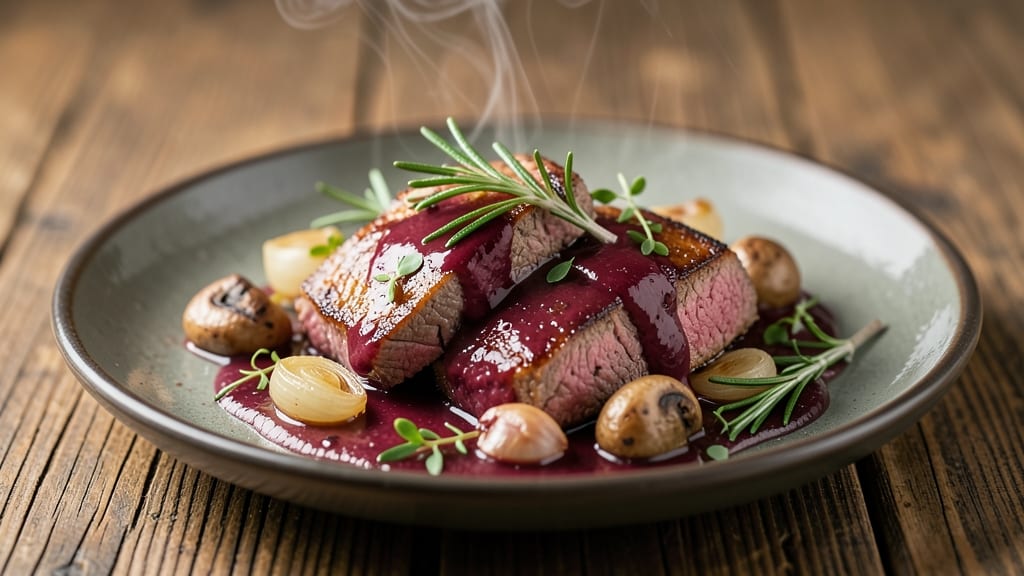
This venison sauce recipe transforms game day into a gourmet experience with its rich red wine reduction and deep, earthy herb complexity. 🍷 The perfect balance of wine's acidity and mushrooms' umami creates a sauce that elevates venison from simple to extraordinary—ideal for drizzling over roasted cuts or serving alongside roasted roots.
What sets this apart is the slow reduction technique, which develops layers of flavor while maintaining a velvety texture that clings beautifully to meat.
The foundation begins with a classic red wine reduction, where alcohol cooks off to reveal concentrated fruit notes that pair perfectly with venison's natural richness.
Earthy herbs like thyme and rosemary join wild mushrooms to deepen the sauce's complexity, while a touch of balsamic vinegar adds a subtle tang that brightens every spoonful. This isn't just a sauce—it's a flavor bridge that transforms game meat into a restaurant-worthy centerpiece.
What you'll achieve is a sauce that's equally impressive as a standalone condiment or as the star of your venison dish. The reduction process—simmered until syrupy—creates a glossy finish that glistens under table lights, while the herbs infuse aromatic depth that lingers on the palate.
The best part? It reheats beautifully, making it perfect for leftovers or meal prep when you want to serve venison with professional flair.
Whether you're hosting a hunting celebration or simply craving a sophisticated sauce, this recipe delivers restaurant-quality results with minimal effort. The key lies in patience—letting the wine reduce slowly to develop those rich, caramelized notes that make all the difference.
Store it in the fridge for up to 5 days or freeze for longer shelf life, ensuring you always have gourmet sauce on hand.
Ingredients for venison sauce
Eleven ingredients transform simple venison into a gourmet masterpiece with wine's depth and herbs' earthy magic.
| Ingredient | Amount | Notes |
|---|---|---|
| Dry Red Wine 🍷 | 2 cups | Bold Cabernet Sauvignon preferred |
| Wild Mushrooms 🍄 | 8 oz | Cremini or shiitake sliced thin |
| Shallots 🧅 | 2 whole | Finely minced, about 2 tbsp |
| Garlic Cloves 🧄 | 4 cloves | Peeled and smashed |
| Fresh Thyme 🌿 | 2 tbsp | Leaves only, stems removed |
| Fresh Rosemary 🌿 | 1 tbsp | Finely chopped, fresh preferred |
| Balsamic Vinegar 🍶 | 1 tbsp | Aged 25 years or more |
| Beef Stock 🥄 | 1 cup | Homemade or high-quality jarred |
| Unsalted Butter 🧈 | 2 tbsp | Cold, cubed for finishing |
| Diamond Crystal Kosher Salt 🧂 | ½ tsp | Adjust to taste |
| Black Peppercorns 🌶️ | ¼ tsp | Freshly cracked |
The red wine is non-negotiable—Cabernet Sauvignon or Merlot from a local winery adds the most complexity, but any bold dry red works. Wild mushrooms are the umami powerhouse here; cremini or shiitake from the farmers market have the most intense flavor. For the herbs, fresh thyme and rosemary from the grocery store's produce section (not dried) make all the difference—they infuse the sauce with aromatic depth that dried herbs can't match. Shallots and garlic? Freshly minced right before cooking to preserve their bright flavors.
No wild mushrooms? Portobello or oyster mushrooms work in a pinch, but they're less earthy. Running low on wine? Substitute beef stock with a splash of balsamic—it'll still deliver that tangy depth. Fresh herbs not an option? Dried thyme at one-third the amount and dried rosemary at half get you close, but the sauce won't have that same vibrant aroma. The balsamic vinegar? Skip it if you're avoiding sugar, but it's worth the extra $20 for the aged stuff—it adds a caramelized richness that regular vinegar can't replicate.
This sauce tastes even better the next day as the flavors meld. Store it in a glass jar in the fridge for up to 5 days—the wine reduction keeps beautifully. For longer storage, freeze in ice cube trays and transfer to a bag; thaw overnight in the fridge. The butter should be added at the very end, so keep it cold until you're ready to finish the sauce. A little goes a long way—2 tbsp per pound of venison is perfect for drizzling.
Why You'll Love This Recipe
- Here’s the kicker: this sauce actually improves the next day. The flavors meld even more, and it reheats like a dream. I make a double batch on Sundays because by Wednesday, I’m still sneaking bites straight from the jar—no one will believe it’s just leftover sauce.
- One-Pot Magic: I swear by this sauce because it’s basically foolproof—just toss in the mushrooms, shallots, and garlic, let the wine do its thing, and simmer until the thyme infuses that earthy, rich aroma. No straining, no fuss, just pure, deep flavor with minimal cleanup.
- Wine-Infused Depth: That dry red wine isn’t just for show—it transforms the sauce into something luxurious, with a velvety texture and a hint of tang that cuts through the richness of venison. Honestly, the mushrooms soak it up like a sponge, turning every bite into a little flavor bomb.
- Weeknight or Dinner Party: Between us, this sauce works everywhere. Drizzle it over pasta for a rustic dinner, use it as a glaze for roasted venison, or even toss it with mashed potatoes for a hearty side. I’ve served it at holiday dinners and lazy Sundays—it’s that versatile.
Step-by-step instructions for venison sauce
This rich red wine reduction transforms simple ingredients into a velvety sauce perfect for venison.
🍳 Step 1: Sauté Mushrooms and Aromatics
Heat a heavy-bottomed saucepan over medium heat and add the 8 oz wild mushrooms sliced thin. Cook undisturbed for 5-6 minutes until they release their moisture and begin to brown. This step develops deep umami flavor—don't rush it.
Add the 2 whole shallots (finely minced) and 4 cloves garlic cloves (peeled and smashed). Cook for another 3-4 minutes until the shallots soften and the garlic becomes fragrant. The mixture should smell like a forest after a rain—this is your foundation.
🍳 Step 2: Deglaze with Wine and Reduce
Pour in the 2 cups dry red wine (preferably bold Cabernet Sauvignon) and scrape up all the browned bits from the pan with a wooden spoon. This deglazing captures all the flavor you've built. Bring to a gentle simmer and reduce by half—about 8-10 minutes—until the wine reduces to a syrupy consistency.
Here's where the magic happens: the alcohol content in the wine will evaporate, leaving behind concentrated wine flavors. You'll know it's ready when the sauce coats the back of a spoon and smells intensely of red fruit and herbs.
🥘 Step 3: Build Depth with Herbs and Stock
Stir in the 2 tbsp fresh thyme leaves and 1 tbsp finely chopped fresh rosemary. These earthy herbs complement venison perfectly. Add the 1 tbsp aged balsamic vinegar and 1 cup beef stock, then bring to a gentle simmer. Let it reduce by another third—about 10 minutes—until the sauce thickens noticeably.
Taste and adjust seasoning with the 0.5 tsp Diamond Crystal kosher salt and 0.25 tsp freshly cracked black peppercorns. The sauce should be balanced—savory from the mushrooms, bright from the wine, and herby from the thyme and rosemary.
🔥 Step 4: Finish with Butter for Luxurious Texture
Remove the pan from heat and stir in the 2 tbsp cold cubed unsalted butter. Let it melt completely, then return to low heat for 1-2 minutes to emulsify. The butter adds richness and helps create that silky, velvety texture we want in a venison sauce.
Strain the sauce through a fine-mesh sieve to remove any herb stems or mushroom bits if you prefer a completely smooth texture. This final step ensures a luxurious, restaurant-quality finish that pairs beautifully with your venison.
Pro Tips For Making Venison Sauce
- DEGLAZE HOT: Pour that red wine in when your mushrooms and shallots are still sizzling—don’t let them cool first. The alcohol will evaporate faster, and the sauce won’t taste like you boiled it dry. (Yes, even if you’re impatient like me, resist the urge to walk away.)
- SWEAT SHALLOTS LOW: Shallots need 8-10 minutes on low heat to soften without burning. I learned this the hard way—charred shallots make the sauce bitter, and no one wants that. Stir occasionally, and if they start to stick, splash in a little wine early.
- SKIP THE MUSHROOM WATER: Wild mushrooms release enough moisture when cooked—don’t rinse them. Pat them dry first, then let them cook uncovered until all the liquid evaporates. Wet mushrooms turn your sauce into soup, and nobody’s serving that.
- TOAST THYME WHOLE: Toss whole thyme sprigs into the pan with the garlic for 30 seconds before adding wine. The leaves infuse faster, and you can fish them out later—no straining. (Your future self will thank you for not muddying the sauce with chopped stems.)
Essential equipment for venison sauce
Heavy-Bottomed Saucepan
This is your most important tool for this recipe—not just any pan will do. I swear by a 5-quart stainless steel saucepan like the All-Clad Stainless or Le Creuset Dutch oven because they distribute heat evenly and prevent scorching.
A copper-bottomed pan also works beautifully if you have one, as copper conducts heat faster for more precise reductions. Avoid nonstick pans—they can't handle the high heat needed for proper wine reduction. 🔥
Wooden Spoon
A long-handled wooden spoon is essential for stirring and deglazing without scratching your pan. I use a 6-inch hickory spoon from Oxo because it's sturdy enough to scrape up browned bits while being gentle on your saucepan.
Avoid metal utensils during cooking to prevent altering the sauce's flavor profile. The wooden spoon also helps you gauge consistency—when the sauce coats the back of the spoon, you know it's ready.
Fine-Mesh Sieve
For that silky, restaurant-quality finish, you'll want to strain out any herb stems or mushroom bits. A fine-mesh sieve like the OXO Good Grips does the job perfectly. If you don't have one, a cheesecloth works in a pinch, but it won't be as efficient.
Pro tip: Line your sieve with a coffee filter for an even smoother texture. This step is especially important if you're serving the sauce as a condiment rather than a rustic accompaniment.
Kitchen Thermometer
While not strictly necessary, a candy or sauce thermometer like the Thermoworks Thermapen helps you monitor the reduction process precisely. I aim for a reduction temperature between 205-212°F—this range ensures the wine reduces properly without burning.
The thermometer also helps you avoid over-reducing, which can turn your sauce bitter. For most home cooks, this is an optional but highly recommended upgrade for consistent results. 🌡️
Tongs for Butter
When adding the 2 tbsp cold cubed butter at the end, I use a pair of kitchen tongs to hold the butter cubes over the sauce while they melt. This keeps the butter from immediately dissolving into the hot liquid, allowing for better emulsification.
A small slotted spoon works too, but tongs give you better control. The goal is to create a glossy, velvety finish—this technique helps achieve that perfect texture.
Storage Containers
For leftovers, I recommend glass storage containers with airtight lids, like Le Parfait or Ball mason jars. Glass preserves the sauce's flavor better than plastic and won't absorb odors. For freezing, use ice cube trays or silicone molds—they make it easy to portion out just what you need.
Label your containers with the date to track freshness. The sauce keeps well in the fridge for 5 days and freezes beautifully for up to 3 months. ❄️
Nutrition facts
Frequently asked questions
Can I substitute regular wine for the red wine in this venison sauce?
While you can technically use any dry red wine, bold varieties like Cabernet Sauvignon or Merlot work best because their higher tannins and fruit concentration create deeper flavor. For a lighter option, try Pinot Noir, but expect slightly less richness. Avoid sweet or fruity wines—they'll overpower the earthy venison flavors.
How do I know when the wine reduction is ready?
The sauce is done when it coats the back of a spoon and smells intensely of red fruit and herbs. Aim for a syrupy consistency (about 8-10 minutes of simmering). If it's too thin, reduce longer; if too thick, add 1 tsp beef stock at a time. The wine should reduce by roughly half its original volume.
Can I make this sauce ahead of time?
This sauce tastes even better the next day as flavors meld. Store it in a glass jar in the fridge for up to 5 days. For longer storage, freeze in ice cube trays—thaw overnight in the fridge. Reheat gently on low heat or in the microwave (stirring frequently) to preserve its velvety texture.
What if I don't have fresh herbs?
Use dried thyme at one-third the amount (⅔ tsp) and dried rosemary at half (½ tsp). Toast the dried herbs in the pan for 30 seconds before adding wine to enhance their aroma. The sauce won't be as vibrant, but it'll still deliver great flavor. For extra depth, add ½ tsp smoked paprika as a substitute.
How much sauce should I make for a venison roast?
Start with 2 tbsp sauce per pound of venison—this recipe yields about 1½ cups, perfect for a 4-6 lb roast. For larger cuts, double the recipe. The sauce clings beautifully to meat, so less is often more. Save leftovers for drizzling over pasta or grilled vegetables!