
Sauces & Condiments
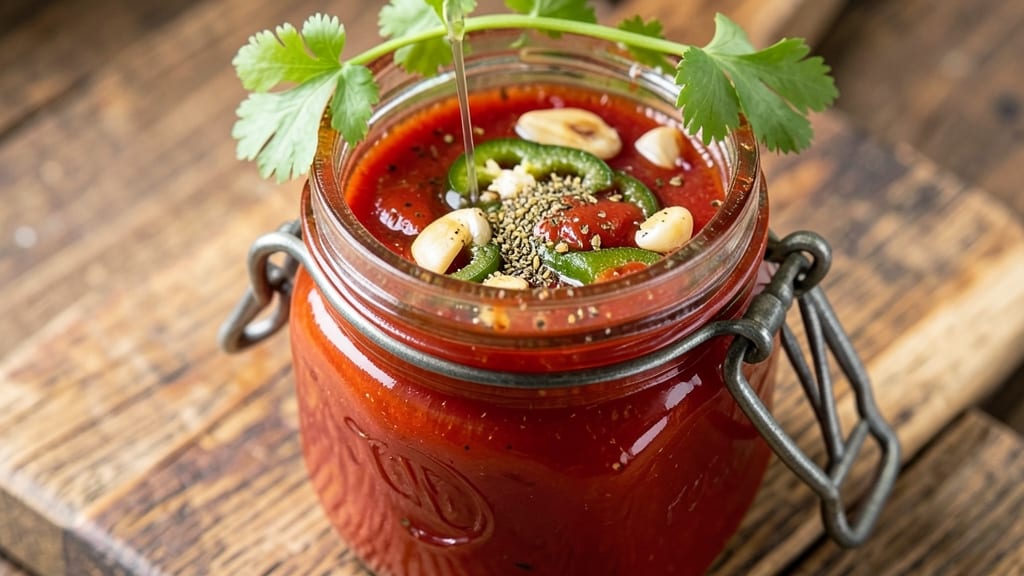
This canned picante sauce recipe delivers bold, smoky heat that transforms everyday meals into restaurant-quality dishes. 🔥 The secret lies in balancing ripe tomatoes, fiery jalapeños, and aromatic spices like cumin and garlic—simmered until deeply flavorful, then preserved properly for months of use.
Unlike store-bought versions, this homemade sauce builds layers of complexity through slow cooking and natural acidification.
What sets this recipe apart is its versatility—use it as a taco sauce, bean dip, or marinade, all while keeping the ingredients simple and the process straightforward. The sterilization method ensures safety without sacrificing flavor, and the vinegar-based preservation extends shelf life for up to a year.
For those who love heat but hate the artificial aftertaste of commercial sauces, this is the game-changer you’ve been waiting for.
The result is a vibrant, slightly tangy sauce with just the right kick—smooth enough to drizzle but bold enough to stand up to grilled meats and crispy tortilla chips. Every batch delivers consistent heat and depth, making it perfect for batch cooking and gifting.
Whether you're a seasoned home cook or a beginner, this recipe delivers professional-quality results with minimal effort.
Once you taste the difference, store-bought picante sauce will never satisfy again. The slow simmer develops flavors that bottled versions can’t match, and the homemade touch makes every meal feel special. Ready to elevate your tacos, beans, and dips? Here’s how to make it.
Ingredients for canned picante sauce
Eleven simple ingredients transform into bold, restaurant-quality picante sauce perfect for canning and gifting.
| Ingredient | Amount | Notes |
|---|---|---|
| Ripe Roma Tomatoes 🍅 | 4 lbs | Vine-ripened for sweetness and acidity |
| Fresh Jalapeño Peppers 🌶️ | 6 whole | Seeds removed for moderate heat |
| White Vinegar 💧 | 1 cup | White or apple cider vinegar |
| Garlic Cloves 🧄 | 8 cloves | Freshly minced for aromatic depth |
| Ground Cumin 🌿 | 2 tbsp | Toasted for enhanced flavor |
| Dried Oregano 🍃 | 1 tbsp | Mexican oregano preferred |
| Salt 🧂 | 1 ½ tsp | Diamond Crystal kosher salt |
| Black Peppercorns 🌶️ | 1 tsp | Freshly cracked for texture |
| Onion 🧅 | 1 whole | Yellow or white, diced |
| Canning Salt 🧂 | 1 tsp | For processing jars |
| Lemon Juice 🍋 | 2 tbsp | Freshly squeezed for acidity |
The tomatoes are the foundation—Roma are ideal for their meaty texture and lower water content. Local farmers markets often have the best vine-ripened varieties, but store-bought works too if they're firm and red. Jalapeños should be bright green and firm—avoid any with soft spots. For extra heat, keep the seeds in; for mild sauce, remove them. Ball canning jars are a must for sterilization, available at any grocery store's canning aisle or online. If you can't find Mexican oregano, regular dried oregano works, but the flavor will be slightly different.
No fresh jalapeños? Pickled jalapeños in juice work in a pinch, but reduce the amount by half. Substitute vinegar with lemon juice at double the amount if you prefer a tangier sauce. For the garlic, garlic powder at half the amount is an option, but fresh is always better. If you're short on time, pre-minced garlic from a jar works, though it lacks the same depth. The onion can be swapped for 1/4 cup onion powder, but fresh is preferred for that caramelized flavor. For those avoiding salt, use half the amount and add extra lemon juice for acidity.
This sauce keeps for up to a year when canned properly. Store jars in a cool, dark place like a pantry or cellar. For immediate use, refrigerate for up to 3 months. The sterilization process is critical—process pint jars for 15 minutes and quart jars for 20 minutes in a boiling water bath. Always check seals before storing. Once opened, refrigerate and use within 7 days. Freezing is also an option for up to 6 months—leave 1-inch headspace and store in airtight containers.
Why You'll Love This Recipe
- No Chopping Needed: I’ll be real—this sauce is ridiculously simple. You just toss whole Roma tomatoes and jalapeños into a pot with vinegar and garlic, let them simmer until soft, then blend. No peeling, no dicing, no fuss.
- Heat You Can Control: That fresh jalapeño kick is dangerously good, but here’s the magic: the vinegar mellows it out just enough to make it versatile. Want it spicier? Add more peppers. Prefer mild? Strain out the seeds. It’s all up to you.
- Pantry Staple Power: Between us, this sauce is my secret weapon for lazy nights. Drizzle it on tacos, mix it into scrambled eggs, or toss it with beans—it turns basic meals into something special. And since it uses pantry basics, I never run out.
- Makes a Month’s Worth: Honestly, I batch this stuff in jars and keep them in the fridge for weeks. The vinegar acts like a natural preservative, so you’re not stuck throwing out sad, wilted leftovers. Plus, it’s cheaper than buying store-bought every time.
Step-by-step instructions for canned picante sauce
Here's the method to transform fresh ingredients into vibrant, heat-packed picante sauce that keeps beautifully.
🍳 Step 1: Roast Tomatoes and Onion for Deep Flavor
Preheat your oven to 400°F. Cut the 4 lbs ripe Roma tomatoes in half lengthwise and place them cut-side down on a baking sheet. Dice the 1 whole onion and spread it around the tomatoes. Roast for 30-35 minutes until the tomatoes collapse slightly and the onion softens—you'll see them darken to a deep golden color.
This roasting step develops concentrated sweetness and caramelized depth that store-bought sauces can't match. The tomatoes should be soft enough to mash easily with a fork when cool, but still hold their shape slightly. Remove from oven and let cool completely before processing.
🔪 Step 2: Prepare and Blend All Ingredients
While the tomatoes cool, remove seeds and membranes from the 6 whole fresh jalapeño peppers (leave seeds in for extra heat if preferred). Finely mince the 8 cloves garlic and crack the 1 tsp black peppercorns using a mortar and pestle or small spice grinder.
In a large food processor, combine the cooled roasted tomatoes, onion, jalapeños, garlic, 2 tbsp ground cumin, 1 tbsp dried oregano, 1.5 tsp salt, and 2 tbsp lemon juice. Pulse until smooth but still slightly textured—you want some body to the sauce. Scrape down the sides as needed to ensure even blending.
🥘 Step 3: Simmer and Acidify the Sauce
Transfer the blended mixture to a large saucepan and bring to a gentle boil over medium-high heat. Stir in the 1 cup white vinegar and simmer uncovered for 20-25 minutes, stirring occasionally. The sauce should reduce slightly and develop a glossy sheen.
Taste and adjust seasoning—you may need an additional ½ tsp salt or more vinegar for proper acidity. The sauce should balance sweet, spicy, and tangy flavors with a medium heat level. Here's the thing—proper acidification is crucial for both flavor and safe canning, so don't skimp on the vinegar.
⏰ Step 4: Hot-Pack and Process Jars
Ladle the hot sauce into clean, hot pint-sized canning jars, leaving ½-inch headspace. Add a ¼ tsp canning salt to each jar if desired for extra preservation. Wipe jar rims with a damp cloth to ensure clean seals.
Place lids on the jars and process in a boiling water bath for 15 minutes (adjust for altitude if needed). Start timing when water returns to a full boil. Remove jars and let cool completely on a towel-lined counter for 12-24 hours—this allows the lids to seal properly.
🔥 Step 5: Store and Enjoy Your Homemade Picante
Once cooled, check that lids have sealed by pressing in the center—if they don't pop back, they're sealed. Store sealed jars in a cool, dark place for up to 1 year. The sauce will continue to develop flavor over time, becoming even more complex.
Use your picante sauce on tacos, as a dip for chips, or mixed with mayonnaise for a spicy sandwich spread. The homemade version delivers vibrant color, authentic heat, and layers of flavor that far surpass anything in store-bought bottles. Real talk—the first batch always disappears faster than you expect!
Pro Tips For Making Canned Picante Sauce
- BLANCH TOMATOES FIRST: Drop whole Roma tomatoes into boiling water for 30 seconds before peeling—this loosens the skins so they slip off clean. I used to wrestle with stubborn skins until I realized this step cuts prep time in half and keeps the sauce from turning cloudy.
- PEEL JALAPEÑOS HALFWAY: Slit jalapeños lengthwise but leave the stem intact—this lets you remove seeds and membranes without cutting into the flesh. I learned this the hard way when I over-sliced and ended up with bitter, seedy sauce every time.
- SIMMER LOW AND LONG: Keep the sauce at a gentle bubble (180–190°F) for at least 45 minutes after adding vinegar—this breaks down the tomatoes evenly and mellows the acidity. Rushing this step leaves you with a chunky, sharp mess instead of smooth, balanced heat.
- TOAST THE CUMIN DRY: Heat the ground cumin in a dry pan for 30 seconds until fragrant before adding it to the sauce—this deepens its earthy notes without bitterness. I was skeptical until I tried it; now I can’t imagine skipping it.
Storing and reheating this dish
Refrigerator Storage
If you're not canning your picante sauce right away, store it in the fridge in an airtight container for up to 3 months. The flavors actually deepen over time, so I recommend making a fresh batch every 2 months for peak freshness.
Transfer the cooled sauce to a glass jar with a tight-sealing lid—I prefer Ball mason jars because they're food-safe and reusable. 🥫
Freezing for Long-Term
Freezing is a great option if you want to preserve your sauce for up to 6 months. Use freezer-safe containers or heavy-duty freezer bags, leaving 1-inch headspace to prevent expansion cracks.
Label with the date so you can track freshness. When ready to use, thaw overnight in the fridge and stir well before reheating. 🧊
Reheating Methods
For the best texture, reheat your picante sauce on the stovetop over medium-low heat for 5-7 minutes, stirring occasionally. Avoid boiling to prevent separation. If using from the fridge, add a splash of water or vinegar (about 1 tbsp) to help restore the sauce's glossy consistency.
For quick use, microwave on 50% power for 1-2 minutes, stirring halfway. 🔥
Shelf Life After Opening
Once opened, store your canned picante sauce in the fridge for up to 7 days. If you notice any changes in color, texture, or smell, it's best to discard it. The vinegar and acidification process should keep it safe, but always trust your senses.
I like to portion out small amounts into small jars so I can use just what I need without worrying about waste. 💡
Reviving Stored Sauce
If your stored sauce seems too thick after reheating, thin it with 1-2 tbsp water or vinegar and stir well. For extra heat, add a pinch of cayenne pepper or a few drops of hot sauce.
If the flavor has mellowed, boost it with a splash of fresh lime juice or a pinch of extra salt. The beauty of homemade sauce is that you can always adjust it to taste! 🌶️
Nutrition facts
Frequently asked questions
Can I adjust the heat level in this picante sauce?
For milder heat, remove all jalapeño seeds and membranes before blending. For extra spice, add 1-2 extra jalapeños or a pinch of cayenne pepper after simmering. The roasted tomatoes naturally mellow the heat, so you can always balance it with more vinegar or lemon juice if needed.
What’s the best way to use leftover picante sauce?
This versatile sauce works as a taco dip, bean topping, or marinade for grilled meats. Mix it with mayo for spicy sandwich spreads, or drizzle over nachos. For extra richness, stir in 1 tbsp olive oil or blend with ½ cup sour cream for a creamy version. The possibilities are endless!
Why did my sauce separate after canning?
Separation happens when the sauce cools too quickly or lacks proper acidity. Stir in 1 tbsp vinegar or lemon juice and reheat gently to restore consistency. Always ensure your sauce reaches a pH of 4.6 or lower (via vinegar/lemon juice) to prevent separation and ensure safety.
Can I make this sauce without a food processor?
Yes! Roast and mash the tomatoes by hand, then finely chop all ingredients with a knife. Simmer everything together for 30 minutes to blend flavors. The texture will be slightly chunkier but still delicious. For a smoother result, pulse in a blender after simmering.
How do I know if my canned sauce is spoiled?
Discard it if you notice mold, foul odors, or a slimy texture. Check for bulging or leaking jars before opening. Properly sealed jars should last 1 year unopened. When in doubt, toss it—safety first!