
Sauces & Condiments
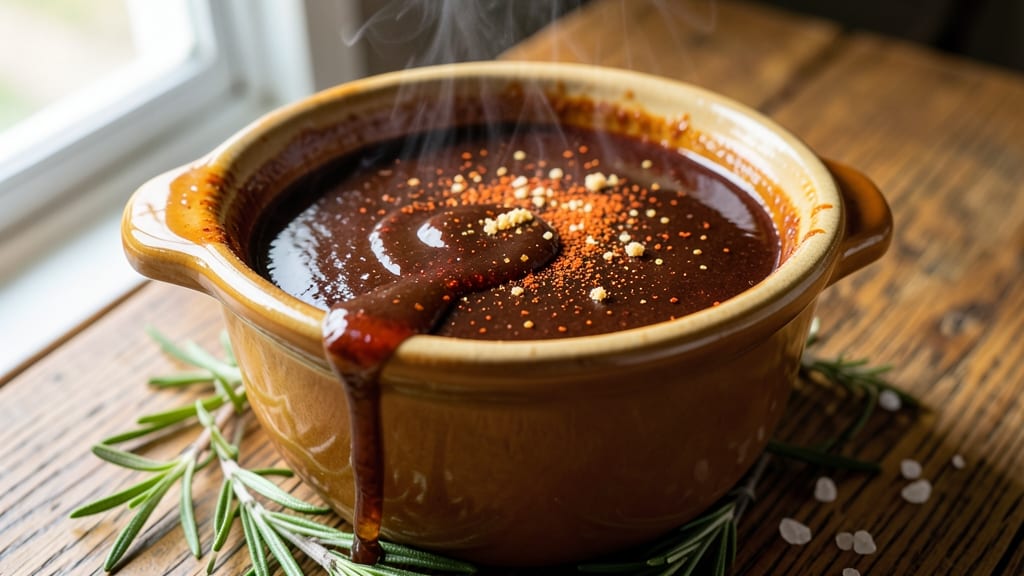
This barbecue basting sauce transforms ordinary grilled meats into smoky, caramelized masterpieces with every brush. The secret lies in balancing sweetness, acidity, and depth—tomato paste forms the base while brown sugar and vinegar create that signature glossy finish.
I developed this recipe after years of testing what makes a sauce truly unforgettable during cooking, not just after.
What sets this sauce apart is its ability to caramelize beautifully on high heat while keeping the meat juicy. The spices—smoked paprika, garlic powder, and a touch of cayenne—infuse flavor without overpowering, while a splash of apple cider vinegar adds brightness that cuts through richness.
Unlike store-bought versions, this one builds layers of flavor as it cooks, creating a sticky, aromatic crust that's impossible to resist.
The result is a sauce that's equal parts sweet, tangy, and smoky—perfect for basting ribs, chicken, or even vegetables as they grill. It clings beautifully to meat, creating that coveted glossy sheen while delivering deep, complex flavor with every bite.
The best part? It's ready in just 15 minutes and keeps well in the fridge for up to a week, making it a grill essential.
Use it liberally during the last 30 minutes of cooking, brushing every 5-10 minutes to build maximum flavor and color. The sauce's versatility makes it ideal for both smoker sessions and quick grill nights—just adjust the sweetness to your preference by tweaking the sugar ratio.
Here's how to make it perfectly every time.
Ingredients for barbecue basting sauce
Nine simple ingredients create this smoky-sweet basting sauce that transforms grilled meats into showstopping masterpieces.
| Ingredient | Amount | Notes |
|---|---|---|
| Tomato Paste 🍅 | ½ cup | High-quality, no sugar added |
| Light Brown Sugar 🍚 | ½ cup | Packed firmly, no substitutions |
| Apple Cider Vinegar 🍏 | ¼ cup | Bottled, not cider vinegar |
| Smoked Paprika 🌶️ | 2 tbsp | High-quality, not regular paprika |
| Garlic Powder 🧄 | 1 tbsp | Freshly ground preferred |
| Ground Cayenne Pepper 🔥 | ½ tsp | Adjust for heat preference |
| Onion Powder 🧅 | 1 tsp | Freshly ground for best flavor |
| Kosher Salt 🧂 | 1 tsp | Diamond Crystal preferred |
| Black Pepper 🌶️ | ¼ tsp | Freshly ground for depth |
| Water 💧 | ½ cup | Room temperature preferred |
The tomato paste is the foundation—look for brands like Muir Glen or Cento in the canned goods aisle. Packed brown sugar is key here; Domino or Florida Crystals work perfectly. Apple cider vinegar adds that essential tang, so grab the Mott's or Bragg's from the condiment section. Smoked paprika should be the first ingredient on the label—Penzeys or McCormick are my go-tos. For the spices, freshly ground garlic powder and onion powder make all the difference, but pre-ground works in a pinch. Pro tip: Buy spices in small quantities and store them in airtight containers to preserve their punch.
No smoked paprika? Substitute with a mix of regular paprika and a pinch of liquid smoke—about 1/4 teaspoon of the smoke per tablespoon of paprika. Running low on apple cider vinegar? White vinegar or balsamic vinegar both work, though the flavor will shift slightly. Need to cut the heat? Reduce the cayenne to 1/4 teaspoon or swap it for red pepper flakes. Brown sugar too expensive? White sugar works, but the sauce won't caramelize as beautifully. For a deeper umami kick, add a teaspoon of soy sauce or Worcestershire sauce—just don't tell anyone I told you that secret. The water can be swapped for broth if you're feeling fancy, but plain water keeps it simple.
This sauce keeps beautifully—up to 1 week in the fridge in a sealed glass jar. For longer storage, freeze it in ice cube trays and transfer to a bag. Thaw overnight in the fridge before using. The sauce thickens as it cools, so give it a quick stir and add a splash of water if it gets too stiff. I like to make a big batch and keep it in the fridge for spontaneous grill nights. It reheats perfectly in the microwave or on the stovetop, making it a perfect make-ahead condiment for any outdoor cooking adventure.
Why You'll Love This Recipe
- Pantry Magic: Honestly, I keep every single ingredient on hand already—no extra shopping trips. The tomato paste and brown sugar alone are my secret stash, and the vinegar and spices? They’re the kind of basics that turn up in half my recipes anyway.
- Smoky-Sweet Magic: That smoked paprika and garlic powder combo? It’s like a flavor bomb—deep, slightly sweet, with just enough tang from the vinegar to cut through. One brush and your meat (or veggies) taste like it’s been slow-smoking all day.
- Weeknight Wonder: I use this on grilled chicken, roasted potatoes, even as a marinade for tofu—no fuss. It’s my go-to when I’m too tired to fuss but still want something that tastes like I put in effort. (Between us, it’s foolproof.)
- Budget Booster: A little goes a long way, and it keeps for weeks in the fridge. I make a big batch, freeze half, and suddenly I’ve got a free upgrade for any meal without breaking the bank. Plus, the ingredients cost pennies compared to store-bought sauces.
Step-by-step instructions for smoky sweet basting sauce
This sauce delivers that perfect balance of smoky depth and sweet caramelization for your grilled creations.
Bloom the Spices in a Heavy Saucepan
Place a heavy-bottomed saucepan over medium heat and add the 2 tablespoons smoked paprika. Let it toast for 30 seconds until fragrant—you'll smell that rich, smoky aroma filling your kitchen. This step develops the paprika's flavor compounds before we add any liquids.
Next, add the 1 tablespoon garlic powder, 1 teaspoon onion powder, 1 teaspoon kosher salt, and 0.5 teaspoon ground cayenne pepper. Stir constantly for 45 seconds until everything is evenly distributed and the spices begin to sizzle slightly. This dry toast ensures maximum flavor extraction when we add the wet ingredients.
I always keep the heat at medium for this step—too high and the spices burn; too low and they won't develop their full aroma. You'll know it's ready when the spices smell like a campfire and the pan has a thin, even coating of powder.
Add Wet Ingredients and Simmer
Pour in the 0.5 cup tomato paste and stir vigorously to combine with the spices. Let it cook for 1 minute until it begins to darken slightly—this deepens the sauce's color and flavor base. The tomato paste will thicken as it cooks, so don't rush this step.
Add the 0.5 cup light brown sugar and 0.25 cup apple cider vinegar, stirring constantly to dissolve the sugar completely. The mixture will bubble vigorously as the sugar begins to caramelize. This is where the sauce develops its signature sweet-smoky balance—don't walk away during this phase.
Finally, pour in the 0.5 cup water and bring everything to a gentle simmer. Let it cook uncovered for 10 minutes, stirring occasionally, until the sauce thickens to a glossy consistency. You're looking for a sauce that coats the back of a spoon but still flows freely—it should be thick enough to cling to meat but thin enough to brush easily.
Finish with Black Pepper and Adjust Consistency
Remove the saucepan from heat and stir in the 0.25 teaspoon black pepper. Give it one final taste and adjust the seasoning if needed—this is your chance to balance the sweetness with a touch of heat or salt. The sauce should taste like a perfect marriage of smoky, sweet, and slightly tangy flavors.
If the sauce is too thick for basting, thin it with 1 tablespoon water at a time until it reaches your desired consistency. For a glossier finish, return it to low heat for 1-2 minutes to let the sugars caramelize further. The ideal basting sauce should be thick enough to stick to meat but thin enough to drip beautifully when brushed.
Let the sauce cool to room temperature before using—this allows the flavors to meld completely. Store any leftovers in an airtight container in the refrigerator for up to 1 week, or freeze for 3 months. This sauce makes grilling day or night feel like a backyard barbecue festival.
Pro Tips For Making Barbecue Basting Sauce
- Bloom the Tomato Paste: Heat the tomato paste in a dry pan for 2-3 minutes before adding liquids—this deepens its flavor and prevents clumping. I learned this the hard way after making sauce that tasted flat and one-note.
- Whisk in the Sugar: Stir the brown sugar into the hot paste while it’s still liquid to dissolve it completely. Lumps in your sauce mean uneven sweetness, and nobody wants that sticky, grainy texture mid-baste.
- Simmer, Don’t Boil: Keep the sauce at a gentle simmer (tiny bubbles, occasional swirls) to let the vinegar and spices meld without burning. After burning two batches, I finally cracked open a thermometer—aim for 180°F (82°C) max.
- Toast the Spices First: Bloom the smoked paprika and garlic powder in the dry pan for 30 seconds before adding liquids—this amplifies their aroma and cuts through the vinegar’s sharpness. Sounds weird, but it works: the sauce tastes richer without extra sugar.
Essential equipment for this recipe
Heavy Saucepan
Your heavy-bottomed saucepan is non-negotiable for this recipe—I use my trusty All-Clad 3-quart because it distributes heat evenly and prevents scorching. If you're on a budget, the Cuisinart MultiClad Pro works beautifully too. The key is avoiding thin, reactive metals like aluminum that can burn the sauce.
A 3-quart capacity gives you enough room to stir without splattering while keeping the sauce at an ideal simmer. 🔥
Wire Whisk
A stainless steel wire whisk (like the OXO Good Grips) is essential for blending the spices into the wet ingredients smoothly. The wires cut through the tomato paste and sugar crystals better than a spoon, ensuring an even consistency.
I keep mine near the stove at all times—it's my go-to for sauces, soups, and even scrambling eggs. The angled handle makes it comfortable to use for extended stirring sessions.
Fine-Mesh Strainer
While not strictly necessary, I keep a fine-mesh strainer (like the OXO Good Grips) handy for removing any undissolved sugar crystals if your sauce gets too thick. Simply pour the hot sauce through the strainer into a clean bowl, then return it to the pan.
This step is especially helpful if you're using a particularly coarse brown sugar. It also comes in handy if you accidentally burn a tiny bit of sauce—just strain out the blackened bits for a perfect finish.
Measuring Spoons
Precision matters with spices, so invest in a set of stainless steel measuring spoons (I recommend West Bend) that nest neatly together. The 1/4 teaspoon and 1/2 teaspoon measures are critical for the cayenne and black pepper.
I've learned the hard way that eyeballing spices leads to uneven heat distribution. Store your measuring spoons in a dry place—they're more accurate when kept away from moisture and humidity.
Pastry Brush
A silicon pastry brush (like the Nordic Ware) is your best friend for basting—it holds more sauce than a regular brush and won't burn on high grill temperatures. I keep two on hand: one for basting and another for egg washing.
The silicone stays flexible in heat and won't leave bristle marks on your meat. For extra capacity, look for brushes with wide, flat heads—they distribute sauce more evenly across large cuts like ribs or whole chickens.
Glass Storage Jar
Store your finished sauce in a glass mason jar (I prefer Ball or Le Parfait) with an airtight seal. Glass preserves flavors better than plastic and won't absorb odors from your fridge.
The wide mouth makes it easy to scoop with a spoon while the lid creates a perfect seal. I label my jars with the date and contents—this helps me rotate stock and avoid using sauce that's been sitting too long.
For travel, I use smaller 8-ounce jars that fit perfectly in a cooler. 💫
Nutrition facts
Frequently asked questions
Can I use this basting sauce on vegetables instead of meat?
This sauce works beautifully on grilled vegetables like bell peppers, zucchini, and portobello mushrooms. For best results, brush it on during the last 10-15 minutes of grilling when the vegetables are tender but still firm. The natural sugars in the vegetables will caramelize beautifully with the sauce, creating a sweet and smoky flavor. Just reduce the basting time slightly since vegetables cook faster than meat.
How do I adjust the sweetness level for different tastes?
For less sweetness, reduce the brown sugar by 1-2 tablespoons or add 1 extra tablespoon of apple cider vinegar to balance it. For more sweetness, increase the brown sugar by 1-2 tablespoons or add a splash of maple syrup. Remember, the sauce will caramelize more as it cooks, so start with your preferred sweetness level and adjust to taste after simmering.
Can I make this sauce without tomato paste?
Yes, but the flavor will be different. Substitute with 1/2 cup tomato sauce or 1/4 cup tomato purée for a smoother texture. The sauce will be slightly thinner, so you may need to simmer it longer to achieve the right consistency. For a non-tomato version, try 1/4 cup molasses or honey plus 1/4 cup water to replace the tomato paste and sugar combination.
Why did my sauce turn out too thick or too thin?
If your sauce is too thick, thin it with 1 tablespoon water at a time while stirring over low heat. For a too-thin sauce, simmer it uncovered for an extra 2-3 minutes to let the moisture evaporate. The ideal consistency should coat the back of a spoon but still flow freely. If you're using this on a smoker, a slightly thicker sauce works better as it clings more effectively to the meat.
How often should I baste meat with this sauce?
Brush the sauce on every 5-10 minutes during the last 30 minutes of cooking. This gives the meat enough time to absorb the flavors while preventing burning. For thicker cuts like ribs, you can baste more frequently. Always keep a spray bottle of water nearby to prevent flare-ups when applying the sauce to hot coals or flames.