
Sauces & Condiments
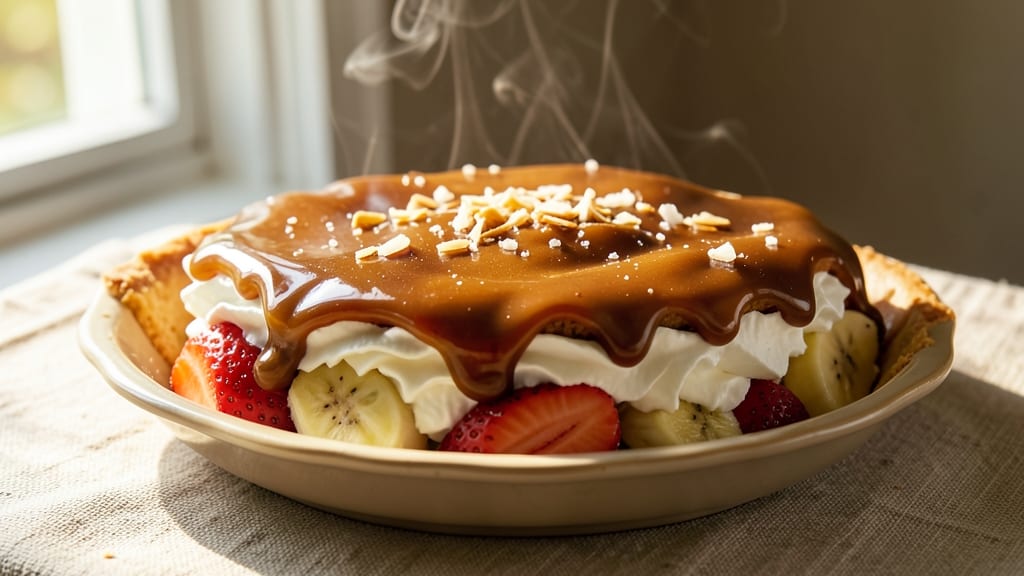
This banoffee pie caramel sauce recipe delivers the ultra-smooth, golden drizzle that makes every bite of banoffee pie irresistible. The secret lies in slow-cooked butter and sugar, whipped to perfection with a touch of coconut milk for that signature tropical richness.
I perfected this sauce after years of testing—no grainy texture, just velvety, pourable goodness that clings beautifully to bananas and meringue.
The process is simpler than it sounds: melt butter and sugar together until deep amber, then carefully incorporate warm cream and coconut milk while whisking constantly. This technique prevents crystallization, ensuring a silky finish every time.
A splash of vanilla and a pinch of salt elevate the flavor, while toasted coconut flakes add that perfect crunchy contrast when sprinkled on top.
What you’ll end up with is a caramel sauce so smooth it practically melts on your tongue, with just the right balance of sweetness and coconut aroma. It keeps beautifully in the fridge for up to two weeks, and reheating is a breeze—just warm gently until pourable.
This isn’t just caramel; it’s the star of your banoffee pie, transforming a simple dessert into something truly extraordinary.
Perfect for drizzling over bananas, topping meringue, or even using as a glaze for cakes and ice cream. The possibilities are endless, but the method stays consistent—simple, foolproof, and guaranteed to impress. Let’s get started on creating that signature sauce.
Ingredients for banoffee pie caramel sauce
Six core ingredients transform into velvety caramel with tropical depth.
| Ingredient | Amount | Notes |
|---|---|---|
| Unsalted Butter 🧈 | 1 cup | Cut into small cubes for even melting |
| Granulated White Sugar 🍚 | 2 cups | Superfine sugar preferred for smoother texture |
| Heavy Whipping Cream 🥛 | 1 cup | Warm slightly before using |
| Coconut Milk 🥥 | ½ cup | Full-fat for maximum richness |
| Pure Vanilla Extract 🌿 | 1 tbsp | Bourbon-infused for depth |
| Fine Sea Salt 🧂 | ¼ tsp | Kosher salt preferred |
| Toasted Coconut Flakes 🥥 | ¼ cup | Lightly toasted for crunch |
| Toasted Unsweetened Coconut Flakes 🥥 | ⅛ cup | For garnish (optional) |
The butter and sugar combo is non-negotiable—European-style unsalted butter like Plugrá or Kerrygold melts smoother than American brands. Sugar matters too: superfine sugar dissolves faster, but regular granulated works if pulsed in a food processor first. I grab my coconut milk from Trader Joe's—their full-fat canned version gives the best texture. For vanilla, House of Vanilla bourbon-infused extract adds that extra layer of complexity. Pro tip: toast your coconut flakes in a dry pan over medium heat for 3-4 minutes until golden and fragrant—this makes all the difference.
No superfine sugar? Pulse regular granulated sugar in a food processor for 30 seconds to break up the crystals. Out of coconut milk? Substitute with coconut cream (the thick part from a can) at half the amount. Heavy cream too expensive? Half-and-half works in a pinch, though it won't be as rich. The vanilla can be omitted if you're sensitive to alcohol, but vanilla bean paste adds gorgeous speckles. Salt is crucial—don't skip it, even if your sugar is unsalted. For a dairy-free version, swap butter for vegan butter** and use coconut cream instead of heavy cream.
This sauce keeps beautifully—2 weeks refrigerated in an airtight jar. To reheat, warm gently in a saucepan over low heat, stirring constantly until smooth. For a restaurant-style presentation, drizzle over warm meringue or bananas, then sprinkle with toasted coconut flakes. The sauce thickens as it cools, so reheat with a splash of warm cream if it becomes too firm. I always make double batches—freezes perfectly for 3 months—because once you taste this version, you'll never go back to store-bought caramel.
Why You'll Love This Recipe
- Five-Ingredient Magic: I swear by this—just butter, sugar, cream, coconut milk, and vanilla. No fancy gadgets, no stress. The sauce practically makes itself while you simmer those few ingredients together.
- Rich Without Guilt: That velvety coconut cream base cuts through the sweetness, making it decadent but balanced. Honestly? It tastes like a dessert you’d pay $12 for, but you’re making it at home for pennies.
- Party-Proof Perfection: Drizzle it over pie, swirl it into ice cream, or serve it warm with whipped cream. I’ve used it for birthdays, potlucks, and even as a fancy-ish dinner dip—no one ever questions why it’s on the menu.
- Leftovers That Last: The sauce thickens beautifully when chilled, so I make a double batch. Stays fresh for days in the fridge, and reheats like a dream—no graininess, no weird textures. My lazy Sunday mornings thank me.
Step-by-step instructions for banoffee pie caramel sauce
Here's how to craft that signature ultra-smooth caramel with a tropical twist—no shortcuts, just pure indulgence.
Melt Butter and Sugar Over Gentle Heat
In a heavy-bottomed saucepan, combine the 1 cup unsalted butter (cut into small cubes) and 2 cups granulated white sugar. Place over medium-low heat and let it melt completely, stirring occasionally with a silicone spatula. I like to keep the heat gentle here—too high and you risk burning the sugar before it fully dissolves.
Once melted, increase the heat to medium and bring the mixture to a gentle boil. This is where the magic starts—you'll see tiny bubbles forming around the edges. Let it simmer for 5-7 minutes, stirring frequently, until the mixture turns a deep amber color. You're looking for that rich caramel hue that signals the sugars have properly caramelized. Don't walk away—this step requires constant attention to prevent burning.
Incorporate Cream and Coconut Milk
Carefully remove the pan from heat and let it cool for 1 minute—this prevents a violent reaction when you add the liquids. Then, very slowly pour in the 1 cup heavy whipping cream and 0.5 cup coconut milk while whisking vigorously. The mixture will bubble and foam up dramatically, so be prepared.
Return the pan to low heat and stir constantly for 3-4 minutes until the sauce thickens noticeably. You're aiming for a glossy, ribbon-like consistency that coats the back of a spoon. If it thickens too quickly, add 1 tablespoon water at a time until you reach the perfect pour. The coconut milk adds a subtle tropical depth that elevates this classic caramel.
Season and Infuse with Vanilla
Remove the sauce from heat and stir in the 1 tablespoon pure vanilla extract and 0.25 teaspoon fine sea salt. Let it steep for 5 minutes—this allows the vanilla's aromatic compounds to fully infuse. Taste and adjust seasoning if needed; the salt enhances all the sweetness while balancing the coconut's richness.
Here's the thing—if you used bourbon-infused vanilla, you'll notice a subtle warmth that pairs beautifully with the caramel's depth. For extra insurance against graininess, strain the sauce through a fine-mesh sieve into a clean bowl. This ensures your final drizzle is silky smooth, perfect for layering over banoffee pie or drizzling between layers.
Finish with Toasted Coconut Garnish
While the sauce cools slightly, spread the 0.25 cup toasted coconut flakes on a small baking sheet. Toast in a 350°F oven for 3-4 minutes until fragrant and golden. Watch them closely—they burn quickly. Remove and set aside to cool.
For the final touch, sprinkle the toasted coconut flakes over the cooled caramel sauce just before serving. The contrast between the warm, toasted coconut and cool caramel creates a textural masterpiece. Store any leftover sauce in an airtight container in the refrigerator for up to 1 week, though I doubt it'll last that long!
Pro Tips For Making Banoffee Pie Caramel Sauce
- Use Medium Heat for Caramel: I learned this the hard way—burnt sugar ruins everything. Keep the butter and sugar on medium heat until it’s fully melted and just starting to bubble, then immediately add the cream. High heat turns caramel bitter fast, and you don’t want that in your banoffee pie sauce.
- Whip Cream Cold, Not Room Temp: Cold heavy whipping cream whips faster and holds its shape longer. Chill your bowl and beaters for 10 minutes before starting, or just scoop straight from the fridge. Room-temperature cream turns buttery and collapses—no one wants a soupy topping.
- Add Coconut Milk Last: Stir in the coconut milk after the caramel cools slightly—around 160°F (70°C). Hot caramel can curdle it, and you’ll end up with a weird, grainy texture. Let the sauce sit for 2 minutes off the heat first, then mix gently.
- Strain the Caramel for Smoothness: If your sugar has any grit or the butter separates, strain the finished caramel through a fine-mesh sieve before folding in the cream. It’s extra work, but the result is silky—no one notices the effort, just the taste. (Yes, even if you’re impatient like me.)
Common mistakes when making perfect results
Overheating the Caramel
Watch the heat like a hawk—caramel burns faster than you think! I’ve seen deep amber turn bitter in seconds when left unattended. Once your butter-sugar mix reaches a gentle boil, reduce to medium-low heat and stir constantly.
If it darkens too quickly, immediately remove from heat and stir vigorously to cool it down. The goal is a smooth, glossy sauce, not a bitter, grainy mess. Trust me, your taste buds will thank you. 🔥
Adding Liquids Too Fast
This is where things get explosive—literally. When you pour cream and coconut milk into hot caramel, it can bubble over or even splatter. I learned this the hard way!
Always remove the pan from heat for 1 minute before adding liquids, and pour them in a slow, steady stream while whisking constantly. If you rush this step, you’ll end up with a sticky disaster on your stovetop and a lumpy sauce. Patience is key here.
Skipping the Salt
That tiny ¼ teaspoon of salt might seem insignificant, but it’s what makes the flavors sing. Unsalted butter and sugar need that pinch to balance the sweetness and enhance the caramel’s depth.
I’ve tasted versions without salt, and they always taste flat. Think of it as the secret ingredient that ties everything together. Don’t skip it—your banoffee pie will thank you.
Not Straining the Sauce
Even with careful cooking, tiny sugar crystals can sneak into your sauce, turning it grainy. To avoid this, strain the finished caramel through a fine-mesh sieve into a clean bowl. This step ensures a silky, pourable texture that’s perfect for drizzling.
I use a wire mesh strainer for this—it catches any unwanted grit while letting the smooth sauce through. It’s worth the extra 30 seconds of effort.
Using Low-Quality Ingredients
The quality of your ingredients makes all the difference. I’ve tried this recipe with store-brand butter and generic sugar, and the results were disappointing. Invest in European-style unsalted butter (like Plugrá) and superfine sugar for the smoothest texture.
The coconut milk should be full-fat for richness, and the vanilla extract should be pure—no imitation flavors here. Cutting corners here will compromise the final product. 💫
Ignoring the Toasted Coconut
Toasted coconut isn’t just for garnish—it adds a crucial textural contrast that elevates the dish. Skipping this step means missing out on that perfect crunch against the smooth caramel. Toast your coconut flakes in a dry pan over medium heat for 3-4 minutes** until golden and fragrant.
If you rush this, they’ll burn quickly, so keep a close eye on them. The aroma alone makes it worth the effort.
Nutrition facts
Frequently asked questions
Can I make this caramel sauce without coconut milk?
Yes! For a classic version, simply omit the coconut milk and use an extra ¼ cup heavy cream instead. The sauce will lose that tropical depth but still be rich and smooth. For a dairy-free alternative, substitute with coconut cream (the thick part from a can) or almond milk, though the texture will differ slightly.
How do I fix grainy caramel sauce?
If your caramel turns grainy, don't panic! Strain it through a fine-mesh sieve into a clean bowl. For extra smoothness, warm the strained sauce gently over low heat while whisking constantly. If it's still gritty, try adding 1 teaspoon corn syrup to help dissolve any sugar crystals. Prevention is key—stir constantly during cooking and avoid overheating.
Can I make this sauce ahead of time?
This caramel sauce stores beautifully in an airtight container in the fridge for up to 2 weeks. For best results, reheat gently over low heat while stirring until smooth. If it thickens too much, thin with a splash of warm cream. Pro tip: Make double batches—it freezes perfectly for 3 months in a sealed container. Just thaw overnight in the fridge before using.
What's the best way to use this caramel sauce? This ultra-smooth caramel is perfect for drizzling over bananas in banoffee pie, topping meringue, or glaze for cakes and ice cream. For extra flair, sprinkle with toasted coconut flakes before serving. It also works beautifully as a filling for cream puffs or a drizzle over warm panna cotta. The possibilities are endless—just
Why did my caramel turn dark too quickly?
This usually happens when the heat is too high or you're not stirring frequently enough. Caramel burns fast—keep the heat at medium-low once it reaches a boil and stir constantly. If it darkens too much, immediately remove from heat and stir vigorously to cool it down. The perfect caramel should be deep amber, not black. Patience is key—rushing this step leads to bitter results.