
Sauces & Condiments
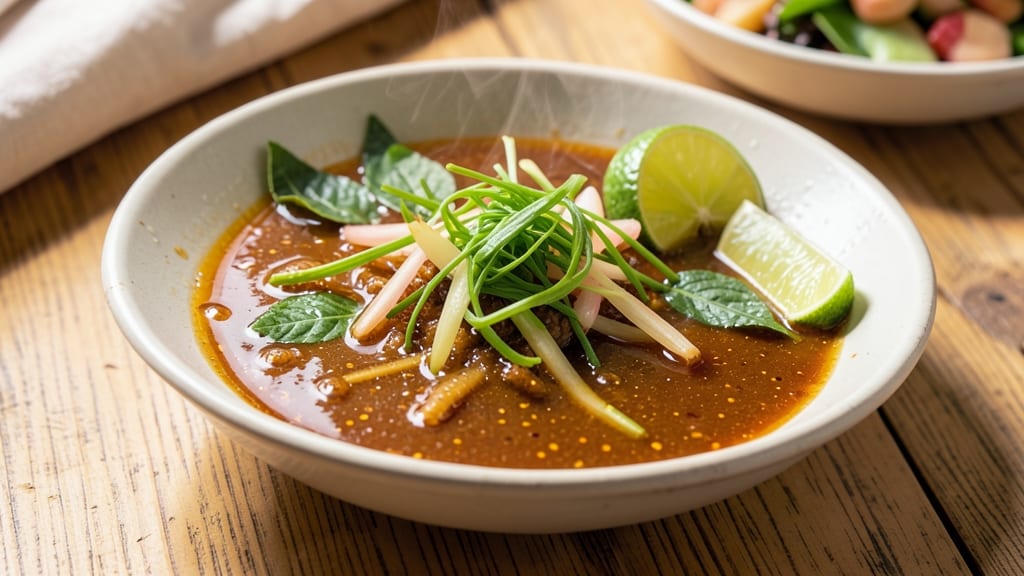
Bangkok curry sauce transforms ordinary dishes into bold, aromatic masterpieces with its perfect balance of sweet, sour, and smoky flavors. This recipe captures the essence of street-side Thai cuisine—where lemongrass, kaffir lime, and fish sauce create a sauce so complex it elevates everything from grilled meats to stir-fried vegetables. The secret lies in the slow reduction of ingredients, allowing their flavors to meld into a harmonious, deeply savory liquid that's as versatile as it is addictive.
What sets this sauce apart is its adaptability—use it as a marinade for tenderizing proteins, a dipping sauce for spring rolls, or a finishing glaze for roasted dishes.
The recipe builds layer upon layer of flavor: sweet from palm sugar, tangy from lime juice, umami from fish sauce, and aromatic depth from lemongrass and galangal. Unlike store-bought versions, this homemade sauce lets you control the sweetness and spice levels precisely, ensuring each batch delivers restaurant-quality results.
The process is straightforward but requires patience—simmering the ingredients until they reduce into a thick, glossy sauce that coats the back of a spoon. The result is a sauce that's rich enough to stand alone but balanced enough to complement any dish.
Whether you're serving it over noodles, drizzling it over satay, or using it as a glaze for grilled meats, this Bangkok curry sauce will become your go-to condiment for adding authentic Thai flavor to any meal.
Once made, the sauce keeps beautifully in the refrigerator for up to two weeks, making it perfect for meal prep. The instructions include tips for adjusting the balance of sweetness and heat, so you can tailor it to your taste.
Let's create a sauce that brings the vibrant flavors of Bangkok straight to your kitchen.
Ingredients for bangkok sauce
Eleven ingredients transform into the aromatic heart of Thai cuisine—smoky, sweet, and complex.
| Ingredient | Amount | Notes |
|---|---|---|
| Fresh Lemongrass 🌿 | ½ cup | Stalks finely chopped, bottom 6 inches only |
| Kaffir Lime Leaves 🍋 | 4 whole | Bruised slightly for aroma release |
| Galangal 🌶️ | ¼ cup | Thinly sliced, or substitute ginger |
| Fish Sauce 🍶 | ¼ cup | Red Boat brand preferred |
| Palm Sugar 🍯 | ½ cup | Or light brown sugar |
| Lime Juice 🍋 | ¼ cup | Freshly squeezed |
| Coconut Milk 🥥 | 1 can | Full-fat, 13.5 oz can |
| Garlic Cloves 🧄 | 6 cloves | Minced |
| Thai Chili Peppers 🌶️ | 2 whole | Adjust for heat preference |
| Shallots 🧅 | ¼ cup | Finely chopped |
| Coconut Oil 🫒 | 2 tbsp | For cooking lemongrass |
| Salt 🧂 | 1 tsp | Kosher salt preferred |
Lemongrass and kaffir lime are the soul of this sauce. Asian markets have the best selection—look for stalks that are fresh and vibrant, not dried out. The galangal should smell citrusy and peppery, not moldy. Thai Kitchen or Pan-Asian brands stock these at most supermarkets, but if you can't find galangal, ginger works in a pinch. Fish sauce is non-negotiable—Red Boat is the gold standard, but Squid Brand is a solid backup. Palm sugar adds authentic sweetness, but light brown sugar works if you're in a hurry. The lime juice should be freshly squeezed—bottled won't have the same punch.
No kaffir lime leaves? Double the lime zest plus a splash of lime juice. Running low on galangal? Ginger plus a pinch of cinnamon mimics its earthy flavor. For extra depth, toast the coconut milk in a saucepan for 5 minutes before adding. Want less heat? Remove the seeds from Thai chilies before chopping. The shallots can be swapped for regular onions, but they add a more delicate sweetness. Trader Joe's carries pre-minced garlic and shallots in a jar, which saves time—just rinse well to remove excess liquid. If your fish sauce smells off, toss it—it should have a funky, savory aroma, not vinegary.
This sauce tastes even better the next day as flavors meld. Store in a glass jar in the fridge for up to 2 weeks, or freeze for 3 months. I double the batch and freeze half—perfect for quick weeknight meals. To reheat, warm gently on the stove with a splash of water or coconut milk to restore its silky texture. The sauce thickens as it cools, so add a little water if it seems too stiff when you're ready to use it.
Why You'll Love This Recipe
- No Chopping Chaos: I swear by this recipe because it’s actually minimal prep—just bruise the lemongrass and galangal, tear the lime leaves, and you’re done. No julienneing, no peeling, no fuss. The hardest part is finding the galangal at the store (worth it, though).
- Umami Bomb: That first taste of fish sauce and palm sugar hitting your tongue? Chef’s kiss. It’s bright, salty, and just sweet enough—like a perfect balance of Thai street-food magic. Honestly, I’ve made it with soy sauce as a shortcut, but the real deal? Unmatched.
- Dresses Everything: Slather it on grilled shrimp, drizzle it over noodles, or toss it with cold rice—this sauce is my secret weapon for lazy nights. Between us, it’s also the reason my takeout-order habit dropped by 80%. (Yes, even on a Tuesday night.)
- Lasts All Week: A small jar keeps for weeks in the fridge, and it only takes 10 minutes to make. I’ve used the same batch to flavor three different meals without losing its punch. Budget win: fish sauce and sugar are cheap, but the flavor feels luxurious.
Step-by-step instructions for Bangkok curry sauce
This aromatic sauce builds layer by layer—each ingredient unlocks deeper flavors.
Bloom the Aromatics in Coconut Oil
Heat the 2 tablespoons coconut oil in a medium saucepan over medium heat. Add the 0.25 cup chopped shallots and cook for 3-4 minutes until softened and translucent. Here's the thing—don't rush this step. You want the shallots to release their sweetness without browning.
Next, add the 6 minced garlic cloves and 2 whole Thai chili peppers (leave them whole if you prefer less heat). Cook for 1-2 minutes until fragrant—you'll smell that pungent garlic aroma. This is where the foundation of your sauce begins to develop. Watch closely so the garlic doesn't burn; it should be golden but not dark brown.
Add Lemongrass, Galangal, and Kaffir Lime
Toss in the 0.5 cup chopped lemongrass and 0.25 cup sliced galangal. Stir constantly for 3-4 minutes until the lemongrass turns vibrant green and the galangal softens slightly. The galangal will release its citrusy, peppery aroma—this is your signal that it's ready to work its magic.
Add the 4 bruised kaffir lime leaves and 1 teaspoon salt. Stir for another 1 minute until the lime leaves wilt slightly and the mixture smells intensely aromatic. The combination of these ingredients creates that unmistakable Thai curry complexity. If you're using ginger as a substitute for galangal, add it now with the other aromatics.
Balance with Palm Sugar and Fish Sauce
Pour in the 0.5 cup palm sugar and stir until it dissolves completely. This sweet element will balance the heat and acidity later. Then add the 0.25 cup fish sauce—this is where the sauce starts to come together. Stir well for 1-2 minutes until the sugar is fully incorporated and the mixture smells rich and savory.
Here's where it gets interesting: taste your base. You're aiming for a balance of sweet, salty, and slightly spicy. If it's too sweet, add a splash more fish sauce. If it's too salty, add a pinch more sugar. This is your flavor calibration moment—don't skip it. The sauce should coat your spoon with a glossy sheen.
Finish with Coconut Milk and Lime Juice
Pour in the 1 can coconut milk and stir gently to combine. The sauce will immediately lighten in color and texture. Bring to a gentle simmer over medium-low heat for 8-10 minutes, stirring occasionally. You want the coconut milk to infuse with the aromatics without curdling.
Finally, add the 0.25 cup lime juice and simmer for another 2-3 minutes. The sauce should now have a vibrant yellow-green hue and a complex aroma that combines sweet, sour, salty, and spicy notes. Taste again and adjust seasoning if needed—this is your final flavor check. The sauce should be balanced with bright acidity cutting through the richness.
Simmer and Rest for Maximum Flavor
Reduce heat to low and let the sauce simmer gently for 5-7 minutes to allow all the flavors to meld together. The sauce should thicken slightly but remain smooth. Here's the crucial part: remove from heat and let it rest for 10 minutes. This resting period allows the flavors to fully develop and the sauce to reach its perfect consistency.
Strain the sauce through a fine-mesh sieve if you prefer a smoother texture, or leave it slightly textured for that authentic Thai curry experience. Your Bangkok curry sauce is now ready to elevate any dish—whether it's poured over noodles, drizzled on grilled meats, or served with steamed rice. The aroma alone should transport you to Bangkok's bustling streets.
Pro Tips For Making Bangkok Sauce
- BLEND IN STAGES: Start with the hard ingredients—lemongrass, galangal, and kaffir lime leaves—until smooth, then add fish sauce and palm sugar. I learned this the hard way: dumping everything in at once just makes a chunky, uneven mess that never emulsifies right.
- SALT THE FISH SAUCE: Add a pinch of salt to your fish sauce before blending—it balances the umami and cuts through the sharpness. Sounds weird, but it works: the sauce will taste more refined, not briny or one-note.
- LOW AND SLOW SIMMER: Reduce the sauce on low heat after blending, stirring often to prevent scorching. I used to rush this, and the sauce would turn bitter—now I let it bubble gently for 10-15 minutes, and the flavors meld perfectly.
- USE GRATED GALANGAL: Skip the thick slices—grate the galangal finely for maximum flavor infusion. It’s more work, but the aroma and heat integrate better, and you’ll taste it in every spoonful. (Yes, even if you’re impatient like me.)
Storing and reheating your bangkok sauce
Refrigerator Storage
Store your Bangkok curry sauce in an airtight glass jar in the refrigerator for up to 2 weeks. The glass preserves flavor better than plastic, and the tight seal prevents contamination. I like to use Le Parfait glass jars—they’re sturdy and stack neatly.
Let the sauce cool completely before storing to avoid condensation, which can dilute flavors. The sauce actually improves overnight as the ingredients meld further. 🥫
Freezer Preservation
For longer storage, freeze the sauce in ice cube trays or small airtight containers for up to 3 months. Portioning in cubes makes it easy to thaw just what you need for a quick stir-fry or marinade. If using a jar, leave 1-inch headspace to prevent cracking.
Thaw overnight in the fridge—never microwave directly from frozen, as it can break down the sauce’s texture. I often freeze half the batch right after making it for future meals. ❄️
Reheating Techniques
To restore the sauce’s silky texture, reheat gently on the stovetop over low heat with 1-2 tablespoons of water or coconut milk. Stir constantly to prevent scorching—this sauce is delicate! If it thickens too much, add a splash more liquid.
I avoid microwaving because it can make the sauce greasy. For best results, reheat just until warmed through, then adjust seasoning with a pinch of salt or lime juice if needed. 🔥
Texture Adjustments
The sauce naturally thickens as it cools. If it’s too stiff when reheated, thin it with 1-2 teaspoons of water or coconut milk while stirring. For a smoother finish, strain through a fine-mesh sieve before storing.
If you prefer texture, leave the lemongrass and lime leaves in during simmering—just remove them before storing. The sauce should coat the back of a spoon but still pour easily. 💫
Flavor Refresh
After storing, the sauce may lose some brightness. Revive it by adding ½ teaspoon of lime juice or a pinch of salt before using. If the coconut milk separates, whisk vigorously or reheat gently to recombine.
For extra depth, stir in 1 teaspoon of coconut cream or a splash of fish sauce to restore umami. A quick taste test ensures it’s back to its vibrant best. ✨
Safety Reminders
Always check for mold or off smells before using stored sauce—discard if anything seems wrong. The fish sauce should smell funky but not rancid, and the coconut milk should have a clean, nutty aroma.
If in doubt, toss it! Properly stored sauce will keep its rich color and aromatic complexity, ready to transform your next dish. Trust your senses—when it smells amazing, it’s ready to go. 💪
Nutrition facts
Frequently asked questions
Can I make this Bangkok sauce without coconut milk?
Yes, but the texture and richness will change. For a dairy-free alternative, use 1 cup vegetable broth or cashew cream (blend soaked cashews with water). If you want to keep it creamy without coconut, try ½ cup Greek yogurt plus ½ cup water for a tangier profile. The sauce will be thinner but still packed with flavor.
How do I adjust the spice level?
Start by removing the seeds from Thai chilies before chopping for milder heat. For extra spice, add ½ teaspoon of chili flakes or a dash of Thai chili paste after simmering. If it's too hot, balance it with more palm sugar or lime juice. Taste as you go—this sauce is all about finding your perfect balance!
What are the best dishes to use this sauce with?
This versatile sauce works beautifully with grilled meats (chicken, pork, or shrimp), stir-fried vegetables, rice dishes, and spring rolls. Drizzle it over pad Thai, use it as a marinade for satay skewers, or serve it as a dipping sauce for fresh spring rolls. The possibilities are endless—it's like liquid sunshine for your plate!
Can I substitute palm sugar with regular sugar?
Light brown sugar works perfectly and is widely available. For a more authentic flavor, use ½ cup coconut sugar or muscovado sugar. Regular white sugar will work in a pinch, but it lacks the caramel notes that make palm sugar special. The sauce will still taste amazing—just slightly less complex.
Why does my sauce smell amazing but taste bland?
This usually means you need more umami or acidity. Add 1-2 teaspoons of fish sauce for deeper savory notes, or splash in 1 tablespoon of lime juice for brightness. If the sauce tastes flat, try simmering it for an extra 5 minutes to concentrate the flavors. Remember, taste as you go—adjustments are key!