
Sauces & Condiments
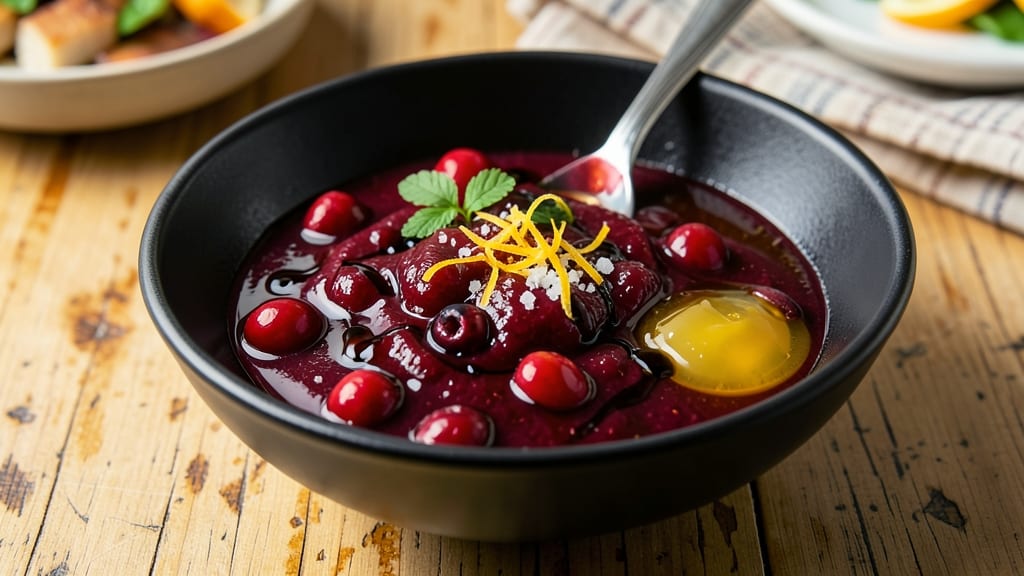
This balsamic cranberry sauce recipe transforms a classic holiday staple into a sophisticated, glossy drizzle that elevates everything from turkey to cheese boards. The marriage of tart cranberries and rich balsamic creates a complex sweet-tangy balance that’s far more dynamic than traditional recipes.
I developed this version after realizing how versatile a reduced, syrupy sauce could be—it’s perfect for glaze, dipping sauce, or even dessert garnish.
The process is simpler than you’d expect: just simmer cranberries with balsamic vinegar and sweetener until they burst and reduce into a thick, velvety sauce. No jelly texture here—this is a bold, glossy drizzle that clings beautifully.
The key is patience; letting it reduce slowly intensifies the flavors while maintaining that perfect balance of sweetness and acidity that makes it irresistible.
What sets this apart is its versatility—drizzle it over roasted meats, swirl it into whipped cream for desserts, or use it as a dramatic dip for cheeses and charcuterie.
The sauce keeps well in the fridge for up to two weeks, making it ideal for holiday prep. Once you try this elevated version, store-bought cranberry sauce won’t compare.
The result is a sauce that’s restaurant-quality yet effortless to make at home. With just five ingredients and minimal hands-on time, you’ll have a pantry staple that transforms ordinary dishes into something extraordinary. Let’s get started—your holiday table (and taste buds) will thank you.
Ingredients for balsamic cranberry sauce
Five ingredients transform classic cranberry sauce into a bold, restaurant-worthy drizzle perfect for holidays.
| Ingredient | Amount | Notes |
|---|---|---|
| Fresh Cranberries 🍇 | 1 ½ lbs | Whole, preferably organic |
| Balsamic Vinegar 🍷 | 1 cup | Aged 10+ years preferred |
| Granulated Sugar 🍬 | 1 cup | Or light brown sugar |
| Orange Zest 🍊 | 1 tbsp | From organic orange |
| Fresh Orange Juice 🍊 | ¼ cup | Freshly squeezed preferred |
| Pinch of Salt 🧂 | ¼ tsp | Enhances flavor balance |
The cranberries are the foundation—organic if possible since they’re often waxed conventionally. Trader Joe's or Whole Foods carry high-quality berries year-round, but if you’re making this in December, any grocery store will have fresh ones. The balsamic matters too: aged 10+ years for that deep, caramelized flavor (look for it in the wine aisle, not the vinegar section). I always grab a small bottle of Di Martino or Balsamic Vinegar of Modena—it’s worth the splurge for this sauce. The orange zest should be vibrant, not dried out, and the juice should be freshly squeezed for that bright acidity that cuts through the sweetness.
No organic cranberries? Conventional works fine—just give them a quick rinse before using. Short on balsamic? Substitute with 2 tbsp balsamic glaze plus 1 tbsp red wine vinegar, but you’ll lose some depth. The sugar can be swapped for maple syrup or honey (reduce other liquids slightly to compensate), but granulated dissolves cleanly and keeps the sauce glossy. If you’re feeling fancy, add a pinch of cinnamon or cardamom—it pairs beautifully with the tartness. And if you’re making this ahead, frozen cranberries work perfectly (no need to thaw first).
This sauce gets better with time—reduce for 20-25 minutes until it coats the back of a spoon, then let it cool completely before storing. It’ll thicken further as it sits. Keeps in an airtight jar in the fridge for up to 2 weeks, or freeze for 6 months. I always make a double batch: one for the table, one to drizzle on pancakes in January. The flavor deepens overnight, so if you can wait, do it. And if you’re using it as a glaze? Warm it gently before drizzling for that luxurious, runny consistency.
Why You'll Love This Recipe
- No-Simmer Struggle: I just toss in whole cranberries, a splash of balsamic, and let them soften on the stove—no chopping, no straining, no mess. The berries burst naturally, releasing that tart-sweet jam into the pan while I sip my coffee.
- Taste Like Thanksgiving: That deep, tangy balsamic cutting through the bright orange zest? It’s the kind of flavor that makes you pause mid-bite. Honestly, my turkey sandwiches get second looks now.
- Holiday Table Star: Slather it on ham, drizzle over roasted pork, or serve it in little bowls at your Thanksgiving table—everyone reaches for it. I’ve even used it as a glaze for grilled chicken when I’m lazy.
- Shelf-Stable Magic: Make a big batch—it keeps for weeks in the fridge, and the balsamic mellows into something even richer over time. Between us, I’ve had this sauce last through three holiday seasons without losing a drop.
Step-by-step instructions for balsamic cranberry sauce
Here's how to craft this sophisticated holiday condiment with deep flavor and glossy texture.
Simmer the Cranberries Until Soft
In a medium saucepan, combine the 1.5 lbs fresh cranberries, 1 cup granulated sugar, and the 0.25 tsp pinch of salt. Bring to a boil over medium-high heat, stirring occasionally to distribute the sugar evenly. Once boiling, reduce heat to medium-low and let the mixture simmer for 15-20 minutes until the cranberries begin to burst and soften.
You'll know it's ready when the cranberries lose their firmness and the mixture takes on a jam-like consistency. I like to press a cranberry gently with a fork—it should mash easily but still hold some shape. This simmering process is crucial for breaking down the cranberries' natural bitterness while preserving their vibrant color.
Incorporate the Balsamic Vinegar and Orange Zest
Remove the saucepan from heat and carefully stir in the 1 cup aged balsamic vinegar. This is where the magic happens—the balsamic's rich, caramelized notes will meld beautifully with the cranberries. Add the 1 tbsp orange zest and give everything a thorough stir to distribute the flavors evenly.
Here's the thing—don't be tempted to rush this step. Let the mixture sit off the heat for 5 minutes while you prepare the fresh orange juice. This brief resting period allows the balsamic to begin infusing the cranberry mixture, creating a more cohesive flavor profile. The orange zest will add a bright citrus aroma that complements the balsamic's depth.
Finish with Orange Juice and Simmer to Perfection
Return the saucepan to low heat and carefully stir in the 0.25 cup fresh orange juice. Simmer gently for 10-12 minutes, stirring occasionally, until the sauce thickens to your desired consistency. You're looking for a glossy, syrupy texture that will beautifully coat your holiday dishes.
To test the consistency, dip a clean spoon into the sauce and let it drip back into the pan. If it forms a slow, elegant ribbon that doesn't immediately fall back in, you've achieved the perfect balance. Your oven might run hot, so start checking at the 10-minute mark. The sauce should coat the back of a spoon but still be pourable for drizzling.
Cool and Rest for Maximum Flavor Development
Remove the sauce from heat and let it cool at room temperature for 20-30 minutes. This resting period is essential for allowing all the flavors to meld together. I know it's tempting to use it immediately, but patience here makes a world of difference in the final product.
While cooling, you'll notice the sauce thicken slightly as it comes to room temperature. This is normal and actually enhances the texture. Once cooled, transfer the sauce to a clean glass jar or airtight container. The balsamic cranberry sauce will keep in the refrigerator for up to 2 weeks, making it perfect for holiday entertaining.
Strain for a Silky Texture (Optional)
For an ultra-smooth, restaurant-quality finish, strain the cooled sauce through a fine-mesh sieve into a clean bowl or jar. This step removes any remaining cranberry seeds and skin, giving you that luxurious, glossy drizzle that looks as good as it tastes.
If you prefer a more rustic texture with visible cranberry bits, simply skip this step. The choice depends on how you plan to use the sauce—strained for elegant drizzling over meats or cheeses, or unstrained for a more rustic presentation with holiday dishes. Either way, you'll have a balsamic cranberry sauce that elevates any holiday meal.
Pro Tips For Making Balsamic Cranberry Sauce
- Simmer Slow and Low: I learned this the hard way—boiling cranberries turns them into mush. Keep the heat at a gentle simmer (small bubbles, maybe 3-4 minutes) so they burst naturally and release their juice without collapsing. You want jammy chunks, not cranberry paste.
- Pick Over Your Berries: Skim through fresh cranberries before cooking—remove any shriveled or moldy ones. A few bad berries can ruin the whole batch, and they’ll turn your sauce cloudy. Rinse them quickly in cold water, then pat very dry. Wet berries dilute the sauce and make it take longer to thicken.
- Balance the Balsamic: Balsamic vinegar is bold, so start with half the amount listed in the recipe. Taste as you go—add the rest only if your sauce needs more depth. Too much makes it taste like a salad dressing, not a dessert. If you’re using aged balsamic reduction (the thick, syrupy kind), cut it in half again—it’s way stronger.
- Strain the Zest: Orange zest is magical here, but it can make the sauce gritty if you’re not careful. After adding it, let the mixture sit for 2 minutes, then strain through a fine-mesh sieve to remove any bitter pith. No sieve? Wrap cheesecloth around a spoon and press gently. Trust me, your teeth will thank you.
Troubleshooting this dish
Sauce Too Thin?
If your sauce isn’t thickening enough, you likely didn’t reduce it long enough. Return the saucepan to low heat and simmer uncovered for an additional 5-10 minutes, stirring occasionally. The balsamic vinegar has a high water content, so patience is key—this is where the magic happens.
For a quicker fix, stir in 1 tbsp cornstarch mixed with 1 tbsp water and simmer for 2-3 minutes until it thickens. 🔥
Sauce Too Thick?
Over-reducing is the most common mistake. If your sauce is too thick, thin it with 1-2 tbsp water or orange juice, stirring constantly over low heat until smooth.
Avoid adding too much liquid at once—start with ½ tbsp and adjust gradually. If you’ve already cooled the sauce, simply stir in a splash of liquid and reheat gently.
Cranberries Too Tart?
If the cranberries taste overly tart, you likely didn’t sweeten enough. Add 1-2 tbsp more sugar and simmer for 5 minutes to dissolve. Alternatively, stir in 1 tbsp honey or maple syrup for a deeper sweetness.
The balsamic vinegar’s acidity can amplify tartness, so balance is everything. Taste as you go—this sauce should taste sweet-tangy, not sour.
Balsamic Flavor Weak?
Aged balsamic vinegar is non-negotiable here. If your sauce lacks depth, use more balsamic (start with 2 tbsp extra) or substitute 1 tbsp balsamic glaze for a richer flavor.
Avoid cheap vinegars—they won’t develop the caramelized notes. Let the sauce rest for 30 minutes after cooking to let the balsamic flavors meld fully. 💫
Sauce Separated or Oily?
This happens when the sauce cools too quickly or if you used too much balsamic vinegar. Gently reheat the sauce over low heat, stirring constantly until smooth. If it’s still separating, whisk in 1 tbsp cold water to emulsify.
For prevention, always cool the sauce gradually—transfer it to a heatproof bowl and let it sit at room temperature for 20-30 minutes before refrigerating.
Mold or Fermentation?
If your stored sauce develops mold or an off smell, it’s time to toss it. Always store the sauce in a clean, airtight glass jar in the fridge. The balsamic vinegar acts as a natural preservative, but 2 weeks is the max for freshness.
If you’re freezing, use freezer-safe containers and leave 1 inch of headspace to prevent expansion cracks. Never refreeze thawed sauce—make a fresh batch instead.
Nutrition facts
Frequently asked questions
Can I use frozen cranberries instead of fresh?
Frozen cranberries work perfectly—no need to thaw them first. They’ll soften just as well during simmering, and the texture difference is negligible. Just be sure to use the same quantity (1.5 lbs) and adjust simmering time slightly if your cranberries are extra firm.
How do I make this sauce spicier?
Add warmth with a pinch of cayenne pepper or ½ tsp red pepper flakes during the final simmer. For depth, try ½ tsp smoked paprika or a dash of chili powder. Start small—you can always add more, but you can’t remove spice once it’s in!
What’s the best way to reheat this sauce?
Gently warm in a small saucepan over low heat for 2-3 minutes, stirring constantly until smooth. Avoid microwaving—it can make the sauce grainy. For drizzling, reheat until just pourable (around 110°F). The balsamic flavors intensify when warmed!
Can I make this without sugar?
Yes! Use ½ cup honey or maple syrup instead, but reduce the orange juice to ¼ cup to balance the extra liquid. The sauce will be slightly thinner, so simmer 5 extra minutes to reach your desired consistency. The natural sweetness of honey adds subtle floral notes that pair beautifully with balsamic.
How much sauce should I make for a holiday turkey?
This recipe yields about 2 cups—perfect for a 12-14 lb turkey. For larger birds, double the batch. Drizzle 2-3 tbsp over the turkey during the last 15 minutes of roasting, then baste with the remaining sauce. The glossy finish will make your table look like a restaurant spread!