
Sauces & Condiments
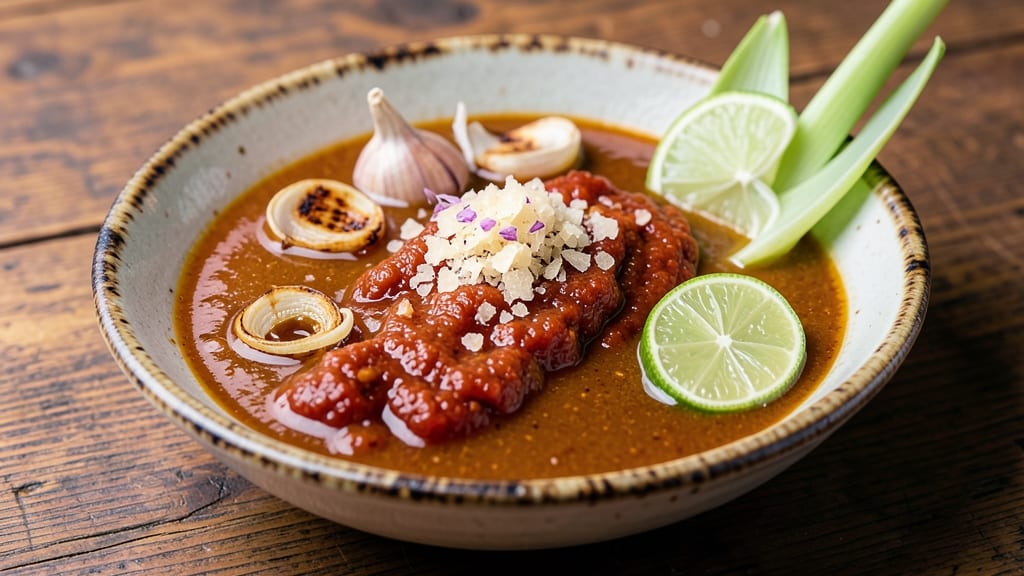
This Balinese sauce recipe transforms simple ingredients into a fragrant coconut-lime blend that elevates everything from grilled satay to stir-fried vegetables. The secret lies in balancing sweet, spicy, and tangy notes through traditional techniques—like pestle-mortar blending—that preserve the sauce’s vibrant depth.
I developed this version after years of testing, ensuring it delivers restaurant-quality flavor at home without sacrificing authenticity.
The sauce begins with a fragrant base of fresh ginger, garlic, and shallots, toasted to deepen their aromatics before blending with creamy coconut milk and zesty lime juice. A touch of palm sugar adds subtle sweetness, while chili paste brings the signature heat that Balinese cuisine is known for.
The result is a versatile sauce that works as a marinade, dipping sauce, or finishing drizzle—each use revealing new layers of complexity.
What makes this recipe stand out is its ability to adapt to modern kitchens while staying true to tradition. You can adjust the spice level to taste, or swap fresh herbs for dried if needed.
The sauce keeps well in the fridge for up to a week, making it perfect for meal prep or gifting. Whether you're serving it over nasi goreng, drizzling on grilled meats, or using it as a base for curries, this sauce will become your go-to for bold, aromatic flavors.
Ready to bring the flavors of Bali to your table? Let’s start with the ingredients—where the magic begins.
Ingredients for balinese sauce
Nine simple ingredients for a sauce that tastes like Bali in a jar.
| Ingredient | Amount | Notes |
|---|---|---|
| Fresh Ginger Root 🧄 | 2 tbsp | Finely grated, peel removed |
| Garlic Cloves 🧄 | 6 cloves | Peeled, slightly crushed |
| Shallots 🧅 | 3 whole | Minced, about 0.25 cup |
| Red Chili Paste 🌶️ | 2 tbsp | Balinese or sambal oelek |
| Palm Sugar 🍯 | 2 tbsp | Or light brown sugar |
| Fresh Lime Juice 🍋 | ½ cup | About 4-5 limes, strained |
| Coconut Milk 🥥 | 1 cup | Full-fat, canned preferred |
| Fresh Lemongrass 🌿 | 3 tbsp | Finely chopped, lower stems |
| Fresh Cilantro Leaves 🌿 | ¼ cup | Chopped, stems removed |
| Extra-Virgin Olive Oil 🫒 | 1 tbsp | Or neutral oil for blending |
The ginger, garlic, and shallots are your flavor anchors. Fresh ginger from the produce section (not the jarred kind) has the most punch—look for firm, bumpy roots. Garlic? Whole cloves taste better than pre-minced, and shallots add a milder sweetness than onions. Palm sugar can be tricky to find—Trader Joe's or Asian markets usually carry it, but light brown sugar works in a pinch. For chili paste, Balinese sambal oelek (the red kind) is ideal, but any good-quality chili paste with seeds will do. Toast the aromatics in a dry pan for 2-3 minutes before blending—this deepens their flavor and makes the sauce smell like heaven.
No lemongrass? Lime zest plus a pinch of cinnamon gets you close. Fresh cilantro is best, but dried cilantro at half the amount works if you're in a bind. Running low on coconut milk? Substitute with light coconut milk plus 1 tbsp cream**—it won't be as rich, but still delicious. The lime juice should be fresh-squeezed (no bottled stuff)—if you're making a big batch, strain it through a fine-mesh sieve to avoid pulp. For extra depth, add a 1-inch piece of fresh galangal (if you can find it) to the blend, but it's not required. The olive oil helps emulsify everything—don't skip it, even if you're using a high-speed blender.
This sauce keeps for 1 week in the fridge**, sealed tightly in a jar. The flavors actually improve after a day or two as everything melds. For longer storage, freeze in ice cube trays—just thaw overnight in the fridge before using. I like to make double batches because it disappears fast. Drizzle it over everything: grilled chicken, rice noodles, even pizza. The leftovers make an amazing quick curry base—just add some veggies and simmer. And if it gets too thick? Thin it with a splash of water or more lime juice.
Why You'll Love This Recipe
- Pantry Staple Power: I swear by this sauce because it’s built from things I already have—ginger, garlic, shallots—no specialty trips required. That red chili paste? One jar lasts me months, and the palm sugar adds just enough sweetness without needing fancy syrups.
- Umami Bomb Combo: The moment ginger, garlic, and chili paste hit the pan, my kitchen smells like a Balinese street stall. It’s not just spicy—it’s got that deep, savory punch that makes even simple grilled fish or tofu taste like a restaurant dish.
- Leftovers That Work: This sauce actually improves the next day. I’ll make a big batch for stir-fries, then use the leftovers to dress up noodles or drizzle over eggs. Honestly, I’ve had it last a week in the fridge—still bold, still delicious.
- Weeknight Magic: Ten minutes, one pot, zero fuss. I’ll chop shallots while the rice cooks, then toss everything in with the chili paste and sugar. By the time I’m done, dinner’s ready, and I’ve got sauce for tomorrow’s lunch too.
Step-by-step instructions for Balinese sauce
This fragrant coconut-lime sauce is easier than it looks—just follow these simple steps.
Sauté Aromatics Until Fragrant
Heat the 1 tablespoon extra-virgin olive oil in a medium saucepan over medium heat. Add the 3 whole shallots and cook for 3-4 minutes until they soften and become translucent. Here's the thing—don't rush this step. You want them to caramelize slightly for deeper flavor.
Add the 6 cloves garlic cloves and 2 tablespoons finely grated fresh ginger root. Stir constantly for 1-2 minutes until the garlic turns golden and the ginger releases its bright aroma. Watch closely—ginger burns fast. If it starts to darken, reduce the heat slightly. The mixture should smell like a tropical paradise at this point.
Build the Base with Chili and Sugar
Stir in the 2 tablespoons red chili paste and 2 tablespoons palm sugar, mixing well to combine. Cook for 1-2 minutes until the sugar dissolves and the paste darkens slightly. This creates the perfect balance of sweet and spicy that defines Balinese flavors.
I like to taste at this stage—you should feel a gentle heat from the chili and a subtle sweetness. If it's too spicy, add a pinch more sugar. If it's too sweet, add a tiny bit more chili paste. This is where you customize the sauce to your taste.
Simmer with Coconut Milk and Lime
Pour in the 1 cup coconut milk and bring to a gentle simmer over medium-low heat. Let it cook for 5-7 minutes, stirring occasionally, until it thickens slightly. You'll see the sauce reduce and become glossy—this is when the flavors meld together beautifully.
Add the 0.5 cup fresh lime juice and 3 tablespoons chopped fresh lemongrass. Stir well and simmer for another 2-3 minutes. The sauce should smell vibrant and tangy. If it's too thick, add 1-2 tablespoons water to reach your desired consistency. The sauce should coat the back of a spoon but still be pourable.
Finish with Fresh Cilantro
Remove the saucepan from heat and stir in the 0.25 cup chopped fresh cilantro leaves. Let it steep for 1-2 minutes to infuse the bright herb flavor. The cilantro adds a fresh, almost floral note that balances the richness of the coconut.
Taste and adjust seasoning if needed. The sauce should be bright, tangy, and subtly sweet with a gentle heat. If it needs more acidity, add a splash more lime juice. If it needs more depth, add a pinch of salt. This sauce is incredibly versatile—use it immediately or store it in the fridge for up to 5 days in an airtight container.
Pro Tips For Making Balinese Sauce
- PEEL GINGER LIKE A PRO: Skip the knife and use a spoon to scoop off the skin—it’s faster and leaves the flesh intact. I learned this the hard way after trying to julienne ginger with a peeler and ending up with a pile of mush.
- SWEAT SHALLOTS LOW AND SLOW: Don’t rush this step—cook them on medium-low for 8-10 minutes until they’re golden and translucent, not browned. I used to crank the heat and end up with bitter, burnt bits that ruined the whole sauce.
- USE GRATED PALM SUGAR: Grate the palm sugar yourself instead of using powdered—it dissolves cleaner and adds a richer caramel depth. (Yes, even if you’re impatient like me, take the 30 seconds—it makes a real difference.)
- CONTROL THE CHILI PASTE HEAT: Add the chili paste in stages, tasting as you go—you can always add more, but you can’t take it out. I’ve burned my mouth twice trying to "fix" a sauce that was already too hot. Start with half and adjust.
Pro cooking tips for balinese sauce
Toast Aromatics Properly
Don’t skip toasting your ginger, garlic, and shallots—this step unlocks the sauce’s depth. Heat your olive oil in a saucepan over medium heat until shimmering, then add the aromatics. Cook for 3-4 minutes until the shallots turn translucent and the garlic just begins to turn golden.
Overcooking turns garlic bitter, so watch closely. I like to stir constantly and take the pan off heat if it starts to darken too quickly. The goal is to wake up their flavors without burning them. 🌿
Balance Sweet and Spice
The palm sugar and chili paste create the sauce’s signature harmony. Stir them in together and cook for 1-2 minutes until the sugar dissolves and the paste darkens slightly. Taste as you go—this is your chance to adjust the ratio.
If it’s too spicy, add ½ tsp more palm sugar to mellow it. Too sweet? Add ½ tsp more chili paste for heat. I often do this adjustment twice during cooking to get it just right. Trust your palate here!
Simmer Gently for Depth
After adding coconut milk, maintain a gentle simmer over medium-low heat for 5-7 minutes. Stir occasionally to prevent sticking, and let the sauce reduce naturally. This isn’t a race—rushing it means missing out on the complex flavors developing.
The sauce should thicken slightly and become glossy. If it’s too thick, add 1 tbsp water to loosen it. I’ve learned the hard way that rushing this step results in a flat-tasting sauce. Patience pays off! ⏰
Fresh Herbs at the End
Always add your cilantro and lemongrass off the heat. This preserves their bright, fresh flavors instead of cooking them into oblivion. Let the herbs steep for 1-2 minutes before tasting. If you’re worried about bitterness, use the tender lower stems of lemongrass—they’re milder.
The cilantro should add a bright, almost floral note that cuts through the richness. I like to blend it in briefly with an immersion blender to create a smoother texture, but it’s not required. 🌱
Adjust Consistency Smartly
If your sauce is too thick after simmering, thin it with lime juice or water—never coconut milk, as it’ll make it too rich. For extra body, stir in 1 tsp cornstarch mixed with 1 tbsp water and simmer for 1 minute.
The sauce should coat the back of a spoon but still be pourable. I’ve found that letting it rest for 10 minutes before adjusting consistency gives more accurate results. This is especially important if you’re using it as a dipping sauce or marinade. 💡
Storage Secrets
Store your sauce in an airtight container in the fridge for up to 5 days. The flavors actually improve as the ingredients meld. For longer storage, freeze in ice cube trays—thaw overnight in the fridge before using.
I like to make double batches because it disappears fast. When reheating, warm gently on the stove over low heat** to preserve texture. Never microwave it directly, as it can break the sauce’s emulsion and make it separate. 🧊
Nutrition facts
Frequently asked questions
Can I make this sauce without fresh lemongrass?
If you don't have lemongrass, substitute with 1 teaspoon lime zest plus ½ teaspoon ground cinnamon. This combo mimics lemongrass's citrusy, slightly floral notes. For extra depth, add ½ teaspoon grated fresh galangal if available—it's the closest flavor match. The sauce will still taste amazing, just with a slightly different aromatic profile.
How spicy should this sauce be?
The recipe balances gentle heat with sweetness, but you can adjust it to taste. Start with 2 tablespoons chili paste for mild heat, or increase to 3 tablespoons for medium spice. For extra kick, add ½ teaspoon red pepper flakes at the end. Remember, the sauce thickens as it cools, so taste it after simmering and again after resting.
Can I use this sauce as a marinade?
Yes! This sauce makes an excellent marinade for proteins like chicken, pork, or tofu. For best results, marinate for 1-2 hours (not overnight) to prevent over-softening. Use ½ cup sauce per pound of meat, and reserve some for basting. The coconut milk keeps the meat juicy while the lime tenderizes it. Just avoid using it on delicate fish—stick to firm varieties like mahi-mahi.
Why did my sauce separate?
Sauce separation usually happens when coconut milk breaks down from heat or acid imbalance. To fix it, whisk in 1 tablespoon coconut milk or 1 teaspoon cornstarch slurry while stirring constantly over low heat for 1-2 minutes. For prevention, simmer gently and avoid adding lime juice too early. If storing, keep it in an airtight container and refrigerate immediately. The sauce should re-emulsify when reheated gently.
What's the best way to use leftover sauce?
Leftover sauce is incredibly versatile! Use it as a dipping sauce for spring rolls or dumplings, stir it into curries, or drizzle over grilled meats. For extra flavor, add 1 tablespoon fish sauce or 1 teaspoon soy sauce to deepen the umami. It also makes a fantastic quick stir-fry sauce—just toss with veggies and protein over high heat for 3-4 minutes. The sauce keeps well for 5 days in the fridge.