
Sauces & Condiments
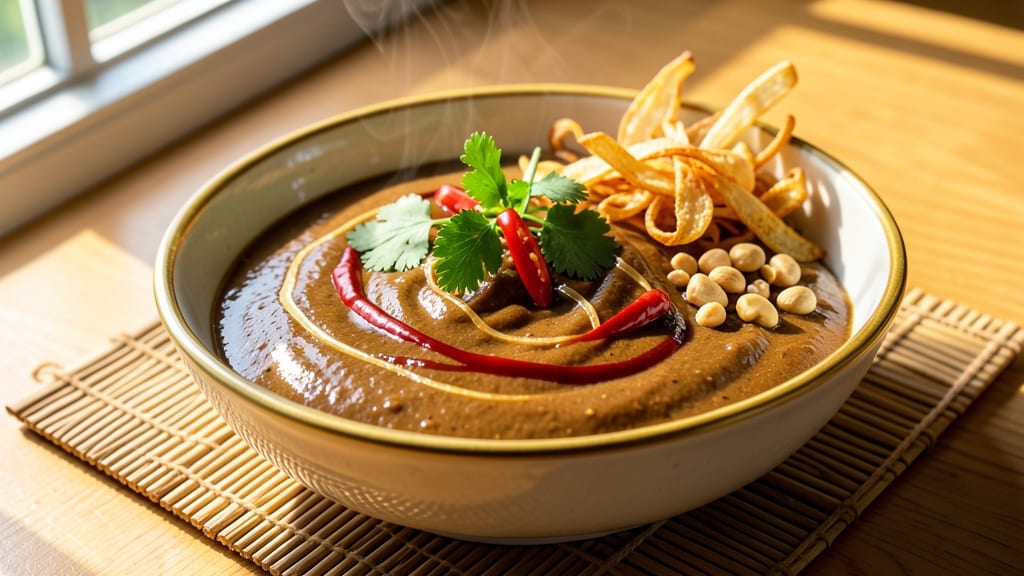
This Bali peanut sauce recipe transforms simple pantry staples into a velvety, aromatic condiment that elevates everything from satay to noodle bowls. The secret lies in balancing rich peanut butter with tangy tamarind and fragrant Balinese spices—turmeric, garlic, and shallots—that create layers of flavor in every spoonful.
I developed this version after years of testing, ensuring it’s smooth yet textured, sweet yet complex, and versatile enough for dipping, drizzling, or tossing.
The sauce starts with a fragrant base of sautéed shallots and garlic, where turmeric infuses warmth and tamarind adds a bright, citrusy tang. Peanut butter and coconut milk create a luscious, nutty-sweet foundation, while a touch of palm sugar rounds out the flavors.
What sets this apart is the balance—never cloying, never bitter—just perfectly harmonized. The result? A sauce that clings to grilled meats, enhances curries, and turns simple rice bowls into restaurant-worthy meals.
What makes this recipe stand out is its foolproof technique: no blender required, just a whisk and patience. The sauce thickens beautifully when chilled, making it ideal for meal prep.
Store it in the fridge for up to a week or freeze for months—its rich flavors only deepen over time. Whether you’re serving satay, stir-fries, or even roasted vegetables, this sauce delivers that unmistakable Bali-inspired depth with minimal effort.
For extra versatility, adjust the sweetness to your taste or add a pinch of chili for heat. The possibilities are endless, but the core technique remains simple: build flavor gradually, then let the sauce rest.
This isn’t just a condiment—it’s a flavor multiplier that turns ordinary dishes into something extraordinary. Let’s make it.
Ingredients for bali peanut sauce
Ten simple ingredients transform into a velvety, aromatic sauce that elevates every dish from satay to rice bowls.
| Ingredient | Amount | Notes |
|---|---|---|
| Natural Peanut Butter 🥜 | ½ cup | Creamy, unsweetened preferred |
| Full-Fat Coconut Milk 🥥 | ½ cup | Canned, shaken well |
| Palm Sugar 🍯 | ¼ cup | Or light brown sugar |
| Tamarind Paste 🍋 | 2 tbsp | Unsweetened, or lime juice |
| Turmeric Powder 🌿 | ½ tsp | Freshly ground preferred |
| Shallots 🧅 | 3 whole | Finely minced, about 2 tbsp |
| Garlic Cloves 🧄 | 4 cloves | Minced, about 1 tbsp |
| Red Chili Flakes 🌶️ | ½ tsp | Adjust for heat preference |
| Salt 🧂 | ½ tsp | Diamond Crystal preferred |
| Water 💧 | ¼ cup | For thinning as needed |
The peanut butter and coconut milk form the sauce’s luxurious base—choose natural peanut butter without additives for authentic flavor. Bali's finest palm sugar (available at Asian markets) adds depth, but light brown sugar works in a pinch. Tamarind paste is non-negotiable for that signature tang, though lime juice can substitute at double the amount. Look for tamarind paste in the international aisle of larger grocery stores like Whole Foods or Trader Joe's, where it’s often sold in small jars. The shallots and garlic should be finely minced—a microplane works best—to create a fragrant, aromatic foundation that infuses the sauce with complexity. Fresh turmeric root, if available, should be grated and used at half the powdered amount for vibrant color and earthy warmth.
No tamarind paste? Lime juice with a pinch of salt mimics the acidity, though the sauce will be slightly less complex. Running short on palm sugar? Honey or maple syrup (use half the amount) keeps the sauce sweet but alters the flavor profile. Substitute coconut milk with cashew cream for a richer texture, though the sauce will be slightly less balanced. Chili flakes can be swapped for fresh red chili, minced (use half the amount), or even a dash of Sriracha for convenience. For a smoother sauce, blend the shallots and garlic first before adding other ingredients, though whisking by hand creates a more rustic texture that many prefer. The sauce thickens as it cools, so adjust with water if it’s too stiff after chilling.
This sauce thickens beautifully when refrigerated, making it perfect for meal prep. Store in an airtight container for up to 1 week in the fridge, where flavors deepen over time. For longer storage, portion into ice cube trays, freeze, then transfer to a bag—ideal for quick drizzling later. Avoid reheating if possible; instead, let it sit at room temperature for 10 minutes before serving. The sauce pairs exceptionally well with grilled meats, noodle bowls, and even roasted vegetables, delivering that unmistakable Bali-inspired depth with minimal effort.
Why You'll Love This Recipe
- Five-Ingredient Magic: I swear, this sauce comes together with just a pan and a whisk—no fancy techniques, no stress. The peanut butter and coconut milk blend like they were born to be together, while the tamarind paste adds that tangy kick without extra effort.
- Sweet-Savory Balance: That first taste? Chef’s kiss. The palm sugar caramelizes just enough to mellow out the peanut richness, and the turmeric gives it this warm, golden glow that makes it feel like a hug in a bowl. Honestly, I’ve never met a peanut sauce that hits this perfectly.
- Weeknight Superhero: Slather it on grilled chicken, toss it with noodles, or drizzle it over veggies—it’s the ultimate lazy dinner fix. My kids even ask for it on Tuesdays (yes, even on a Tuesday night), and it turns basic meals into something special without extra prep.
- Leftovers That Don’t Let You Down: Make a double batch—it keeps for days in the fridge, and the flavor only gets deeper. I’ve reheated this sauce three times and it’s still just as rich and smooth. Plus, the ingredients are cheap, so you’re basically making gourmet sauce on a budget.
Step-by-step instructions for Bali peanut sauce
This sauce delivers the perfect harmony of nutty richness and tangy sweetness—essential for elevating curries and bowls.
Sauté Aromatics Until Fragrant
Heat a medium saucepan over medium heat and add the 3 whole shallots and 4 cloves garlic cloves. Cook for 3-4 minutes, stirring occasionally, until the shallots soften and turn translucent. You'll notice the garlic becomes fragrant and slightly golden at the edges—this is when it's ready for the next step.
Don't rush this process. The aromatics form the flavor base, so proper cooking ensures they release their full potential. If the shallots begin to brown too quickly, reduce the heat slightly to prevent burning. The goal is to develop their natural sweetness without charring.
Add Turmeric and Chili for Depth
Immediately after the aromatics soften, sprinkle in the 0.5 teaspoon turmeric powder and 0.5 teaspoon red chili flakes. Stir vigorously for 1 minute to evenly distribute the spices and prevent them from burning. You'll see the turmeric dissolve into the shallots, creating a vibrant yellow hue that signals proper incorporation.
This step builds the sauce's signature color and subtle heat. The turmeric adds earthy warmth while the chili flakes introduce a gentle, lingering spice. Taste the mixture now—it should be aromatic but not yet fully balanced. This is just the foundation for the rich peanut-coconut blend to come.
Incorporate Peanut Butter and Coconut Milk
Reduce the heat to low and gradually whisk in the 0.5 cup natural peanut butter and 0.5 cup full-fat coconut milk. Start with a slow drizzle of coconut milk to prevent the peanut butter from seizing up. Stir constantly for 3-4 minutes until the mixture becomes smooth and creamy.
Here's where the sauce transforms. The peanut butter's richness combines with coconut milk's velvety texture, creating a luscious base. If the mixture thickens too quickly, add 1 tablespoon water at a time to achieve a pourable consistency. The sauce should coat the back of a spoon but remain fluid enough to drizzle.
Sweeten and Balance with Tamarind
Add the 0.25 cup palm sugar and 2 tablespoons tamarind paste, stirring continuously for 2-3 minutes until the sugar fully dissolves. The tamarind will create a slight tang that cuts through the richness, while the sugar rounds out the flavors. You'll notice the sauce become glossy and more cohesive as the ingredients meld.
Taste the sauce at this stage—it should be sweet, nutty, and slightly tangy. Adjust the balance if needed: add more tamarind for acidity, sugar for sweetness, or a pinch of salt to enhance depth. The tamarind is crucial; if unavailable, lime juice can substitute, though the flavor profile will differ slightly.
Season and Thin to Perfection
Add the 0.5 teaspoon salt and stir for 30 seconds to fully integrate. If the sauce is too thick, gradually whisk in the 0.25 cup water until it reaches a smooth, drizzling consistency. The ideal texture should coat a spoon lightly but not be gluey. Let the sauce simmer gently for 1-2 minutes to meld all flavors.
Remove from heat and let it cool slightly before serving. The sauce will thicken further as it cools, so adjust with additional water if needed. This sauce is versatile—drizzle over noodle bowls, use as a dip, or fold into curries. Its nutty-sweet balance makes it a pantry staple for bold, flavorful dishes.
Pro Tips For Making Bali Peanut Sauce
- STIR CONSTANTLY AT FIRST: The first 3 minutes after adding peanut butter and coconut milk are when the sauce either clumps into a greasy mess or blends into velvety silk. I learned this the hard way—skipping this step means you’ll be scraping peanut butter off the bottom of your pot later. Use a wooden spoon and keep it moving.
- TOAST THE PEANUT BUTTER: Don’t just dump in store-bought peanut butter straight from the jar. Heat it in a dry pan over medium for 2-3 minutes until it smells nutty and fragrant—this deepens the flavor and cuts through the coconut’s richness. (Yes, even if you’re impatient like me.)
- DILUTE THE TAMARIND PASTE: Tamarind paste is thick and stubborn. Mix it with 1-2 tablespoons of warm water before adding it to the sauce—this prevents clumping and ensures it dissolves smoothly. I was skeptical until I tried it; now I can’t imagine skipping this step.
- SWEAT THE TURMERIC FIRST: Add turmeric powder to the dry pan before any liquids hit. Toast it for 30 seconds until it smells earthy—this prevents that chalky aftertaste and gives the sauce a vibrant color. (Your future self will thank you for this tiny effort.)
Make-ahead tips for this dish
Batch Prep Strategy
Make a double batch (2 cups peanut butter) and store in two 8-ounce glass jars—this keeps the sauce fresh longer and lets you use just what you need without transferring. I like using Le Parfait glass jars because they seal tightly and stack neatly in the fridge.
The sauce thickens as it cools, so plan to thin with 1-2 tablespoons water per jar before serving. 💛
Fridge Storage Secrets
Transfer the cooled sauce to an airtight container and press a parchment paper square directly on the surface before sealing. This prevents a skin from forming and keeps the top layer from drying out.
Store for up to 1 week—the flavors actually deepen over time, becoming more complex with each day. I’ve found that the sauce tastes best on day 3 or 4 when used as a drizzle.
Freezing for Long-Term Use
Portion the sauce into 1-ounce silicone ice cube molds or small jars for easy single-use servings. Freeze for up to 3 months—the texture may separate slightly, but a quick whisk restores it to perfection. To use, thaw overnight in the fridge or microwave for 10-15 seconds on low power.
This method is ideal for travel or meal prep when you want to keep the sauce on hand without bulk storage. ✨
Reviving Stale Sauce
If your sauce thickens too much in the fridge, simply whisk in 1 tablespoon warm water at a time until it reaches a smooth, drizzling consistency. For extra richness, add ½ teaspoon coconut milk to restore creaminess.
Avoid reheating on high heat—this can separate the peanut butter. Instead, warm gently in a microwave-safe bowl for 15-20 seconds, stirring between intervals. 🔥
Sauce Stability Tips
Add a pinch of salt (about ¼ teaspoon) to each jar before sealing—this preserves freshness and prevents mold growth. If you notice separation after freezing, don’t panic! Just whisk vigorously for 1-2 minutes until smooth.
The sauce’s natural oils will re-emulsify, restoring its velvety texture. For added shelf life, store in the coldest part of your fridge, away from strong-smelling foods. 💡
Meal Prep Pairings
Prep this sauce alongside grilled chicken or tofu for a complete meal kit. Store the sauce and protein in separate containers, then assemble with steamed rice or noodles when ready to eat.
The sauce also freezes beautifully with satay skewers—just thaw and drizzle before serving. For extra convenience, keep a small jar in your pantry for quick drizzling over salads or soups. 🍛
Nutrition facts
Frequently asked questions
Can I substitute tamarind paste in this sauce?
Yes! If you can't find tamarind paste, use 2 tablespoons lime juice mixed with ½ teaspoon sugar to mimic the tangy-sweet balance. For extra depth, add ¼ teaspoon salt to enhance the flavor profile. The sauce will be slightly less complex but still delicious.
Why does my sauce separate after freezing?
This is normal—peanut butter and coconut milk naturally separate when frozen. Simply whisk vigorously for 1-2 minutes with 1 tablespoon warm water to restore its creamy texture. The sauce will re-emulsify completely, just like fresh. For best results, thaw overnight in the fridge.
How spicy should the sauce be?
The recipe includes ½ teaspoon chili flakes for mild heat, but adjust to taste! For more spice, add ¼ teaspoon cayenne or 1 teaspoon fresh chili paste. For a smoky kick, substitute half the chili with ½ teaspoon smoked paprika. Start with the base amount and adjust gradually.
Can I make this sauce without coconut milk?
Yes, but the texture will be thinner. Replace the coconut milk with ½ cup cashew cream (blend soaked cashews with water) or ½ cup Greek yogurt for tanginess. For a richer alternative, use ½ cup heavy cream and add ¼ teaspoon vanilla extract to balance. The flavor will differ slightly but still work well.
What’s the best way to use leftover sauce?
This versatile sauce works as a dip for spring rolls, a drizzle over noodle bowls, or a marinade for grilled meats. Try mixing 1 tablespoon into peanut butter for sandwiches or spreading on toast with sliced banana. For extra creativity, blend with 1 teaspoon honey and use as a glaze for roasted vegetables.