
Sauces & Condiments
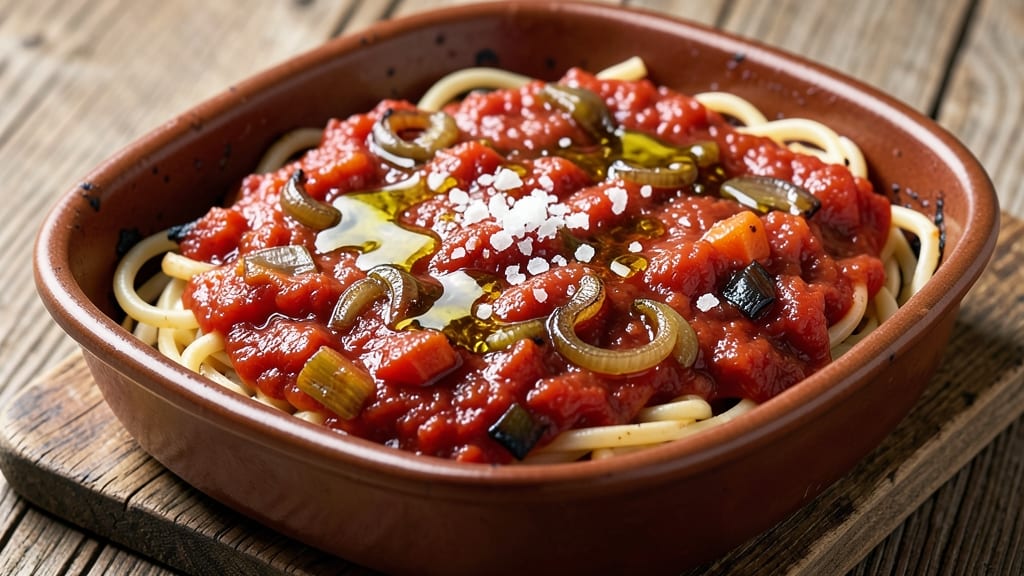
This baked spaghetti sauce recipe transforms simple pantry ingredients into a rich, concentrated sauce with deep umami flavor—no hours of simmering required. The secret lies in baking, which intensifies flavors through caramelization while naturally thickening the sauce.
I developed this version after years of testing, and it consistently delivers restaurant-quality results with minimal effort.
The beauty of this method is its versatility—use it as a pasta sauce, layer it in lasagna, or serve it as a hearty dip. We start with crushed tomatoes and aromatic vegetables, then build layers of flavor through baking.
The sauce develops a slightly caramelized edge while maintaining a smooth, velvety texture perfect for tossing with noodles or spreading on crusty bread.
What makes this recipe stand out is how it transforms basic ingredients into something extraordinary. The baking process concentrates flavors without drying out the sauce, and the optional addition of ground meat or mushrooms adds depth for those who prefer a heartier version.
Every batch delivers that perfect balance of acidity, sweetness, and savory richness that defines great Italian-American sauces.
Best of all, this sauce tastes even better the next day as flavors meld together. Whether you're prepping for a weeknight dinner or meal prepping for the week, this recipe delivers professional-quality results with simple ingredients and a foolproof technique. Let's get started on creating your next favorite sauce.
Ingredients for baked spaghetti sauce
Nine simple ingredients baking together create restaurant-quality spaghetti sauce with deep umami flavor.
| Ingredient | Amount | Notes |
|---|---|---|
| Crushed Tomatoes (400g can) 🍅 | 1 can | San Marzano preferred for sweetness |
| Onion 🧅 | 1 medium | Finely diced, yellow or red |
| Garlic Cloves 🧄 | 4 cloves | Minced, fresh preferred |
| Carrots 🥕 | 2 medium | Finely diced, orange color |
| Celery Stalks 🌿 | 2 whole | Finely diced, leafy greens removed |
| Extra-Virgin Olive Oil 🫒 | ¼ cup | High quality, fruity |
| Dry Red Wine 🍷 | ½ cup | Bold, like Chianti |
| Tomato Paste 🍅 | 2 tbsp | Smooth, no sugar added |
| Italian Seasoning 🌿 | 1 tbsp | Dried blend, or 1 tsp each oregano/basil/thyme |
| Ground Black Pepper 🌶️ | ½ tsp | Freshly ground, coarse |
The crushed tomatoes are the foundation—San Marzano is worth the splurge for that natural sweetness. Whole Foods or Trader Joe's both carry excellent brands. For the vegetables, I always grab the freshest carrots and celery from the store's produce section—look for vibrant colors and crisp texture. The red wine adds complexity, so don't skimp on quality. A Chianti or Cabernet Sauvignon works perfectly. If you're using a pre-made Italian seasoning blend, check the ingredients—some contain fillers that dull the flavor.
No red wine? Substitute with 0.5 cup beef broth plus 1 tbsp balsamic vinegar for depth. The tomato paste can be replaced with an extra 2 tbsp crushed tomatoes if you're avoiding it. For the vegetables, frozen diced mix works in a pinch—just thaw and drain well. The Italian seasoning blend is flexible: you can swap for 1 tsp each of dried oregano, basil, and thyme. Want more umami? Add 1 tsp fish sauce (vegetarian version) or 1 tbsp soy sauce. The carrots and celery can be swapped for bell peppers if you prefer a sweeter note.
This sauce tastes even better the next day as flavors meld—plan ahead. Store in an airtight container in the fridge for up to 5 days or freeze for 3 months. For freezing, portion into ice cube trays first—perfect for adding to pasta later. The sauce thickens as it cools, so you can thin it with a splash of water or broth when reheating. I always make a double batch—one for dinner and one to freeze for lazy nights.
Why You'll Love This Recipe
- No-Chop Trick: I swear by this—just roughly dice the onion, celery, and carrots (no need for perfect matchsticks). The slow bake softens everything into a silky, sweet base without extra effort.
- Garlic Bomb Depth: That can of crushed tomatoes gets layered—sautéed garlic cloves caramelize into the sauce, then the oven deepens their flavor into something rich and aromatic. (Yes, even if you’re not a garlic lover, this wins you over.)
- Meal Prep MVP: Between us, this sauce begs to be made in bulk. Double the batch, freeze half, and you’ve got a weeknight lifesaver—just reheat and toss with pasta. My freezer’s full of these jars, and I’m never scrambling for dinner.
- Pantry Powerhouse: Honestly, it’s the ultimate budget hack: one can of tomatoes, a handful of cheap veggies, and you’ve got a sauce that tastes like it cost twice as much. Plus, the carrots and celery add natural sweetness—no fancy ingredients needed.
Step-by-step instructions for baked spaghetti sauce
This method delivers restaurant-quality depth in minutes—not hours—with minimal effort.
Sauté the Vegetable Base
Heat the 0.25 cup extra-virgin olive oil in a large Dutch oven over medium heat. Add the finely diced onion, carrots, and celery stalks, stirring occasionally for 8-10 minutes until the vegetables soften and begin to caramelize. This slow cook transforms their flavors from bland to sweet and complex.
When the vegetables are tender, add the 4 minced garlic cloves and cook for 30 seconds until fragrant. Watch closely—garlic burns quickly, and you want that nutty aroma, not bitter smoke. Remove the pan from heat and set aside temporarily. This step builds the flavor foundation your sauce will develop in the oven.
Build the Sauce Base
Return the Dutch oven to medium heat and stir in the 2 tablespoons tomato paste, cooking for 2 minutes until it darkens slightly. This step deepens the sauce's richness and balances acidity. Pour in the 0.5 cup dry red wine, scraping up any browned bits from the bottom of the pan—these contain concentrated flavor.
Simmer the wine mixture for 3-4 minutes until it reduces by half. The alcohol will cook off, leaving behind a more intense flavor profile. Add the 1 can crushed tomatoes, 1 tablespoon Italian seasoning, and 0.5 teaspoon ground black pepper, stirring to combine. The sauce should be thick but still pourable at this stage.
Bake to Develop Complexity
Transfer the Dutch oven to a 375°F preheated oven. Cover with a tight-fitting lid and bake for 45-50 minutes, stirring once halfway through. The lid traps steam, which helps break down the vegetables further and intensifies the flavors. You're essentially creating a slow-cooked effect without the hours of simmering.
After baking, remove the lid and let the sauce reduce uncovered for 5-10 minutes to achieve your desired consistency. The sauce should coat the back of a spoon but still be loose enough to cling to spaghetti. If it's too thick, add 1-2 tablespoons of water or pasta water to loosen it. This final reduction step concentrates the flavors even more.
Finish and Serve
Taste the sauce and adjust seasoning if needed. The Italian seasoning and pepper should complement the tomatoes' natural sweetness. For extra depth, finish with a drizzle of extra-virgin olive oil—this adds a silky texture and enhances the sauce's richness.
Serve immediately over al dente spaghetti, allowing diners to twirl strands through the vibrant sauce. The baked method delivers a depth of flavor you'd typically need hours to achieve on the stovetop, with minimal effort and maximum impact. This sauce tastes even better the next day, so make extra for leftovers!
Pro Tips For Making Baked Spaghetti Sauce
- Sweat the Veggies First: Start with medium heat and let onions, carrots, and celery soften for 8-10 minutes before adding garlic—this prevents burning and builds real flavor. (Yes, even if you’re impatient like me, resist the urge to rush this.)
- Crush Tomatoes by Hand: Skip the can’s pre-crushed tomatoes—drain the can and break the tomatoes with your fingers to remove excess water and skin. This makes the sauce richer and thicker without extra starch or additives.
- Simmer, Don’t Boil: After adding crushed tomatoes, reduce heat to low and let it bubble gently for at least 20 minutes. Boiling burns the sauce and makes it bitter—this is the thing that matters most for depth of flavor.
- Add Garlic Late: Toss in minced garlic only in the last 5 minutes of cooking. Raw garlic burns fast and turns bitter, but a quick sauté at the end adds that bright, aromatic punch without overpowering the sauce.
Pro cooking tips for baked spaghetti sauce
Dutch Oven Magic
A large Dutch oven is your secret weapon for this sauce—its heavy base distributes heat evenly, preventing hot spots that can burn the sauce. I swear by the Lodge 5.5-quart for its durability and heat retention, but any heavy-bottomed pot will work.
The deep sides prevent splatter when adding wine, and the tight-fitting lid creates steam for even cooking. If you don’t own one, a heavy oven-safe skillet works in a pinch, though stirring may be trickier. 🔥
Low-and-Slow Baking
Baking at 375°F for 45-50 minutes mimics a slow simmer, breaking down vegetables and concentrating flavors without drying out the sauce. Don’t rush this step—patience is key! The lid traps steam, which tenderizes the carrots and celery while deepening the tomato’s sweetness.
If your oven runs hot, reduce to 350°F to avoid overcooking. Pro tip: Place a baking sheet on the lower rack to catch any drips.
Wine Reduction Trick
Reducing the 0.5 cup dry red wine by half (to about 0.25 cup) is non-negotiable—it removes alcohol’s harshness while intensifying flavor. Use a bold Chianti or Cabernet Sauvignon for depth; cheaper wines add bitterness.
If you skip wine, substitute 0.5 cup beef broth + 1 tbsp balsamic vinegar for acidity. Always scrape up browned bits from the pan—they’re packed with caramelized flavor. 🍷
Tomato Paste Boost
The 2 tablespoons tomato paste is a game-changer—it thickens the sauce and balances acidity, but don’t overcook it. Toast it for just 2 minutes over medium heat until it darkens slightly. This step unlocks deeper umami flavors.
For extra richness, stir in 1 teaspoon fish sauce (or 1 tbsp soy sauce for vegetarian versions) after baking. It’s a pro trick from Italian nonnas!
Stirring Strategy
Stir the sauce once halfway through baking to prevent sticking and ensure even cooking. Use a wooden spoon—it’s gentle on the Dutch oven’s enamel. If the sauce clings to the bottom, add 1-2 tablespoons of water and stir to release it.
Avoid overstirring, which can break down the sauce’s texture. After baking, let it reduce uncovered for 5-10 minutes—this final step thickens it naturally without a roux. 💫
Flavor Balancing
Taste as you go! The sauce should harmonize sweetness (tomatoes), acidity (wine/pepper), and umami (tomato paste). If it’s too acidic, add a pinch of sugar; if bland, boost with 1 tsp Italian seasoning or a splash of red wine.
Finish with a drizzle of extra-virgin olive oil—it adds silkiness and enhances all the flavors. Trust your palate: great sauce is all about balance. ✨
Nutrition facts
Frequently asked questions
Why does baking make spaghetti sauce better than simmering?
The baking process creates a low-and-slow cooking effect that develops deeper flavors through caramelization and steam breakdown of vegetables. Unlike stovetop simmering, baking concentrates umami without risking over-reduction. The trapped steam also tenderizes carrots and celery while preserving the sauce's natural thickness. This method delivers restaurant-quality depth in 45 minutes instead of hours!
Can I make this sauce without wine?
Substitute the 0.5 cup dry red wine with 0.5 cup beef broth + 1 tbsp balsamic vinegar for acidity and depth. The vinegar mimics wine's tang while the broth adds savory richness. For a vegetarian version, use vegetable broth + 1 tbsp red wine vinegar. The sauce will still develop complex flavors—just slightly different character.
How do I adjust the thickness for different uses?
For pasta sauce, keep it slightly loose (2-3 minutes uncovered reduction). For lasagna layers, thicken further by simmering uncovered 5-10 minutes longer. If too thick, add 1-2 tbsp water or pasta water. Pro tip: The sauce thickens more as it cools—always adjust when hot. For dips, thin with 1 tbsp cream or olive oil for silkiness.
What's the best way to store leftovers?
Store in an airtight container in the fridge for up to 5 days—flavors actually improve overnight! For freezing, portion into ice cube trays first, then transfer to bags. Thaw in the fridge overnight. Reheat gently on the stovetop with 1 tbsp water to prevent drying. The sauce thickens when cold, so add water as needed when reheating.
Can I add meat or vegetables after baking?
Yes! For meat, stir in 1/2 lb ground beef or Italian sausage during the final 10 minutes of baking. For vegetables, add diced mushrooms or bell peppers with the initial sautéed base. Avoid leafy greens—they'll wilt. For extra richness, fold in 1/4 cup grated Parmesan at the end. Just don't overcrowd the Dutch oven to maintain even cooking.