
Sauces & Condiments
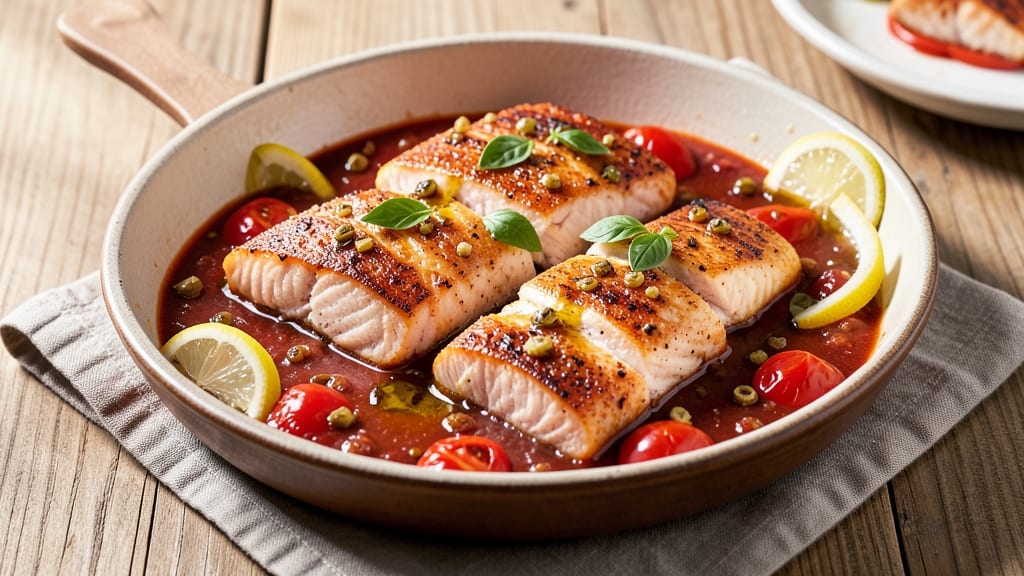
Baked salmon in tomato sauce transforms a simple weeknight dinner into a restaurant-worthy meal with just one pan and 30 minutes. The secret lies in balancing bright lemon, fresh basil, and a rich tomato sauce that clings to the flaky salmon while baking. I developed this recipe after years of perfecting the art of keeping salmon tender and sauce flavorful—no dry bites or watery sauce here.
What makes this recipe special is the harmony of flavors: tangy tomato sauce meets zesty lemon and fragrant basil, creating a symphony that elevates the natural richness of the salmon.
The one-pan method means minimal cleanup, while the high-heat baking ensures the sauce caramelizes slightly, adding depth without overpowering the delicate fish. This isn’t just dinner—it’s a dish that feels like a celebration.
By the time you serve it, you’ll have perfectly cooked salmon with golden edges and a sauce that’s thick enough to coat every forkful. The lemon brightens the acidity of the tomatoes, while the basil adds an aromatic freshness that cuts through the richness.
It’s the kind of meal that makes you want to linger at the table, savoring each bite.
Pair it with crusty bread to soak up the sauce or a simple green salad for a complete, balanced plate. The recipe scales effortlessly, whether you’re cooking for two or feeding a crowd. Let’s get to the step-by-step instructions—your dinner is about to get an upgrade.
Ingredients for baked salmon in tomato sauce
Bright lemon, fragrant basil, and rich tomato sauce make this one-pan salmon feel like a restaurant masterpiece.
| Ingredient | Amount | Notes |
|---|---|---|
| Salmon Fillets 🐟 | 4 pieces | Skin-on, center-cut preferred |
| Canned San Marzano Tomatoes 🍅 | 14 oz | Crushed or diced, no salt added |
| Fresh Lemon 🍋 | 1 whole | Zest and juice, organic preferred |
| Fresh Basil Leaves 🌿 | ½ cup | Packed, stems removed |
| Extra-Virgin Olive Oil 🫒 | ¼ cup | High-quality, fruity |
| Shallot 🧅 | 1 whole | Finely minced, or 2 tbsp pre-minced |
| Garlic Cloves 🧄 | 3 cloves | Minced, fresh preferred |
| Dry White Wine 🍷 | ¼ cup | Any dry white, like Sauvignon Blanc |
| Vegetable Broth 💧 | ¼ cup | Low-sodium preferred |
| Dijon Mustard 🌶️ | 1 tsp | For depth of flavor |
| Honey 🍯 | 1 tsp | To balance acidity |
| Salt 🧂 | 1 tsp | Kosher or sea salt |
| Black Pepper 🌶️ | ½ tsp | Freshly ground |
| Red Pepper Flakes 🌶️ | ¼ tsp | Optional, for heat |
The salmon makes or breaks this dish—center-cut fillets with skin stay together better, and the skin crisps beautifully. Grab the thickest fillets you can find (about 1-inch thick) at Whole Foods or your local fishmonger for the best texture. If you're using frozen, thaw overnight in the fridge—never under running water, or the salmon gets waterlogged. The San Marzano tomatoes are non-negotiable here. Trader Joe's and Costco carry them canned, and they make all the difference with their sweet, rich flavor. If you can't find them, any high-quality canned tomatoes work, but avoid the salt-added varieties.
No white wine? Substitute extra vegetable broth—just add another 2 tbsp. Fresh basil? If you've got it, use it—nothing beats the aroma. Dried basil works in a pinch (use half the amount), but trust me, fresh makes this dish sing. The shallot can be swapped for 1 tbsp onion powder if you're short on time, but fresh is better. For the honey, maple syrup works too if you're avoiding it. The tomato sauce can be made ahead—it actually tastes better the next day as the flavors meld. Just reheat gently before using.
This sauce keeps for 5 days in the fridge—make extra for pasta or toast. Store it in a glass jar with a tight lid. The salmon itself reheats beautifully—just warm it in the sauce for 2-3 minutes. For meal prep, portion the sauce into containers and freeze it for up to 3 months. The lemon zest and basil can be prepped ahead too—just store them separately in the fridge until ready to use. The basil wilts fast, so wrap it in damp paper towels and keep it in a sealed container.
Why You'll Love This Recipe
- One-Pan Magic: I swear by this—just toss the salmon and tomatoes on a sheet, drizzle with olive oil, and let the oven do the work. No chopping, no fuss, and honestly, the cleanup is just wiping one pan.
- Tomato-Basil Bliss: That burst of San Marzano sweetness with fresh basil and lemon? It’s like a Mediterranean vacation in your mouth. The sauce clings to the salmon so well, every bite feels indulgent.
- Weeknight to Dinner Party: Same recipe, different vibes. Toss it together for a lazy Tuesday or plate it with crusty bread for guests. The lemon brightens it up enough to feel special, even when it’s just you.
- Leftovers That Don’t Suck: Between us, salmon often gets ignored the next day. But this tomato sauce keeps it moist and flavorful for days—perfect for wraps, salads, or reheating with a squeeze of lemon. No dry fish here.
Step-by-step instructions for baked salmon in tomato sauce
Here's how to create this vibrant, one-pan dish with minimal effort and maximum flavor.
Prepare the Tomato-Basil Sauce
In a large oven-safe skillet, heat the 0.25 cup extra-virgin olive oil over medium heat. Add the 1 whole finely minced shallot and cook for 2-3 minutes until softened and translucent. This is your flavor foundation—don't rush it.
Stir in the 3 cloves minced garlic and cook for 30 seconds until fragrant. Add the 14 oz canned San Marzano tomatoes, breaking them up with a wooden spoon. Stir in the 0.25 cup dry white wine and let it simmer for 3-4 minutes until slightly reduced. The sauce should thicken just enough to coat the back of a spoon.
Reduce the heat to low and stir in the 1 tsp Dijon mustard, 1 tsp honey, 1 tsp salt, 0.5 tsp black pepper, and 0.25 tsp red pepper flakes. Let the sauce simmer gently for 5 minutes to meld all the flavors together. This is where the magic happens—don't skip this step.
Season and Arrange the Salmon
While the sauce simmers, pat the 4 pieces salmon fillets dry with paper towels. Season each fillet generously with salt and pepper on both sides. I like to press the seasoning in gently so it adheres well and doesn't fall off during baking.
Arrange the salmon fillets skin-side down in the skillet with the tomato sauce. The skin will help protect the delicate flesh and create a beautiful presentation when done. Space the fillets slightly apart so they have room to cook evenly.
Squeeze the juice from the 1 whole fresh lemon over the salmon and fillets, and sprinkle with the 0.5 cup fresh basil leaves. The bright acidity of the lemon will cut through the richness of the salmon and tomatoes, while the basil adds that fresh, aromatic touch.
Bake to Perfect Doneness
Preheat your oven to 375°F. Once the oven is fully preheated, carefully transfer the skillet to the oven and bake for 12-15 minutes. You'll know the salmon is done when it flakes easily with a fork and reaches an internal temperature of 145°F.
About halfway through baking, after 7-8 minutes, pour the 0.25 cup vegetable broth around the salmon. This adds moisture and helps create a beautiful sauce. The broth will absorb into the sauce, deepening its flavor and ensuring it doesn't dry out.
Watch the salmon closely in the last few minutes—it cooks quickly once it reaches the right temperature. The sauce should be bubbling gently around the edges, and the salmon should be just beginning to turn opaque at the edges. If the sauce looks too thick, add a splash of water or broth to loosen it.
Finish and Serve
Remove the skillet from the oven and let the salmon rest for 3-5 minutes before serving. This resting period allows the juices to redistribute throughout the fillets, ensuring each bite is moist and flavorful. Don't skip this step—it makes all the difference.
Garnish each serving with an extra sprinkle of fresh basil leaves and a squeeze of lemon juice. The bright green of the basil against the rich tomato sauce and golden salmon creates a visually stunning dish that's just as delicious as it looks.
Serve immediately with crusty bread or over your favorite grains to soak up that amazing sauce. The combination of sweet, tangy, and herby flavors makes this dish a crowd-pleaser every time.
Pro Tips For Making Baked Salmon In Tomato Sauce
- CRANK THE OVEN TO 425°F: I learned this the hard way—starting at 375°F gives you mushy salmon and a sauce that tastes like it’s been simmering for hours. Hit 425°F for the first 10 minutes to sear the skin (if using skin-on fillets) and build flavor fast. The salmon will cook through perfectly while the tomatoes caramelize.
- DRAIN AND CRUSH THOSE TOMATOES: San Marzano tomatoes are sweet, but their juices can turn your sauce watery. Drain them thoroughly over a bowl to catch the excess liquid, then crush them by hand (no blender needed)—this keeps the texture rich and prevents a thin, sad sauce. Skip this, and you’ll end up with a soup instead of a sauce.
- SALT THE SALMON BEFORE IT HITS THE PAN: Seasoning salmon after it’s cooked is a rookie move. Pat the fillets dry, then sprinkle them generously with salt at least 10 minutes before baking—this draws out moisture for a better crust. If you’re using skin-on salmon, salt the skin side first; it crisps up like magic.
- SAVE THE BASIL FOR LAST: Fresh basil wilts faster than you’d think in hot tomato sauce. Tear the leaves (not chop—big pieces hold up better) and add them only in the final 5 minutes of baking. This keeps their bright green color and peppery bite instead of turning them into sad, limp confetti. (Yes, even if you’re impatient like me.)
Serving suggestions for leftovers
Crusty Bread Pairing
Nothing enhances this dish like a warm, crusty loaf to soak up all that delicious tomato-basil sauce. I love using a baguette or ciabatta from my local bakery—Duane’s Bakery has the perfect crust for this.
Toast it lightly in the oven for 5 minutes at 375°F while the salmon bakes. The crispy exterior contrasts beautifully with the tender salmon and creamy sauce. 🥖
Simple Green Salad
A bright green salad balances the richness of the salmon perfectly. Toss 4 cups mixed greens (like arugula and spinach) with 2 tbsp olive oil, 1 tbsp lemon juice, ½ tsp Dijon mustard, and a pinch of salt.
Top with ¼ cup cherry tomatoes and 2 tbsp toasted pine nuts for crunch. The acidity cuts through the sauce, while the greens add freshness. 🥗
Creamy Polenta
For a heartier option, serve the salmon over creamy polenta. Cook 1 cup polenta with 4 cups chicken broth and 2 tbsp butter until thick and creamy.
Stir in ¼ cup grated Parmesan cheese and a splash of cream. The mild, buttery flavor complements the tangy tomato sauce without overpowering it. 🍲
Wine Pairings
A crisp Sauvignon Blanc or Pinot Grigio enhances the lemon and basil notes in the dish. I reach for a New Zealand Sauvignon Blanc—its citrusy brightness mirrors the lemon in the sauce.
For red lovers, a light Pinot Noir works beautifully, especially if it has a touch of earthiness. Avoid heavy reds like Cabernet, which can clash with the delicate salmon flavors. 🍷
Garnish Like a Pro
Before serving, sprinkle the salmon with extra lemon zest and fresh basil leaves for a pop of color and flavor. A drizzle of high-quality olive oil adds a luxurious finish.
For a smoky touch, add a pinch of flaky sea salt or a few crispy fried shallots on top. These small details elevate the dish from homemade to restaurant-worthy. ✨
Make It a Meal
Turn this into a full meal by adding roasted asparagus or sautéed green beans. Toss 1 lb asparagus with 1 tbsp olive oil, salt, and pepper, then roast at 400°F for 12-15 minutes until tender-crisp.
The bright green veggies contrast perfectly with the rich salmon and tomato sauce. 🌱
Nutrition facts
Frequently asked questions
Can I use frozen salmon for this recipe?
Yes, but thaw it properly first! Place frozen salmon in the fridge overnight for even cooking. Never thaw at room temperature—this causes uneven texture and can make the fish waterlogged. For a quick thaw, use the cold water method: seal the salmon in a leak-proof bag and submerge in cold water (change water every 30 minutes). The salmon should be fully thawed in about 1 hour per pound. Pat it completely dry before seasoning to ensure crispy skin.
What if my tomato sauce is too thin after baking?
Simmer the sauce uncovered on the stovetop for 5-10 minutes to reduce it naturally. For immediate thickening, mix 1 tbsp cornstarch with 2 tbsp cold water, stir into the sauce, and simmer until it reaches your desired consistency. Avoid over-thickening—you want the sauce to coat the salmon without being gluey. A splash of fish stock can also add depth while maintaining proper texture.
Can I make this recipe without wine?
Replace the 0.25 cup white wine with an equal amount of vegetable broth or apple cider vinegar. For extra depth, add 1 tsp lemon juice or ½ tsp balsamic vinegar to mimic wine's acidity. The dish will still be flavorful—just slightly less complex. If using vinegar, reduce the lemon juice by half to balance the acidity.
How do I know when the salmon is fully cooked?
The salmon is done when it reaches an internal temperature of 145°F and flakes easily with a fork. For skin-on fillets, the skin should be crispy and opaque. If using a meat thermometer, insert it into the thickest part of the fillet (avoid touching the bone). Overcooking is easy—salmon turns rubbery quickly! Remove it from the oven when it's just 1-2 minutes shy of your target time, as it continues cooking while resting.
Can I prepare the sauce ahead of time?
Yes, this sauce actually tastes better the next day! Make it up to 2 days ahead and store it in an airtight container in the fridge. Reheat gently on the stovetop over low heat until warmed through, stirring occasionally. For longer storage, freeze the sauce for up to 3 months. Thaw overnight in the fridge before using—never microwave directly from frozen. The flavors meld beautifully when made ahead!