
Sauces & Condiments
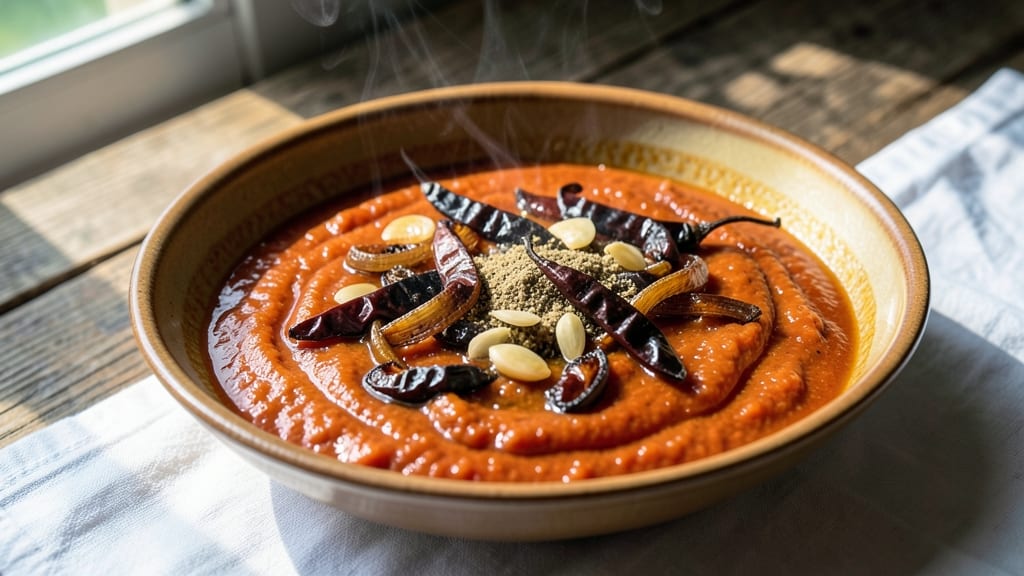
This authentic Tex-Mex enchilada sauce delivers the smoky, spicy depth that transforms ordinary enchiladas into a restaurant-worthy dish. The secret lies in slow-simmered tomatoes, chipotle peppers, and warm spices like cumin and oregano—built layer by layer in a single pot.
I've perfected this recipe over years of testing, ensuring every spoonful captures the bold, complex flavors of traditional Tex-Mex cooking without shortcuts.
The sauce begins with charred onions and garlic, which form the aromatic base before blending with roasted tomatoes, dried chiles, and warm broth. A touch of cinnamon or raisins (optional but traditional) adds subtle sweetness that balances the heat, while bay leaves infuse earthy depth.
The result is a velvety, medium-thick sauce with just enough body to coat enchiladas perfectly without being gluey.
What makes this sauce truly authentic is the patience in simmering—never rushed, never over-blended. The flavors meld into a harmonious blend of smoky chipotle, toasty cumin, and bright tomato acidity.
Unlike store-bought versions, this sauce develops complexity as it cooks, rewarding you with layers of taste that stand up to any filling.
Store it in the fridge for up to a week or freeze for months, making it the ultimate pantry staple for quick weeknight meals. Whether you're serving enchiladas, tacos, or quesadillas, this sauce elevates every bite with professional-quality flavor. Let's get cooking—your taste buds will thank you.
Ingredients for authentic tex mex enchilada sauce
Eleven ingredients build layers of smoky, spicy depth—no shortcuts, just authentic Tex-Mex flavor.
| Ingredient | Amount | Notes |
|---|---|---|
| Medium Yellow Onions 🧅 | 2 whole | Charred for smoky depth |
| Garlic Cloves 🧄 | 6 cloves | Minced after charring |
| Roma Tomatoes 🍅 | 2 lbs | Roasted for sweetness |
| Dried Chipotle Peppers in Adobo 🌶️ | 2 whole | Stems removed, minced |
| Chicken or Vegetable Broth 💧 | 2 cups | Low-sodium preferred |
| Ground Cumin 🌿 | 2 tbsp | Toasted for aromatic depth |
| Dried Oregano 🍃 | 1 tbsp | Mexican oregano preferred |
| Bay Leaves 🌿 | 2 whole | For earthy infusion |
| Ground Cinnamon 🌶️ | ½ tsp | Optional for sweetness |
| Salt 🧂 | 1 ½ tsp | Adjust to taste |
| Black Pepper 🌶️ | ½ tsp | Freshly ground |
The onions and garlic are your flavor anchors—char them in a dry skillet until blackened for that smoky backbone. Mexican onion adds sweetness, but yellow works too. For the chipotles, La Costeña or Goya brands are reliable, but any adobo-packed peppers do the trick. The Roma tomatoes? Heirloom or vine-ripened roast down beautifully—skip the canned stuff here. Toast the cumin in a dry pan for 30 seconds before adding; it makes all the difference. I grab mine from the bulk section at Whole Foods, but the regular grocery store stuff is fine too.
No chipotles? Ancho chiles rehydrated in broth work in a pinch, though they lack the smoky heat. Skip the cinnamon if you're avoiding sweetness, but trust me—it rounds out the acidity beautifully. The broth can be swapped for water in a bind, but low-sodium is key—you don’t want to over-salt later. For the oregano, Mexican oregano (sold at Latin markets) has a brighter, more complex flavor than the Italian variety. If you can’t find it, double the regular oregano. And yes, the sauce tastes better the next day—patience is the secret ingredient.
This sauce keeps for 1 week in the fridge, sealed in a jar with a layer of olive oil on top to preserve freshness. Freezes beautifully for up to 6 months—portion into ice cube trays for easy thawing. I double the batch and freeze half; it’s always ready for last-minute enchilada nights. Just stir in a splash of water if it thickens too much after reheating. The flavors only deepen with time, so don’t rush it.
Why You'll Love This Recipe
- No-Fuss Simmer: I swear by this sauce because it’s literally dump-and-simmer. One pot, five ingredients—no blender, no straining, no stress. Just toss in the onions, garlic, tomatoes, and adobo sauce, then let the broth do the work while you chop tortillas or set the table.
- Smoky Depth Magic: That chipotle in adobo? It’s the secret weapon. The smoky heat lingers just right—not overpowering, but there, making every bite taste like a proper Tex-Mex joint. Honestly, I’ve tried store-bought sauces, and this one wins every time.
- Weeknight to Party: Same sauce, endless uses. Slather it on enchiladas for Taco Tuesday, drizzle it over grilled chicken for a dinner party, or even toss it with rice and beans for a lazy Sunday. It’s my go-to for when I don’t want to cook but still crave flavor.
- Budget-Friendly Staple: A single batch stretches for weeks—freeze half for next month’s tacos or burrito bowls. Onions, tomatoes, and broth are cheap, but the flavor? Priceless. I make this twice a month and never regret it.
Step-by-step instructions for authentic Tex-mex enchilada sauce
This sauce delivers the deep, smoky complexity of traditional Tex-Mex cooking in one flavorful pot.
Char the Aromatics for Smoky Depth
Heat a dry skillet over medium-high heat and add the 2 whole medium yellow onions, cut into thick wedges. Let them char undisturbed for 8-10 minutes until blackened in spots and caramelized at the edges. This charring builds the sauce's signature smoky flavor—don't rush it. Transfer the onions to a cutting board and roughly chop them, keeping those precious browned bits.
In the same skillet, add the 6 garlic cloves and toast them for 1-2 minutes until fragrant and just beginning to color. The garlic should smell intense but not burn—this ensures a sweet, aromatic base. Remove the garlic and set it aside with the onions. The residual charred bits in the pan will form the sauce's flavor foundation.
Roast Tomatoes and Prepare the Chipotle
Preheat your oven's broiler to high. Place the 2 lbs Roma tomatoes on a baking sheet and broil for 10-12 minutes, turning occasionally, until their skins blister and blacken in spots. This roasting intensifies their natural sweetness and deepens their flavor. Transfer the tomatoes to a bowl, cover with a clean kitchen towel, and let them steam for 10 minutes. The steam makes them easier to peel.
While the tomatoes roast, remove the stems from the 2 whole dried chipotle peppers in adobo and finely mince them with a sharp knife. The adobo sauce contains flavor, so scrape any remaining paste from the can into a small bowl. You'll use this later to balance the sauce's heat. Be cautious—chipotles pack serious heat, so taste as you go.
Build the Sauce Base with Toasted Spices
Return the skillet to medium heat and add the 2 tablespoons ground cumin, stirring constantly for 1 minute until fragrant and slightly toasted. This step unlocks cumin's warm, earthy notes—don't skip it. Add the 1 tablespoon dried oregano and 0.5 teaspoon ground cinnamon, stirring for another 30 seconds to bloom their flavors. The cinnamon adds subtle sweetness that balances the heat.
Add the chopped charred onions and toasted garlic to the skillet, stirring to combine with the spices. Cook for 2-3 minutes until the onions soften slightly and release their juices. This step ensures all the aromatics meld together before adding liquids. The mixture should smell rich and complex—like a warm, smoky hug.
Simmer and Reduce for Rich Texture
Add the peeled, roasted tomatoes to the skillet and crush them with a wooden spoon, breaking them into large chunks. Pour in the 2 cups chicken or vegetable broth and scrape up any browned bits from the bottom of the pan—these contain concentrated flavor. Add the minced chipotle peppers, 2 whole bay leaves, 1.5 teaspoons salt, and 0.5 teaspoon black pepper. Bring the mixture to a gentle simmer over medium-low heat.
Let the sauce simmer uncovered for 25-30 minutes, stirring occasionally, until it reduces by about half and thickens to a velvety consistency. You're looking for a sauce that coats the back of a spoon with a glossy sheen. If it reduces too quickly, add 1-2 tablespoons of water at a time to maintain the balance. The bay leaves will infuse earthy notes, so don't remove them until the very end.
Finish and Strain for Smooth Perfection
Once the sauce reaches your desired thickness, remove it from heat and let it cool slightly for 5 minutes. Strain the sauce through a fine-mesh sieve into a clean saucepan, pressing gently on the solids to extract every last bit of flavor. Discard the bay leaves and any remaining chipotle stems. Taste the sauce and adjust the seasoning—you might need a pinch more salt or a splash of the reserved adobo paste to balance the heat.
Return the sauce to low heat and simmer gently for another 5 minutes to meld all the flavors. The sauce should now be rich, smoky, and deeply aromatic with just the right amount of heat. For best results, use the sauce immediately to coat enchiladas or freeze it in airtight containers for up to 3 months. This sauce is the heart of any authentic Tex-Mex meal—don't skip the steps that build its complexity.
Pro Tips For Making Authentic Tex Mex Enchilada Sauce
- CHAR THE ONIONS LOW: I learned this the hard way—cooking onions at high heat turns them bitter and burns their sweetness before the tomatoes even hit the pot. Keep the heat at a gentle simmer (medium-low) until they’re translucent and just starting to soften, then crank it up for the garlic and tomatoes. That way, the onions contribute flavor, not ash.
- TOAST THE CHIPOTLES: Skip the adobo sauce when toasting dried chipotles—it makes them slippery and hard to control. Instead, dry-toast them in a clean skillet over medium heat for 30 seconds per side until fragrant and slightly darkened. This deepens their smoky depth without overpowering the sauce.
- BLAZE THE TOMATOES: After adding raw Roma tomatoes to the pot, let them blister for 2-3 minutes before stirring. The char on the skins adds a smoky complexity that store-bought canned tomatoes can’t match—just don’t let them burn into blackened sludge.
- STRAIN THE FINISH: If your sauce ends up too chunky, resist the urge to blend it. Instead, strain it through a fine-mesh sieve after cooking, pressing the solids with a spoon to extract every last bit of flavor. The result is silky-smooth without losing the texture that makes it authentic.
Common mistakes when making your authentic tex mex enchilada sauce
Rushing the Charring
I’ve seen people try to speed up the onion and garlic charring by moving them around too much or using high heat. Don’t do this! The key is patience—let those onions develop deep caramelization and blackened spots over 8-10 minutes on medium-high heat.
Rushed charring means weak smoky flavor, which is the soul of this sauce. If your pan isn’t hot enough, the onions will steam instead of caramelize. 🔥
Skipping the Toasted Cumin
Toasting the cumin is non-negotiable for authentic flavor. Many recipes call for adding it directly to the pot without toasting, but I’ve found that toasting for 1 minute unlocks its warm, earthy notes.
Untosted cumin can taste bitter and one-dimensional. Pro tip: Use a dry skillet and stir constantly to prevent burning. This small step makes a huge difference in the final sauce’s depth. 🌿
Overblending the Sauce
Some people blend this sauce until it’s silky smooth, but that’s a mistake. A slightly textured sauce with tiny tomato chunks adds body and complexity. If you blend too aggressively, you’ll lose the rustic, handmade quality that makes this sauce special.
For the best texture, strain it through a fine-mesh sieve after simmering—this removes bay leaves and chipotle stems while keeping just enough texture. 💫
Ignoring the Bay Leaves
Bay leaves might seem insignificant, but they infuse the sauce with subtle earthy depth that rounds out the flavors. Many recipes suggest removing them early, but I let them steep until the very end. They add complexity without overpowering the dish. Just
Not Adjusting Heat Balance
Chipotle peppers pack serious heat, and the sauce can easily become overwhelming. Taste as you go and adjust with a splash of the reserved adobo paste or a pinch of salt to balance the flavors. Some recipes skip this step, but I always taste and tweak—it’s the difference between a good sauce and a great one. Start with 1 teaspoon of adobo paste and adjust from there. 🌶️
Using Canned Tomatoes
Fresh, roasted Roma tomatoes are the secret to this sauce’s depth. Canned tomatoes lack the natural sweetness and complexity that roasting brings out. If you’re short on time, you can use high-quality canned tomatoes, but roasting fresh ones is worth the effort.
The caramelization and smoky notes from the broiler create a flavor profile that canned tomatoes just can’t match. 🍅
Nutrition facts
Frequently asked questions
Can I make this sauce without chipotle peppers?
Swap the chipotles for 2-3 dried ancho chiles rehydrated in ½ cup hot water for 15 minutes. Remove seeds and stems, then blend the soaked chiles with the water into a smooth paste. This will give you a milder, fruitier flavor instead of the smoky heat from chipotle. For extra depth, add ½ teaspoon smoked paprika to mimic the chipotle's smokiness.
How do I adjust the thickness of the sauce?
If your sauce is too thick after simmering, stir in 1-2 tablespoons of warm water or broth at a time until you reach a velvety consistency that coats the back of a spoon. For a thicker sauce, simmer uncovered for 5-10 extra minutes to reduce further. Pro tip: The sauce will thicken more as it cools, so start slightly thinner if you prefer a smoother texture when serving.
What's the best way to store leftover sauce?
Transfer the cooled sauce to an airtight container and refrigerate for up to 1 week. For longer storage, freeze in 1-cup portions wrapped tightly in plastic wrap and placed in a freezer bag. Thaw overnight in the fridge—never microwave directly from frozen. To preserve freshness, top the refrigerated sauce with a thin layer of olive oil before sealing. The flavors actually improve after 2-3 days of resting!
Can I use this sauce for dishes other than enchiladas?
This versatile sauce works beautifully for tacos, quesadillas, tamales, or even as a dip for tortilla chips! For tacos, reduce the sauce slightly thinner than for enchiladas. When using with cheese dishes like quesadillas, simmer the sauce with ¼ cup sour cream at the end to mellow the heat. The sauce also makes an excellent base for Tex-Mex soups or stuffed peppers—just adjust the spice level to your preference.
Why does my sauce taste bitter?
Bitterness usually comes from overcooking the tomatoes or using too many dried chiles. To fix it, stir in 1 teaspoon of sugar or honey while simmering to balance the flavors. If the bitterness persists, add a splash of the reserved adobo paste (from the chipotle can) or a pinch of salt. For prevention, don't simmer the sauce too aggressively—keep it at a gentle bubble and taste frequently to catch bitterness early.