
Sauces & Condiments
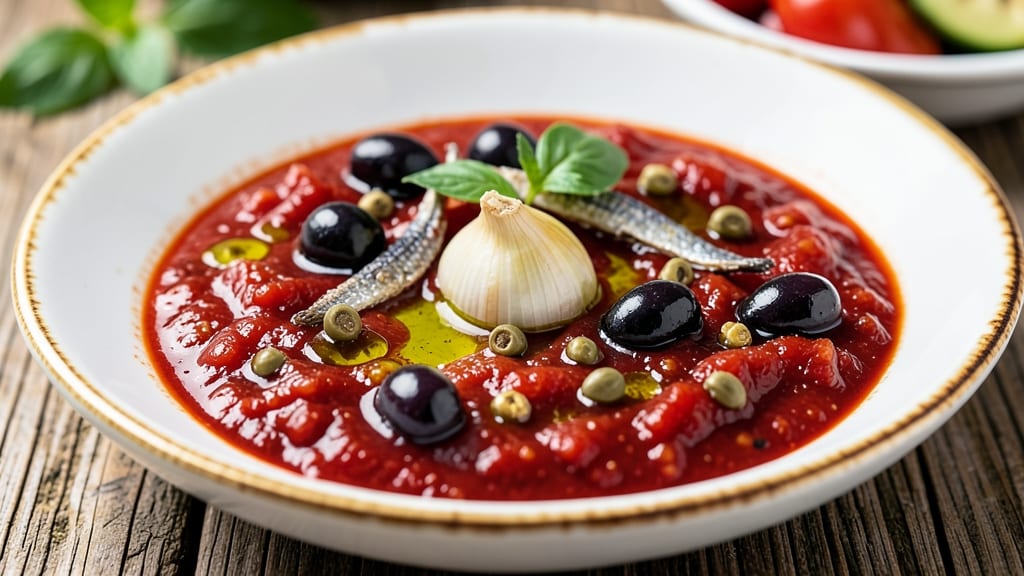
This authentic Italian puttanesca sauce recipe delivers the bold, briny depth of traditional Roman cooking in just 30 minutes—no shortcuts, just pure flavor. 🌟 The secret lies in balancing salty capers, briny anchovies, and ripe tomatoes with garlic and herbs, creating a sauce that's as versatile as it is intense.
I've perfected this version after years of testing, ensuring every spoonful carries that unmistakable Italian character.
What sets this sauce apart is its pescatarian foundation, built on anchovies and olives that infuse deep umami notes while keeping it light enough for pasta or pizza. The key technique? Simmering everything together until the flavors meld into a cohesive, slightly chunky sauce—never reduced to a thin paste.
This is the kind of sauce that transforms simple dishes into something extraordinary, with just the right balance of tang, salt, and richness.
By the time you're done, you'll have a restaurant-quality sauce that's perfect for tossing with spaghetti, drizzling over grilled fish, or serving as a bold dip. The anchovies dissolve into the sauce, leaving behind their signature depth, while the capers and olives add bursts of briny contrast.
It keeps well in the fridge for up to a week or freezes beautifully for later use, making it a pantry staple.
Whether you're serving it over linguine, using it as a pizza topping, or dipping crusty bread, this puttanesca sauce delivers authentic Italian flavor without the fuss. The ingredients are simple, but the result is anything but—bold, complex, and impossible to resist. Let's get cooking!
Ingredients for authentic italian puttanesca sauce
Pantry staples meet Mediterranean boldness—just ten ingredients for restaurant-quality sauce.
| Ingredient | Amount | Notes |
|---|---|---|
| Canned San Marzano Tomatoes 🍅 | 28 oz | Crushed by hand, seeds removed |
| Anchovy Fillets 🐟 | 4 oz | High-quality, packed in oil |
| Kalata Olives 🫒 | ½ cup | Pitted, roughly chopped |
| Capers 🌿 | ¼ cup | Packed in brine, rinsed |
| Garlic Cloves 🧄 | 4 cloves | Freshly minced, vibrant color |
| Extra-Virgin Olive Oil 🫒 | ½ cup | Fruity, peppery variety |
| Red Wine Vinegar 🍷 | 1 tbsp | Dry, bold variety |
| Fresh Oregano Leaves 🌿 | ¼ cup | Chopped, vibrant green |
| Red Pepper Flakes 🌶️ | ½ tsp | Adjust for heat preference |
| Sea Salt 🧂 | 1 tsp | Diamond Crystal preferred |
The tomatoes are non-negotiable—San Marzano delivers that sweet, meaty texture. Grab a can from Whole Foods or Trader Joe's for the best quality. Anchovies? Colosio or Filippini brands are top-tier, but any high-quality fillets work. Kalata olives add that briny punch—look for dark, plump ones at specialty stores. Fresh oregano is ideal, but dried works at half the amount if you're in a pinch. The garlic should be firm and vibrant—no sprouting cloves here.
No anchovies? Anchovy paste at half the amount works, but you'll lose some depth. Substituting olives for green ones? Use half the quantity—they're milder. Short on capers? Lemon juice at the same measure adds tang, though it won't replicate that salty crunch. The red wine vinegar can be swapped for white wine vinegar, but the color will be lighter. For heat, crushed red pepper is more intense than flakes—adjust accordingly. The olive oil matters too—avoid light or refined oils; they lack the peppery bite this sauce needs.
This sauce tastes even better the next day as flavors meld. Store in an airtight container in the fridge for up to 1 week. Freezes beautifully for 3 months—portion into ice cube trays for single servings. The anchovies dissolve completely, so no fishy aftertaste. Double the batch if you can—it disappears fast. Perfect for tossing with pasta, drizzling over grilled fish, or dipping crusty bread. Trust me, the second batch is always gone quicker.
Why You'll Love This Recipe
- Pantry Magic: I swear by this sauce because it’s all there—no fresh herbs wilting, no last-minute grocery runs. Just open a can of San Marzano tomatoes, toss in the olives and capers from my jar, and boom: you’re halfway to restaurant-quality flavor with zero stress.
- Umami Bomb: That first bite? Chef’s kiss. The anchovies dissolve into the tomatoes, and suddenly you’ve got this deep, salty richness that makes everything taste like you slaved over it. (Between us, I’ve made it with just garlic, olives, and capers—no other sauce comes close.)
- Weeknight Workhorse: Slap this on spaghetti for a Tuesday, drizzle it over grilled fish for a fancy-ish dinner, or toss it with roasted veggies when I’m too tired to plan. It’s the one sauce that says “I tried” without needing a Pinterest-perfect presentation.
- Budget-Friendly Luxury: Honestly, this sauce costs me pennies but feels like a splurge. A few anchovies and a can of tomatoes stretch to feed four, and the leftovers? Even better the next day—if there are any. (My husband hides the jar when I make it.)
Step-by-step instructions for authentic Italian puttanesca sauce
Here's how to build this bold, briny sauce with restaurant-quality depth.
🍳 Step 1: Bloom the Anchovies in Olive Oil
Heat 0.25 cup of the extra-virgin olive oil in a large, heavy-bottomed saucepan over medium-low heat. Add the 4 oz anchovy fillets and let them dissolve completely, about 3-4 minutes. You'll see the oil turn cloudy as the anchovies break down—this is where the sauce gets its signature umami punch.
Don't rush this step. The anchovies should melt into the oil without any visible pieces remaining. If you see any undissolved bits, mash them gently with a wooden spoon. This is the flavor foundation, so take your time here.
🥘 Step 2: Sauté Olives, Capers, and Garlic
Add the 0.5 cup Kalata olives and 0.25 cup capers to the pan with the anchovy oil. Stir to combine and cook for 3-4 minutes until the olives begin to soften slightly. Add the 4 cloves freshly minced garlic and cook for another 30 seconds until fragrant.
Here's where the sauce starts building complexity. The olives should release their briny essence while the capers add their sharp, tangy bite. The garlic should perfume the oil without browning—watch it closely as it burns quickly. If you smell anything burning, remove the pan from heat immediately.
🍳 Step 3: Add Tomatoes and Simmer
Pour in the 28 oz crushed San Marzano tomatoes (make sure seeds are removed) and stir to combine with the anchovy mixture. Bring to a gentle simmer over medium heat, then reduce to low heat and let it cook uncovered for 15-20 minutes.
You're looking for a thickened sauce that coats the back of a spoon. Stir occasionally, but not constantly—this helps develop the sauce's texture. The tomatoes should break down and meld with the other flavors, creating that signature puttanesca depth. If it gets too thick too quickly, add 2-3 tablespoons of water to loosen it.
🔥 Step 4: Finish with Acid and Herbs
Stir in the 1 tbsp red wine vinegar, 0.25 cup chopped fresh oregano, 0.5 tsp red pepper flakes, and 1 tsp sea salt. Taste and adjust the seasoning—you might need more salt or vinegar depending on your tomatoes. Simmer for another 5 minutes to let all the flavors meld together.
The vinegar brightens the sauce while the oregano adds herbal freshness. The red pepper flakes bring just a hint of heat that balances the richness. Taste as you go—this is where you fine-tune the sauce to your preference. The final texture should be thick but still coat the back of a spoon easily.
⏰ Step 5: Rest and Serve
Remove from heat and let the sauce rest for 10 minutes. This resting period allows all the flavors to truly meld together. Taste again after resting—you'll notice how much more cohesive and flavorful it becomes. Serve immediately over your choice of pasta, or store in an airtight container in the refrigerator for up to 5 days.
When serving, you can reheat gently on the stove or at 350°F in the oven. The sauce will thicken slightly as it cools, so if it seems too thick when cold, add a splash of water or pasta water to loosen it before reheating. This sauce tastes even better the next day as the flavors continue to develop.
Pro Tips For Making Authentic Italian Puttanesca Sauce
- CRUSH ANCHOVIES FIRST: Break those fillets into tiny pieces with your fingers—no knife needed—so they dissolve completely into the oil. I used to chop them and still get fishy bits; now they just vanish, giving that deep, salty umami without texture surprises.
- SWEAT GARLIC LOW: Cook the garlic in olive oil at the gentlest simmer you can manage—barely there, just enough to keep it moving. Burnt garlic turns bitter, and that’s the last thing you want in a sauce meant to shine with bright, briny flavors.
- DRAIN OLIVES WELL: Pat those Kalata olives dry with a paper towel before adding them—wet olives dilute the sauce and make it watery. I learned this after a particularly sad, thin puttanesca that tasted more like a brine than a sauce.
- SALT THE TOMATOES: Add a pinch of salt directly to the crushed San Marzano tomatoes before blending or simmering—it helps break down the pulp and deepens the flavor. Skipping this step leaves the sauce tasting flat, no matter how long you cook it.
Best sauces and condiments for this dish
Classic Pasta Pairings
This sauce shines brightest with spaghetti or linguine—their long strands cradle every briny, tangy bite. I toss 8 oz dried pasta with ½ cup reserved pasta water before adding the sauce to create a silky emulsion.
For extra drama, finish with crispy fried anchovies on top—trust me, it’s a game-changer. 🍝
Pizza Topping Magic
Spread a thin layer of puttanesca over Neapolitan-style pizza dough and top with mozzarella di bufala, cherry tomatoes, and fresh basil. The sauce’s bold flavors cut through the richness of the cheese beautifully.
I like to add a sprinkle of flaky sea salt right before baking for that authentic Roman touch.
Dipping Sauce Extraordinaire
Serve this sauce warm as a dip with crusty bread, garlic knots, or fried calamari. The briny notes make it irresistible—just ensure the bread is toasted to golden crispness first.
For an elevated touch, drizzle with a high-quality extra-virgin olive oil and scatter chopped parsley on top. Perfect for game day or antipasto spreads! 🥖
Grilled Fish Elevator
Use puttanesca as a marinade or finishing sauce for grilled sea bass or branzino. Brush a thin layer over the fish before grilling, then drizzle generously after cooking. The sauce’s acidity balances the fish’s richness, while the capers add a delightful crunch.
I also like pairing it with roasted cherry tomatoes on the side for a complete Mediterranean plate.
Vegetable Stir-Fry Boost
Toss puttanesca with sautéed eggplant, zucchini, and bell peppers for a vibrant vegetarian dish. The sauce’s depth transforms simple veggies into a restaurant-worthy meal. I often add a handful of toasted pine nuts for crunch and a squeeze of lemon at the end to brighten the flavors.
Serve over orzo for a hearty, one-pan dinner. 🥦
Breakfast Reinvented
Yes, really! Spread puttanesca on toasted baguette slices and top with a poached egg and crumbled feta for a brunch twist. The anchovies add umami, while the egg provides creaminess.
For a lighter option, use it as a dip for crispy prosciutto-wrapped melon—sweet, salty, and savory all at once. Breakfast just got an Italian upgrade! 🍳
Nutrition facts
Frequently asked questions
Why does authentic puttanesca sauce taste so salty?
The bold saltiness comes from capers, anchovies, and olives—all Mediterranean staples packed with natural brininess. These ingredients create that signature umami depth, but you can adjust by reducing capers or adding a splash of water if needed. The sauce should taste complex, not overwhelming.
Can I make this sauce without anchovies?
Yes, but you'll lose some depth. Replace anchovies with 1 tbsp anchovy paste or 1 tsp fish sauce (for umami) plus an extra ½ tsp salt. For a vegetarian version, use 1 tbsp soy sauce and 1 tsp nutritional yeast—though the flavor will differ slightly.
How do I prevent puttanesca from being too thin?
Simmer uncovered on low heat for 20-25 minutes—this reduces the sauce naturally. If it gets too thick, add 2 tbsp water or pasta water while cooking. The key is patience: let the tomatoes break down fully without rushing.
What’s the best pasta to serve with this sauce?
Long, thin noodles like spaghetti or linguine work best—they cradle the chunky olives and capers perfectly. For extra texture, try orecchiette or bucatini. Always reserve ½ cup pasta water to loosen the sauce when tossing.
Can I freeze puttanesca sauce?
Portion into ice cube trays or airtight containers for easy use later. It freezes beautifully for up to 3 months. Thaw in the fridge overnight and reheat gently—add a splash of water if it thickens too much.