
Sauces & Condiments
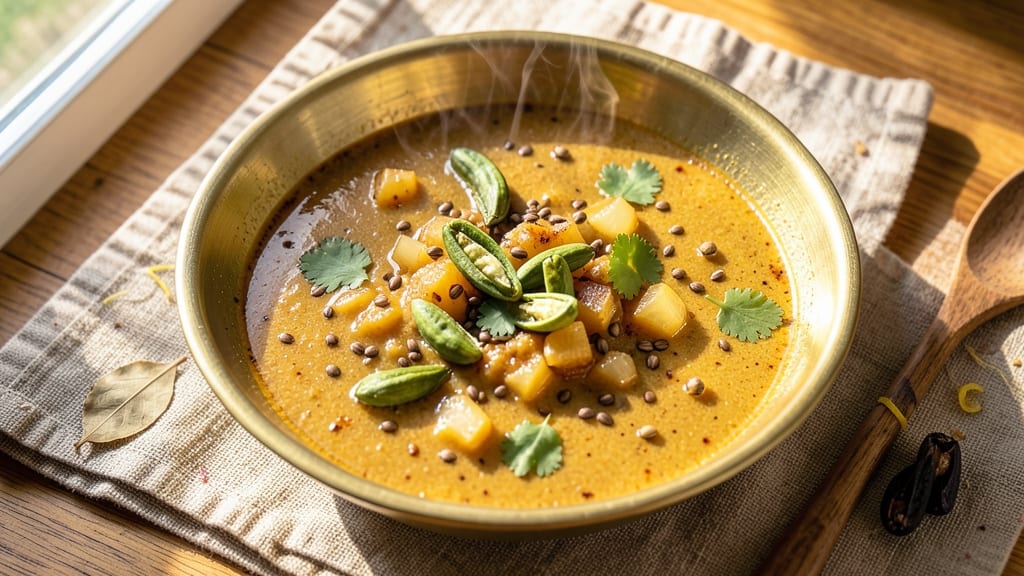
This authentic Indian curry sauce transforms simple ingredients into a fragrant, complex base that captures the soul of Indian home cooking. 🌟 The secret lies in slow-toasting whole spices—cumin, coriander, and cardamom—until their oils infuse the onions, creating layers of warmth that build as the sauce simmers.
Unlike store-bought versions, this recipe balances rich tomato depth with bright fresh herbs, delivering a sauce that works as a marinade, curry foundation, or dipping sauce for naan.
What sets this sauce apart is the two-stage cooking method: first building a spice-infused onion base, then blending in tomatoes and coconut milk for creaminess without heaviness.
The result is a versatile sauce that stays fresh in the fridge for up to 5 days or freezes beautifully for future use. It’s the kind of sauce that elevates store-bought curry powders into something truly special—deep, aromatic, and full of character.
The sauce’s authentic depth comes from traditional techniques: blooming spices in hot oil, simmering tomatoes until they break down into a jammy consistency, and finishing with fresh cilantro and lemon juice for brightness.
This isn’t just a sauce; it’s a flavor experience that turns any dish—whether chicken, vegetables, or even grilled meats—into a restaurant-worthy meal. The instructions are straightforward, but the payoff is undeniably rich.
Use it as a base for curries, a marinade for grilled proteins, or a dipping sauce for samosas and pakoras. The possibilities are endless, but the foundation remains the same: a sauce so flavorful, it becomes the star of any dish. Let’s make it—your taste buds will thank you.
Ingredients for authentic indian curry sauce
Transform simple pantry staples into a fragrant, aromatic curry sauce with depth and brightness.
| Ingredient | Amount | Notes |
|---|---|---|
| Yellow Onions 🧅 | 2 whole | Thinly sliced, not peeled |
| Whole Cumin Seeds 🌿 | 1 tbsp | Toasted until fragrant |
| Whole Coriander Seeds 🌿 | 1 tbsp | Toasted lightly |
| Green Cardamom Pods 🌿 | 6 whole | Lightly crushed |
| Black Cardamom Pods 🌿 | 2 whole | Lightly crushed |
| Bay Leaves 🌿 | 2 whole | Dried, standard size |
| Cinnamon Sticks 🌿 | 1 whole | 1-inch pieces |
| Cloves 🌿 | 4 whole | Whole, not ground |
| Extra-Virgin Olive Oil 🫒 | ½ cup | High-quality, fruity |
| San Marzano Whole Tomatoes 🍅 | 1 lb | Crushed by hand |
| Full-Fat Coconut Milk 🥥 | 1 can | 13.5 oz can, unsweetened |
| Fresh Cilantro 🌿 | ½ cup | Stems included, chopped |
| Fresh Lemon Juice 🍋 | 2 tbsp | Freshly squeezed |
| Garam Masala Powder 🌶️ | 1 tsp | Store-bought or homemade |
| Salt 🧂 | 1 tsp | Diamond Crystal kosher |
The spices are the heart of this sauce—whole cumin, coriander, and cardamom must be toasted until their oils infuse the onions (the slow-toasting method is non-negotiable for authentic flavor). Penzeys Spices or bulk bins at Indian markets are your best bets for high-quality, whole spices. If you can't find black cardamom, substitute extra green cardamom, but the smoky depth will differ. The onions should caramelize into a golden paste—this is where the sauce builds its complexity. Whole San Marzano tomatoes are ideal for their sweetness and acidity, but any ripe tomatoes will work if crushed by hand.
No whole spices? Use pre-ground spices at half the amount, but the flavor won't be as layered. For coconut milk, full-fat is essential—light versions won't provide the same creaminess. Fresh cilantro is non-negotiable for brightness, but if you're out, substitute with flat-leaf parsley at double the amount. The sauce can be made ahead and reheated gently—never boil to preserve its delicate balance. For a smokier profile, add a pinch of smoked paprika at the end. The garam masala should be added at the very end to keep its aromatic oils intact.
This sauce keeps beautifully—5 days in the fridge sealed in an airtight container, or 3 months in the freezer. Portion into ice cube trays for single-use servings before freezing. Reheat gently on low heat, stirring occasionally, until warmed through. The sauce thickens as it cools, so a splash of water or coconut milk can restore consistency if needed. Always finish with fresh lemon juice before serving to brighten the flavors.
Why You'll Love This Recipe
- Same sauce, endless uses: toss it with rice for dinner, slather it on grilled chicken for guests, or freeze half for lazy Mondays. My kids even ask for it on their school lunch—yes, really.
- No-Fuss Spice Roast: I swear by toasting those whole spices—cumin, coriander, cardamom—until the kitchen smells like a Mumbai street. It takes two minutes but builds flavor that lasts, and honestly? Once you hear that crackle, you’ll never skip it.
- Layered Depth Magic: That onion base, slow-cooked until caramelized, is where everything happens. The black cardamom adds a smoky punch while green cardamom keeps it bright—like a secret conversation between spices that makes every bite unforgettable.
- Weeknight to Party: Same sauce, endless uses: toss it with rice for dinner, slather it on grilled chicken for guests, or freeze half for lazy Mondays. My kids even ask for it on their school lunch—yes, really.
Step-by-step instructions for authentic Indian curry sauce
This method delivers restaurant-quality depth with balanced spice and freshness every time.
🔥 Step 1: Toast Whole Spices Until Fragrant
Heat a dry skillet over medium heat and add all the whole spices: the 1 tbsp whole cumin seeds, 1 tbsp whole coriander seeds, 6 whole green cardamom pods, 2 whole black cardamom pods, 2 whole bay leaves, 1 whole cinnamon stick, and 4 whole cloves. Toast for 2-3 minutes until the spices release their aroma and begin to darken slightly—you'll smell that warm, earthy perfume filling your kitchen.
This toasting step is non-negotiable for authentic flavor. The spices should be lightly browned but not burned. I stir constantly with a wooden spoon, shaking the pan occasionally to prevent scorching. Once they're fragrant and just beginning to darken, immediately transfer them to a spice grinder or mortar and pestle to crush lightly—this releases their oils and intensifies their flavor in the sauce.
🍳 Step 2: Bloom the Spices in Olive Oil
Return the crushed spices to the same skillet and add the 0.5 cup extra-virgin olive oil over low heat. Cook for 3-4 minutes, stirring constantly, until the spices release their oils and the mixture becomes rich and fragrant. You'll see those beautiful golden oils swirling in the pan—this is where the sauce's depth begins.
Here's the thing—don't rush this step. The spices need time to properly infuse the oil. If you smell any burning, reduce the heat immediately. Once the spices are fully bloomed and the oil smells like an Indian spice market, remove from heat and let the mixture cool slightly for 1 minute—this prevents the oil from cooking off when you add the onions.
👨🍳 Step 3: Cook Onions Until Golden Brown
Add the 2 whole thinly sliced yellow onions to the spice-infused oil and cook over medium heat for 8-10 minutes, stirring occasionally. The onions should soften and caramelize to a deep golden brown color—this sweetness forms the base of the sauce. I like to press down gently with a wooden spoon during the first few minutes to help them break down evenly.
You'll know they're ready when they're deeply colored and their edges begin to crisp slightly. If they start to stick, add 1-2 tablespoons of water to deglaze the pan. The onions should be soft enough to pierce with a fork but still hold their shape. Remove from heat and set aside—these caramelized onions will form the flavor backbone of your sauce.
🍳 Step 4: Build the Tomato Base
Increase heat to medium-high and add the 1 lb crushed San Marzano whole tomatoes (crushed by hand for maximum texture). Cook for 10-12 minutes, stirring frequently, until the tomatoes break down into a thick, jam-like consistency. The sauce should reduce significantly and develop a rich, concentrated tomato flavor with visible spice flecks.
This reduction process is crucial—it removes excess water and intensifies the flavors. You'll see the sauce transform from bright red to deep, rustic brown. If it starts to stick, add 1-2 tablespoons of water to keep it moving. Once thick and reduced, stir in the 1 tsp salt and 1 tsp garam masala powder, then remove from heat.
🥘 Step 5: Finish with Coconut Milk and Fresh Herbs
Add the 1 can full-fat coconut milk to the tomato mixture and stir gently to combine. Return to low heat and simmer for 5-7 minutes, stirring occasionally, until the sauce reaches your desired consistency—it should coat the back of a spoon but still be pourable. The coconut milk will create a velvety texture while adding subtle sweetness that balances the spices.
Remove from heat and stir in the 0.5 cup chopped fresh cilantro and 2 tbsp fresh lemon juice. The cilantro adds bright, herbal freshness that cuts through the richness, while the lemon juice brightens the entire sauce. Taste and adjust seasoning with additional salt if needed. The sauce should be complex with layers of spice, sweetness, and acidity—each bite should tell a story.
Pro Tips For Making Authentic Indian Curry Sauce
- Bloom the Spices Slowly: After burning three batches of cumin seeds, I learned to add them one tablespoon at a time over 30 seconds—let that first batch sizzle until it just turns golden, then add the next. Whole coriander seeds? Toss them in last—they’ll toast faster and release their earthy aroma without bitterness. (Yes, even if you’re impatient like me.)
- Slice Onions for Even Cooking: Thin, even slices (about ⅛-inch thick) caramelize consistently and don’t turn to mush. If you’re lazy, buy pre-sliced onions—but soak them in cold water for 10 minutes first to remove excess moisture. Uneven slices = uneven texture in your curry base.
- Crack Cardamom Pods First: Skip the whole pods—they’ll just sit there like decorative placeholders. Lightly crush green and black cardamom with the side of a knife (or a mortar) to release the oils. Black cardamom’s stronger; use half the amount of green if you’re unsure. (Your future self will notice the difference.)
- Simmer, Don’t Boil: Once your onions turn golden and spices bloom, reduce to lowest heat and let the sauce simmer uncovered for 10 minutes. Boiling burns the spices and makes the sauce taste harsh. A gentle bubble is all you need—this is where the flavors marry. (Does it look weird? Yes. Does it work? Every single time.)
Dietary considerations for authentic indian curry sauce
Vegetarian Adaptations
This sauce is naturally vegetarian-friendly—just omit any animal-based ingredients (though this recipe doesn’t include any). For extra depth, stir in 1 tbsp tomato paste or ½ cup cooked lentils at the end for a protein boost.
I’ve tested it with tofu or paneer curries, and the sauce’s richness perfectly complements the mildness of these proteins. 🌱
Gluten-Free Assurance
All ingredients in this recipe are naturally gluten-free, but always double-check your garam masala and spice blends for cross-contamination warnings. I recommend Bob’s Red Mill or Penzeys certified gluten-free garam masala.
The sauce works beautifully as a dip for gluten-free samosas or as a base for vegetable stir-fries. No modifications needed—just enjoy as-is!
Dairy-Free Options
This sauce is already dairy-free, but if you’re using it with dairy-sensitive dishes, note that coconut milk provides natural creaminess. For extra richness in curries, stir in 1 tbsp coconut cream or 2 tbsp cashew cream at the end.
The sauce pairs perfectly with dairy-free yogurt dips or as a marinade for chickpea-based dishes. 🥥
Spice Sensitivity Tweaks
Adjust heat levels by reducing black cardamom or omitting it entirely—it’s the boldest spice here. For milder versions, use ½ tsp garam masala instead of 1 tsp and add a pinch of sweet paprika for warmth without heat.
The sauce still delivers depth while being gentle on sensitive palates. Always taste as you go!
Protein-Packed Additions
Boost nutritional value by blending in ½ cup cooked quinoa or ¼ cup nutritional yeast for a cheesy, umami note. For meat lovers, use this sauce as a marinade for chicken thighs (30-minute marinade) or lamb chops (2-hour marinade). The spices tenderize while infusing flavor—game-changer for grilled proteins. 🍗
Nutrition facts
Frequently asked questions
Why do we toast whole spices instead of using ground ones?
Toasting whole spices releases their essential oils and deepens their flavor far beyond ground versions. The gentle browning creates aromatic compounds that infuse the onions and oil, giving your sauce that authentic, layered complexity you can't get from pre-ground spices. This step is what transforms a basic sauce into something truly special.
Can I make this sauce without coconut milk?
Yes! For a dairy-free version, use 1 cup heavy cream or ½ cup Greek yogurt instead. If you prefer plant-based options, try cashew cream (blend soaked cashews with water) or ½ cup tomato paste for a tangier base. The sauce will still be rich, just with different textures and flavors.
How can I adjust the spice level for sensitive palates?
Start by reducing the black cardamom pods to just 1 or omitting them entirely—they're the boldest spice here. For extra mildness, use ½ tsp garam masala instead of 1 tsp and add ½ tsp sweet paprika for warmth without heat. Always taste as you go and adjust salt to balance flavors.
What's the best way to store and reheat this sauce?
Store in an airtight container in the fridge for up to 5 days or freeze for 3 months. To reheat, warm gently on low heat, stirring occasionally—never boil to preserve the delicate herb flavors. If it thickens too much, add 1-2 tablespoons of water or coconut milk to restore consistency.
Can I use this sauce as a marinade for meats?
This sauce makes an excellent marinade for chicken thighs (30-minute marinade) or lamb chops (2-hour marinade). The spices tenderize while infusing deep flavor. For best results, reserve ¼ cup sauce for serving after cooking, and use the rest for marinating. The sauce works especially well with yogurt-based marinades.