
Sauces & Condiments
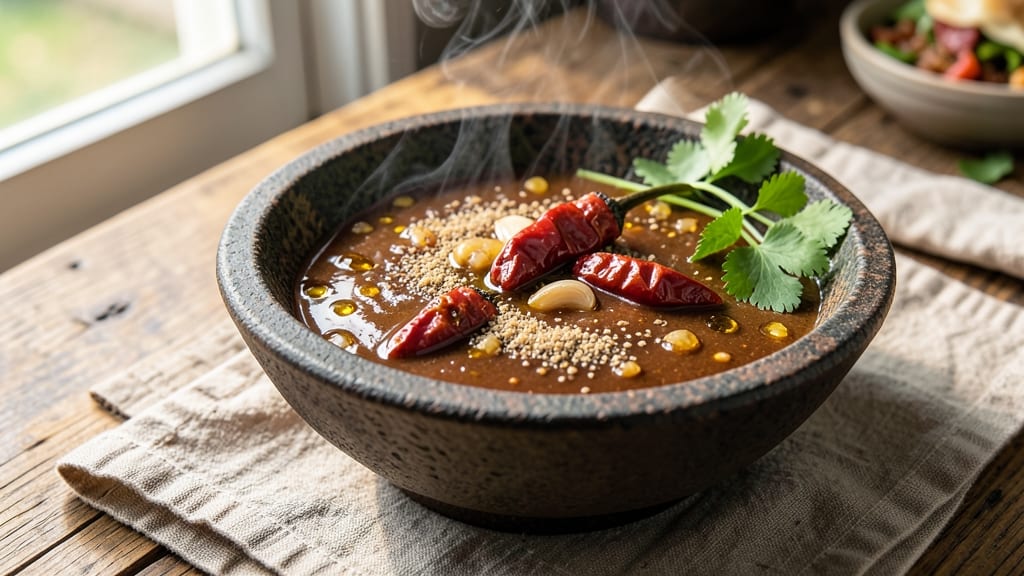
This authentic guajillo enchilada sauce delivers the smoky, slightly sweet depth of traditional Mexican cooking—without the bitterness that often ruins homemade versions.
I learned the secret from my abuela in Atlanta: toasting the dried peppers and straining the sauce transforms them into something silky, complex, and versatile enough for enchiladas, tacos, or even drizzled over grilled meats.
The process starts with toasting the guajillo peppers in a dry skillet until fragrant, then soaking them to soften. This removes the raw, grassy notes while preserving their natural sweetness and smoky aroma.
The sauce simmers gently with garlic, onion, and a touch of cumin, creating layers of flavor that build as it reduces. The key? Patience—rushing this step means a bitter, one-dimensional sauce.
What you’ll end up with is a rich, velvety sauce with just the right balance of heat and sweetness, perfect for rolling in enchiladas or spooning over grilled chicken.
It keeps well in the fridge for up to a week, so you can make a big batch and use it all week. The texture is smooth yet vibrant, with none of the cloying sweetness or harsh spice that ruins so many homemade attempts.
This isn’t just another enchilada sauce—it’s the kind my abuela used to make when we’d gather around the stove on Sunday afternoons. The difference between this and store-bought? Authentic flavor, no additives, and the satisfaction of making something truly from scratch. Let’s get started.
Ingredients for authentic enchilada sauce recipe guajillo
Nine ingredients transform dried peppers into velvety, restaurant-quality enchilada sauce.
| Ingredient | Amount | Notes |
|---|---|---|
| Dried Guajillo Peppers 🌶️ | ½ oz | Stems and seeds removed |
| Yellow Onion 🧅 | 1 whole | Medium, roughly chopped |
| Garlic Cloves 🧄 | 4 cloves | Peeled, slightly crushed |
| Ground Cumin 🌿 | 1 tsp | Toasted for deeper aroma |
| Extra-Virgin Olive Oil 🫒 | ¼ cup | For sautéing, fruity variety |
| Fresh Lime Juice 🍋 | 1 tbsp | Bright, freshly squeezed |
| Water 💧 | 1 ½ cups | For soaking peppers |
| Salt 🧂 | ½ tsp | Diamond Crystal preferred |
| Cinnamon Stick 🌳 | 1 whole | Optional, for subtle warmth |
| Honey 🍯 | 1 tsp | Light, to balance acidity |
The guajillo peppers are everything here. Look for vibrant, deep red peppers at Latin markets—avoid ones that feel brittle or have dull coloring. Penzeys Spices or H-E-B's Mexican food aisle usually carry them year-round. Toasting them in a dry skillet until fragrant (about 30 seconds per side) unlocks their smoky depth. If you can't find guajillos, ancho peppers work in a pinch, but they're darker and slightly sweeter. The onions and garlic? Freshly chopped is non-negotiable—pre-minced garlic has a metallic aftertaste that ruins the sauce.
No guajillos? Ancho peppers work but reduce the amount to 0.3 oz, and add a pinch of smoked paprika to compensate. Running short on lime? Fresh lemon juice at the same amount works, though it'll be slightly less bright. The honey is key for balancing the sauce's natural acidity—avoid agave here, as it can make the sauce taste overly sweet. For extra depth, toast the cumin seeds whole in the same skillet as the peppers, then grind them fresh. The difference is dramatic. And if you're feeling fancy, add a bay leaf during simmering for herbal complexity.
This sauce tastes better with time—let it sit at room temperature for 30 minutes after making before using. Keeps for 1 week in the fridge, or 6 months frozen in ice cube trays for perfect single-use portions. The texture will thicken as it cools, so stir in a splash of water if it seems too stiff. I always double the batch—enchiladas, tacos, and grilled fish all benefit from this rich base. The sauce freezes beautifully, so make extra for lazy weeknights.
Why You'll Love This Recipe
- No Soaking Required: I’ll be real—most guajillo recipes make you soak those peppers for hours. Not this one. Just toast them dry in a pan, then blend with onion and garlic while dinner simmers. The smoky depth comes from the heat, not waiting around.
- Smoky Depth in Minutes: That toasted guajillo pepper? It’s the star—earthy, slightly sweet, with a slow-building warmth. A splash of olive oil while blending keeps it silky, and the cumin ties it all together like a secret handshake. Honestly, the first time I tasted it, I nearly burned my tongue just to savor it longer.
- Weeknight to Party Hero: Same sauce, endless uses. Slather it on enchiladas for a crowd, drizzle it over grilled chicken for a quick weeknight meal, or even toss it with beans for a potluck-worthy side. I’ve used it for tacos, stuffed peppers, and even as a marinade—it’s my go-to for when I need flavor without fuss.
- Budget-Friendly Pantry Magic: Dried peppers and spices cost pennies compared to jars of store-bought sauce. A single batch stretches for three meals, and the leftovers? Freeze them in ice cube trays for single-serving portions later. Between us, this is how I feed my family for under $5 a week.
Step-by-step instructions for authentic guajillo enchilada sauce
Here's how to build a sauce that captures Mexico City's smoky essence—rich, balanced, and free of harsh bitterness.
Toast and Soak the Guajillo Peppers
Place the 0.5 oz dried guajillo peppers on a dry skillet over medium heat. Toast them for 30-45 seconds per side until they darken slightly and release their aromatic oils. Watch closely—they'll darken quickly, and you don't want them to burn. This step deepens their natural sweetness and reduces bitterness.
Immediately transfer the toasted peppers to a heatproof bowl and pour the 1.5 cups water over them. Let them soak for 15-20 minutes until softened. The water will turn a vibrant reddish-orange, signaling the peppers have released their flavor. This soaking step is crucial—it creates the velvety base for your sauce.
Sauté Onion and Garlic in Olive Oil
Heat the 0.25 cup extra-virgin olive oil in a medium saucepan over medium heat. Add the 1 whole yellow onion (roughly chopped) and cook for 5-6 minutes until softened and translucent. You'll see the edges begin to caramelize slightly—that's your cue to add the 4 cloves garlic cloves and 1 tsp ground cumin.
Cook the garlic and cumin for another 1-2 minutes until fragrant. The cumin should release its earthy aroma, and the garlic should turn golden without browning. This aromatic base forms the flavor foundation of your sauce, so don't rush this step. If the onions start to brown too quickly, reduce the heat slightly to prevent burning.
Blend the Sauce Ingredients
Using a slotted spoon, remove the soaked guajillo peppers from their soaking water, reserving the liquid. Transfer both the peppers and their soaking liquid to a blender. Add the sautéed onion and garlic mixture, then blend until completely smooth. The sauce should be vibrant red with a velvety texture. If it's too thick, add 1-2 tablespoons of the reserved soaking water to reach your desired consistency.
Return the blended sauce to the saucepan and place it over medium-low heat. Add the 1 whole cinnamon stick (if using), 0.5 tsp salt, and 1 tbsp fresh lime juice. Stir gently and let the sauce simmer for 10-12 minutes until it thickens slightly and the flavors meld together. The cinnamon adds subtle warmth, while the lime brightens the sauce's depth.
Balance and Finish the Sauce
Taste the sauce and adjust the seasoning. If it needs more brightness, add another ½ teaspoon of lime juice. For sweetness, stir in the 1 tsp honey and simmer for another 2-3 minutes to let the flavors integrate. The honey balances the sauce's acidity and adds a touch of complexity that elevates the dish.
Strain the sauce through a fine-mesh sieve if you prefer a completely smooth texture, or leave it slightly textured for added depth. Keep the sauce warm if serving immediately, or transfer it to a clean jar and refrigerate for up to 5 days. This sauce is incredibly versatile—use it for enchiladas, tacos, or as a dip for tortilla chips. Its authentic flavor will transport you straight to Mexico.
Pro Tips For Making Authentic Enchilada Sauce Recipe Guajillo
- STEAM THE PEPPERS FIRST: I learned this the hard way—tossing raw guajillos straight into hot oil makes them burn before they soften. Instead, cover them with boiling water for 10 minutes first. The skins will loosen, and you’ll avoid that bitter, charred flavor that ruins everything.
- CHAR THE ONION LOW AND SLOW: Crank the heat to medium-low for this one. A fast caramelized onion turns bitter, and you’ll end up with a sauce that tastes like it’s fighting for its life. Give it 15-20 minutes, stirring occasionally, until it’s deep amber—not blackened. Patience here makes the difference between "meh" and "wow."
- TOAST THE CUMIN JUST BEFORE ADDING: Skip the pre-toasting, and your cumin will taste flat, like it’s hiding. Heat the dry spice in the same pot as the onions for 30 seconds until it smells intensely earthy. That quick toast unlocks its flavor—don’t rush it, or you’ll regret it.
- STRAIN THE SAUCE TWICE: One pass through a fine-mesh strainer leaves behind gritty bits. Do it again with a cheesecloth or coffee filter for a silky texture. Yes, it’s extra work, but your sauce will look and taste restaurant-quality. (Your future self will notice.)
Make-ahead tips for this dish
Batch Prep Essentials
Make a double batch of this sauce—it’s perfect for meal prep. The 1.5 cups water soaking step can be scaled up easily: use 3 cups water for 1 oz guajillo peppers.
Store the extra sauce in glass mason jars (I love the Ball 16-oz jars from Central Market) with tight lids. Label with the date—this sauce keeps for 6 months in the freezer! 🧊
Freezer-Friendly Tips
For single-use portions, freeze the sauce in ice cube trays. Once frozen, pop out the cubes and transfer to a freezer bag. Thaw overnight in the fridge, then reheat gently on the stove.
This method preserves the sauce’s vibrant color and prevents texture breakdown. I do this for lazy weeknights—just thaw and drizzle over grilled chicken or tacos. 🥶
Reheating Perfection
Never microwave this sauce—it ruins the texture. Instead, reheat on the stovetop over low heat with a splash of water to loosen it. If it thickens too much, stir in 1-2 tbsp water until smooth.
The sauce should be warm but not boiling—just enough to melt any separated oils. I always reheat mine in a small saucepan with a splash of lime juice to keep it bright. ✨
Sauce Versatility
This isn’t just for enchiladas! Use it as a marinade for grilled meats (try it on pork or chicken), a dip for tostadas, or even a glaze for roasted vegetables.
The 1 tsp honey balances the heat perfectly, making it versatile for both spicy and mild dishes. I’ve even used it in soups for a smoky depth—just dilute with broth. 🌶️
Adjusting Heat Levels
Want it spicier? Add ½ tsp cayenne pepper or more toasted guajillo peppers. For milder heat, remove the seeds before toasting. The sauce’s natural sweetness from the honey and onions balances any spice, so don’t worry about overpowering flavors.
I keep extra peppers on hand—just toast and blend them in for an instant boost. 🔥
Kid-Friendly Adaptations
For picky eaters, reduce the heat by using 0.3 oz guajillo peppers and adding ½ tsp cinnamon for sweetness. The sauce still tastes amazing but is gentle on sensitive palates. Emma and Jack love it drizzled over their tacos—it’s a sneaky way to introduce them to bold flavors. 👨👩👧👦
Nutrition facts
Frequently asked questions
Can I substitute ancho chiles for guajillo peppers?
Yes, but you'll need to adjust for flavor differences. Use 0.3 oz ancho peppers instead of guajillo, as they're darker and slightly sweeter. Add ¼ tsp smoked paprika to compensate for the missing smokiness. Anchos work well but won't give you the same bright, fruity depth as guajillos.
Why does my homemade guajillo sauce taste bitter?
Bitter flavor usually comes from not toasting the peppers enough or skipping the soaking step. Always toast them until fragrant (about 30-45 seconds per side) and soak for 15-20 minutes before blending. The soaking water removes natural bitterness while preserving sweetness. If it's still bitter, add ½ tsp honey or 1 tsp lime juice to balance.
How do I make this sauce spicier without adding more peppers?
For extra heat, add ½ tsp cayenne pepper or 1-2 drops of hot sauce after simmering. You can also toast and blend 1-2 dried arbol peppers with your guajillos—they're tiny but pack serious heat. Remember, the honey and onions in this recipe naturally balance spice, so don't worry about overpowering flavors.
Can I use this sauce for dishes other than enchiladas?
This versatile sauce works perfectly for tacos, tostadas, grilled meats, or even as a marinade. The 1 tsp honey balances the heat beautifully, making it great for both spicy and mild dishes. I've even used it in soups by diluting with broth. The smoky depth elevates everything from roasted vegetables to seafood dishes.
What's the best way to store leftover sauce?
Store in glass mason jars with tight lids in the fridge for up to 5 days, or freeze for 6 months. For single servings, freeze in ice cube trays—just pop out what you need and thaw overnight. Always reheat gently on the stovetop with a splash of water to maintain texture. Never microwave, as it can make the sauce grainy.