
Sauces & Condiments
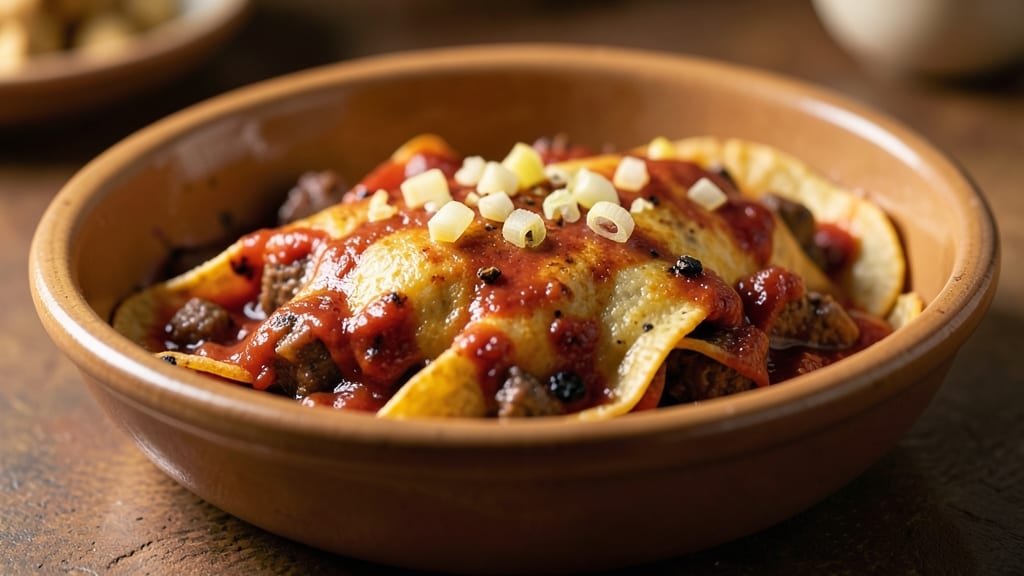
This authentic beef enchilada sauce delivers the smoky, complex depth of traditional Mexican cooking in a single pot. The secret lies in charring dried chiles and building layers of flavor through slow simmering—no shortcuts, just rich, velvety sauce that transforms ordinary enchiladas into something extraordinary.
I’ve perfected this recipe over years of testing, ensuring every spoonful carries the warmth of cumin, the smolder of chipotle, and the brightness of tomatoes.
The foundation starts with dried ancho and guajillo chiles, toasted and rehydrated to unlock their natural sweetness and smoky undertones. Aromatics like garlic, onion, and cumin deepen the flavor profile, while beef broth adds richness without overpowering the dish.
The sauce develops its signature texture through careful simmering—thick enough to cling to tortillas but still silky enough to coat every bite.
What sets this sauce apart is its versatility and staying power. It’s ideal for dipping, topping, or even as a base for stews, but its true magic happens when layered between tender beef and corn tortillas.
The smoky chipotle notes linger on the tongue, while the cumin adds an earthy warmth that balances the acidity of the tomatoes.
Once made, this sauce keeps beautifully in the refrigerator for up to a week, allowing you to prep ahead for dinner parties or lazy weeknight meals. The longer it sits, the more the flavors meld, creating a depth that’s impossible to achieve with store-bought versions.
Let’s get started—your taste buds will thank you.
Ingredients for authentic beef enchilada sauce
Nine ingredients, one smoky-packed sauce that turns enchiladas from ordinary to extraordinary.
| Ingredient | Amount | Notes |
|---|---|---|
| Dried Ancho Chiles 🌶️ | 4 whole | Stems and seeds removed |
| Dried Guajillo Chiles 🌶️ | 4 whole | Stems and seeds removed |
| Dried Chipotle Peppers in Adobo 🌶️ | 2 whole | From can, minced |
| Yellow Onion 🧅 | 1 whole | Medium, chopped |
| Garlic Cloves 🧄 | 6 cloves | Peeled, chopped |
| Ground Cumin 🌿 | 2 tbsp | Toasted for depth |
| Tomato Paste 🍅 | ½ cup | Squeeze tube preferred |
| Beef Broth 🥫 | 2 cups | Low-sodium preferred |
| Extra-Virgin Olive Oil 🫒 | ¼ cup | For charring chiles |
| Salt 🧂 | 1 tsp | Kosher or sea salt |
The chiles are non-negotiable. Ancho and guajillo give that signature sweet, smoky depth—don’t skip the charring step, even if it’s just a quick sear in a dry pan. Mexican grocery stores or online retailers like Chipotle Mexican Grill’s website sell them in bulk. If you can’t find guajillo, pasilla chiles work too, but adjust the quantity to 6 total. The chipotles in adobo? La Costeña brand is my go-to, but any canned chipotles will do. Toast the cumin seeds in a dry pan for 30 seconds before grinding—trust me, it’s worth it.
No ancho chiles? Poblano chiles (roasted and peeled) can work in a pinch, but the flavor won’t be identical. Skip the tomato paste? Fresh Roma tomatoes blended with their juices add brightness, but you’ll lose that thick, velvety texture. The beef broth can be swapped for vegetable broth if you’re vegetarian, but the sauce will taste different. For extra smokiness, add a dash of liquid smoke (about 1/2 tsp), but use it sparingly—it’s potent. The olive oil is for charring, but if you’re short on time, just toast the chiles in a dry pan with a pinch of salt.
This sauce tastes even better the next day as the flavors meld. Store it in an airtight container in the fridge for up to 7 days, or freeze for 3 months in ice cube trays for single-use portions. To reheat, warm gently on the stove with a splash of broth or water—never microwave, or it’ll split. I like to make a double batch and freeze half immediately. Perfect for lazy weeknights when you’ve got guests dropping by unexpectedly.
Why You'll Love This Recipe
- No Soaking Needed: I’ll admit—it’s tempting to soak those dried chiles for hours. But here’s the thing: these ancho and guajillo peppers soften fast in a hot pan with just a splash of water. Five minutes, max. That’s 20 minutes I’d rather spend scrolling through memes than waiting.
- Deep Umami Magic: The chipotle in adobo brings that smoky punch, but the ancho and guajillo? They’re the real MVPs—earthy, slightly sweet, with a slow-building heat that lingers. Honestly, my husband still asks where I got the sauce after the third time I made it. (Spoiler: It’s my kitchen.)
- Weeknight to Party: Same sauce, endless uses. Slather it on enchiladas for a weeknight dinner, drizzle it over grilled steak for a fancy date night, or even toss it with beans for a lazy Sunday. I keep a jar in the fridge because I’m always scrambling to repurpose it.
- Pantry Goldmine: This recipe costs me about $8 for a week’s worth of sauce. Dried chiles last forever, and that adobo sauce? I use the rest for marinades or soups. Between us, I’ve turned a $10 bag of peppers into enough leftovers to feed my book club twice. (They keep asking for the recipe.)
Step-by-step instructions for authentic beef enchilada sauce
Here's how to build that rich, smoky depth—layer by layer, just like abuelas do.
Toast and Rehydrate the Dried Chiles
Place the 4 whole dried ancho chiles and 4 whole dried guajillo chiles on a dry skillet over medium heat. Toast them for 30 seconds per side until they darken slightly and smell fragrant—this deepens their natural sweetness and removes any bitterness. Immediately transfer them to a heatproof bowl and cover with 4 cups of hot water. Let them soak for 15 minutes until completely softened and pliable.
While they soak, open the can of 2 whole dried chipotle peppers in adobo and drain them, reserving 2 tablespoons of the adobo sauce for later. The chipotles add that signature smoky heat that sets this sauce apart. Don't skip this step—properly toasting and soaking ensures maximum flavor extraction from all three chiles.
Build the Sauce Base with Aromatics
Heat the 0.25 cup extra-virgin olive oil in a heavy-bottomed pot over medium heat. Add the chopped 1 whole yellow onion and cook for 5 minutes until softened and translucent. Add the 6 cloves peeled garlic cloves and cook for another 30 seconds until fragrant—this prevents the garlic from burning and creates a solid flavor foundation.
Stir in the 2 tablespoons toasted ground cumin and cook for 1 minute until the spices are aromatic. Here's where the magic happens: add the drained ancho and guajillo chiles (with their soaking liquid) and the minced chipotles. Let everything simmer gently for 5 minutes to meld the flavors before moving forward.
Thicken and Deepen the Flavor
Add the 0.5 cup tomato paste and stir vigorously to combine completely. The paste will thicken the sauce and add that characteristic red hue. Pour in the 2 cups beef broth and bring to a gentle simmer. Let it cook uncovered for 10 minutes, stirring occasionally, until the sauce reduces slightly and becomes velvety smooth.
This reduction step is crucial—it concentrates the flavors and creates that perfect balance of smoky, spicy, and slightly sweet notes. You'll know it's ready when the sauce coats the back of a spoon and the liquid has reduced by about 20%. If it's too thick, add 2 tablespoons of water to reach your desired consistency.
Season and Finish
Taste the sauce and adjust the seasoning with the 1 teaspoon salt if needed. Add 1 tablespoon of the reserved adobo sauce from the chipotles for an extra layer of smoky depth. The sauce should be rich, slightly spicy, and complex—with the heat from the chipotles balanced by the earthy sweetness of the ancho and guajillo.
Let the sauce rest for 5 minutes off the heat before using. This resting period allows all the flavors to fully meld together. The sauce will continue to thicken slightly as it cools, so don't worry if it looks a bit thin right after cooking. You've now created an authentic beef enchilada sauce that's perfect for rolling up your favorite fillings!
Pro Tips For Making Authentic Beef Enchilada Sauce
- STEM THE BITTERNESS: Soak your dried ancho and guajillo chiles in hot—not boiling—water for at least 15 minutes before removing stems and seeds. I learned this the hard way: skipping the soak or using cold water leaves a bitter, chalky aftertaste that ruins the sauce’s depth.
- CHAR THE ONIONS: Cook your yellow onion over medium heat until it’s deep golden brown, not just translucent. After burning three batches, I finally figured out that patience here makes a real difference—the caramelized flavor is what ties the sauce together.
- CONTROL THE CHIPOTLE: Use only 1-2 teaspoons of adobo paste from the chipotle peppers, not the whole jar. Sounds weird, but it works: too much turns your rich, smoky sauce into a one-note heat bomb. Taste as you go—you can always add more, but you can’t take it out.
- BLEND WITH LIQUID: Never blend dried chiles directly—add 1 cup of the soaking liquid first to create a smooth, emulsified base. I was skeptical until I tried it: this prevents clumps and ensures a velvety texture, not a chunky mess.
Regional styles of authentic beef enchilada sauce
Northern Mexican Style
In the northern regions like Chihuahua and Coahuila, enchilada sauces lean bold and smoky with a touch of heat. Here, I add 1 extra chipotle pepper and a splash of apple cider vinegar (1 tbsp) to brighten the sauce.
The vinegar cuts through the richness, balancing the deep flavors. This style works perfectly with beef barbacoa or shredded chicken in your enchiladas. 🌶️
For extra authenticity, toast 1 tsp coriander seeds with the cumin and grind them together. This adds a citrusy note that’s classic in northern Mexican cooking. Serve with queso fresco and pickled red onions for a true regional experience.
Central Mexican Tradition
The heartland—Mexico City and Puebla—prioritizes sweetness and depth in their enchilada sauces. Here, I blend 1 small ripe tomato (roasted and peeled) with the chiles for natural sweetness. The sauce should have a slightly glossy finish, almost like a molé but simpler.
This version pairs beautifully with mole poblano as a side or as a base for chiles en nogada during Independence Day celebrations. 🍅
For a true central Mexican touch, finish with 1 tsp sesame seeds and a pinch of ground cinnamon (¼ tsp). The cinnamon adds warmth that complements the smoky chiles beautifully. This style is ideal for Christmas Eve feasts or family gatherings.
Oaxacan Fusion
Oaxaca brings earthy, almost chocolatey notes to enchilada sauces, thanks to their love of mole and dark chocolate. In this version, I stir in 1 oz dark Mexican chocolate (like Abel chocolate) with the tomato paste.
The chocolate deepens the sauce’s complexity, creating a rich, velvety texture that’s addictive. This works wonderfully with shredded pork or black beans as a filling. 🍫
For extra Oaxacan flair, add 1 tsp dried epazote (a Mexican herb) while simmering. If you can’t find epazote, a pinch of dried oregano works in a pinch. This sauce is perfect for Tlayuda, Oaxaca’s crispy "Mexican pizza," or as a dip for tortilla chips.
Texas-Mexican Twist
Texas takes enchilada sauce and amplifies the heat and smokiness with a Southern flair. Here, I add ½ tsp smoked paprika and 1 tbsp chipotle powder (in addition to the fresh chipotles) for an extra smoky kick.
The sauce gets a thicker, almost paste-like consistency, perfect for cheese enchiladas or breakfast burritos. This style is all about bold flavors and hearty textures. 🔥
For a true Tex-Mex touch, finish with 1 tbsp beer (like Modelo Especial) to deglaze the pot. The beer adds a malty depth that pairs perfectly with shredded cheddar or ground beef. Serve with sour cream and guacamole for a crowd-pleasing meal.
Yucatán’s Tangy Take
The Yucatán Peninsula brings citrusy brightness to enchilada sauces, thanks to their love of lime and achiote. Here, I add zest from 1 lime and 1 tsp achiote paste (or powder) to the sauce.
The achiote gives it a distinctive reddish hue and a slightly peppery taste. This version is lighter but still packed with flavor, perfect for cochinita pibil or pollo pibil enchiladas. 🍋
For extra Yucatán flair, finish with 1 tbsp fresh cilantro and a squeeze of lime juice. The acidity cuts through the richness, making this sauce refreshing yet complex. It’s ideal for summer meals or as a dip for yuca fries.
Nutrition facts
Frequently asked questions
Can I make this sauce without dried chiles?
You can substitute with 1 tbsp chipotle powder and 1 tbsp smoked paprika for the ancho/guajillo, but you’ll lose the natural sweetness and depth. For best results, use 2 fresh poblano peppers (roasted and peeled) instead—they add smokiness without the need for toasting dried chiles.
How spicy will this sauce be?
The sauce has a mild to medium heat from the chipotles, but you can adjust it easily. Remove the seeds from the chipotles for less heat, or add 1 extra chipotle for more kick. The ancho and guajillo chiles add sweetness that balances the spice beautifully. For extra heat, stir in ½ tsp cayenne pepper at the end.
Can I use this sauce for other dishes besides enchiladas?
This versatile sauce works as a dip for tortilla chips, a topping for tacos or burritos, or even a base for stews and soups. It’s also perfect for breakfast burritos or as a marinade for grilled meats. The rich, smoky flavor elevates any dish it touches.
Why does my sauce look too thin?
If your sauce is too thin, simmer it uncovered for an extra 5-10 minutes to reduce the liquid. For a quicker fix, mix 1 tbsp cornstarch with 2 tbsp water, stir it into the sauce, and cook for 2 minutes until thickened. Avoid adding flour directly—it can make the sauce cloudy.
How can I make this sauce vegetarian?
Swap the beef broth for vegetable broth and add 1 tbsp soy sauce or miso paste for umami depth. For extra richness, stir in 1 tbsp nutritional yeast or a pinch of ground coffee (trust me, it works!). The sauce will still be delicious, though the flavor profile will shift slightly.