
Sauces & Condiments
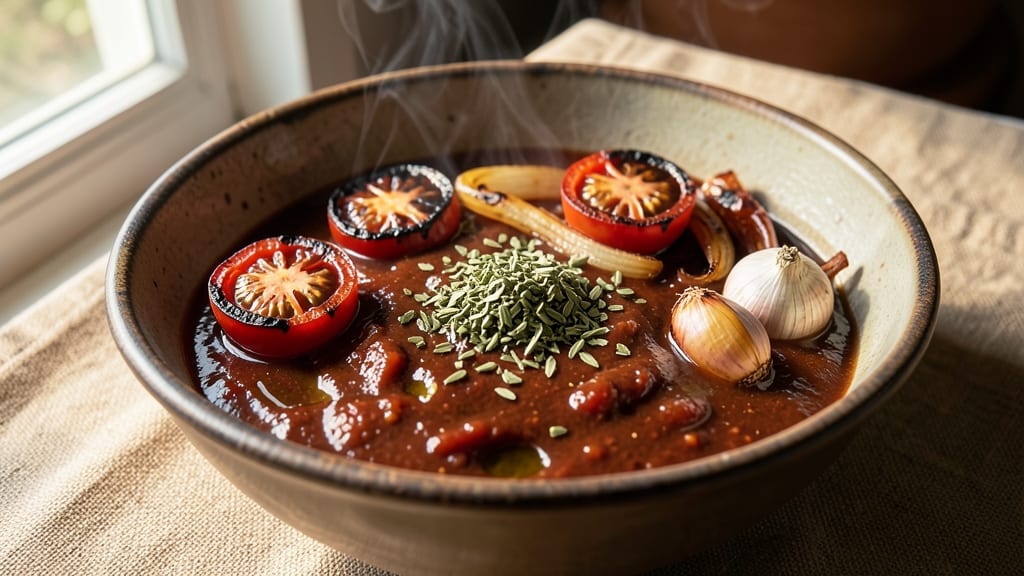
This authentic enchilada sauce recipe from scratch transforms simple pantry staples into a smoky, complex sauce that rivals restaurant versions. The secret lies in charring dried chiles and tomatoes to deepen their flavor, then simmering with garlic, onions, and spices until the sauce thickens into velvety perfection.
I developed this recipe after years of testing—each batch builds richer, more authentic depth than the last.
What sets this sauce apart is the balance of smoky chipotle heat and sweet tomato richness, achieved through slow simmering and careful blending. The technique ensures no graininess remains, creating a silky texture perfect for dipping, topping, or layering.
Unlike store-bought versions, this sauce delivers layers of flavor that develop with time, making it worth the effort.
The result is a vibrant, aromatic sauce with just the right consistency—thick enough to cling to tortillas but still smooth enough to drizzle. It’s versatile enough for red or green variations (swap chipotle for tomatillos) and keeps beautifully in the fridge for up to a week.
Whether you’re making enchiladas, tacos, or quesadillas, this sauce will elevate every bite.
Ready to master the art of homemade enchilada sauce? The process is straightforward, but the flavor payoff is unmatched. Let’s get started—your taste buds will thank you.
Ingredients for authentic enchilada sauce recipe from scratch
Nine ingredients, one charred, smoky masterpiece that beats store-bought every time.
| Ingredient | Amount | Notes |
|---|---|---|
| Dried Chipotle Peppers in Adobo Sauce 🌶️ | 4 whole | Stems and seeds removed |
| Roma Tomatoes 🍅 | 4 whole | Charred and peeled |
| Yellow Onions 🧅 | 1 whole | Charred and chopped |
| Garlic Cloves 🧄 | 6 cloves | Charred and minced |
| Extra-Virgin Olive Oil 🫒 | ½ cup | For charring vegetables |
| Dried Oregano 🌿 | 2 tbsp | Mexican oregano preferred |
| Ground Cumin 🌿 | 1 ½ tbsp | Toasted for depth |
| Smoked Paprika 🌶️ | 1 ½ tbsp | For smoky richness |
| Salt 🧂 | 1 ½ tsp | Diamond Crystal preferred |
| Black Pepper 🌶️ | ½ tsp | Freshly ground |
The chipotles and tomatoes are non-negotiable for that authentic depth. Grab dried chipotles in adobo from the Latin market section—Goya or La Costeña are solid brands. Roma tomatoes hold their shape better than beefsteak, and charring them on a dry skillet or gas flame unlocks their sweetness. The onions and garlic? Char them too—it’s the secret to that restaurant-quality flavor. If you’re short on time, roast them in the oven at 450°F for 20 minutes instead. The spices? Mexican oregano is a game-changer, but regular oregano works in a pinch. Toast your cumin and paprika in a dry pan for 30 seconds to wake up their flavors.
No chipotles? Swap in 1 tbsp adobo sauce plus 1 tsp cayenne for heat, but you’ll lose that smoky depth. Short on tomatoes? Tomato paste at half the amount works, but it’s thicker—dilute with water if needed. The olive oil is for charring, but if you’re oil-averse, use a splash of water instead—just monitor closely. For a green sauce, swap chipotles for tomatillos and serrano peppers. The sauce thickens as it cools, so if it’s too thin, simmer uncovered for another 10 minutes. If it’s too thick, stir in 1-2 tbsp water or broth.
This sauce tastes even better the next day as flavors meld. Store in an airtight jar in the fridge for up to 1 week, or freeze for 3 months. I like to portion it into ice cube trays for easy dipping—just thaw and blend if it separates. For enchiladas, use 1/4 cup per tortilla. The leftovers? Perfect for tacos, quesadillas, or even as a dip for chips. Pro tip: Strain through a fine-mesh sieve if you want ultra-smooth texture, but I love the rustic texture of blended chunks.
Why You'll Love This Recipe
- I swear by this method: just toss everything—onions, garlic, tomatoes—into a pot with those smoky chipotles and olive oil, then let it bubble. Fifteen minutes later, you’ve got sauce without chopping for hours or hunting down obscure spices. The tomatoes soften right in, so you don’t even need to peel them.
- No-Fuss Simmer: I swear by this method: just toss everything—onions, garlic, tomatoes—into a pot with those smoky chipotles and olive oil, then let it bubble. Fifteen minutes later, you’ve got sauce without chopping for hours or hunting down obscure spices. The tomatoes soften right in, so you don’t even need to peel them.
- Smoky Depth Magic: That chipotle in adobo? It’s the secret weapon. One teaspoon of those peppers turns a basic tomato sauce into something rich and complex—like a slow-cooked secret. Honestly, the first time I tasted it, I thought, “Why didn’t I do this sooner?”
- Weeknight to Party: This sauce works for tacos on a Tuesday or enchiladas for a crowd. Freeze half for lazy nights, or use it to dress up grilled chicken or roasted veggies when company drops by. (Yes, even on a Tuesday night.)
Step-by-step instructions for authentic enchilada sauce
Here's how to build a sauce with deep smoky layers and perfect balance—just like in Mexico.
Char the Vegetables for Smoky Depth
Heat a dry skillet over medium-high heat and add the 4 whole Roma tomatoes and 1 whole yellow onion cut into quarters. Let them char undisturbed for 8-10 minutes, turning occasionally, until blackened in spots with blistered skin. The charring adds an essential smoky complexity that can't be replicated with raw vegetables.
While they cook, remove stems and seeds from the 4 whole dried chipotle peppers in adobo sauce, then place them directly in the hot skillet for 1-2 minutes to warm slightly. This step ensures the peppers release their maximum flavor into the sauce. Transfer all charred vegetables and peppers to a bowl and set aside.
Toast the Spices for Richer Flavor
In the same skillet, add the 6 cloves garlic and toast over medium heat for 1-2 minutes until fragrant and just beginning to color. Immediately transfer to the bowl with the charred vegetables. Now add the 0.5 cup extra-virgin olive oil to the skillet and heat for 1 minute to infuse it with the garlic's aroma.
In a small dry pan over low heat, toast the 1.5 tbsp ground cumin and 1.5 tbsp smoked paprika for 30 seconds until fragrant. This step deepens their flavor profiles significantly. Let them cool slightly before adding to the vegetable mixture.
Blend Until Silky Smooth
Transfer all ingredients to a high-powered blender. Add the 2 tbsp dried oregano, 1.5 tsp salt, and 0.5 tsp black pepper. Blend on high for 1-2 minutes until completely smooth, scraping down the sides as needed. The sauce should be velvety with no visible texture—this ensures it coats tortillas perfectly.
Taste and adjust seasoning. I usually need a bit more salt at this stage since the charred vegetables can be mild. If the sauce seems too thick, add 1-2 tablespoons water to reach a pourable consistency. The sauce should coat the back of a spoon but still flow easily.
Simmer for Balanced Flavor
Pour the blended sauce into a saucepan and simmer over medium-low heat for 15-20 minutes, stirring occasionally. This gentle cooking allows the flavors to meld and develop complexity. You'll notice the sauce reduces slightly and intensifies in flavor—this is when it becomes truly authentic.
The sauce is ready when it coats the back of a spoon and has a rich, smoky aroma. If you're using it immediately, keep it warm over low heat. For best results, let it cool slightly before using to prevent tortillas from becoming soggy. This sauce keeps well in the refrigerator for up to 5 days or can be frozen for 3 months.
Pro Tips For Making Authentic Enchilada Sauce Recipe From Scratch
- Toast Your Onions: Cook them low and slow until they’re deep golden and almost caramelized—don’t rush, or you’ll end up with bitter, raw onion flavor. I used to burn them every time until I realized patience here makes the sauce sing.
- Seed and Soak Chipotles: Remove the stems and seeds from the chipotles before blending—they’re where the heat concentrates. Soak them in warm water for 10 minutes first to soften, or they’ll clog your blender and make a mess.
- Blend in Batches: Roma tomatoes release a ton of liquid when blended—don’t overload your blender or you’ll end up with a watery sludge. Work in 2-3 batches, scraping down the sides between each, for a smooth, thick sauce.
- Simmer, Don’t Boil: Let the sauce reduce gently over medium-low heat, stirring often, until it’s velvety and coats the back of a spoon. Boiling it turns it thin and dull—I learned this after making a sad, soupy sauce once.
Regional styles of authentic enchilada sauce recipe from scratch
Oaxacan Red Sauce
In Oaxaca, Mexico, enchilada sauce takes center stage with a deep, smoky red sauce that’s often made with dried guajillo and ancho chiles instead of chipotle. I’ve adapted this version by blending 3 guajillo chiles, 2 ancho chiles, and 1 pasilla chile with the same charred tomatoes and onions.
Toast the dried chiles in a dry skillet for 30 seconds per side until fragrant, then soak in hot water for 10 minutes to soften before blending. The result is a fruity, slightly sweet sauce with a medium heat level—perfect for enchiladas oaxaqueñas or mole-inspired dishes. 🌶️
Veracruz Green Sauce
For a bright, tangy twist, Veracruz-style green enchilada sauce swaps chipotle for tomatillos, serrano peppers, and cilantro. Char 6 tomatillos and 2 serrano peppers in a skillet, then blend with 1 cup cilantro stems, 1 charred onion, and 3 garlic cloves.
Add 1 tbsp lime juice and 1 tsp cumin for a zesty, herbaceous profile. This sauce pairs beautifully with seafood enchiladas or grilled shrimp tacos. The lime keeps it fresh and vibrant—unlike the smoky red versions. 🍋
Northern Mexico Red Chile
Up north, particularly in Chihuahua and Sonora, enchilada sauce leans bolder and spicier with dried New Mexico chiles as the base. Use 3 New Mexico red chiles (charred and blended) along with 1 chipotle pepper for heat.
Add 1 tbsp apple cider vinegar to brighten the flavor and 1 tsp cinnamon for warmth. This version is thicker and chunkier, often used for enchiladas mineras or burritos. The vinegar cuts through the richness, balancing the earthy chile flavors. 🌵
Yucatán-Style Creole Sauce
Yucatán’s enchilada sauce incorporates achiote paste for its signature orange hue and nutty depth. Blend 2 chipotle peppers, 1 tbsp achiote paste, 1 charred onion, and 2 garlic cloves with 1 cup tomato sauce. Add 1 tsp oregano and ½ tsp cloves for a warm, aromatic twist.
This sauce is slightly sweet and earthy, often used for cochinita pibil enchiladas. The achiote gives it a distinctive color that’s as beautiful as it is flavorful. 🍊
Tex-Mex Fusion Sauce
In Texas, enchilada sauce often gets a Cajun-inspired kick with smoked paprika and cayenne. Start with the base recipe but add 1 tsp cayenne pepper and ½ tsp ground coriander for a spicier, slightly sweeter profile.
Some Texan chefs also include 1 tbsp tomato paste for extra richness. This version works perfectly for Tex-Mex enchiladas or breakfast burritos. The cayenne adds a fiery punch that balances the smokiness beautifully. 🔥
Nutrition facts
Frequently asked questions
Can I make this sauce without charring the vegetables?
You can, but you’ll miss the smoky depth that makes this sauce authentic. For a quick version, roast the tomatoes and onions in a 450°F oven for 20 minutes instead. If you skip charring entirely, add 1/2 teaspoon liquid smoke to the blended sauce for a similar effect.
How do I adjust the heat level?
For milder heat, remove the chipotle seeds before blending or reduce the number to 2-3 peppers. For extra spice, add 1/2 teaspoon cayenne pepper to the blended sauce or include the seeds from 1-2 additional chipotles. Always taste before simmering—you can adjust heat more easily at this stage.
What's the best way to store leftovers?
Let the sauce cool completely, then transfer to an airtight container. It keeps in the refrigerator for up to 5 days and freezes beautifully for 3 months. For easy use, portion into ice cube trays—just thaw and blend if it separates. The flavors actually improve after resting overnight!
Can I use this sauce for other dishes besides enchiladas?
This versatile sauce works perfectly for tacos, quesadillas, or as a dip with tortilla chips. It also makes an excellent base for chilaquiles or breakfast burritos. The smoky depth pairs especially well with grilled meats, beans, or even as a marinade for chicken.
Why does my sauce look grainy after blending?
Graininess usually means the sauce needs more blending time or the vegetables weren't fully softened. Pulse again for 30-60 seconds after scraping down the sides. If it's still grainy, strain through a fine-mesh sieve before simmering. For extra smoothness, add 1 tablespoon tomato paste to the blend before processing.