
Sauces & Condiments
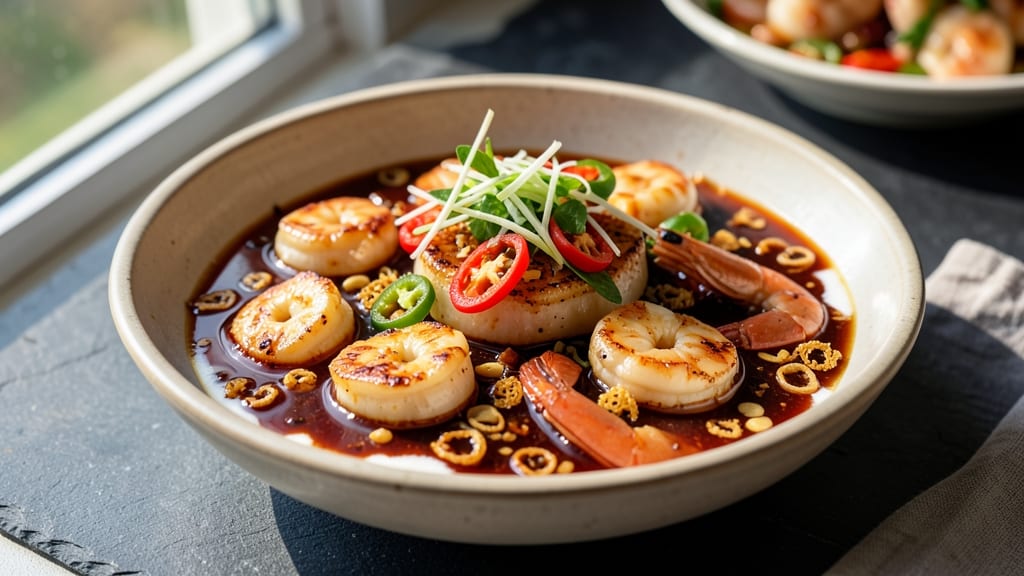
This Asian seafood sauce recipe transforms simple stir-fries and bowls into restaurant-quality meals with just a few pantry staples. The secret lies in balancing sweet, salty, and umami flavors through careful reduction—no fancy techniques required.
I developed this version after years of testing, and it never fails to elevate seafood dishes with its rich, aromatic depth.
The sauce builds on a classic foundation of fish sauce, soy sauce, and garlic, but what sets it apart is the slow simmer with coconut milk and ginger. This creates a velvety texture while keeping the flavors bright and complex.
The chili paste adds subtle heat, while a touch of brown sugar rounds out the profile. What makes this sauce truly versatile is how it works—whether drizzled over grilled shrimp, tossed with noodles, or served as a dipping sauce for spring rolls.
By the time you're done, you'll have a glossy, umami-packed glaze that clings beautifully to proteins and vegetables. The aroma alone will have everyone at the table asking what's for dinner.
Best of all, it keeps well in the fridge for up to two weeks, so you can make a big batch and use it throughout the week.
Ready to master this sauce? Here's everything you need to create a flavor profile that's equal parts comforting and exciting. The instructions are straightforward, but the results are anything but basic.
Ingredients for asian seafood sauce
Pantry staples plus a few fresh aromatics—this sauce is restaurant-quality with zero fuss.
| Ingredient | Amount | Notes |
|---|---|---|
| Fish Sauce 🐟 | ½ cup | Red Boat brand preferred |
| Soy Sauce 🥢 | ½ cup | Light or dark variety |
| Coconut Milk 🥥 | 1 can | Full-fat for creaminess |
| Brown Sugar 🍯 | ¼ cup | Packed firmly |
| Garlic Cloves 🧄 | 6 cloves | Minced finely |
| Fresh Ginger 🌿 | 2 tbsp | Grated finely |
| Red Chili Paste 🌶️ | 1 tbsp | Or sambal oelek |
| Extra-Virgin Olive Oil 🫒 | 1 tbsp | For heat resistance |
| Lime Juice 🍋 | 1 tbsp | Freshly squeezed |
| Water 💧 | ¼ cup | For thinning |
The fish sauce is non-negotiable here—Red Boat or Three Crabs are my go-tos, but any good-quality brand works. You'll smell it before you taste it, and that's a good thing. The coconut milk should be full-fat for that velvety texture, but if you're watching calories, light coconut milk works too. Ginger and garlic? Fresh is best, but if you're in a pinch, jarred minced garlic and powdered ginger (at half the amount) won't ruin it. Just don't skip them—they're the aromatic backbone. I always grab my ginger from the Asian market where it's freshest, but the regular grocery store works fine too.
No fish sauce? Soy sauce plus a dash of oyster sauce gets you close, though the umami won't be quite as deep. Swapping brown sugar for honey or maple syrup works, but the sauce will taste slightly different. The chili paste can be omitted if you're sensitive to heat, but I recommend keeping it—it adds complexity. For a smoother sauce, blend everything first before simmering. If you're using pre-minced garlic from a jar, drain it well or the sauce will be watery. And if you're making this for a crowd, double the batch—it disappears fast.
This sauce tastes even better the next day as the flavors meld. Store it in an airtight jar in the fridge for up to 2 weeks, or freeze portions for 3 months. I like to keep a small jar in the fridge at all times—it's perfect for quick stir-fries or as a dipping sauce. If it thickens too much, just add a splash of water or coconut milk to loosen it up. And if you make extra, freeze some in ice cube trays for single-use portions—thaw and drizzle as needed.
Why You'll Love This Recipe
- Pantry Magic: I swear by this sauce—no fancy shopping required. You’re probably already staring at fish sauce and soy sauce in your cabinet right now, and coconut milk? That’s the creamy secret weapon hiding in your freezer aisle.
- Umami Bomb: That first hit of garlic sizzling in the pan, then the deep, salty punch of fish sauce cutting through the sweetness—it’s like a flavor explosion in your mouth. The brown sugar ties it all together with this caramelized richness that makes everything taste better.
- Weeknight Workhorse: Slather it on grilled shrimp for a 15-minute dinner. Drizzle it over rice bowls when you’re too tired to think. Even toss it with tofu and veggies for a quick stir-fry that still feels fancy. (Yes, even on a Tuesday night.)
- Budget Flex: A little goes a long way—this sauce stretches to coat four servings, and the ingredients cost pennies. Plus, it keeps for days in the fridge, so you’re not scrambling to use it up before it spoils. My wallet and my taste buds win.
Step-by-step instructions for Asian seafood sauce
This vibrant sauce comes together in minutes with bold flavors that elevate any seafood dish.
Sauté Aromatics Until Fragrant
Heat the 1 tablespoon extra-virgin olive oil in a medium saucepan over medium heat. Add the 6 cloves minced garlic cloves and 2 tablespoons finely grated fresh ginger, stirring constantly for 1-2 minutes until the garlic turns golden and the ginger becomes fragrant. Watch closely—garlic burns quickly, so keep the heat moderate.
This step builds the aromatic foundation. You'll know it's ready when the mixture smells intensely of garlic and ginger, with no raw or acrid notes remaining. The oil should be shimmering but not smoking.
Combine Liquids and Sweeteners
Pour in the 0.5 cup fish sauce and 0.5 cup soy sauce, stirring to dissolve any sugar crystals. Add the 0.25 cup packed brown sugar and bring the mixture to a gentle simmer over medium-high heat. Let it bubble for 3-4 minutes until the sugar begins to caramelize slightly along the edges of the pan.
The sauce should reduce by about one-third during this time, developing a glossy sheen. If it thickens too quickly, add 1-2 tablespoons of the 0.25 cup water to maintain proper consistency. Stir occasionally to prevent sticking.
Add Coconut Milk and Spice
Reduce heat to medium-low and stir in the 1 can coconut milk and 1 tablespoon red chili paste. The sauce will lighten in color and become smoother. Simmer gently for 5 minutes, stirring occasionally, until the mixture thickens slightly and coats the back of a spoon.
Here's where the sauce transforms—coconut milk adds creaminess while the chili paste introduces depth. You'll see tiny bubbles form along the edges, signaling proper thickening. If it's too thick, add the remaining 0.25 cup water gradually until you reach a pourable consistency.
Finish with Acid and Adjust Seasoning
Remove the pan from heat and stir in the 1 tablespoon freshly squeezed lime juice. Taste immediately—this is your quality checkpoint. The sauce should balance sweet, salty, umami, and tangy flavors. If it needs more depth, add 1-2 teaspoons fish sauce. For heat adjustment, add ½ teaspoon more red chili paste if desired.
Let the sauce rest for 5 minutes before using. This allows the flavors to meld completely. The final texture should be glossy yet pourable, with a rich aroma that hints at all the components. This sauce keeps well in the refrigerator for up to 1 week, making it perfect for meal prep.
Pro Tips For Making Asian Seafood Sauce
- Bloom the Garlic First: I learned this the hard way—raw garlic in this sauce just tastes sharp and medicinal. Mince it extra fine (almost like a paste) and let it sit in the pan for 30 seconds at medium heat until it’s just turning golden. That’s when it releases its sweetness and stops being a punch in the throat.
- Simmer, Don’t Boil: This sauce is all about balance, and coconut milk curdles faster than you think. Once everything’s in the pot, keep the heat at a gentle simmer—tiny bubbles breaking the surface, not a rolling boil. If it looks like it’s fighting you, drop the heat lower. The sugar will caramelize properly, and the fish sauce won’t turn bitter.
- Balance the Fish Sauce: Fish sauce is salty, but not all brands taste the same. Taste it before adding it to the sauce—some are strong enough that you’ll only need 1 tablespoon, others need double. Start with half what the recipe says, let it cook, then adjust. You can’t fix oversalting, but you can always add a splash of coconut milk or a pinch of sugar to round it out.
- Strain the Coconut Milk: Store-bought coconut milk is convenient, but it’s packed with sediment that makes the sauce look murky. Pour it through a fine-mesh strainer into a bowl before adding it to the pot—yes, even if it’s “full-fat.” The result is a smoother, cleaner sauce that looks restaurant-worthy without extra effort. (Your future self will thank you.)
Creative variations of asian seafood sauce
Thai-Inspired Spicy Coconut
For a Thai-inspired twist, replace the soy sauce with 2 tbsp fish sauce and 2 tbsp tamarind paste (or 1 tbsp lime juice for tang). Add 1 tbsp Thai red curry paste instead of chili paste, and finish with 1 tsp palm sugar for authentic depth.
The coconut milk stays the same, but the tamarind adds a fruity complexity that works brilliantly with shrimp or squid. 🌶️
Japanese Miso-Glaze Version
Swap the fish sauce for 3 tbsp white miso paste and reduce the soy sauce to ¼ cup. Add 1 tsp grated daikon radish and ½ tsp mirin for sweetness.
Simmer the miso paste with the aromatics first to dissolve completely before adding coconut milk. This version pairs perfectly with grilled salmon or scallops, offering a fermented umami richness. 🍣
Vietnamese Nuoc Cham Fusion
Create a fusion sauce by replacing half the fish sauce with ¼ cup rice vinegar and adding 1 tbsp sugar (instead of brown sugar). Stir in 1 tsp fish sauce at the end for balance.
The lime juice becomes 2 tbsp, and you can add 1 tsp finely chopped Thai basil or cilantro for freshness. This works as a dipping sauce for spring rolls or a marinade for shrimp skewers. 🍜
Korean Gochujang Twist
Replace the red chili paste with 1 tbsp gochujang (Korean chili paste) and add ½ tsp grated ginger plus 1 tsp sesame oil at the end. Use light soy sauce and reduce the coconut milk to ½ can for a thicker, spicier profile.
This version shines with grilled mackerel or as a glaze for tofu. 🌟
Sweet and Tangy Filipino Style
Boost the sweetness with 3 tbsp brown sugar and add 1 tbsp calamansi juice (or extra lime) for tang. Include ½ tsp ground black pepper and 1 tsp toasted garlic oil for depth.
This version is perfect for grilled squid or as a dipping sauce for lumpia. The extra sugar caramelizes beautifully during simmering. 🍍
Nutrition facts
Frequently asked questions
Can I make this sauce without coconut milk?
Yes, but the texture will be lighter. Replace the coconut milk with ½ cup heavy cream or ½ cup water plus 1 tablespoon cornstarch to maintain thickness. The sauce will still be flavorful, though less rich. For a vegan version, use ½ cup cashew cream (blended soaked cashews with water).
How do I adjust the heat level?
Start with ½ teaspoon red chili paste if you prefer mild heat, or add 1½ teaspoons for extra spice. For a smoky depth, stir in ½ teaspoon smoked paprika at the end. Remember, flavors intensify as the sauce cools—taste before serving!
What seafood works best with this sauce?
This sauce shines with delicate seafood like shrimp, scallops, and white fish (cod, halibut). For heartier options, try grilled mackerel or tuna. Avoid overly oily fish like salmon—the sauce's richness may clash. For stir-fries, use 1-2 tablespoons sauce per ½ pound seafood.
Why did my sauce turn out too salty?
Most likely, your fish sauce was more concentrated than expected (some brands vary). Balance it by adding 1-2 tablespoons water or ½ cup coconut milk to dilute. For a quick fix, stir in 1 teaspoon honey or sugar to offset saltiness. Always taste as you go!
Can I use this sauce in non-seafood dishes?
It works beautifully with grilled chicken, tofu, or even roasted vegetables. For plant-based dishes, reduce the fish sauce to ¼ cup and add 1 teaspoon soy sauce for umami. The sauce also makes an excellent dipping sauce for spring rolls or dumplings.