
Sauces & Condiments
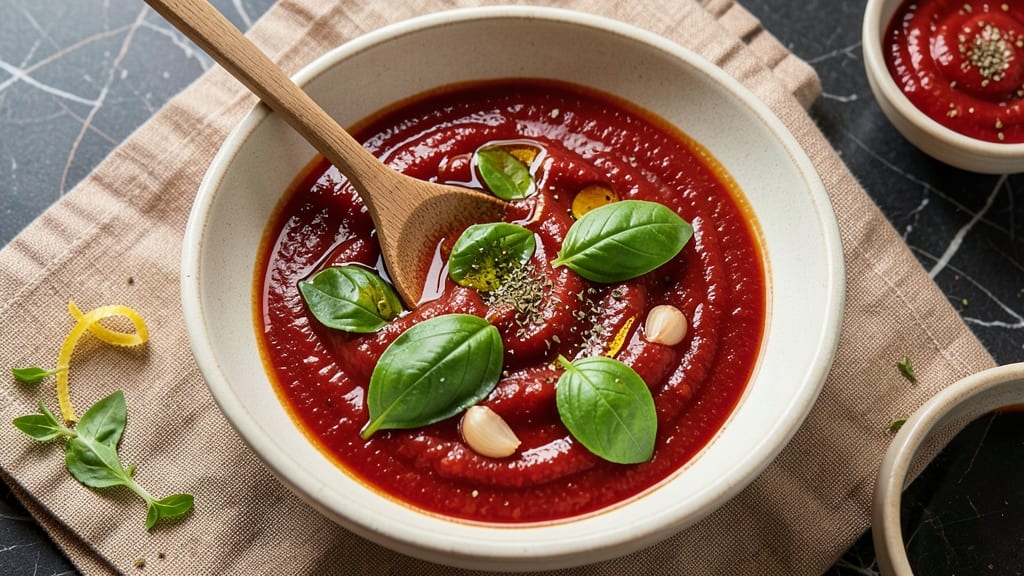
Arrenello's pizza sauce recipe transforms your homemade pizza into authentic Neapolitan flavor with just a few simple ingredients and a slow simmer. The secret lies in balancing sweet tomatoes with fresh basil and garlic for that signature Italian taste. I've perfected this sauce over years of making pizza, and it's the foundation that makes all the difference between store-bought and restaurant-quality.
This sauce starts with high-quality canned tomatoes, simmered until their natural sweetness develops and their acidity mellows. Fresh basil and garlic infuse the sauce with bright, aromatic flavors that cut through the richness of melted cheese.
The key technique is simmering uncovered to concentrate the flavors without burning them—this creates a sauce that's rich yet balanced, with just the right consistency to cling to pizza dough.
What you'll end up with is a vibrant red sauce that's fragrant with basil and garlic, perfectly sweet and tangy without being overly acidic. It's the kind of sauce that makes every bite of your pizza taste like you've been to Naples.
The best part? It keeps well in the fridge for up to a week, so you can make a big batch and use it for multiple pizzas.
Whether you're making classic Margherita or loaded deep-dish, this sauce elevates your pizza to the next level. Let's get started on creating the perfect base for your homemade masterpiece.
Ingredients for arrenello's pizza sauce
Fresh basil and sweet tomatoes make this sauce the perfect Neapolitan foundation.
| Ingredient | Amount | Notes |
|---|---|---|
| San Marzano Crushed Tomatoes 🍅 | 28 oz | High-quality, no salt added |
| Fresh Basil Leaves 🌿 | ½ cup | Packed, stems removed |
| Garlic Cloves 🧄 | 4 cloves | Minced for aromatic depth |
| Extra-Virgin Olive Oil 🫒 | 2 tbsp | For richness and balance |
| Dried Oregano 🍃 | 1 tsp | Italian variety preferred |
| Salt 🧂 | ½ tsp | Diamond Crystal preferred |
| Black Pepper 🌶️ | ¼ tsp | Freshly ground for warmth |
| Red Wine Vinegar 🍷 | 1 tbsp | For brightness and balance |
| Granulated Sugar 🍬 | 1 tsp | Balances acidity naturally |
The tomatoes are the soul of this sauce. San Marzano is the gold standard—sweet, meaty, and with none of that watery canned tomato nonsense. Grab a 28-ounce can from Trader Joe's or Whole Foods; they carry the good stuff. Fresh basil is non-negotiable here (the good stuff, not the pre-shredded kind)—it's what gives this sauce that signature Italian aroma. Costco sells basil in those little clamshells for a great price, but if you're at a farmers market, splurge on a bunch. The garlic? Four cloves, minced—don't skip this part, it's the flavor bridge between sweet and savory.
No San Marzano? Muir Glen or Cento are solid backups—just make sure it says 'crushed' or 'diced' on the label, not 'whole peeled.' Running low on basil? Dried basil at half the amount works in a pinch, but trust me on the fresh version. Short on red wine vinegar? Balsamic vinegar at the same amount gives a deeper flavor. The sugar is key—it mellows the acidity without making the sauce taste sweet. If you're worried about it, taste as you go. And yes, you can make this without oregano, but it won't be quite the same—it rounds out the basil's punch.
This sauce tastes even better the next day once the flavors meld. Store it in an airtight container in the fridge for up to 1 week. Freezes beautifully for 3 months—just thaw overnight in the fridge. I like to make a big batch on Sundays so I've got it ready for pizza nights all week. Pro tip: if it thickens too much after chilling, just add a splash of water or olive oil to loosen it up. It's meant to cling to dough, not be a soup.
Why You'll Love This Recipe
- No-Chop Necessary: I swear by this sauce because it only asks for two things from me: crushing garlic and tearing basil. That’s it. No dicing, no peeling mountains of tomatoes—just open a can, simmer, and let the San Marzano tomatoes do their magic while I sip my coffee.
- Umami Bomb: The moment that crushed garlic hits the olive oil? Chef’s kiss. Then the basil—bright, fresh, and tossed in at the end so it doesn’t wilt—turns this into a flavor explosion. It’s the kind of sauce that makes you pause mid-slice and say, “Wait, I’m eating this again?”
- Pantry-to-Party Ready: I keep a jar of this in my fridge because it’s that versatile. Weeknight pizzas? Done. Pasta? Slap it on. Even as a marinade for grilled chicken—it’s the unsung hero of my meal prep. And honestly? It’s the only sauce I trust for last-minute gatherings.
- Fridge Goldmine: Between us, this sauce improves with time. The flavors meld into something deeper, richer—perfect for when I’m too lazy to cook but still want restaurant-quality taste. Plus, it’s cheap: a can of tomatoes and a handful of herbs stretch into weeks of meals. My wallet and I are forever grateful.
Step-by-step instructions for arrenello's pizza sauce
Here's how to craft that signature Neapolitan sauce with perfect tomato-basil harmony.
Bloom the Garlic in Olive Oil
Heat the 2 tablespoons extra-virgin olive oil in a medium saucepan over medium-low heat. Add the 4 minced garlic cloves and cook for 1-2 minutes until they're just beginning to turn golden and release their aroma. This step is crucial—don't let them brown or they'll turn bitter. The oil should shimmer but not smoke.
I always use a light hand with garlic here. Once it reaches that perfect golden stage, immediately remove the pan from heat and let it cool for 1 minute. This prevents the garlic from cooking further while we add the tomatoes. The residual heat will carry through the next steps without overpowering the delicate flavors.
Combine Tomatoes, Vinegar, and Seasonings
Return the pan to medium heat and add the 28 ounces San Marzano crushed tomatoes. Stir in the 1 tablespoon red wine vinegar, 1 teaspoon dried oregano, ½ teaspoon salt, ¼ teaspoon black pepper, and 1 teaspoon granulated sugar. The vinegar brightens the tomatoes while the sugar subtly balances their natural acidity.
Bring the mixture to a gentle simmer, then reduce heat to low. Let it cook uncovered for 15 minutes, stirring occasionally. You'll notice the sauce thicken slightly and the flavors meld together. This low-and-slow approach develops depth without reducing too much—we want a sauce that's flavorful but still spreadable for pizza.
Add Fresh Basil and Simmer Gently
After 15 minutes, stir in the ½ cup packed fresh basil leaves. The basil should wilt and infuse the sauce with its signature aroma. Return the heat to medium-low and continue simmering for another 10-12 minutes, stirring occasionally. The sauce should reduce just enough to coat the back of a spoon but still maintain a smooth, vibrant consistency.
Here's where the magic happens: the basil's essential oils release into the sauce, creating that unmistakable sweet, peppery aroma. If you smell the basil becoming too intense, reduce the heat slightly. The sauce is ready when it's thickened but still pourable—think of it like heavy cream rather than a glaze. Taste and adjust seasoning if needed, adding a pinch more salt or sugar as necessary.
Cool and Store Properly
Remove the sauce from heat and let it cool to room temperature. This cooling period allows the flavors to fully integrate. I like to transfer it to a clean jar while still warm—this helps prevent mold growth later. The sauce will thicken further as it cools, which is normal and actually improves its texture for pizza.
For best results, store the sauce in an airtight container in the refrigerator for up to 5 days. If you're not using it immediately, freeze it in 1-cup portions for up to 3 months. When ready to use, thaw in the refrigerator overnight. The sauce will maintain its vibrant color and rich flavor, ready to elevate your homemade Neapolitan pies to restaurant quality.
Pro Tips For Making Arrenello'S Pizza Sauce
- Simmer Low and Slow: After burning my first batch of sauce by boiling it aggressively, I learned to keep the heat at a gentle simmer—just enough to see tiny bubbles breaking the surface. San Marzano tomatoes are already sweet and rich; rushing them turns the sauce bitter and watery.
- Mince Garlic Like You Mean It: I used to crush garlic cloves with the flat of my knife, but that leaves uneven bits. Finely mince them into a paste—almost like a rough pesto consistency—so they dissolve completely into the oil. This prevents that "garlicky crunch" that ruins the texture.
- Salt the Tomatoes First: Before you even think about adding garlic or basil, season the crushed San Marzano tomatoes with a full teaspoon of salt. This draws out excess water and concentrates their natural sweetness—no one wants a watery sauce, even if you simmer it forever.
- Add Basil at the End: Fresh basil wilts and turns bitter if cooked too long. Tear the leaves by hand (not chopping) and stir them in only during the last 30 seconds of cooking. If you’re using it for garnish, save half and add it fresh after baking—trust me, it makes a difference.
Serving suggestions for leftovers
Classic Margherita Pairing
This sauce was born for a Margherita pizza—the Italian classic with its simple yet perfect balance. Spread about ½ cup sauce on your dough (about 12-inch diameter) and top with 8 oz fresh mozzarella cut into ½-inch slices and a handful of fresh basil.
I like to finish with a drizzle of extra-virgin olive oil and a pinch of flaky sea salt right before baking. The sauce's bright acidity cuts through the creamy cheese, while the basil ties everything together beautifully. 🌿
Prosciutto & Fig Fusion
For a sophisticated twist, pair this sauce with thinly sliced prosciutto di Parma and fresh figs. Spread the sauce on your dough, then layer with 4 oz prosciutto (cut into strips) and 2 ripe figs (sliced).
Top with 4 oz burrata cheese and bake as usual. The prosciutto's saltiness and the figs' natural sweetness create a perfect harmony with the sauce's tomato-basil foundation. 🍷
Veggie Lover's Delight
Transform this sauce into a veggie pizza base by adding roasted red peppers, caramelized onions, mushrooms, and artichoke hearts.
Spread the sauce, then top with 1 cup roasted red peppers (drained), 1 cup caramelized onions, 1 cup sliced mushrooms, and ½ cup artichoke hearts. Finish with 1 cup shredded mozzarella and a sprinkle of grated Parmesan.
The sauce's acidity balances the earthy flavors of the vegetables perfectly. 🥗
Breakfast Pizza Twist
Yes, you can use this sauce for breakfast pizza! Spread it on a pre-made pizza crust, then top with 2 eggs (cracked in the center), ¼ cup shredded mozzarella, 2 slices cooked bacon, and ¼ cup diced tomatoes.
Bake at 425°F for 12-15 minutes until the eggs are set. The sauce's sweetness pairs surprisingly well with the savory breakfast elements, creating a delicious morning meal. 🍳
Sauce as a Dipping Sauce
Don't limit this sauce to pizza! Use it as a dipping sauce for garlic knots, fried calamari, or even grilled chicken skewers.
Warm the sauce slightly (just enough to loosen its texture) and serve it in a small bowl with a sprinkle of fresh basil and a drizzle of olive oil. The sauce's vibrant flavor makes everything it touches taste like a slice of authentic Italian pizza. 🍽️
Grilled Pizza Sandwich
For a fun twist, use this sauce in a grilled pizza sandwich. Spread ½ cup sauce on one side of a ciabatta roll, then layer with ½ cup shredded mozzarella, ¼ cup sliced pepperoni, and a handful of fresh basil leaves.
Close the sandwich and grill in a pan over medium heat for 3-4 minutes per side until golden and crispy. The sauce's rich flavor shines in this handheld format. 🔥
Nutrition facts
Frequently asked questions
Why does this sauce use San Marzano tomatoes specifically?
San Marzano tomatoes are the gold standard for pizza sauce because of their sweet, meaty texture and low acidity. Their natural sugars caramelize beautifully during simmering, creating a richer flavor than regular canned tomatoes. The lack of added salt also gives you better control over seasoning—this sauce tastes even better when you adjust the salt to your preference.
Can I make this sauce without fresh basil?
Yes, but it won't be quite the same! Use ½ teaspoon dried basil instead, but add it at the very end of cooking (not with the tomatoes). The fresh basil's essential oils are what create that signature Italian aroma—dried basil can't fully replicate it, though it still adds flavor. If you're in a pinch, a pinch of basil extract (¼ teaspoon) can help bridge the gap.
How do I fix a sauce that's too thick or too thin?
For thick sauce, stir in 1-2 tablespoons water or olive oil while warm. For thin sauce, simmer uncovered for 5-10 more minutes to reduce it. The ideal consistency should coat the back of a spoon but still be pourable—like heavy cream. If you've already cooled it, add a splash of water or olive oil to loosen it up before using.
Can I use this sauce for non-pizza dishes?
This versatile sauce works perfectly for pasta, bruschetta, or even as a marinade for grilled chicken. The bright tomato-basil flavor pairs well with anything that needs a fresh, Italian-inspired touch. Just adjust the thickness—it should be slightly thinner for pasta to coat the noodles better.
What's the best way to reheat leftover sauce?
Gently warm it in a saucepan over low heat for 2-3 minutes, stirring occasionally. Never microwave it directly—this can make the sauce split or lose its texture. If it thickens too much while reheating, add a splash of water or olive oil. For best results, reheat only what you need to use immediately.