
Sauces & Condiments
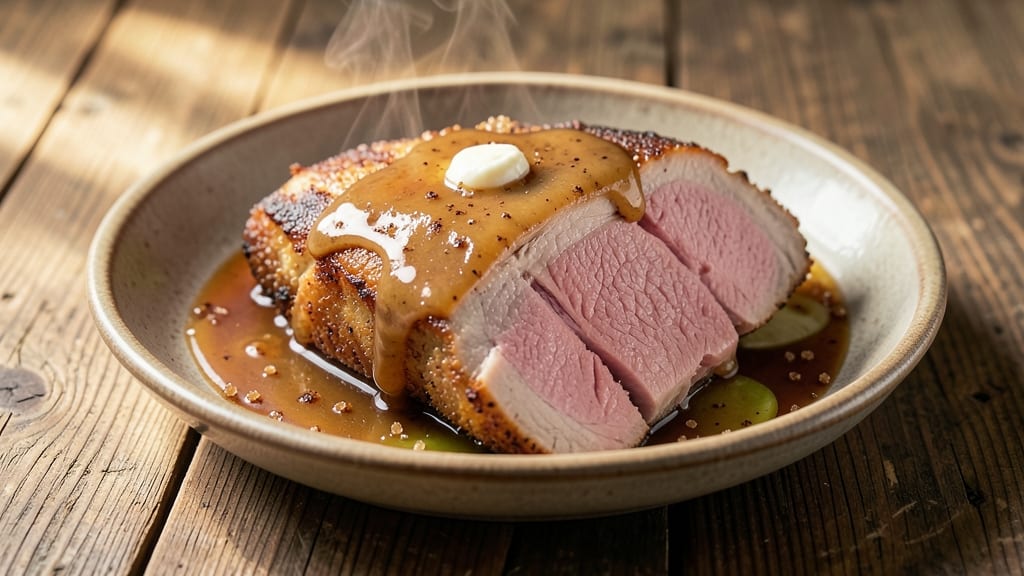
This apple sauce for pork roast transforms a simple roast into a showstopper with its caramelized sweetness and tangy depth. After years of perfecting glazes for my restaurant’s pork specials, I’ve simplified this into a foolproof sauce that clings beautifully to meat while balancing richness with acidity.
The key? Cooking apples until they break down into a velvety consistency, then simmering with just enough vinegar to cut through the sugar.
The recipe uses only five ingredients—no complicated techniques or last-minute store runs. Tart apples (like Granny Smith) provide structure, while brown sugar and apple cider vinegar create that signature sweet-tangy profile.
A splash of pork broth ties it all together, ensuring the sauce has the same depth as the meat it’s glazing. It’s the kind of sauce that makes even a basic pork roast taste like it came from a pitmaster’s smoker.
What makes this sauce special is how it behaves on the meat. Brushed on during the last 30 minutes of roasting, it caramelizes into a sticky glaze that locks in moisture while adding layers of flavor.
The result? A pork roast with golden, crackling edges and a sauce that’s neither cloyingly sweet nor blandly savory. It’s the perfect balance—sweet enough to please, but with enough acidity to keep it interesting.
Use this sauce as a glaze for pork roasts, pulled pork, or even as a topping for mashed potatoes. The recipe scales easily, so you can make a small batch for a weeknight dinner or double it for a holiday feast.
The best part? It keeps well in the fridge for up to a week, so you’ll always have a ready-made way to elevate your pork dishes.
Ingredients for apple sauce for pork roast
Five simple ingredients that turn pork roast into a restaurant-worthy masterpiece.
| Ingredient | Amount | Notes |
|---|---|---|
| Granny Smith Apples 🍎 | 4 medium | Peeled, cored, chopped |
| Brown Sugar 🍚 | ½ cup | Packed firmly |
| Apple Cider Vinegar 🍶 | ¼ cup | Unfiltered preferred |
| Pork Broth 🍲 | ½ cup | Low-sodium preferred |
| Unsalted Butter 🧈 | 2 tbsp | Cold, cubed |
| Ground Cinnamon 🌿 | ½ tsp | Optional, for warmth |
Granny Smith apples are the secret weapon here—their tartness cuts through the sweetness perfectly. Trader Joe's and Whole Foods usually carry them year-round, but if you can't find them, Fuji or Honeycrisp work too. Look for apples that are firm but yield slightly to pressure—those are the ones that'll break down beautifully. The brown sugar should be packed firmly into the measuring cup; don't scoop it. For the vinegar, unfiltered brands like Bragg add a subtle depth of flavor that regular vinegar can't match. If you're making this ahead, the sauce actually tastes better the next day as the flavors meld.
No apple cider vinegar? White vinegar or lemon juice will work in a pinch, though the flavor profile shifts slightly. The butter is non-negotiable for that velvety texture—European-style butter like Plugra melts more smoothly. Short on pork broth? Chicken broth with a splash of apple juice gets you close. Want extra tang? Add a pinch of mustard powder to the sauce. The cinnamon is optional but adds that cozy, autumnal note that makes this sauce feel special. If you're using dried apples, soak them in warm water for 10 minutes first to rehydrate them—it makes all the difference.
This sauce keeps beautifully in the fridge for up to 7 days in an airtight container. For longer storage, freeze it in ice cube trays—just thaw and reheat when ready. The texture thickens as it cools, so add a splash of water or broth when reheating. Brush it on pork roasts during the last 30 minutes of cooking for that perfect caramelized glaze. It also works wonders on chicken thighs or as a topping for pancakes. Make a double batch—you'll want it on everything.
Why You'll Love This Recipe
- Five-Ingredient Magic: I swear by this combo—peel, core, and chop those Granny Smiths, then toss them in a pot with brown sugar, vinegar, and broth. It’s the kind of sauce where the prep feels like a warm hug, not a chore.
- Sweet-Savory Balance: That tangy vinegar cuts through the richness of the pork, while the brown sugar caramelizes into something dangerously addictive. Honestly? It’s the kind of flavor that makes you want to lick the spoon.
- Leftovers That Shine: This sauce thickens beautifully when reheated—perfect for slathering on cold cuts the next day or turning into a quick gravy. I’ve even used it in sandwiches, and no one’s ever complained.
- Budget-Friendly Luxury: Granny Smiths are cheap this time of year, and a little butter and vinegar stretch it into something that feels special. Between us, this is my secret weapon for making a simple roast taste like a restaurant-worthy meal.
Step-by-step instructions for sweet-tangy apple sauce glaze
Here's how to make a luscious glaze that caramelizes beautifully onto pork roast every time.
🍳 Step 1: Simmer Apples Until Soft and Flavorful
In a medium saucepan, combine the peeled, cored, and chopped 4 medium Granny Smith Apples, 0.5 cup Brown Sugar, and 2 tbsp Unsalted Butter. Cook over medium heat for 10 minutes, stirring occasionally, until the apples begin to soften and release their juices. The mixture should smell sweetly tart with a hint of caramelization.
Here's the thing—don't rush this step. You want the apples to break down completely but still retain some texture. When they're tender enough to mash easily with a fork but still hold their shape slightly, you're ready for the next stage. This takes about 10-12 minutes total cooking time.
🍳 Step 2: Build Depth with Vinegar and Broth
Once the apples are tender, pour in the 0.25 cup Apple Cider Vinegar and 0.5 cup Pork Broth. Stir well to combine, then bring the mixture to a gentle boil. Reduce heat to medium-low and let it simmer uncovered for 8-10 minutes, stirring occasionally. You'll notice the sauce thickening as the liquid reduces and the flavors meld together.
This is where the magic happens—the vinegar adds that bright tang that cuts through the sweetness, while the pork broth deepens the savory notes that pair perfectly with roast pork. You'll see the sauce turn from a pale liquid to a rich, glossy consistency. If it starts to stick to the pan, add a splash of water—just enough to keep it moving.
🥘 Step 3: Finish with Cinnamon and Achieve Perfect Glaze Texture
After simmering, stir in the 0.5 tsp Ground Cinnamon (if using) and continue cooking for another 5-7 minutes until the sauce reaches your desired consistency. For a perfect glaze, you want it thick enough to coat the back of a spoon but still pourable. If it's too thick, thin it with a little more pork broth or water, 1 tablespoon at a time.
The sauce should have a glossy sheen and coat the apples completely. Taste it now—it should balance sweet, tart, and just a hint of smoky depth from the broth. If you want it sweeter, add a pinch more brown sugar. For extra tang, add a splash more vinegar. This is your chance to adjust before it goes on the pork.
⏰ Step 4: Cool and Prepare for Roasting
Remove the sauce from heat and let it cool slightly for 10 minutes—this helps it thicken further as it sits. While it cools, you can mash it lightly with a potato masher or fork if you prefer a smoother texture. The sauce should be thick enough to cling beautifully to the pork without dripping off.
Here's a pro tip: For the best results, use this glaze warm or at room temperature on your pork roast. If you've made it ahead, reheat it gently in a saucepan over low heat, stirring occasionally, until warmed through. The glaze should be thick enough to caramelize nicely on the meat but still spreadable with a brush. Now it's ready to transform your pork roast into a showstopper!
Pro Tips For Making Apple Sauce For Pork Roast
- Peel and Core Efficiently: Granny Smiths are tough—don’t waste time fighting them. Cut the fruit in half, then use an apple corer (or a paring knife) to scoop out the core from the top down. I learned this the hard way after peeling six apples by hand and nearly losing a fingernail.
- Simmer, Don’t Boil: A rolling boil turns your sauce into mush. Keep the heat at a gentle simmer—tiny bubbles breaking the surface—so the apples break down evenly without turning to applesauce sludge. (Yes, even if you’re impatient like me.)
- Vinegar First: Add the apple cider vinegar before the pork broth. It mellows out the sharpness and cuts through the sweetness faster, so your sauce doesn’t taste like a science experiment. Trust me, this small swap makes a real difference.
- Butter at the End: Stir in the unsalted butter off the heat—otherwise, it’ll seize and clump. Let the sauce cool for 30 seconds, then swirl in the butter until it melts into a glossy finish. (Your pork roast will thank you for the extra shine.)
Troubleshooting great apple sauce for pork roast
Sauce Too Thin?
If your apple sauce glaze turns out too thin, don’t panic—simmer it uncovered for an extra 5-10 minutes to reduce the liquid. I’ve found that using a wider saucepan speeds this up by increasing surface area.
For an immediate fix, mix 1 tablespoon cornstarch with 2 tablespoons cold water, stir into the sauce, and cook for 2 minutes until thickened. Just be careful not to overcook or it’ll turn gluey. 🔥
Sauce Too Thick?
Thick sauce? Thin it with pork broth or apple juice—1 tablespoon at a time—while stirring constantly. I prefer pork broth to maintain flavor balance. If it’s still too stiff, warm it gently over low heat while stirring; the heat helps break up any lumps.
For a smoother texture, blend briefly with an immersion blender—just don’t overdo it or you’ll lose that lovely apple chunkiness. ✨
Glaze Not Caramelizing?
For that perfect caramelized crust on your pork, brush the glaze on during the last 30 minutes of roasting when the meat reaches 350°F. If it’s not browning, try adding 1 teaspoon molasses to the sauce for deeper color.
I also recommend using a wire cooling rack under the roasting pan to prevent steam from keeping the meat moist (and preventing caramelization). 🌟
Sauce Too Tart?
Too much vinegar? Balance it with an extra 1-2 tablespoons of brown sugar or a pinch of cinnamon. If you’re short on sugar, a splash of apple juice or even a tiny bit of honey works in a pinch.
Taste as you go—this sauce should sing with sweetness, not sting with acidity. I’ve even added a dash of vanilla extract for warmth when needed. 💫
Apples Not Soft Enough?
If your apples aren’t breaking down, they might not be ripe enough. Next time, choose slightly softer apples or add 1-2 tablespoons of water to the pan to create steam. For stubborn apples, cover the pan for 5 minutes to speed up the process.
I’ve also had success using a handheld immersion blender to puree the apples slightly before adding other ingredients—this helps them soften faster. 💪
Sauce Separating?
If your sauce splits into layers, it’s likely due to the butter separating. Stir in 1 teaspoon of lemon juice and warm it gently while whisking vigorously. For a more permanent fix, blend it briefly with an immersion blender.
To prevent this, always add the butter last and keep the heat at medium-low**—never let it boil vigorously. This sauce should be silky, not lumpy! 🍎
Nutrition facts
Frequently asked questions
Can I use this apple sauce glaze on other meats besides pork?
This sweet-tangy glaze works beautifully on chicken thighs, ham, or even beef ribs. The apple cider vinegar and pork broth give it a savory depth that pairs well with pork, but the sweetness and acidity make it versatile. For beef, I’d reduce the vinegar slightly (2 tablespoons) to avoid overpowering the meat.
How far ahead can I make this sauce?
You can prepare this glaze 3 days in advance and store it in an airtight container in the fridge. The flavors actually improve as they meld! When ready to use, reheat gently over low heat while stirring to restore its glossy texture. For longer storage, freeze it in ice cube trays—just thaw and warm through before brushing on meat.
Can I substitute honey for the brown sugar?
Yes, but use ⅓ cup honey instead of ½ cup brown sugar—it’s sweeter! For balance, reduce the vinegar to 2 tablespoons to prevent the sauce from becoming too one-dimensional. I’ve also found that adding ½ teaspoon cinnamon enhances the honey’s floral notes. The texture will be slightly smoother, but the flavor will be more complex.
What’s the best way to apply the glaze to pork roast?
Brush it on during the last 30 minutes of roasting when the meat reaches 350°F. Use a pastry brush for even coverage, focusing on the top and edges. For extra caramelization, broil for 2-3 minutes at the very end. Pro tip: Place the roast on a wire rack over a baking sheet to prevent steam from keeping the sauce from sticking.
Why does my glaze turn out too thick or too thin?
Thickness depends on cooking time and liquid reduction. For thin sauce, simmer uncovered for 5-10 extra minutes or add 1 tablespoon cornstarch mixed with water. For thick sauce, thin with pork broth or apple juice (1 tbsp at a time). The ideal consistency coats the back of a spoon but still spreads easily. Taste as you go—adjust while warm!