
Sauces & Condiments
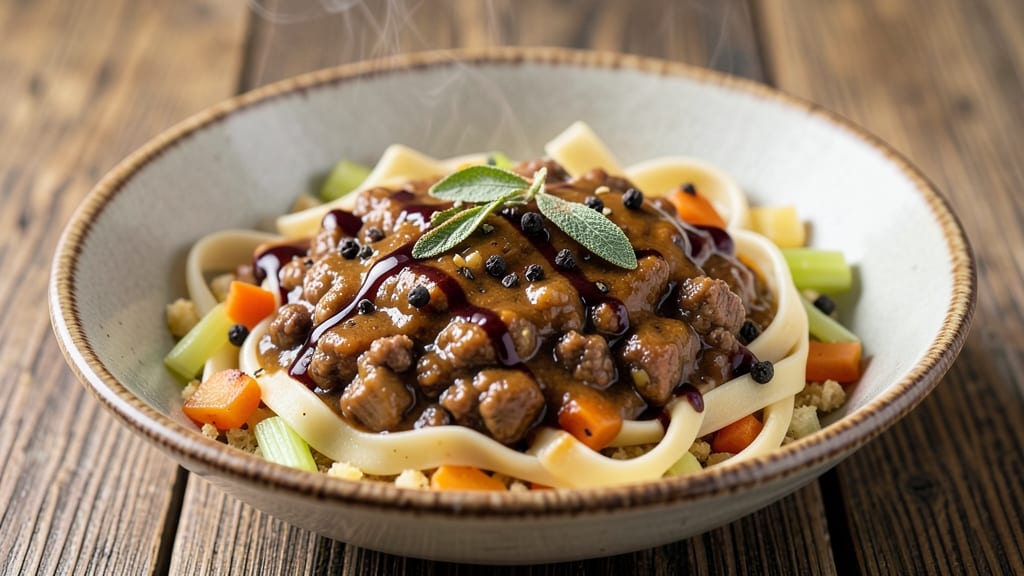
This amazing Bolognese sauce recipe transforms simple ingredients into a rich, slow-cooked masterpiece that tastes like it simmered all day. The secret lies in patience—letting the meat brown deeply, the wine reduce completely, and the tomatoes meld into a velvety sauce.
I've been perfecting this version for years, and it never fails to impress, even picky eaters.
The magic happens in layers: caramelized onions and celery form the aromatic base, while ground beef and pork develop deep, meaty flavor. A splash of red wine cuts through the richness, and a Parmesan rind adds umami depth you won't find in store-bought versions.
It's the kind of sauce that gets better with time, developing complex flavors as it simmers.
What you'll end up with is a sauce so rich and flavorful it'll make you forget you didn't spend hours in the kitchen. The texture is perfect—thick enough to coat pasta beautifully but still silky smooth.
This isn't just any tomato sauce; it's the kind that makes you want to eat it straight from the pot with a spoon.
Best of all, it keeps beautifully in the fridge for up to 5 days or freezes for months, so you can make a big batch and enjoy it all week. Let's get cooking—your taste buds will thank you.
Ingredients for amazing bolognese sauce
Simple ingredients that build bold flavor—this sauce is all about patience and layers.
| Ingredient | Amount | Notes |
|---|---|---|
| Ground Beef (80/20 fat ratio) 🥩 | 1 ½ lb | Finely ground for even cooking |
| Ground Pork 🐖 | ½ lb | Lean or regular, your choice |
| Yellow Onion 🧅 | 2 whole | Diced small, not too fine |
| Celery Stalks 🥬 | 3 whole | Diced, about 1 cup total |
| Carrot 🥕 | 1 whole | Diced, for color and sweetness |
| Garlic Cloves 🧄 | 4 cloves | Minced, not pre-minced jar |
| Canned Crushed Tomatoes 🍅 | 2 cups | San Marzano preferred, no salt added |
| Tomato Paste 🍅 | ½ cup | Smooth, not chunky |
| Dry Red Wine 🍷 | ½ cup | Bold Cabernet or Merlot |
| Parmesan Cheese Rind 🧀 | 1 whole | Fresh, not pre-shredded |
| Olive Oil 🫒 | ¼ cup | Extra-virgin for richness |
| Beef Stock 💧 | 1 cup | Homemade or high-quality |
| Dried Thyme 🌿 | 1 tsp | Or 1 tbsp fresh thyme leaves |
| Bay Leaves 🌿 | 2 whole | Dried, removed before serving |
| Salt 🧂 | 1 tsp | Kosher or sea salt |
| Black Pepper 🌶️ | ½ tsp | Freshly cracked preferred |
| Parmesan Cheese 🧀 | ½ cup | Freshly grated, for finishing |
The meat makes this sauce sing, so don't skimp. Ground beef and pork give you that deep, meaty richness—80/20 fat ratio is ideal for flavor. I grab mine from the butcher counter at Whole Foods when possible, but the pre-packaged stuff at Kroger works fine. The onions, celery, and carrot are your aromatic base, so chop them small and even. Fresh thyme is better than dried, but if you're using dried, measure it at one-third the amount. The Parmesan rind adds umami depth—just toss it in whole and remove it later.
No red wine? Beef stock with a splash of balsamic vinegar works in a pinch. Fresh garlic is non-negotiable here—pre-minced jarred garlic has no soul. The tomatoes should be San Marzano if you can find them, but any good-quality canned tomatoes will do. Tomato paste can be a squeeze tube from Trader Joe's for convenience—just measure it out carefully. If you're short on time, you can use pork sausage instead of pork, but the flavor will be slightly different. The bay leaves are easy to forget, but they're essential for that classic Bolognese taste.
This sauce tastes even better the next day, so make a big batch. Keeps for 5 days in the fridge and freezes beautifully for up to 3 months. I always portion it into containers with a layer of olive oil on top to preserve freshness. The Parmesan rind can be saved and frozen for future batches—just toss it in a baggie. For serving, a sprinkle of freshly grated Parmesan and a drizzle of olive oil takes it to the next level.
Why You'll Love This Recipe
- No Chopping Stress: I swear by the celery-carrot-onion combo—just dice it roughly, toss it in, and let the meat do the work. That 80/20 beef and pork? They break down into tender chunks without fuss, so you’re not stuck stirring for hours.
- Deep, Rich Umami Bomb: Between the pork’s fat and the beef’s depth, this sauce builds layers of flavor that just keep getting better. The slow simmer caramelizes everything—no fancy techniques, just patience and that perfect balance of savory and sweet from the veggies.
- Leftovers That Save Me: Make a double batch on Sunday, and you’ve got lunch for Wednesday. Freezes like a dream, too—just reheat and serve over pasta, in lasagna, or even on toast. Honestly, I’ve eaten it cold straight from the jar. (Don’t judge.)
- Budget-Friendly Crowd-Pleaser: Ground beef and pork stretch further than you’d think, and the veggies add bulk without costing a fortune. Feed six for under $15, and everyone—even the picky eaters—will ask for seconds. My secret weapon for game nights and lazy Fridays.
Step-by-step instructions for slow-cooked bolognese sauce
Here's how to build rich, deep flavor layer by layer—just like Nonna used to make.
Sauté the Vegetable Base Until Soft and Sweet
Heat the 0.25 cup olive oil in a large Dutch oven over medium heat. Add the 2 whole yellow onion, 3 whole celery stalks, and 1 whole carrot, all diced as specified. Cook for 10-12 minutes, stirring occasionally, until the vegetables soften and their edges become translucent. You'll notice the onions turn golden and the celery releases its natural sweetness—this is your flavor foundation.
Add the 4 cloves minced garlic and cook for another 1 minute until fragrant but not browned. Here's the thing—garlic burns fast, so keep an eye on it. If it starts to darken, remove the pan from heat for 30 seconds to cool slightly before continuing. This aromatic base will carry through your entire sauce, so take your time getting it right.
Brown the Meat for Maximum Flavor
Push the vegetable mixture to one side of the Dutch oven and add the 1.5 lb ground beef (80/20 fat ratio) and 0.5 lb ground pork to the empty space. Break up the meat with a wooden spoon and let it brown for 5-7 minutes over medium-high heat, stirring occasionally. You want the meat to release its juices and develop a deep brown crust—this is where all that meaty flavor comes from.
Once the meat is well browned, stir it together with the vegetables. Add the 1 tsp dried thyme, 2 whole bay leaves, 1 tsp salt, and 0.5 tsp black pepper, mixing everything thoroughly. The spices should cling to the meat and vegetables, creating an even flavor base. This is your chance to taste and adjust seasoning—add a pinch more salt if needed, but don't overdo it since we'll be adding more liquid later.
Deglaze and Simmer with Wine and Tomatoes
Pour in the 0.5 cup dry red wine and scrape up all those delicious browned bits from the bottom of the pot with a wooden spoon. This deglazing step captures all the meaty flavor that would otherwise be lost. Let the wine simmer for 3-4 minutes until it reduces by half and the alcohol cooks off—you'll notice the aroma becomes richer and more complex.
Add the 2 cups canned crushed tomatoes and 0.5 cup tomato paste, stirring well to combine. The sauce should thicken slightly as it simmers. Here's where the magic happens: add the 1 whole parmesan cheese rind and 1 cup beef stock. The rind will slowly melt into the sauce, adding deep umami flavor without needing to grate cheese. Bring everything to a gentle simmer and let it cook uncovered for 45 minutes, stirring occasionally to prevent sticking.
Slow Cook Until Rich and Velvety
Reduce the heat to low and let the sauce simmer uncovered for 2-2.5 hours. This long, slow cooking time is what transforms this into an amazing sauce—it allows all the flavors to meld together and develop depth. Stir occasionally, especially if you notice any liquid reduction at the edges. You're looking for a sauce that coats the back of a spoon with a velvety texture and concentrated flavor.
About 30 minutes before the sauce is done, taste it and adjust the seasoning if needed. The sauce should be rich and slightly tangy from the tomatoes, with a deep meaty flavor. If it's too acidic, add a pinch more salt or a small pat of butter to balance it. The cheese rind should have mostly dissolved by now, leaving behind a smooth, creamy sauce with complex layers of flavor.
Finish and Serve with Fresh Parmesan
Remove the 2 whole bay leaves from the sauce and discard them. Stir in the 0.5 cup freshly grated parmesan cheese until fully melted and smooth. The sauce should now have a beautiful, glossy finish with a perfect balance of richness and acidity. For the best texture, let the sauce rest for 10-15 minutes before serving—this allows the flavors to settle and the sauce to thicken slightly.
Serve the bolognese over your choice of pasta, sprinkled with additional fresh parmesan and a few cracked black peppercorns. Each spoonful should deliver that deep, slow-cooked flavor we worked so hard to create. The sauce will only get better as it sits, so make extra if you can—it freezes beautifully for up to 3 months. This is the kind of sauce that makes people ask, "What's in it?" and then beg for the recipe.
Pro Tips For Making Amazing Bolognese Sauce
- CRUSH THE VEGETABLES: Dice that onion, celery, and carrot into tiny pieces—think rice-sized, not salad-sized. I used to chop them roughly, but the sauce tastes richer when every bite has that sweet, soft texture. A sharp knife and a little patience here make a real difference.
- SWEAT DON’T BROWN: Cook the onion, celery, and carrot slow over medium-low heat until they’re translucent and just starting to soften—about 8-10 minutes. After burning three batches, I finally figured out that rushing this step turns the sauce bitter. Let it do its thing.
- BREAK THE MEAT: Before adding the ground beef and pork, break up any large clumps with your hands or a fork. This ensures even cooking and a smoother texture in the sauce. I skip this when I’m lazy, but the dish is noticeably better when I don’t.
- SALT THE MEAT: Season the raw ground beef and pork with half the total salt you plan to use before browning. The high heat will draw out moisture, and salting early guarantees the meat stays juicy and flavorful throughout. Sounds weird, but it works.
Storing and reheating this amazing bolognese sauce
Fridge Storage Tips
Let your bolognese cool completely before transferring to airtight containers—I use glass Pyrex with snap-on lids for best results. Store at 40°F or below for up to 5 days, but honestly?
It tastes even better the next day as flavors meld. The sauce thickens slightly when chilled, so add 1-2 tablespoons of water or beef stock when reheating if needed. 💫
Freezer Magic
Portion your sauce into quart-sized freezer bags (I use Ziploc for convenience) or airtight containers, leaving 1-inch headspace for expansion. Freeze for up to 3 months—the sauce keeps its rich texture perfectly.
For easy serving, freeze in pasta-shaped portions (about 2 cups per serving) so you can thaw just what you need. Thaw overnight in the fridge for best results.
Stovetop Reheating
My preferred method: Pour chilled bolognese into a heavy-bottomed pot and warm over medium-low heat for 15-20 minutes, stirring occasionally. Add 2-3 tablespoons of water or stock if the sauce thickens too much.
Taste and adjust seasoning—you might need a pinch more salt since flavors concentrate during storage. The sauce should reach 165°F internally for safety. ✨
Microwave Shortcuts
For quick meals, transfer 1-2 cups of sauce to a microwave-safe bowl and heat on medium power (50%) in 2-minute intervals, stirring between each. Cover loosely with a damp paper towel to prevent drying.
If the sauce looks thick, add 1 tablespoon of water and stir. This method works best for single servings—great for busy weeknights!
Reviving Texture
If your reheated sauce seems too thick, thin it with warm beef stock or pasta water (about 1 tablespoon at a time). For extra richness, stir in 1 teaspoon of butter or a splash of red wine while reheating.
The sauce should coat the back of a spoon but remain silky smooth. A sprinkle of freshly grated Parmesan after reheating adds brightness to the flavors. 🧀
Nutrition facts
Frequently asked questions
Can I make this sauce in a slow cooker?
Brown the meat and sauté the vegetables in a skillet first, then transfer everything to your slow cooker. Add the wine, tomatoes, stock, and spices, then cook on low for 6-8 hours or high for 3-4 hours. The slow cooker's gentle heat will create that same rich, tender texture without watching the stove. Just stir occasionally and add a splash of water if it gets too thick.
What's the secret to making it taste better the next day?
The magic happens during the 2-2.5 hour simmer—this lets the flavors meld and deepen. The sauce continues developing overnight in the fridge as the acidity mellows and the meaty flavors become more concentrated. For extra richness, store it with a layer of olive oil on top to preserve freshness and prevent drying.
Can I substitute pork sausage for the pork?
Yes, but the flavor will be slightly different. Use ½ lb Italian sausage (mild or spicy) for a smokier taste. Remove the casing first and brown the sausage with the beef. For the closest texture, choose a ground sausage rather than links. The wine and tomatoes will still balance the richness beautifully.
Why does my sauce get too thick when reheating?
This happens because the starches in the meat and tomatoes release more as the sauce cools and reheats. Thin it with 1-2 tablespoons of warm beef stock or water while reheating. For extra insurance, stir in 1 teaspoon of butter or a splash of red wine to maintain that silky texture. The sauce should coat the back of a spoon but remain smooth.
How do I know when it's fully cooked?
Your sauce is ready when the meat is no longer pink, the liquid has reduced to a rich consistency, and the flavors have melded beautifully. Taste it at the 2-hour mark—it should be rich, slightly tangy from the tomatoes, and deeply meaty. The sauce will thicken more as it cools, so aim for a slightly looser texture when done. The cheese rind should be mostly dissolved by this point.