
Sauces & Condiments
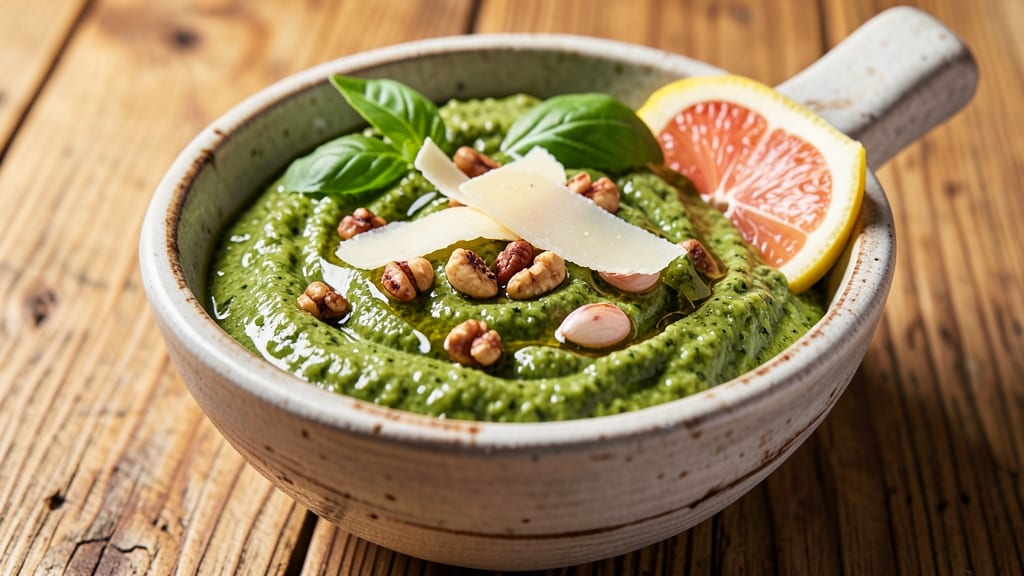
Alton Brown's pesto sauce recipe delivers that perfect balance of nutty richness and vibrant freshness in every bite. This sauce transforms simple ingredients into a velvety, aromatic condiment that elevates pasta, sandwiches, and more.
The secret lies in blending fresh basil with toasted nuts and sharp parmesan, creating a texture that's both smooth and slightly textured.
What makes this pesto truly special is the technique: toast the nuts until fragrant, then pulse them with basil, garlic, and cheese until just combined. The result is a sauce that's vibrant green, intensely flavorful, and perfectly balanced—no bitterness from over-blending.
The olive oil binds everything together, creating a sauce that's rich yet light, with just the right amount of tang.
This recipe yields about 1 cup of pesto, enough to coat a generous serving of pasta or dress a hearty salad. The flavor develops as it sits, so let it rest for 15 minutes before using—this allows the ingredients to meld and the sauce to reach its full potential.
It keeps beautifully in the refrigerator for up to 5 days, making it perfect for meal prep.
The beauty of this pesto is its versatility. Use it as a pasta sauce, a sandwich spread, a dip for bread, or even a marinade for grilled meats.
The nutty depth and fresh herbal notes make it a standout in any dish. Let's get started on creating this foolproof, restaurant-quality sauce at home.
Ingredients for alton brown pesto sauce
Eight essential ingredients blend into Alton Brown's signature vibrant, nutty pesto sauce.
| Ingredient | Amount | Notes |
|---|---|---|
| Fresh Basil Leaves 🌿 | 2 ½ cups | Packed, stems removed for best flavor |
| Pine Nuts 🥜 | ½ cup | Toasted until fragrant for nutty depth |
| Garlic Cloves 🧄 | 3 cloves | Peeled, roughly chopped for bold flavor |
| Parmesan Cheese 🧀 | ¾ cup | Freshly grated from high-quality block |
| Extra-Virgin Olive Oil 🫒 | ¾ cup | High-quality, fruity variety preferred |
| Lemon Juice 🍋 | 1 tbsp | Freshly squeezed for bright acidity |
| Diamond Crystal Kosher Salt 🧂 | ½ tsp | Fine grain for even seasoning |
| Freshly Ground Black Pepper 🌶️ | ¼ tsp | For subtle heat and depth |
The basil is non-negotiable—farmers market stems have the most vibrant flavor. Pine nuts should be toasted until fragrant (about 5 minutes in a dry pan) for that signature nutty depth. For Parmesan, skip the pre-grated—it gets clumpy. Grab a wedge from the deli counter and grate it yourself. The olive oil matters too; California avocado oil or Italian extra-virgin works best. If you're using walnuts instead of pine nuts (they're cheaper and work well), toast them just as long—they burn faster.
No fresh basil? Dried basil at one-third the amount works in a pinch, but the texture won't be the same. Short on nuts? Toasted sunflower seeds or cashews add a different but still delicious profile. For a sharper flavor, Pecorino Romano can replace Parmesan. The lemon juice is crucial—bottled won't cut it. If you're prepping ahead, store the dry ingredients (nuts, cheese, salt, pepper) separately until ready to blend. The garlic can be roasted for a sweeter, mellower flavor if you prefer.
This pesto keeps beautifully—5 days in the fridge sealed under olive oil. For longer storage, freeze in ice cube trays with a thin layer of oil on top. Thaw overnight in the fridge. The sauce thickens as it sits, so add a splash of water or olive oil when reheating. Always taste before serving—adjust salt or lemon as needed. It's perfect for pasta, sandwiches, or even as a marinade—just don't overcook proteins it's paired with.
Why You'll Love This Recipe
- No-Fuss Blender Magic: I swear by this method—just pulse the basil, garlic, and pine nuts until they’re almost smooth, then drizzle in that olive oil like you’re pouring sunshine. The texture? Perfectly chunky, not mushy. My blender’s seen better days, but this recipe forgives every little quirk.
- Parmesan Crunch Factor: That final sprinkle of freshly grated Parmesan? It’s the secret weapon. The heat melts it just enough to coat every noodle or sandwich, but the sharp, salty bite cuts through the richness. I’ll be real: I’ve been known to eat it straight from the jar with a spoon.
- Pasta Party Starter: This isn’t just for linguine—throw it on roasted veggies, dollop it into soups, or slather it on garlic bread. Honestly, I’ve even used it as a quick marinade for grilled chicken. The best part? It turns a simple weeknight meal into something that feels celebratory without the fuss.
- Fridge Hero: Make a double batch and store it in the fridge for up to a week. The olive oil keeps it fresh, and the flavor only deepens over time. Between us, I’ve revived week-old pesto by blending in a splash of water—it’s my go-to for lazy takeout nights when I’ve got nothing but a sad salad in the fridge.
Step-by-step instructions for Alton Brown's pesto sauce recipe
Here's how to make this vibrant, nutty pesto with perfect balance every time.
Toast the Pine Nuts Until Fragrant
Heat a dry skillet over medium-low heat. Add the 0.5 cup pine nuts and toast them for 3-4 minutes, stirring constantly with a wooden spoon. You want them to turn a light golden brown and smell deeply nutty—this enhances their flavor significantly.
Watch them carefully—they burn quickly. When they're fragrant and just beginning to color, remove them from the heat immediately. Let them cool for 2 minutes before proceeding. This cooling step prevents them from releasing excess oil when you blend them later.
Pulse the Garlic and Pine Nuts
Transfer the toasted pine nuts to a food processor fitted with the metal blade. Add the 3 cloves garlic cloves and pulse together for 10-15 seconds until the garlic is finely chopped but not paste-like. You want visible texture here—this prevents the pesto from becoming too smooth.
Don't over-pulse or the garlic will turn bitter. I like to leave a few slightly larger pieces for that fresh garlic punch. The food processor should be clean and dry before you begin—any moisture will make the pesto too thin later.
Add the Fresh Basil and Process
Add the 2.5 cups fresh basil leaves to the food processor. Pulse again for 10-15 seconds to chop the basil finely but not completely purée it. The leaves should be mostly broken down but still retain some texture. This creates the perfect balance between smooth and rustic in the finished pesto.
Here's the thing—if you use wilted basil, the pesto will taste dull. Always use fresh, packed leaves. The vibrant green color indicates peak freshness, which translates directly to flavor in your sauce.
Incorporate the Cheese and Seasonings
Add the 0.75 cup Parmesan cheese, 0.5 tsp Diamond Crystal kosher salt, and 0.25 tsp freshly ground black pepper to the food processor. Pulse again for 5 seconds just to distribute these ingredients evenly. The cheese should be finely grated—large chunks won't blend smoothly.
I always use freshly grated Parmesan for the best flavor. Pre-grated cheese often contains anti-caking agents that make the pesto grainy. If you're short on time, use the highest-quality pre-grated you can find, but freshly grated is worth the effort.
Stream in the Olive Oil and Lemon Juice
With the food processor running on low speed, slowly drizzle in the 0.75 cup extra-virgin olive oil through the feed tube. This gradual addition prevents the oil from splattering everywhere. Once all the oil is incorporated, add the 1 tbsp lemon juice and pulse for another 10 seconds to combine completely.
The oil should create a thick, vibrant green sauce that coats the back of a spoon. If it's too thick, add 1-2 teaspoons of water at a time until it reaches a smooth, spreadable consistency. The lemon juice brightens the flavors and balances the richness of the nuts and cheese.
Taste and Adjust the Seasoning
Transfer the pesto to a bowl and taste it immediately. The flavor should be vibrant with basil, nutty from the pine nuts, and tangy from the lemon. If it needs more salt, add it 1/8 teaspoon at a time—you can always add more, but you can't remove excess salt.
For a smoother texture, blend again for 10 seconds. For more texture, leave it slightly chunky. I like to serve it with both textures—smooth for dipping and slightly rustic for pasta. Store any leftovers in an airtight container in the refrigerator for up to 5 days, or freeze for up to 3 months.
Pro Tips For Making Alton Brown Pesto Sauce
- TOAST THE NUTS LOW: I learned this the hard way—blasting pine nuts on high turns them into bitter charcoal faster than you can blink. Keep the heat medium-low and stir like you’re herding cats, pulling them out the second they’re fragrant and just starting to turn golden. Overcooked nuts ruin the whole dish.
- STACK THE BASIL: Don’t just dump basil leaves into the food processor—stack them in a loose pile first. This prevents clogging and ensures even blending. If your processor struggles, add a splash of olive oil to the feed tube to help things move smoothly.
- GRATE THE CHEESE FRESH: Pre-shredded Parmesan is coated in anti-caking agents that turn pesto into a grainy mess. Use a fine grater and work in batches—this keeps the cheese sharp and prevents the processor from overheating. (Yes, it’s extra work, but the texture difference is night and day.)
- PULSE DON’T PUREE: Alton’s method relies on a rough, textured pesto, not a smooth paste. Pulse the basil and nuts first until they’re finely chopped, then add the garlic and cheese in stages, stopping to scrape down the sides. The goal is pockets of texture, not a homogeneous sludge.
Health benefits of alton brown pesto sauce
Herbal Antioxidant Boost
Fresh basil is packed with antioxidants like vitamin K and flavonoids, which help combat oxidative stress in your body. Just 2.5 cups of basil in this recipe provides about 1,500% of your daily vitamin K needs—that's more than most people get in a week!
These compounds support healthy blood clotting and bone metabolism while reducing inflammation. 💚
Healthy Fats for Heart Health
The extra-virgin olive oil in this pesto isn't just for flavor—it's a powerhouse of monounsaturated fats that support cardiovascular health. Studies show these fats help lower LDL cholesterol while maintaining HDL levels.
Using 0.75 cup provides about 12 grams of heart-healthy fats per serving, making this pesto a smart addition to any meal.
Plant-Based Protein Power
While not a complete protein source, this pesto contains plant-based protein from the pine nuts and Parmesan cheese. The 0.5 cup pine nuts contribute about 7 grams of protein, while the cheese adds another 10 grams.
Together, they create a satisfying protein profile that helps with muscle repair and satiety—perfect for post-workout meals or light lunches.
Calcium and Vitamin Boost
The Parmesan cheese in this recipe is a calcium-rich ingredient, providing about 30% of your daily needs per serving. This mineral supports strong bones and teeth while also playing a role in nerve function.
The cheese also contributes vitamin A and zinc, which support immune function and skin health. Freshly grated cheese maximizes these nutrients compared to pre-shredded varieties.
Low-Calorie, High-Flavor
Despite its rich taste, this pesto is surprisingly light on calories—about 250 calories per serving. The combination of fresh herbs, nuts, and olive oil creates a flavorful sauce without excessive calories.
It's an excellent option for those watching their calorie intake while still wanting restaurant-quality flavor. The lemon juice adds acidity that helps with digestion and prevents bloating.
Vitamin C and Immune Support
The lemon juice in this recipe isn't just for flavor—it provides a vitamin C boost that supports your immune system. While the amount is small (1 tbsp), it helps enhance iron absorption from the nuts and cheese.
Vitamin C also acts as an antioxidant, working alongside the basil's flavonoids to protect your cells. This makes the pesto a simple way to add immune-supporting nutrients to your diet.
Nutrition facts
Frequently asked questions
Can I substitute walnuts for pine nuts in this pesto?
Walnuts work beautifully and are more budget-friendly. Toast them for 3-4 minutes until fragrant—they burn faster than pine nuts, so watch closely. Use the same amount (0.5 cup) and expect a slightly earthier, nuttier flavor. For extra richness, toast them with a pinch of salt.
Why does my pesto turn bitter or lose color?
Over-blending is the usual culprit—it releases bitter compounds from the basil. Pulse just until combined (10-15 seconds total), leaving some texture. For color loss, use fresh, vibrant basil (avoid wilted leaves) and add lemon juice immediately after blending to preserve brightness. Store in an airtight container with a thin layer of olive oil on top to prevent oxidation.
How do I make this pesto thicker or thinner?
For a thicker pesto, blend longer (10-15 seconds) or add 1-2 tablespoons of grated cheese. If it's too thick, thin it gradually with water (1 tsp at a time) or extra olive oil (1 tbsp at a time). Avoid over-thinning—this pesto should coat the back of a spoon but still hold its shape. For dipping, a slightly thicker consistency works best.
Can I freeze this pesto for later use?
Yes! Freeze it in ice cube trays with a thin layer of olive oil on top. Once frozen, transfer cubes to a freezer bag. Thaw overnight in the fridge—never at room temperature. The texture may separate slightly after freezing, so stir in 1 tsp water or olive oil when reheating. It keeps its quality for up to 3 months this way.
What are the best ways to use leftover pesto?
This versatile sauce works beyond pasta! Use it as a sandwich spread, dipping sauce for bread or veggies, or marinade for grilled chicken or fish. Stir it into soups or risottos for depth, or mix with 1 tbsp of cream cheese to make a pesto dip. For a quick meal, toss with 1 cup cooked quinoa and roasted veggies.