
Sauces & Condiments
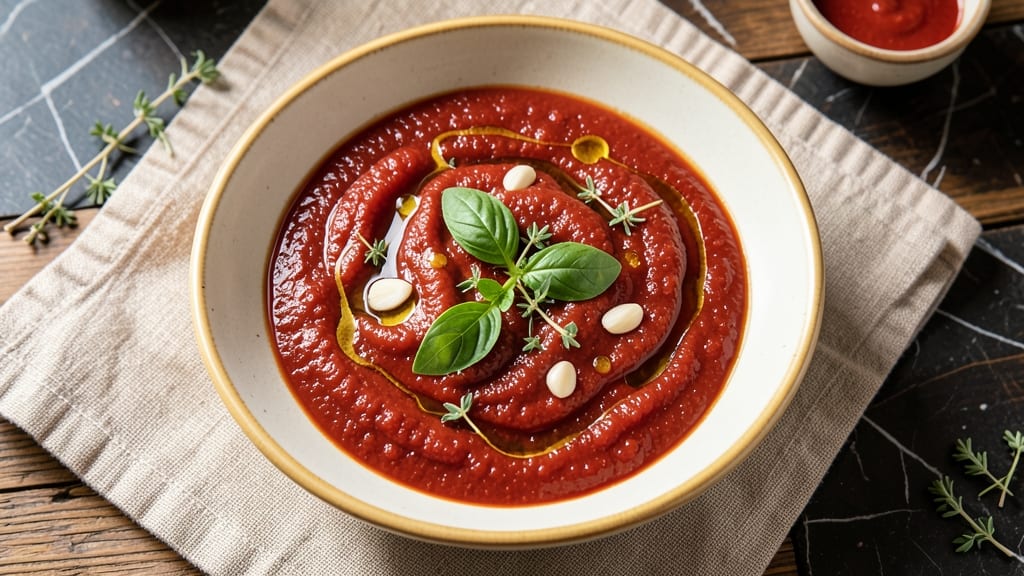
This Alpine pizza sauce recipe transforms your homemade pizza into a crispy-crusted masterpiece with its herby, garlicky tomato base. The secret lies in slow-simmered tomatoes, fresh alpine herbs, and a touch of white wine that adds depth without overpowering.
Unlike heavy marinara, this sauce enhances crust texture while delivering bright, savory flavor—perfect for both pizza and pasta.
The recipe balances simplicity with professional results: just 8 ingredients, a 30-minute prep, and no blender required. Fresh basil, thyme, and a hint of savory herb create that signature alpine aroma, while garlic and Parmesan add richness.
The sauce thickens naturally as it simmers, creating a velvety consistency that clings beautifully to crispy crusts.
What sets this sauce apart is its versatility—use it as a pizza topping, drizzle over roasted vegetables, or toss with grilled chicken. The white wine reduces out during cooking, leaving behind a subtle complexity that elevates any dish.
Best of all, it keeps well in the fridge for up to 5 days or freezes perfectly for later use.
For that extra-crispy crust, spread a thin layer of sauce before adding toppings. The high heat of your oven will caramelize the sauce slightly, creating a golden, flavorful crust that rivals any pizzeria. Let's get started on this game-changing sauce!
Ingredients for alpine pizza sauce
Eight quality ingredients create a velvety, herby sauce perfect for crispy crusts and bold flavors.
| Ingredient | Amount | Notes |
|---|---|---|
| San Marzano Crushed Tomatoes 🍅 | 1 can | High-quality, no added salt |
| Extra-Virgin Olive Oil 🫒 | ¼ cup | Fruity, peppery variety preferred |
| Fresh Garlic Cloves 🧄 | 4 cloves | Minced for even distribution |
| Dry White Wine 🍷 | ¼ cup | Sauvignon Blanc or Pinot Grigio |
| Fresh Basil Leaves 🌿 | ½ cup | Packed, stems removed |
| Fresh Thyme Sprigs 🌿 | ¼ cup | Leaves only, finely chopped |
| Savory Herb Leaves 🌿 | 2 tbsp | Fresh, finely chopped |
| Parmesan Cheese 🧀 | ¼ cup | Freshly grated, fine grade |
| Diamond Crystal Kosher Salt 🧂 | ½ tsp | Adjust to taste |
| Freshly Ground Black Pepper 🌶️ | ¼ tsp | Cracked peppercorns preferred |
San Marzano tomatoes are non-negotiable for this sauce—their sweetness and low acidity create the perfect base. Whole Foods or specialty Italian markets carry the best cans, but any high-quality brand with no added salt works. Fresh herbs elevate the alpine profile, so farmers markets or Whole Foods are ideal for sourcing. For the white wine, Pinot Grigio or Sauvignon Blanc adds brightness without overpowering. The Parmesan should be real Parmigiano-Reggiano—pre-grated lacks the depth. If using dried herbs, reduce to one-third the amount, but fresh delivers that signature alpine aroma.
No San Marzano tomatoes? High-quality crushed tomatoes work, but avoid brands with added salt. Substitute white wine with dry vermouth or additional tomato paste for depth. Fresh herbs unavailable? Dried basil and thyme at one-third the amount suffice, though texture differs. For extra richness, add 1 tbsp tomato paste to the olive oil before cooking. The garlic can be roasted for a sweeter flavor—simply toss minced cloves with olive oil and roast at 400°F for 5 minutes before adding. For a more intense savory note, swap savory herb for a pinch of rosemary.
This sauce thickens as it simmers, so no additional thickeners are needed. Store in an airtight container in the fridge for up to 5 days, or freeze in ice cube trays for 3 months. The sauce reheats beautifully—simmer gently to restore its velvety texture. For best results on pizza, spread a thin layer before adding toppings to create that signature crispy crust. The sauce also pairs wonderfully with grilled vegetables or roasted chicken, adding a bright, herby contrast to richer dishes.
Why You'll Love This Recipe
- Five-Ingredient Magic: I swear by this—just tomatoes, olive oil, garlic, wine, and basil. That’s it. No blender, no straining, no fuss. The crushed tomatoes handle all the work while you sip your wine and pretend you’re in a Tuscan vineyard.
- Wine-Infused Depth: Honestly, the white wine isn’t just for cooking—it’s the secret. It brightens the sauce with a citrusy lift that cuts through the richness, and that first sip of flavor? It’s the kind of thing that makes you pause mid-bite. The basil finishes it off like a fresh handshake.
- Weeknight to Weekend: Between us, this sauce is my go-to for everything. Toss it on pizza dough in 10 minutes, or let it simmer longer for a hearty pasta. Freezes like a dream too—just reheat and you’re back to restaurant-quality in seconds. (Yes, even on a Tuesday night.)
- Budget-Friendly Luxury: San Marzano tomatoes aren’t cheap, but they’re worth it—sweeter, smoother, and way more flavorful than store brands. A single jar stretches across four pizzas, and the olive oil and garlic? Basic pantry staples. You’re paying for quality, not quantity, and it shows in every bite.
Step-by-step instructions for alpine pizza sauce
Here's how to craft a silky, herb-infused tomato base that elevates every pizza crust.
Bloom the Herbs in Olive Oil
Heat the 0.25 cup extra-virgin olive oil in a medium saucepan over medium-low heat. Add the 4 cloves minced fresh garlic cloves and stir constantly for 30 seconds until fragrant but not browned—this prevents bitterness. Immediately add the 0.25 cup finely chopped fresh thyme sprigs and 2 tablespoons chopped savory herb leaves, stirring for another 45 seconds until the thyme leaves soften slightly.
This initial step develops the herbal foundation. The low heat ensures the garlic infuses without burning, while the thyme and savory release their earthy notes. Watch closely—the moment the thyme leaves lose their bright green color, they're ready for the next phase.
Deglaze with Wine and Tomatoes
Pour in the 0.25 cup dry white wine and scrape up any browned bits from the pan's bottom with a wooden spoon. Let it simmer for 2 minutes until reduced by half. Add the 1 can San Marzano crushed tomatoes, stirring to combine. Bring to a gentle simmer over medium heat and cook uncovered for 10 minutes, stirring occasionally, until the sauce thickens slightly.
The wine reduction concentrates the flavors while the tomatoes begin to break down. You'll notice the sauce transform from chunky to velvety as the acidity mellows. If the sauce looks too thick before the 10 minutes are up, add 1-2 tablespoons water to maintain proper consistency.
Build Depth with Herbs and Cheese
Remove the pan from heat and stir in the 0.5 cup packed fresh basil leaves, 0.25 cup freshly grated Parmesan cheese, 0.5 teaspoon Diamond Crystal kosher salt, and 0.25 teaspoon freshly ground black pepper. Let the mixture steep off heat for 5 minutes, stirring once halfway through. This allows the herbs to fully infuse without cooking down.
The basil should wilt completely while the Parmesan melts into the sauce, creating a rich, umami backbone. The cheese adds a subtle tang that balances the tomatoes' sweetness. Taste at this stage—you may need to adjust seasoning, as the herbs can vary in intensity depending on freshness.
Refine the Texture
Return the sauce to low heat and simmer gently for 5-7 minutes, stirring occasionally. The sauce should reduce enough to coat the back of a spoon but remain smooth. If it thickens too much, add 1 tablespoon water at a time until you achieve a light nappe consistency—ideal for pizza sauce that clings without overwhelming the cheese.
For perfect pizza application, the sauce should be thick enough to stay put on the crust but thin enough to spread easily. Strain through a fine-mesh sieve if you prefer a completely smooth texture, or leave it slightly rustic for visible herb flecks. The final sauce should have a vibrant red hue with herbal notes that sing through every bite.
Pro Tips For Making Alpine Pizza Sauce
- Sweat, Don’t Burn the Garlic: I learned this the hard way—when you add those fresh cloves to the olive oil, keep the heat low and let them sweat for 3-4 minutes until just fragrant and translucent. Crispy garlic? That’s for garnishes, not sauce. Once you see the edges soften, it’s time to move on.
- Deglaze Before Adding Wine: Pour that white wine in immediately after the garlic cooks, while the pan’s still hot—this pulls up all the flavorful browned bits (fond) that’ll make your sauce taste richer. Let it bubble for 30 seconds before adding tomatoes, or you’ll dilute the depth.
- Crush Basil Like You Mean It: Tear the basil leaves by hand (no chopping!) and add them last, right when the sauce hits a simmer. If you crush them too early, they’ll turn bitter and muddy the sauce. A handful of fresh leaves, torn and tossed in, is all you need—no need to overdo it.
- Simmer, Don’t Boil the Tomatoes: After adding the crushed tomatoes, reduce the heat to medium-low and let it bubble gently for 15-20 minutes. Boiling it turns the sauce watery and dulls the tomato flavor. You’re aiming for a thick, glossy consistency—not a thin, sad one. Stir occasionally, but don’t stress it.
Make-ahead tips for this dish
Prep Ahead Basics
This sauce holds up beautifully when made 2-3 days in advance—perfect for busy pizza nights. After cooking, let it cool completely, then transfer to an airtight glass container (I love Le Parfait jars).
The flavors deepen over time as the herbs meld together. Store in the fridge for up to 5 days, or freeze in 1-cup portions for 3 months. 🧊
Freezing Like a Pro
For freezing, portion the sauce into silicone ice cube trays—this makes it easy to thaw just what you need. Once frozen, transfer cubes to a freezer bag with all air removed.
When ready to use, thaw overnight in the fridge, then reheat gently on the stovetop with a splash of water to restore its silky texture. Never microwave—it ruins the delicate herb notes! ❄️
Pizza Prep Shortcuts
Make your life easier by prepping sauce and dough separately. Spread a thin layer of chilled sauce on your pizza crust right before baking—it won't slide around like warm sauce.
For extra convenience, keep pre-portioned sauce in small glass jars (like Weck jars) in your freezer. Just pop one in the fridge to thaw while you prep toppings. 🍕
Batch Cooking Tips
Double or triple the recipe for meal prep—this sauce works wonders on flatbreads, grilled chicken, or roasted veggies. Store in mason jars (up to 8 oz each) for easy grab-and-go use.
Label with dates and freeze any extras immediately. The sauce reheats perfectly—simmer for 3-5 minutes on low heat until bubbly. 📅
Reviving Stale Sauce
If your sauce thickens too much in storage, simply add 1 tbsp water or white wine and simmer for 2-3 minutes to restore its velvety consistency. For extra freshness, stir in 1 tbsp fresh basil just before using.
The sauce also freezes beautifully—just thaw and reheat gently to bring back its vibrant flavor. 💫
Sauce Storage Containers
Use glass containers (like Pyrex or Le Parfait) for fridge storage—they preserve flavor better than plastic. For freezing, silicone molds or freezer-safe bags work best. Avoid metal containers as they can react with acidic ingredients. Always leave ½ inch headspace to prevent overflow during freezing. 🥫
Nutrition facts
Frequently asked questions
Can I substitute white wine with something else?
Yes! If you don't have white wine, use 2 tablespoons dry vermouth or 1 tablespoon tomato paste mixed with 1 tablespoon water. Both add depth, though wine gives a subtle brightness. For a non-alcoholic option, try apple cider vinegar (1 tbsp) or extra tomato paste. The key is balancing acidity—adjust seasoning after cooking.
How do I adjust the sauce for a thicker or thinner consistency?
For thicker sauce, simmer uncovered for 5-10 extra minutes to reduce. Too thin? Add 1 tablespoon tomato paste or simmer longer. Need immediate fix? Mix 1 teaspoon cornstarch with 1 tbsp water, stir in, and cook for 1 minute. For pizza, aim for a light nappe consistency—thick enough to stay put but thin enough to spread.
Can I make this sauce without fresh herbs?
Use 1 teaspoon dried basil and ½ teaspoon dried thyme (one-third the fresh amount). For savory herb, try ½ teaspoon dried rosemary. Toast dried herbs in the olive oil for 30 seconds before adding wine to wake up their flavors. Fresh herbs add vibrant aroma, but dried works in a pinch.
Why does my sauce taste too acidic?
Acidity often comes from unripe tomatoes or overcooking. Balance it by adding 1 teaspoon sugar or ½ teaspoon honey to mellow the tang. For extra depth, stir in 1 tbsp tomato paste or a pinch of Parmesan—both add umami that counteracts acidity. Always taste as you go!
How should I store leftover sauce?
Transfer cooled sauce to an airtight glass container (like a mason jar) and refrigerate for up to 5 days. For longer storage, freeze in 1-cup portions for 3 months. Thaw overnight in the fridge—never microwave. To reheat, simmer gently on low heat with 1 tbsp water until bubbly. Glass containers preserve flavor best!