
Sauces & Condiments
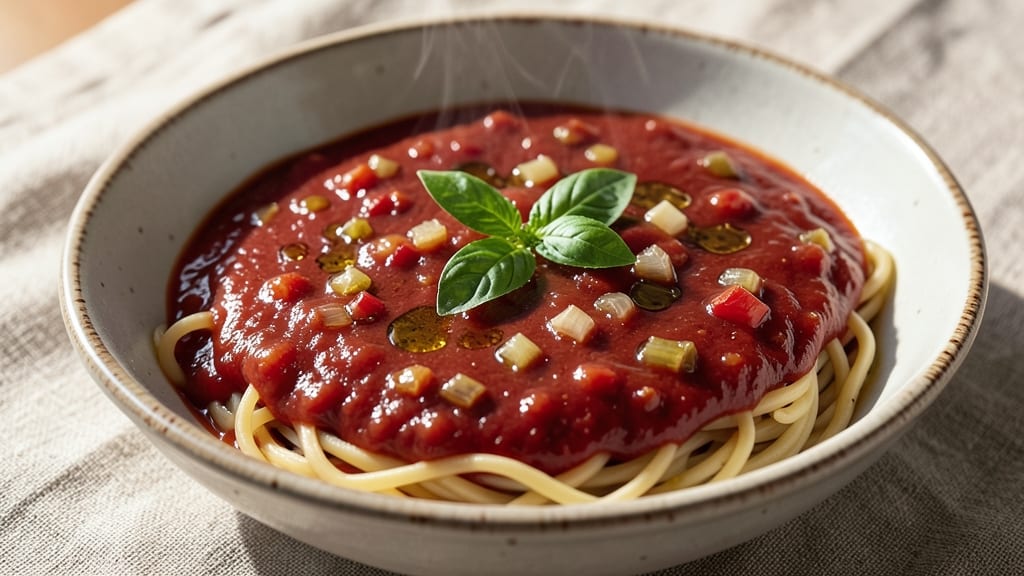
This all-day spaghetti sauce recipe transforms simple ingredients into a rich, complex sauce that deepens with every hour on the stove. The secret lies in slow-simmering—allowing flavors to meld into a velvety, umami-packed base perfect for pasta, lasagna, or freezer storage.
I developed this version after years of testing, balancing sweetness, acidity, and meaty depth without relying on shortcuts. What sets this sauce apart is its versatility and longevity. Simmered low and slow, it develops a texture that clings beautifully to noodles while remaining smooth enough for dipping bread.
The combination of crushed tomatoes, fresh herbs, and aromatic vegetables creates layers of flavor that only improve over time—ideal for meal prep or holiday gatherings. By the final hour, you'll have a sauce so rich it feels like a restaurant-quality secret.
The tomatoes caramelize slightly, the garlic infuses deeply, and the herbs release their bright, earthy notes. This isn’t just spaghetti sauce—it’s the foundation for Italian meals that taste homemade, no matter how many times you reheat it.
Perfect for batch cooking, this sauce keeps its quality for up to three months in the freezer. Let’s build flavor that lasts all day—and beyond.
Ingredients for all day spaghetti sauce
Simple pantry staples and fresh aromatics create a sauce that gets better with time.
| Ingredient | Amount | Notes |
|---|---|---|
| Crushed Tomatoes (San Marzano preferred) 🍅 | 28 oz | High-quality canned preferred |
| Extra-Virgin Olive Oil 🫒 | ½ cup | For richness and depth |
| Onion (Yellow) 🧅 | 1 whole | Finely chopped, yellow preferred |
| Garlic Cloves 🧄 | 6 cloves | Freshly minced, not pre-minced |
| Carrots (Medium) 🥕 | 2 whole | Diced small for even cooking |
| Celery Stalk 🥬 | 2 whole | Diced, with leaves included |
| Tomato Paste 🍅 | 2 tbsp | Squeeze tube or canned |
| Dried Oregano 🌿 | 1 tbsp | Italian or Mediterranean blend |
| Dried Basil 🌿 | 1 tbsp | Or 0.25 cup fresh basil |
| Red Wine (Dry) 🍷 | ½ cup | Bold red like Cabernet |
| Beef Broth 💧 | 1 cup | Low-sodium preferred |
| Bay Leaves 🌿 | 2 whole | Removed before serving |
| Salt 🧂 | 1 ½ tsp | Kosher or sea salt |
| Black Pepper 🌶️ | ½ tsp | Freshly ground preferred |
| Sugar 🍚 | 1 tsp | Balances acidity |
The tomatoes are non-negotiable here—San Marzano cans have the best sweetness and texture, but any high-quality crushed tomatoes work. I grab mine from Trader Joe's or Whole Foods because they're consistent. The onion, garlic, and carrots form your flavor base, so don't rush chopping them—smaller pieces mean better infusion. Fresh herbs (if using) should be packed tightly in your measuring cup. For the red wine, any bold dry red works—Cab Sauv, Merlot, whatever's open. Just avoid sweet wines like Zinfandel.
No red wine? Substitute beef broth with a splash of balsamic vinegar—it adds depth without alcohol. Dried herbs are fine, but fresh basil makes a world of difference. Pre-minced garlic loses flavor fast, so fresh is worth the 30 seconds to mince. The tomato paste can be from a squeeze tube (like Trader Joe's) or a can—just measure carefully. If you're short on carrots or celery, swap one for an extra stalk of celery or a pinch of celery salt. The sugar balances the acidity—skip it if your tomatoes are extra sweet, but don't skip it if they're tart.
This sauce tastes even better the next day, so make a double batch if you can. Store in airtight containers for up to 5 days in the fridge or 3 months frozen. For freezing, portion into ice cube trays first—thaw just what you need. The bay leaves can stay in during freezing. When reheating, add a splash of water or broth to loosen it up if it's too thick. Leftovers make amazing lasagna or pizza sauce too!
Why You'll Love This Recipe
- No-Fuss Simmer: I swear by this—just chop an onion, dice a carrot, and let the crushed San Marzanos do the work. Honestly, the only real effort is stirring once in a while, and the rest? Pure magic while you do other things.
- Deep Umami Magic: That slow caramelization of onion and garlic in olive oil? It builds layers of flavor you won’t find in jarred sauces. Between us, the San Marzano tomatoes alone make this taste like a restaurant dish.
- Meal Prep MVP: Double the batch and freeze half—it’s my go-to for lazy Mondays or when company drops by. Reheats like it was just simmered, and the carrots add a subtle sweetness that kids (and adults) actually eat.
- Budget-Friendly Luxury: A single jar of San Marzanos and a few pantry staples feed a family for days. I’ll be real: this sauce costs me pennies per serving, but it tastes like I spent hours on it. That’s the win.
Step-by-step instructions for slow-simmered spaghetti sauce
This sauce builds flavor over time—here's how to make it rich, balanced, and perfect for pasta or freezing.
Sauté the Vegetable Base
Heat the 0.5 cup extra-virgin olive oil in a large, heavy-bottomed pot over medium heat. Add the 1 whole yellow onion (finely chopped), 2 whole medium carrots (diced small), and 2 whole celery stalks (diced with leaves). Cook for 8-10 minutes until the vegetables soften and the onion turns translucent.
Here's the thing—don't rush this step. You want the vegetables to break down completely, releasing their natural sweetness into the oil. If they start to brown too quickly, reduce the heat slightly. Once they're tender, add the 6 cloves minced garlic and cook for another 30 seconds until fragrant. This aromatic base is the foundation of your sauce, so take your time.
Build the Sauce with Tomatoes and Herbs
Stir in the 2 tbsp tomato paste and cook for 2 minutes, letting it darken slightly. This step deepens the flavor by caramelizing the paste. Now add the 28 oz crushed tomatoes, 1 tbsp dried oregano, 1 tbsp dried basil, 1.5 tsp salt, 0.5 tsp black pepper, and 1 tsp sugar. The sugar balances the acidity of the tomatoes—don't skip this.
Bring the mixture to a gentle simmer, then reduce the heat to low. Let it cook uncovered for 30 minutes, stirring occasionally. You'll see the sauce thicken slightly as the tomatoes break down. This slow simmer is where the magic happens—the flavors meld and the sauce develops depth. If it gets too thick, add a splash of water, but don't worry about adjusting consistency yet.
Add Wine and Broth for Depth
Pour in the 0.5 cup dry red wine and stir well. Let it simmer for 5 minutes to allow the alcohol to cook off and the wine's flavors to integrate. Next, add the 1 cup beef broth and 2 whole bay leaves. This boosts the richness and adds complexity to the sauce. The broth also helps prevent the sauce from becoming too concentrated as it simmers.
Here's where it gets good—cover the pot and let the sauce simmer gently for 1.5 to 2 hours. You want it to reduce slowly, developing a thick, velvety texture. Stir occasionally to prevent sticking, and taste it after 1 hour. Adjust seasoning if needed—this is your chance to fine-tune the balance of salt, acid, and sweetness. The sauce should be rich but not overly salty, tangy but not sour.
Finish and Rest the Sauce
Once the sauce reaches your desired thickness (it should coat the back of a spoon but still be spoonable), remove the bay leaves. For an ultra-smooth texture, use an immersion blender to blend the sauce directly in the pot, or carefully transfer it to a blender and pulse until smooth. If you prefer a rustic texture, skip blending—just stir well.
Let the sauce rest for 15-20 minutes before serving. This resting period allows the flavors to settle and the sauce to thicken slightly more. Serve over al dente spaghetti, garnished with fresh basil if you like. This sauce tastes even better the next day, so it's perfect for meal prep or freezing for up to 3 months. Just thaw and reheat gently on the stove.
Pro Tips For Making All Day Spaghetti Sauce
- SOFTEN CARROTS FIRST: I used to toss diced carrots in raw—they’d turn to mush and disappear into the sauce like shy guests at a party. Instead, parboil them for 3-4 minutes until just tender, then drain and add back. They’ll hold their shape and sweeten the sauce as they cook low and slow.
- SWEAT ONIONS LOW: High heat turns onions bitter, and bitter onions in tomato sauce are a crime. Cook them over medium-low with a splash of water, covered, until they’re translucent and glossy—about 8-10 minutes. Patience here means depth later.
- CRUSH GARLIC WITH SALT: Minced garlic burns in seconds. Instead, peel and crush whole cloves with a pinch of salt in your palm—it releases more flavor and keeps them from sticking. Toss them in at the end for aroma, not color.
- STIR IN TOMATOES HOT: Cold crushed tomatoes dumped into a pot will stall the sauce’s development. Heat the can slightly (or use a ladle to mix in hot sauce from the pot) to jumpstart the cooking process. The sauce will meld faster and taste more cohesive.
Wine and beer pairings for this recipe
Red Wine Pairings
This rich, slow-simmered sauce pairs beautifully with medium-bodied Italian reds that complement its depth. I always reach for a Chianti Classico—its bright acidity and cherry notes cut through the sauce's richness while enhancing the tomato and herb flavors.
For something smoother, try a Montepulciano d'Abruzzo, which offers a balance of fruit and earthiness that mirrors the sauce's complexity. 🍷
Avoid heavy, tannic wines like Cabernet Sauvignon—they can overpower the delicate herb notes. Instead, opt for wines with 2-3 years of aging to soften any remaining tannins. If you prefer white wine, a dry Vermentino from Sardinia works surprisingly well with its citrusy brightness.
Beer Pairings
For beer lovers, a crisp Italian lager like Peroni or Birra Moretti refreshes the palate between bites. The light carbonation cleanses the richness, while the malt sweetness complements the sauce's natural depth.
I also enjoy a Belgian witbier like Hoegaarden—its coriander and orange peel notes create an unexpected but delightful contrast. 🍺
If you're serving this sauce with meatballs, a malty amber ale (like Fat Tire) adds a caramel sweetness that pairs perfectly. For a lighter option, try a pilsner—its crispness balances the sauce's richness without competing. Just avoid heavy stouts or IPAs, which can overpower the dish.
Non-Alcoholic Options
Don't drink alcohol? No problem. A sparkling blood orange soda (like San Pellegrino Aranciata) adds a citrusy brightness that mimics wine's acidity. For something richer, try a ginger beer—its spicy kick enhances the sauce's umami notes.
I also love a cucumber-mint infused water to refresh the palate between bites. ✨
For a more substantial pairing, serve with a tomato-based sangria—mix 1 cup sangria with ½ cup tomato juice and a splash of balsamic vinegar. The acidity and fruitiness complement the sauce beautifully while keeping it non-alcoholic. This works especially well for family gatherings or when kids are around.
Seasonal Adjustments
In summer, when the sauce is lighter, I pair it with a rosé—its crisp acidity and red fruit notes enhance the fresh basil and tomato flavors. For winter meals, a bold Zinfandel (with its jammy fruit) stands up to the sauce's deeper, richer profile.
The key is matching the wine's fruitiness to the sauce's intensity. 🍇
If you're serving this sauce with meatballs or sausage, lean toward wines with higher tannins (like a Sangiovese) to stand up to the fattiness.
For vegetarian dishes, lighter wines or beers work better to avoid overwhelming the dish. Always taste as you go—your palate is the best guide!
Nutrition facts
Frequently asked questions
Why does this sauce need to simmer for so long?
The extended simmering (1.5-2 hours) is what transforms simple ingredients into restaurant-quality depth. This slow cooking allows the tomatoes to break down completely, the vegetables to meld their flavors into the oil, and the herbs to release their aromatic oils. The wine and broth also integrate fully, creating layers of complexity that you just can't achieve with quick cooking. Think of it like making a fine wine—patience pays off!
Can I make this sauce in a slow cooker or Instant Pot?
For a slow cooker, sauté your vegetables first, then transfer everything to the pot and cook on low for 6-8 hours or high for 3-4 hours. For an Instant Pot, sauté the vegetables, then add all ingredients and cook on high pressure for 20 minutes, followed by a 10-minute natural release. The Instant Pot version will be slightly thinner—reduce it uncovered on the stove afterward if needed.
What's the best way to store and reheat leftovers?
Store in airtight containers in the fridge for up to 5 days or freeze for 3 months. For freezing, portion into ice cube trays first—this makes it easy to thaw just what you need. To reheat, warm gently on the stove over low heat, stirring occasionally and adding a splash of water or broth if it thickens too much. Never microwave directly from frozen—this can make the sauce watery. The sauce actually tastes better reheated!
How can I make this vegetarian?
Swap the beef broth for vegetable broth and replace the red wine with an equal amount of dry white wine or additional broth. For extra depth, add 1 tbsp soy sauce or 1 tsp miso paste to mimic umami. You can also stir in ½ cup cooked lentils or mushrooms for a meaty texture. The sauce will still develop that rich, slow-cooked character—just with plant-based ingredients.
What's the secret to getting the perfect texture?
The key is patience and proper technique. First, don't rush the initial vegetable cooking—soften them completely before adding tomatoes. Second, let the sauce reduce naturally over time rather than forcing it with thickeners. If it gets too thick, add a splash of water or broth. For the smoothest texture, blend it at the end (but skip this for rustic, chunky sauce). The resting time (15-20 minutes) is also crucial—it lets the sauce thicken naturally as it cools.