
Sauces & Condiments
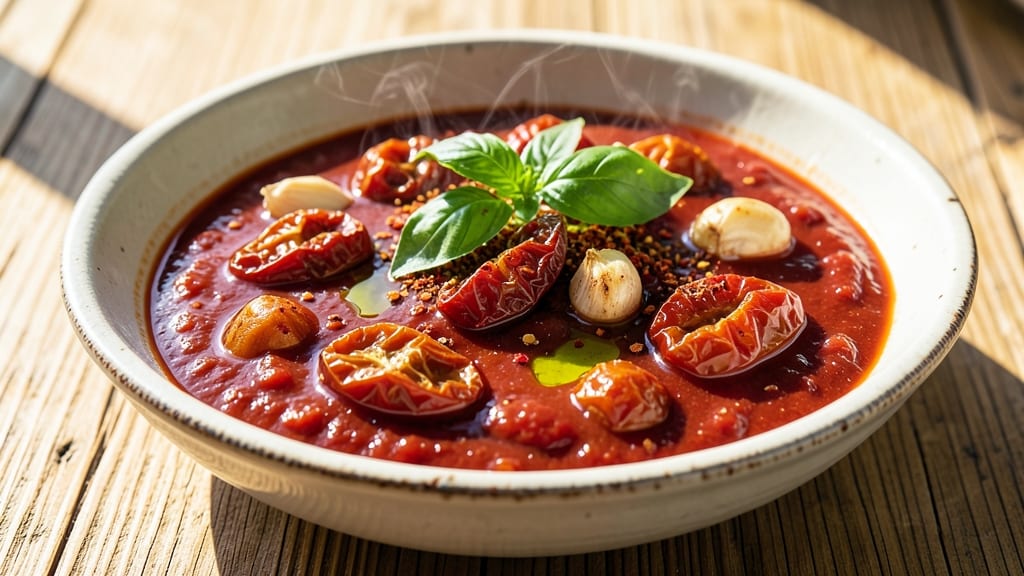
This all'arrabbiata sauce recipe delivers the bold, fiery tomato sauce that defines Roman cuisine in just 20 minutes. The secret lies in balancing sun-dried tomatoes, garlic, and chili flakes to create a sauce that's spicy yet balanced, with deep umami richness that clings to every strand of pasta.
I've perfected this version using canned tomatoes for convenience without sacrificing authentic flavor—no fresh tomatoes required, though they work beautifully if you prefer.
The process is straightforward but precise: sauté garlic until fragrant (never browned), add tomatoes and spices, then simmer until the sauce thickens and flavors meld. The optional basil at the end adds freshness, but traditionalists can omit it entirely.
What you'll end up with is a vibrant red sauce with just the right kick—spicy enough to wake up your taste buds but never overpowering.
This versatile sauce transforms simple pasta into a restaurant-worthy meal. The concentrated flavor means you'll use less per serving, making it perfect for meal prep or when you want to elevate a quick weeknight dinner.
The sauce keeps well in the fridge for up to five days, allowing you to build flavor over time as the spices deepen.
Whether you're tossing it with spaghetti, drizzling over grilled chicken, or using it as a pizza base, this arrabbiata sauce delivers authentic Italian flavor with modern convenience. Let's make it—your taste buds will thank you.
Ingredients for all arrabbiata sauce
Nine simple ingredients transform into bold arrabbiata sauce in minutes.
| Ingredient | Amount | Notes |
|---|---|---|
| Canned San Marzano Tomatoes 🍅 | 1 can | 28 oz, crushed by hand |
| Sun-Dried Tomatoes 🍅 | ¼ cup | Oil-packed, drained and chopped |
| Garlic Cloves 🧄 | 4 cloves | Minced, never browned |
| Red Chili Flakes 🌶️ | 1 tbsp | Adjust for heat preference |
| Extra-Virgin Olive Oil 🫒 | 2 tbsp | High quality, fruity |
| Dried Oregano 🌿 | 1 tsp | Italian or Mediterranean blend |
| Salt 🧂 | ½ tsp | Diamond Crystal preferred |
| Black Pepper 🌶️ | ¼ tsp | Freshly cracked |
| Fresh Basil Leaves 🌿 | ¼ cup | Chopped, optional garnish |
| Red Wine Vinegar 🍷 | 1 tbsp | For brightness |
The tomatoes are the heart of this sauce—San Marzano delivers that classic sweetness and depth, but any high-quality canned tomatoes work in a pinch. Sun-dried tomatoes add umami punch, so grab the oil-packed kind from Trader Joe's or Whole Foods—they keep for months in the fridge. Garlic matters here: mince it fresh (pre-minced gets bitter) and cook it just until fragrant—never browned. For chili flakes, Penzeys has the best quality, but regular grocery store brands work fine. The olive oil? Don't skimp—this is where the sauce gets its richness.
No sun-dried tomatoes? Extra tomato paste at half the amount works, but you'll lose that deep umami. Short on red wine vinegar? Lemon juice at double the amount gives brightness, though it's subtly different. Fresh basil? Dried oregano at one-third the amount is a fine swap, but traditionalists will notice. The oregano should be Italian or Mediterranean—regular Mexican oregano has a different profile. For heat, cayenne pepper at half the amount works too, but chili flakes give that signature texture. If you're sensitive to spice, start with half the chili flakes and add more at the end.
This sauce gets better as it sits—30 minutes at room temperature lets flavors meld beautifully. Store in the fridge for up to 5 days, or freeze portions for 3 months. I like to make a double batch: one for immediate use, one to freeze for lazy weeknights. The basil? Add it fresh at the end—it wilts fast, so don't prep it too early. If you're prepping ahead, store it separately and stir it in just before serving.
Why You'll Love This Recipe
- Foolproof Pantry Magic: I swear by this one—no fresh herbs, no fancy prep, just a can of San Marzano tomatoes and a handful of sun-dried tomatoes. It’s the kind of sauce that makes you feel like a chef even when you’re just stirring a pot.
- Sun-Dried Tomato Heat: That burst of umami from the sun-dried tomatoes? It’s the secret weapon. The garlic and chili flakes hit just right—bright, spicy, but never overpowering. Honestly, I reach for this sauce more than any other.
- Weeknight Workhorse: Slap it on pasta, toss it with chicken, or drizzle it over grilled veggies—it’s my go-to for busy nights. The best part? It tastes even better the next day, so I always make extra.
- Budget-Friendly Staple: A single can of tomatoes and a jar of sun-dried tomatoes stretch across multiple meals. I’ll be real: this sauce is my secret for making simple dinners feel special without breaking the bank.
Step-by-step instructions for all arrabbiata sauce
Here's how to make this bold, spicy tomato sauce with perfect balance in just 20 minutes.
Sauté Garlic and Sun-Dried Tomatoes
Heat the 2 tablespoons extra-virgin olive oil in a medium saucepan over medium-low heat. Add the 4 cloves minced garlic and 0.25 cup chopped sun-dried tomatoes—this is where the flavor foundation builds. Cook for 3-4 minutes until the garlic becomes fragrant but never browns. Watch closely; garlic burns fast and turns bitter.
Here's the thing—sun-dried tomatoes add deep umami flavor, but they can be intense. Start with the full amount and adjust to taste later if needed. Stir occasionally to prevent sticking, and keep the heat gentle to avoid releasing any bitterness from the tomatoes.
Add Spices and Tomatoes
Increase heat to medium-high and add the 1 tablespoon red chili flakes, 1 teaspoon dried oregano, 0.5 teaspoon salt, and 0.25 teaspoon black pepper. Stir for 30 seconds to toast the spices—this releases their essential oils and deepens the flavor profile. You'll smell the aroma immediately; that's your cue to move fast.
Pour in the 1 can crushed San Marzano tomatoes and 1 tablespoon red wine vinegar. The vinegar brightens the sauce and balances the richness. Give everything a good stir to combine, then reduce heat to medium-low. Let the sauce simmer uncovered for 10 minutes until it thickens slightly and the flavors meld together.
Simmer and Adjust Seasoning
After 10 minutes of simmering, taste the sauce. This is where you make the final adjustments. The sauce should be vibrant red with a noticeable kick from the chili flakes. If it needs more heat, add a pinch more chili flakes. If it needs brightness, add another splash of vinegar. If it needs salt, add it gradually—you can always add more but can't remove excess.
Continue simmering for another 5-7 minutes until the sauce reaches your desired consistency. It should coat the back of a spoon but still be loose enough to cling to pasta. If it's too thick, add 1-2 tablespoons water to loosen it. The sauce is ready when it's balanced—spicy but not overwhelming, tangy but not sour.
Finish with Fresh Basil
Remove the sauce from heat and stir in the 0.25 cup chopped fresh basil leaves. This final step adds freshness and aroma that can't be replicated with dried herbs. Let the basil steep for 1-2 minutes before serving—this allows the flavors to meld without cooking the basil to oblivion.
Here's a pro tip: If you're serving this with pasta, reserve 1 cup pasta water before draining. Tossing the cooked pasta with a splash of this starchy water helps the sauce cling beautifully. Serve immediately while the sauce is still vibrant and the basil is fresh.
Pro Tips For Making All Arrabbiata Sauce
- CRUSH THE GARLIC: After burning three batches, I finally figured out—low and slow is the way. Sauté those cloves in olive oil over medium-low heat until they’re golden, not brown. If you rush it, you’ll taste bitter char instead of sweet, mellow garlic. (And yes, even if you're impatient like me.)
- SOAK THE SUN-DRIED: Skip the dry, leathery sun-dried tomatoes by soaking them in warm water for 10 minutes first. They’ll plump up and release their deep, jammy flavor instead of sitting like chewy raisins in your sauce. Drain well before adding—no one wants a watery arrabbiata.
- SIMMER, DON’T BOIL: The moment you add the tomatoes, drop the heat to a gentle simmer. Boiling turns San Marzano sauce into a watery, flavorless mess. Let it bubble softly for at least 20 minutes—this concentrates the sweetness and deepens the acidity. (Your future self will notice the difference.)
- SALT IN STAGES: Taste the sauce at the start, then again at 15 minutes. San Marzano tomatoes are low-sodium, but sun-dried tomatoes can be packed with salt. Adjust gradually—adding too much early will make the sauce taste flat later. (I learned this the hard way after over-salting a batch and crying into my pasta.)
Essential equipment for this recipe
Saucepan Essentials
Start with a medium-sized stainless steel saucepan—I recommend All-Clad or Cuisinart for even heat distribution. These pans handle the medium-low to medium-high heat required without hot spots. Avoid nonstick pans for this sauce; they don’t handle the simmering process as well and can impart off-flavors.
A 3-4 quart capacity is ideal for this recipe, giving you room to stir without splattering. 🔥
Heat Control Tools
A kitchen thermometer like the Thermoworks Thermapen helps monitor your stove’s accuracy—essential for maintaining that medium-low heat when sautéing garlic. Many stoves run hot or cold in specific zones, and this sauce demands precision.
I also keep a long-handled wooden spoon (like OXO Good Grips) nearby to stir without burning my fingers or scraping the pan.
Chopping and Prep Gear
For mincing garlic and chopping sun-dried tomatoes, a sharp chef’s knife (I use Wüsthof) paired with a cutting board (like John Boos bamboo) makes prep a breeze. A microplane is perfect for zesty garlic—it creates fine, fragrant bits that infuse the oil beautifully.
For chili flakes, a small measuring spoon ensures you add the exact 1 tablespoon without overdoing it.
Storage Containers
After making your sauce, transfer it to airtight glass containers—I love Le Parfait or Ball mason jars for fridge storage. These keep the sauce fresh for up to 5 days while preserving its vibrant color.
For freezing, use silicone molds (like OXO Good Grips) to portion individual servings, making it easy to thaw just what you need. Label with the date to track freshness! ❄️
Optional Blender
If you prefer a smoother texture, a high-speed blender (like Vitamix or Ninja) can help break down the sun-dried tomatoes and garlic for a silky finish.
Pulse briefly—just 10-15 seconds—to avoid over-blending and turning the sauce into a paste. This step is optional but adds a modern twist to the classic recipe.
Nutrition facts
Frequently asked questions
Can I make arrabbiata sauce without sun-dried tomatoes?
Yes! Replace the 0.25 cup sun-dried tomatoes with 2 tablespoons tomato paste mixed with 1 tablespoon water to thin it. The sauce will still be flavorful but lose some of the deep umami. For extra richness, add 1 teaspoon balsamic vinegar instead of red wine vinegar to mimic the sun-dried tomato depth.
How do I adjust the heat level in this sauce?
Start with the 1 tablespoon chili flakes and taste after simmering. For milder heat, reduce to 0.5 tablespoons. For extra spice, add 0.5 teaspoons cayenne pepper or 1 chopped fresh chili pepper (like jalapeño) at the end. Remember: you can always add more heat later, but you can't remove it!
Can I use arrabbiata sauce for dishes other than pasta?
This versatile sauce works beautifully as a marinade for chicken or fish, a pizza topping, or even a dip for crusty bread. For grilled meats, reduce the sauce by half first to create a concentrated glaze. The bright acidity and spice make it perfect for bruschetta or as a topping for roasted vegetables like eggplant or zucchini.
Why did my sauce turn out too acidic?
The red wine vinegar is likely the culprit—it adds brightness but can overpower if the tomatoes weren't ripe enough. Balance it by adding 1 teaspoon sugar or 1 extra tablespoon tomato paste to mellow the acidity. For future batches, use slightly underripe tomatoes (they're more acidic) or reduce the vinegar to 0.5 tablespoons if you prefer a milder taste.
How long can I store this sauce in the freezer?
This arrabbiata sauce keeps well in the freezer for up to 3 months in airtight containers. Let it thaw in the fridge overnight before reheating—never at room temperature. When reheating, warm gently on the stove over low heat and stir occasionally to prevent scorching. The texture may thicken slightly after freezing, so add 1-2 tablespoons water when reheating.