
Sauces & Condiments
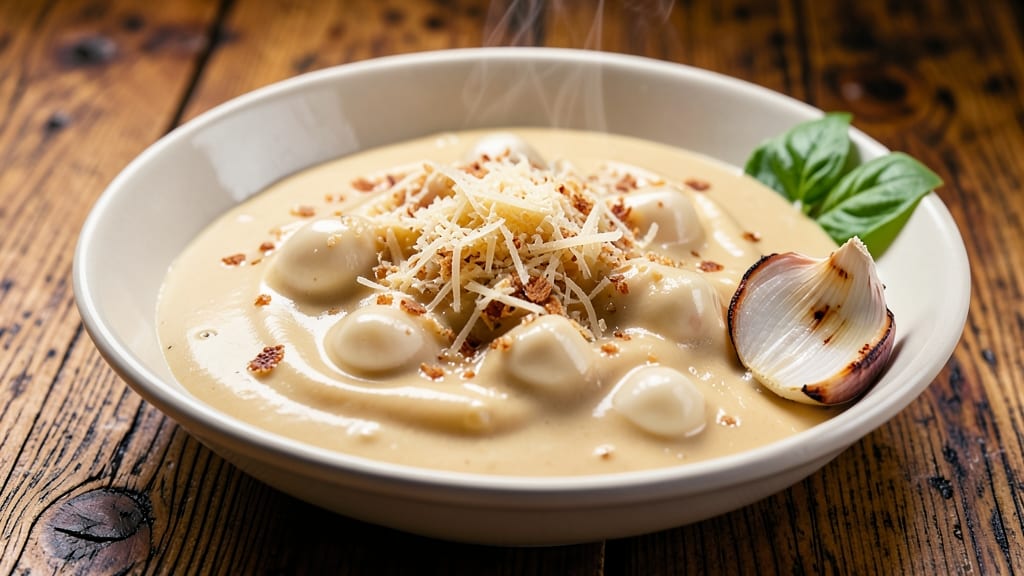
This alfredo sauce recipe with parmesan and mozzarella cheese delivers ultra-creamy, velvety perfection without a single clump. The secret lies in a foolproof emulsification technique that transforms simple ingredients into a luxurious sauce that clings to every strand of fettuccine.
I've tested countless versions, and this one consistently delivers that restaurant-quality richness at home.
What sets this recipe apart is the balance of sharp parmesan and mild mozzarella, combined with a slow, controlled heating method that prevents separation. The sauce starts with a simple roux foundation, then builds to a silky, golden consistency that coats pasta like a dream.
No heavy cream? No problem—the technique ensures a luscious texture without relying on dairy alone.
By the time you're done, you'll have a sauce so smooth and rich it transforms simple pasta into an indulgent meal. The flavor profile is perfectly balanced—creamy yet not overly heavy, with just enough cheesy depth to satisfy any craving.
This is the kind of sauce that makes weeknight dinners feel like a special occasion.
The best part? It reheats beautifully and stores perfectly for up to five days, making it ideal for meal prep. Whether you're serving it over fettuccine, drizzling it on grilled chicken, or using it as a creamy base for seafood, this alfredo sauce will become your new go-to recipe.
Let's get started on creating that perfect, clump-free sauce.
Ingredients for alfredo sauce recipe with parmesan and mozzarella cheese
Nine essential ingredients transform into restaurant-quality alfredo sauce without clumping or separation.
| Ingredient | Amount | Notes |
|---|---|---|
| Unsalted Butter 🧈 | ¾ cup | Cold, cubed for roux |
| All-Purpose Flour 🌾 | ¾ cup | Diamond Crystal preferred |
| Fresh Garlic Cloves 🧄 | 6 cloves | Minced, not pre-minced jar |
| Parmesan Cheese 🧀 | 1 ½ cups | Freshly grated, block form |
| Mozzarella Cheese 🧀 | 1 cup | Fresh, low-moisture block |
| Whole Milk 🥛 | 1 ½ cups | Full-fat for creaminess |
| Heavy Cream 🥛 | ½ cup | Optional for extra richness |
| Freshly Ground Black Pepper 🌶️ | 1 tsp | Freshly cracked preferred |
| Salt 🧂 | ½ tsp | Diamond Crystal kosher |
| Fresh Nutmeg 🌿 | ¼ tsp | Finely grated, not pre-ground |
The cheese selection is non-negotiable for that authentic, velvety texture. Parmigiano-Reggiano is the gold standard for Parmesan—look for blocks with 36-month aging or more at specialty grocers like Whole Foods or Eataly. For mozzarella, low-moisture block (not shredded) melts perfectly without excess moisture. Freshly grated cheese prevents clumping—pre-grated contains anti-caking agents that ruin the sauce. Butter quality matters too: European-style unsalted (like Plugrá) has higher fat content for better emulsification. Store all cheeses airtight in the fridge—Parmesan keeps for months while mozzarella should be used within 1 week.
No heavy cream? The sauce still works beautifully—just omit it entirely. Fresh garlic can be swapped for 1 tsp garlic powder, though fresh delivers superior flavor. For a dairy-free option, replace milk with unsweetened almond milk (though texture will differ slightly). The flour must be all-purpose—bread flour creates a gummy roux. Nutmeg can be omitted if unavailable, but its warmth is essential for that classic alfredo profile. Pre-minced garlic contains fillers that alter flavor—always mince fresh. For a richer version, add 1 tbsp white wine to deglaze the roux pan before adding milk.
This sauce reheats flawlessly—simmer gently on low heat with a splash of milk to restore creaminess. Store in an airtight container for up to 5 days in the fridge or 3 months frozen. For freezing, cool completely first to prevent condensation. The roux can be made ahead and refrigerated for 2 days before adding dairy. When reheating, avoid boiling—gentle warmth prevents separation. Portion into ice cube trays for easy single-use servings, then transfer to freezer bags.
Why You'll Love This Recipe
- No-Fuss Pantry Staples: I swear by this sauce because it uses stuff I always have: butter, flour, and cheese. Honestly, the only thing I need to buy fresh is garlic—and that’s just for the flavor boost.
- Creamy Yet Crispy Magic: That moment when the garlic sizzles in butter? Pure gold. Then the flour toasts just enough to thicken the sauce, while the melted mozzarella and grated parmesan create this insane contrast—silky smooth with a tiny bite.
- Weeknight to Dinner Party: Between us, this sauce works for spaghetti on a Tuesday or fettuccine at a holiday gathering. I’ll even drizzle it over roasted veggies when I’m feeling fancy. The cheese combo makes it feel special without the effort.
- Leftovers That Lie: I make a double batch, freeze half, and pretend I’m not secretly stockpiling comfort food. The sauce reheats like a dream—no lumps, no weird textures—just rich, cheesy goodness waiting for me when I’m too tired to cook.
Step-by-step instructions for ultra-creamy alfredo sauce
Mastering this technique ensures a velvety, lump-free sauce every time.
Create the Perfect Roux Foundation
Melt the 0.75 cup unsalted butter in a heavy-bottomed saucepan over medium heat. Once fully melted and foaming subsides, immediately whisk in the 0.75 cup all-purpose flour all at once. This creates a roux that will form the base of your sauce.
Cook the roux for 2-3 minutes, stirring constantly with a wooden spoon, until it turns a light golden color. You'll notice it thickens noticeably and develops a nutty aroma. This step is crucial—if you let it brown too much, it will impart a bitter taste to your sauce. Remove from heat immediately once golden.
Infuse the Roux with Aromatics
Return the saucepan to medium-low heat and add the 6 minced fresh garlic cloves. Cook for exactly 30 seconds, stirring constantly, until the garlic becomes fragrant but doesn't brown. Overcooking garlic turns it bitter, which will ruin the delicate flavor of your sauce.
Immediately whisk in the 1.5 cups whole milk and 0.5 cup heavy cream (if using). The mixture will bubble vigorously as it comes to a simmer. Reduce heat to low and let it cook for 5-7 minutes, stirring frequently, until it thickens enough to coat the back of a spoon.
Incorporate the Cheeses for Ultra-Creaminess
Lower the heat to lowest setting to prevent scorching. Gradually whisk in the 1.5 cups freshly grated parmesan cheese and 1 cup freshly grated mozzarella cheese in small batches, allowing each addition to melt completely before adding more. This gradual approach prevents clumping and ensures maximum creaminess.
Continue cooking for 3-5 minutes, stirring constantly, until the sauce reaches a luxurious, velvety consistency. You'll notice the sauce becomes noticeably thicker and more opaque as the cheeses fully emulsify. Remove from heat before it has a chance to separate.
Season and Finish with Precision
Season the sauce with the 0.5 tsp salt, 1 tsp freshly ground black pepper, and 0.25 tsp freshly grated nutmeg. Stir well to distribute the seasonings evenly. Taste and adjust the seasoning if needed—this is your final opportunity to perfect the flavor balance.
For an extra-smooth finish, strain the sauce through a fine-mesh sieve into a clean saucepan. This removes any potential lumps and gives you that restaurant-quality texture. Keep the sauce warm over low heat or transfer to a thermos to maintain its creamy consistency until serving.
Pro Tips For Making Alfredo Sauce Recipe With Parmesan And Mozzarella Cheese
- Melt Butter Slowly: I learned this the hard way—drowning butter in a hot pan turns it into grease before the flour can toast properly. Instead, melt the butter over medium-low heat, stirring constantly until it’s fully liquid but not yet foaming. This gives your roux a proper golden base without burning.
- Toast Flour First: Skip the immediate whisking into milk or cream—cook the flour and butter together for 1-2 minutes until it smells nutty and turns a pale gold. This step builds flavor and prevents that raw, floury taste that ruins so many sauces. (Yes, even if you’re impatient like me.)
- Grated Cheese Only: Shred your own mozzarella and Parmesan—store-bought pre-shredded cheese is coated in anti-caking agents that make the sauce grainy. Use a box grater for Parmesan and a knife or shredder for mozzarella, then drain excess moisture from the mozzarella before adding it. Trust me, it makes a real difference.
- Simmer, Don’t Boil: Once the cheese is melted into the sauce, immediately reduce the heat to low and let it simmer gently for 2-3 minutes. Boiling will turn your creamy sauce into a sad, separated mess. Stir constantly and keep it moving—this isn’t the time to walk away.
Make-ahead tips for alfredo sauce recipe with parmesan and mozzarella cheese
Roux Prep Ahead
Make your roux the night before for a stress-free cooking day. After cooking the 0.75 cup butter and 0.75 cup flour to a light golden color, let it cool completely. Transfer to an airtight container and refrigerate for up to 2 days.
When ready to use, simply reheat the roux in a saucepan over low heat with ¼ cup milk to loosen it before adding the remaining ingredients. This jumpstart saves you 15-20 minutes of active cooking time. 💡
Cheese Pre-Grating
Save your wrists by grating the 1.5 cups parmesan and 1 cup mozzarella the day before. Use a microplane for parmesan and a box grater for mozzarella—both create finer, more consistent grates that melt perfectly.
Store the grated cheese in separate airtight containers lined with parchment paper. This prevents clumping and makes assembly day effortless. Just toss the grated cheese into your warm roux mixture. ✨
Milk Mixture Prep
Combine the 1.5 cups whole milk and 0.5 cup heavy cream (if using) in a measuring cup with the 0.5 tsp salt, 1 tsp black pepper, and 0.25 tsp nutmeg the night before.
Store in the fridge until ready to use. This pre-seasoned milk mixture infuses flavors overnight, giving your sauce deeper complexity. Simply pour it directly into your warm roux when ready to cook. 🌟
Portioning for Freezer
Freeze your alfredo sauce in 1-cup portions using silicone ice cube trays or small ramekins. Once frozen solid, transfer to freezer bags with labels showing the date. Thaw overnight in the fridge before reheating.
For a quick serving, place a frozen portion in a saucepan with 2 tbsp milk and warm over low heat for 5-7 minutes, stirring constantly. This method maintains perfect texture without separating. ❄️
Sauce Storage Hack
Keep your freshly made sauce fresh longer by storing it in a thermos instead of a regular container. Fill the thermos with warm (not hot) sauce and let it sit for 1-2 hours before serving.
The thermos maintains ideal serving temperature for up to 4 hours, making it perfect for potlucks or family gatherings. This also prevents the sauce from developing a skin when refrigerated. 🔥
Reheating Troubleshooting
If your reheated sauce looks too thick, simply whisk in 1 tbsp milk at a time until you reach the desired consistency. For separated sauce, return it to the stove over low heat and whisk vigorously for 2-3 minutes until smooth.
Avoid high heat—it causes the cheese to break and the sauce to curdle. A splash of lemon juice (½ tsp) can also help re-emulsify any separated portions. 💪
Nutrition facts
Frequently asked questions
Why does my alfredo sauce get clumpy?
Clumping happens when cheese melts too quickly or isn't incorporated properly. Always add cheese in small batches while stirring constantly over low heat. Using freshly grated cheese (not pre-shredded) and avoiding high heat prevents lumps. For extra smoothness, strain through a fine-mesh sieve after cooking.
Can I make this sauce without heavy cream?
The recipe works perfectly with just 1.5 cups whole milk. The emulsification technique creates creaminess without needing extra fat. For richer flavor, add 1 tbsp white wine when deglazing the roux. The texture will be slightly lighter but still luxurious.
What's the best pasta to pair with this sauce?
Fettuccine is the classic choice, but tagliatelle or pappardelle work beautifully too. For extra texture, try it with chicken tenders or baked salmon. The sauce also works as a creamy base for stuffed shells or baked ziti. Always cook pasta al dente—it absorbs sauce better when slightly firm.
How do I fix separated sauce?
Return the sauce to low heat and whisk vigorously for 2-3 minutes until smooth. If it still separates, add 1 tbsp milk at a time while whisking. For stubborn separation, mix ½ tsp lemon juice into 2 tbsp milk, then slowly whisk into the sauce. Avoid high heat—it causes cheese to break.
Can I use powdered cheese instead of fresh?
Not recommended—powdered cheese contains anti-caking agents that create grainy texture. Freshly grated parmesan and mozzarella melt perfectly for that authentic, velvety consistency. If you must use powdered, reduce by ¼ cup and add 1 tbsp cornstarch to help bind the sauce.