
Sauces & Condiments
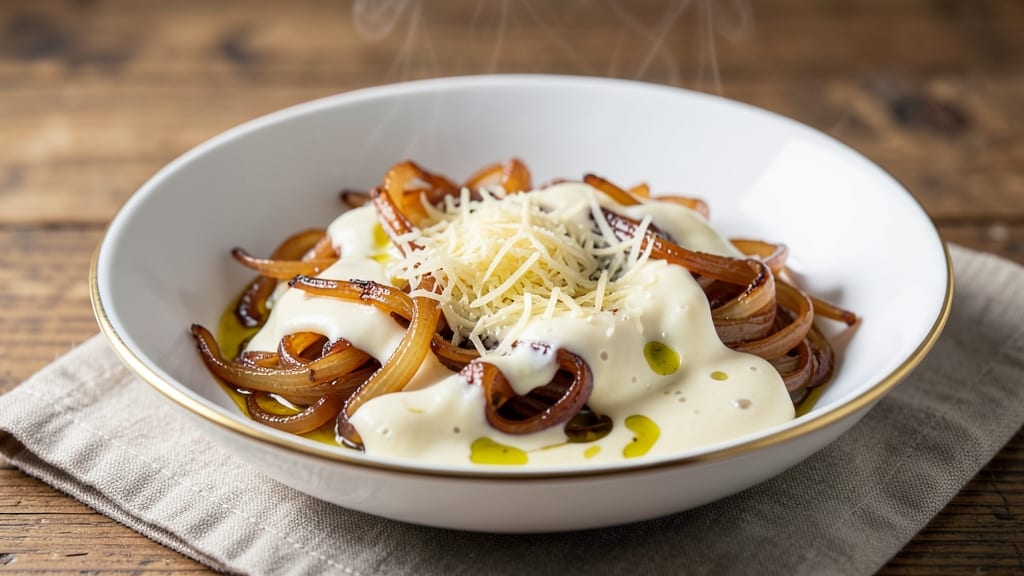
This Alfredo sauce recipe with onion transforms simple ingredients into a velvety, onion-infused cream that clings perfectly to pasta. The secret lies in sautéing onions until sweet and caramelized, then building a rich, emulsified sauce with butter, cream, and Parmesan.
I developed this recipe after years of testing—it’s the kind of sauce that elevates any pasta dish from ordinary to restaurant-quality.
The process is straightforward but requires attention to detail: onions must cook low and slow to develop depth, while the sauce must emulsify properly to avoid breaking. Using heavy cream ensures a luxurious texture, but you can substitute half-and-half for a lighter version.
The result? A silky, golden sauce with layers of savory sweetness from the onions and a nutty finish from the cheese.
This sauce isn’t just for fettuccine—it works beautifully with chicken, shrimp, or even as a creamy dip. The caramelized onions add complexity that store-bought versions miss, and the sauce thickens just enough to coat without being gluey. Once mastered, you’ll never go back to bottled Alfredo.
Make a double batch and store leftovers in the fridge for up to 5 days, or freeze for longer storage. The flavor only improves with time, making this the ultimate pantry staple for quick, satisfying meals. Ready to make it?
Ingredients for alfredo sauce recipe with onion
Nine ingredients transform into velvety, onion-infused Alfredo that clings perfectly to pasta.
| Ingredient | Amount | Notes |
|---|---|---|
| Yellow Onions 🧅 | 2 large | Thinly sliced, caramelized |
| Unsalted Butter 🧈 | ¾ cup | Cold, cubed for emulsification |
| Heavy Cream 🥛 | 1 ½ cups | Full-fat for richness |
| Parmesan Cheese 🧀 | 1 ½ cups | Freshly grated, block preferred |
| Garlic Cloves 🧄 | 4 cloves | Minced for subtle depth |
| Extra-Virgin Olive Oil 🫒 | ¼ cup | For finishing, fruity variety |
| Salt 🧂 | 1 ½ tsp | Diamond Crystal preferred |
| Black Pepper 🌶️ | ½ tsp | Freshly cracked preferred |
| White Wine 🍷 | ¼ cup | Dry, optional for depth |
The onions are the foundation—yellow onions work best for their sweetness when caramelized. Whole Foods or Trader Joe's carry the sweetest varieties, but any yellow onion will do if it's firm and free of sprouts. For the Parmesan, Parmigiano-Reggiano is non-negotiable—pre-grated contains anti-caking agents that prevent proper emulsification. The butter should be cold and cubed when added to prevent breaking the sauce. Heavy cream is essential for that luxurious texture, but if you're watching calories, half-and-half works in a pinch (though the sauce will be lighter).
No white wine? Chicken or vegetable stock works just as well for deglazing. Fresh garlic is ideal, but garlic powder at half the amount gets you close. The olive oil matters—fruity, extra-virgin adds brightness, while cheap oil can make the sauce taste flat. For a dairy-free version, substitute cashew cream for the heavy cream and use nutritional yeast instead of Parmesan. The sauce should thicken naturally as it cooks—if it's too thin, simmer uncovered for an extra 2-3 minutes. If it breaks, whisk in 1 tablespoon of cold water to re-emulsify.
This sauce freezes beautifully—portion into ice cube trays for easy use later. Keeps in the fridge for 5 days and freezes for 3 months. For restaurant-quality results, always finish with a drizzle of olive oil and a pinch of black pepper. It reheats perfectly, though the texture may be slightly thicker after refrigeration. Double batches are worth it—this sauce transforms simple pasta into an elegant meal.
Why You'll Love This Recipe
- No-Chop Nightmare: I swear by this—just one onion, sliced thin while I chat with the kids. No crying, no mess, and it caramelizes into sweet perfection without babysitting the pan.
- Creamy Without Trying: That heavy cream and butter combo? It’s like a hug for your taste buds. The onions add depth, but the garlic and Parmesan? Pure, salty-sweet magic that makes you want to lick the spoon.
- Pasta Party Ready: Slap this on fettuccine for a fancy dinner, toss it with chicken for a quick lunch, or even drizzle it over roasted veggies. It’s my secret weapon for when I need something impressive but don’t want to slave away.
- Leftovers That Lie: Between us, this sauce always disappears first. But if you somehow have extras? Freeze it—it reheats like a dream, and suddenly you’ve got a 5-minute weeknight meal waiting in the freezer.
Step-by-step instructions for onion-infused Alfredo sauce
Here's how to build a velvety sauce with deep caramelized onion flavor that clings perfectly to pasta.
Caramelize the Onions Slowly
In a large, heavy-bottomed saucepan, melt the 0.75 cup unsalted butter over medium-low heat. Add the 2 large yellow onions, sliced thinly, and cook them undisturbed for 10 minutes. This low heat is crucial—it prevents burning while allowing the onions to break down and develop sweet, deep caramelization.
After 10 minutes, stir the onions gently with a wooden spoon, breaking them into smaller pieces as they soften. Continue cooking for another 15-20 minutes, stirring occasionally, until the onions are deep golden brown and have reduced to about ½ cup in volume. The longer you cook them, the more complex flavor you'll develop. If they start to darken too quickly, reduce the heat slightly and keep stirring.
Build the Sauce Base with Wine and Cream
Once the onions are perfectly caramelized, increase the heat to medium and add the 4 cloves minced garlic. Cook for 30 seconds until fragrant—don't let it brown, or it'll turn bitter. Pour in the 0.25 cup dry white wine (if using) and scrape up any browned bits from the bottom of the pan. Let the wine simmer for 2-3 minutes until it reduces by half.
Reduce the heat to low and gradually whisk in the 1.5 cups heavy cream. Stir constantly for 3-4 minutes until the sauce begins to thicken slightly. The sauce should coat the back of a spoon but still be pourable. If it thickens too quickly, add 1-2 tablespoons of pasta water to loosen it. This step is where the sauce comes together—be patient and keep stirring to prevent scorching.
Incorporate the Parmesan for Richness
Lower the heat to lowest setting and gradually add the 1.5 cups freshly grated Parmesan cheese, whisking continuously to prevent clumping. The cheese will melt into the sauce, creating a luxurious, creamy consistency. If the sauce separates or looks grainy, whisk vigorously for 1-2 minutes to emulsify it. The sauce should now be smooth, thick, and glossy, with a rich, nutty Parmesan flavor.
Season with the 1.5 teaspoons salt and 0.5 teaspoon freshly cracked black pepper. Taste and adjust the seasoning if needed—you might need a bit more salt to balance the richness. Keep the sauce warm over low heat while you cook your pasta. If it thickens too much while waiting, whisk in 1 tablespoon of pasta water to maintain the perfect consistency.
Finish with Olive Oil for Stability
Just before tossing with pasta, remove the sauce from heat and stir in the 0.25 cup extra-virgin olive oil. This final step is key—it adds stability to the sauce, preventing it from breaking or separating when combined with starchy pasta water. The olive oil also enhances the sauce's silkiness and adds a subtle fruity depth.
The sauce should now be silky, rich, and perfectly balanced—ready to coat every strand of pasta. Toss it immediately with your cooked pasta, reserving ½ cup of pasta water to adjust the consistency as needed. The onion-infused flavor will shine through, creating a sauce that's far more complex than traditional Alfredo.
Pro Tips For Making Alfredo Sauce Recipe With Onion
- Cook Onions Low: Yellow onions caramelize best when they’re sweated out slowly—think 8-10 minutes on medium-low heat until they’re translucent, not browned. I used to rush this and ended up with bitter, sharp onions that overpowered the creamy sauce. (Yes, even if you’re impatient like me.)
- Melt Butter Gradually: Add the butter to the pan in two batches—first half on medium heat, then the rest off the heat once it’s melted. This prevents burning the butter’s delicate flavor, which is the sauce’s foundation. After burning three batches, I finally figured out butter hates direct high heat.
- Strain the Cream: After simmering the cream with garlic, strain it through a fine-mesh sieve to remove any stray bits of onion or garlic. It’s not the prettiest method, but it guarantees a silky, restaurant-quality sauce. (Your future self will notice the difference.)
- Grated Parmesan Matters: Use freshly grated Parmesan—none of that pre-shredded stuff with anti-caking agents. If you’re short on time, buy a block and grate it yourself, or grab the finest pre-grated from a specialty store. I was skeptical until I tried it, and now I won’t go back.
Common mistakes when making this dish
Rushing the Onion Cook
This is the #1 mistake I see—skipping the slow caramelization. Onions need 15-20 minutes of low-heat cooking to develop their sweet, deep flavor. If you rush them over medium-high heat, they'll burn and turn bitter.
I once made this sauce with onions cooked for just 10 minutes—the result was flat and one-dimensional. Use a heavy-bottomed saucepan and keep heat at medium-low for consistent results. 🧅
Adding Cheese Too Fast
Dumping all the Parmesan at once causes clumping and graininess. Instead, add it gradually while whisking constantly over lowest heat. I learned this the hard way when my first batch separated into cheese curds and watery sauce.
For extra insurance, melt the cheese into the warm cream first, then combine with the onion-butter mixture. This creates a smoother, more stable emulsion.
Skipping the Wine Deglaze
The white wine isn't just for flavor—it removes those precious browned bits (fond) from the pan that pack serious umami punch. Without it, your sauce loses depth. If you omit the wine, deglaze with 2 tablespoons chicken stock instead.
The alcohol also helps emulsify the sauce later, preventing separation. I always keep a small bottle of dry white wine in my pantry specifically for this purpose.
Using Pre-Grated Cheese
Store-bought grated Parmesan contains anti-caking agents that prevent proper emulsification. Freshly grated Parmigiano-Reggiano is non-negotiable for that authentic, nutty flavor and silky texture. If you must use pre-grated, strain it through a fine-mesh sieve first to remove additives.
I keep a block of Parmesan in my fridge specifically for sauces—it's worth the extra effort for that restaurant-quality finish.
Ignoring the Olive Oil Finish
Many recipes stop at the cheese, but that final ¼ cup olive oil is crucial. It stabilizes the sauce when mixed with starchy pasta water, preventing separation. I once made a batch without it—when I tossed the sauce with pasta, it immediately broke into curds.
The olive oil also adds a subtle fruity brightness that balances the richness. Use extra-virgin for the best flavor, and add it off the heat to prevent cooking.
Over-Salting the Final Sauce
It's easy to overdo the salt when seasoning, especially since Parmesan and heavy cream are already salty. Taste as you go! I recommend adding ½ teaspoon salt first, then adjusting. Remember that pasta water also contains salt, so you might not need as much as you think.
The goal is a well-balanced sauce where the onion and cheese flavors shine without being overpowered by saltiness. 💡
Nutrition facts
Frequently asked questions
Can I substitute half-and-half for the heavy cream?
Yes, but expect a lighter texture. Use the same 1.5 cups of half-and-half for a creamier result than whole milk, though the sauce won't be as rich. For best consistency, whisk vigorously while heating to prevent separation. The sauce will still cling well to pasta but may require 1 extra tablespoon of olive oil at the finish for stability.
How do I make this sauce dairy-free?
Replace the heavy cream with 1.5 cups cashew cream (blend soaked cashews with water), use nutritional yeast instead of Parmesan, and swap butter for olive oil. The caramelized onions remain the flavor base, but the sauce will have a lighter, nutty profile. Add 1 teaspoon cornstarch mixed with water to thicken if needed.
Why did my sauce break/separate when I added pasta?
This happens when the emulsion destabilizes, usually from overheating or insufficient olive oil at the finish. To fix it, whisk in 1 tablespoon of cold water while stirring constantly over low heat. For prevention, always add the ¼ cup olive oil off the heat just before tossing with pasta—this creates a protective layer that prevents curdling.
Can I make this sauce ahead of time?
Store in an airtight container in the fridge for up to 5 days or freeze for 3 months. The flavor actually improves with time as the onions deepen. Reheat gently over low heat, adding 1 tablespoon of water or milk if it thickens too much. For freezing, portion into ice cube trays—just thaw and stir before using.
What pasta works best with this onion Alfredo?
Fettuccine is classic, but pappardelle or tagliatelle also work beautifully thanks to their wide surfaces. For extra texture, try gluten-free fettuccine or whole wheat. Avoid thin noodles like angel hair—they'll overcook in the creamy sauce. Cook pasta 1 minute less than package instructions since it'll finish cooking in the sauce.