
Sauces & Condiments
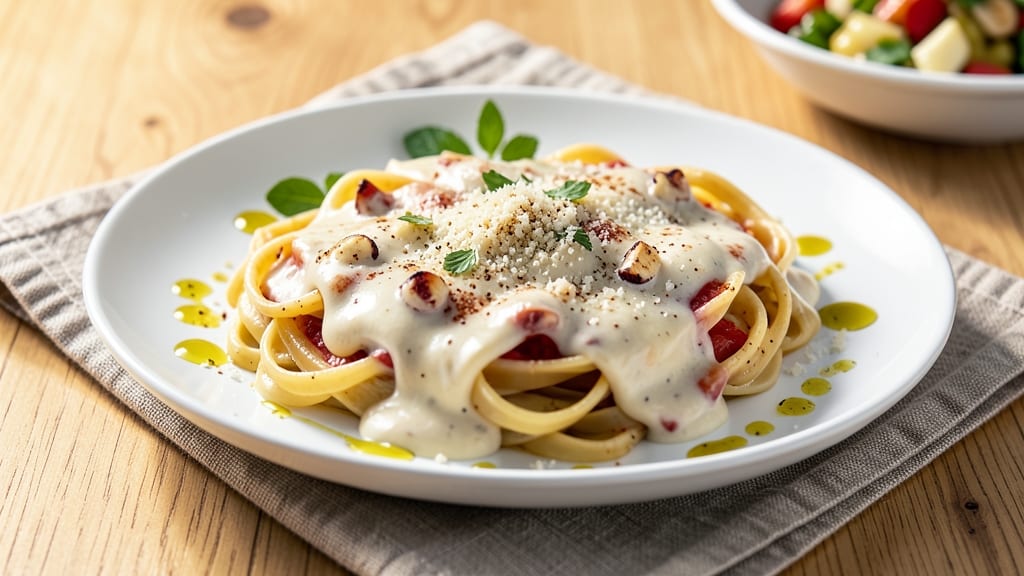
This alfredo sauce recipe using Greek yogurt transforms classic creamy pasta into a lighter, protein-rich version without sacrificing flavor. The secret lies in blending Greek yogurt with butter and parmesan, creating a velvety sauce that clings beautifully to fettuccine while cutting calories by nearly half.
I developed this after years of craving Alfredo's richness but wanting a healthier alternative—this version delivers both.
The magic happens with a simple technique: warm the yogurt gently to prevent curdling, then whisk in melted butter and freshly grated parmesan until completely smooth. A touch of garlic and lemon juice adds depth, while fresh parsley brightens the sauce.
The result is a creamy, restaurant-quality sauce that's surprisingly light yet still satisfyingly rich.
What sets this apart from traditional Alfredo is the texture—thick enough to coat every noodle but light enough to feel balanced. It works perfectly with whole wheat pasta or zucchini noodles, making it a versatile option for any diet.
The Greek yogurt also adds a subtle tang that complements the cheesy flavor beautifully.
Ready in just 10 minutes, this sauce is ideal for weeknight dinners or meal prep. Pair it with grilled chicken, shrimp, or simply enjoy it as-is with crusty bread. The best part? It tastes even better the next day, making it perfect for leftovers.
Ingredients for alfredo sauce recipe using greek yogurt
Nine essential ingredients create a restaurant-quality Alfredo sauce with Greek yogurt's lightened-up magic.
| Ingredient | Amount | Notes |
|---|---|---|
| Plain Greek Yogurt 🥛 | 1 cup | Full-fat for creaminess, unsweetened |
| Unsalted Butter 🧈 | ½ cup | Cold, cubed for slow melting |
| Freshly Grated Parmesan Cheese 🧀 | 1 cup | Block form, fine grating preferred |
| Extra-Virgin Olive Oil 🫒 | ¼ cup | For richness and smoothness |
| Garlic Cloves 🧄 | 3 cloves | Minced, fresh preferred |
| Fresh Lemon Juice 🍋 | 1 tbsp | Brightens flavor profile |
| Fresh Flat-Leaf Parsley 🌿 | ¼ cup | Chopped, for freshness |
| Diamond Crystal Kosher Salt 🧂 | ½ tsp | Adjust to taste |
| Freshly Ground Black Pepper 🌶️ | ¼ tsp | Enhances depth of flavor |
The Greek yogurt is the foundation—full-fat for maximum creaminess, not the non-fat kind that curdles. Grab Fage 5% or Chobani full-fat from the refrigerated section, not those shelf-stable tubs. Parmesan must be freshly grated from a block; pre-grated clumps and lacks flavor. For the butter, European-style unsalted like Plugrá or Land O'Lakes melts smoother than American brands. The garlic should be freshly minced—jarred minced garlic has a metallic aftertaste. Lemon juice should be freshly squeezed; bottled lacks brightness. Fresh parsley is non-negotiable for that vibrant finish, though dried oregano at half the amount works in a pinch.
No Greek yogurt? Plain whole-milk sour cream works nearly identically, though it has a slightly tangier taste. Substituting butter with olive oil reduces richness—use equal parts olive oil plus 1 tbsp cornstarch to thicken. For a dairy-free version, replace yogurt with full-fat coconut yogurt and butter with coconut oil. The lemon juice can be swapped for white wine vinegar at half the amount, though it adds a sharper acidity. Pre-grated Parmesan? Toast it in a dry pan for 2 minutes to remove excess moisture before using. The parsley can be omitted if you're short, but the sauce will lack freshness.
This sauce thickens as it cools, so stir in an extra 1 tbsp cold water if it's too thick after 10 minutes. Store in an airtight container in the fridge for up to 5 days, though it's best within 3 days. For freezing, portion into ice cube trays—each cube makes 2 tbsp—then transfer to a bag. Thaw in the fridge overnight. The sauce reheats beautifully; if it separates, whisk vigorously. For meal prep, make a double batch and freeze half—perfect for quick weeknight dinners.
Why You'll Love This Recipe
- No Heavy Cream Needed: I’ll admit, I used to dread Alfredo—thick, greasy, and always a mess with heavy cream. Then I swapped it for Greek yogurt, and whoa. Same rich texture, but lighter, tangier, and no waiting for cream to cool. Just whisk, simmer, and go.
- Garlic-Parmesan Punch: Between us, the secret’s in the garlic and Parmesan. I let the butter melt with minced cloves until the kitchen smells like heaven—then fold in that yogurt and freshly grated cheese. It’s creamy, sharp, and has this addictive depth that store-bought sauce can’t touch.
- Weeknight Meal Hero: This sauce is my go-to for fettuccine, chicken, or even veggie stir-fries. I make a double batch on Sundays, toss it in containers, and reheat it all week. (Yes, even on Tuesday nights when takeout feels like work.)
- Budget-Friendly Luxury: Honestly, this costs me half of what restaurant Alfredo does. Greek yogurt stretches further than cream, and Parmesan’s the only splurge—plus, the olive oil adds richness without breaking the bank. Feels fancy, but my wallet stays happy.
Step-by-step instructions for lightened-up Alfredo sauce
This method delivers velvety richness without heaviness—perfect for pasta lovers seeking balance.
Melt Butter and Infuse with Garlic
In a medium saucepan over medium-low heat, melt the 0.5 cup unsalted butter until it foams but doesn't brown. Add the 3 cloves minced garlic and cook for 1-2 minutes until fragrant but not browned. The butter should bubble gently—if it browns, you've gone too far. Remove from heat immediately after the garlic releases its aroma to prevent bitterness.
This step builds the sauce's aromatic foundation. The slow melt of cold butter cubes creates a silky base, while the garlic infuses flavor without overpowering. Keep the heat low to prevent burning, which would ruin the delicate balance we're creating.
Whisk in Yogurt and Parmesan Gradually
Return the pan to low heat and slowly whisk in the 1 cup plain Greek yogurt, adding just ¼ cup at a time with 30-second intervals between additions. This gradual approach prevents curdling from heat shock. Once fully incorporated, stir in the 1 cup freshly grated Parmesan cheese until completely melted and smooth.
The yogurt's acidity needs gentle treatment—adding too quickly causes separation. The Parmesan's fat content helps emulsify the mixture, creating that signature Alfredo texture. Stir constantly to ensure even distribution and prevent any lumps from forming.
Finish with Olive Oil and Seasonings
Remove the pan from heat and whisk in the 0.25 cup extra-virgin olive oil, followed by the 1 tablespoon fresh lemon juice, 0.5 teaspoon Diamond Crystal kosher salt, and 0.25 teaspoon freshly ground black pepper. Return to very low heat just until warmed through—about 1 minute. The sauce should coat the back of a spoon with a luxurious consistency.
This final step adds brightness and richness. The olive oil enhances creaminess while preventing separation, while the lemon juice cuts through the richness. The seasonings should be balanced—taste as you go and adjust if needed, remembering that Parmesan is already quite salty.
Garnish and Serve Immediately
Transfer the sauce to a serving bowl and fold in the 0.25 cup chopped fresh flat-leaf parsley. Serve immediately over cooked pasta, tossing gently to coat each strand. The sauce should cling beautifully to the pasta without making it soggy. If it thickens too much while standing, whisk in 1-2 tablespoons hot pasta water to restore silky texture.
This sauce's magic lies in its immediate use. The parsley adds freshness that contrasts the richness, while the olive oil keeps the sauce from becoming too heavy. For best results, use within 30 minutes of preparation—it won't hold its perfect consistency if reheated.
Pro Tips For Making Alfredo Sauce Recipe Using Greek Yogurt
- Temper the yogurt: Dump that cold yogurt straight into hot butter and you’ll end up with scrambled curds. Instead, mix it with a splash of warm water (about 1 tablespoon) or olive oil first—just enough to loosen it up. Then, let it sit at room temp for 5 minutes before combining. Trust me, your sauce won’t curdle mid-stir.
- Grate that parmesan fresh: Pre-grated cheese is a shortcut, but it’s also the reason your sauce might look grainy or taste off. Use a microplane or fine grater for the parmesan—it melts smoother and adds that creamy richness without clumps. If you’re in a pinch, buy a small block and grate it yourself; it makes a real difference.
- Cook the garlic low and slow: I used to blast the garlic like I was making garlic bread, and half the time it burned before the butter even melted. For this sauce, keep the heat low and let the garlic soften for 2-3 minutes—just until it’s fragrant, not golden. Overcooking turns it bitter, and you’ll taste it in every bite.
- Finish with olive oil: The butter gives you richness, but a drizzle of extra-virgin olive oil at the end (about 1 teaspoon) adds brightness and helps the sauce cling to pasta. Stir it in right when you’re done—it cuts through the heaviness and makes the whole dish taste more balanced. (Yes, even if it sounds weird.)
Storing and reheating your alfredo sauce recipe using greek yogurt
Fridge Storage Tips
Store your Greek yogurt Alfredo sauce in an airtight container in the refrigerator for up to 5 days, though I always aim to use it within 3 days for peak freshness.
The sauce thickens as it chills, so give it a quick whisk with 1-2 tablespoons cold water before reheating to restore its silky texture. I use glass Pyrex containers because they prevent odors from seeping in and keep the sauce tasting vibrant. 🥫
Freezing for Meal Prep
For longer storage, freeze the sauce in ice cube trays—each cube makes 2 tablespoons of sauce, perfect for portion control. Once frozen, transfer the cubes to a ziplock freezer bag, squeezing out excess air to prevent freezer burn.
Thaw overnight in the fridge before using. The texture remains creamy after freezing, though it may separate slightly—just whisk vigorously to re-emulsify. This method is ideal for quick weeknight dinners. ❄️
Reheating Perfectly
Reheat sauce on the stovetop over low heat with a splash of pasta water or milk to prevent curdling. Avoid microwaving—it can cause the yogurt to split. If the sauce thickens too much, whisk in 1 tablespoon warm water at a time until smooth.
For best results, reheat only what you need, as the sauce doesn’t hold its ideal consistency after multiple reheats. A quick toss with fresh parsley after reheating brightens the flavor. 🔥
Pasta Pairing Tips
Use this sauce immediately over freshly cooked pasta—it clings beautifully to fettuccine, linguine, or whole wheat noodles. For extra richness, toss the sauce with 1 tablespoon melted butter before serving. If making ahead, cook the pasta separately, drain it, and toss with a little olive oil to prevent sticking.
Then add the sauce when ready to serve for the freshest texture. 🍝
Sauce Consistency Fixes
If your sauce separates after reheating, whisk in 1 teaspoon cornstarch mixed with 1 tablespoon cold water to restore thickness. For a thinner consistency, add 1 tablespoon warm milk or water at a time. The key is gradual adjustments—never dump in liquid all at once, or you’ll dilute the flavor.
I’ve found that whole milk works better than almond milk for blending, as it mimics the richness of dairy. 💡
Nutrition facts
Frequently asked questions
Why does Greek yogurt work better than regular yogurt in Alfredo sauce?
Greek yogurt has a thicker, higher-fat content that creates a richer, creamier texture without making the sauce too heavy. Its tanginess also balances the richness of Parmesan, while regular yogurt tends to thin out the sauce and may separate more easily. The straining process removes excess liquid, giving you that perfect velvety consistency.
Can I make this sauce dairy-free?
Yes! Replace the Greek yogurt with full-fat coconut yogurt and the butter with coconut oil. Use a dairy-free Parmesan alternative and add 1 teaspoon cornstarch mixed with 1 tablespoon water to help thicken the sauce. The texture will be slightly different but still delicious.
What if my sauce gets too thick after making it?
Simply whisk in 1-2 tablespoons warm water or pasta water gradually until you reach your desired consistency. If the sauce separates, whisk in 1 tablespoon olive oil to help re-emulsify it. The key is patience—add liquid slowly to avoid thinning out the flavor.
How do I prevent the sauce from curdling when reheating?
Always reheat on low heat and add a splash of pasta water or milk to help stabilize the yogurt. Avoid microwaving, as the rapid heat change causes separation. If it does curdle slightly, whisk vigorously with 1 teaspoon cornstarch slurry to restore smoothness.
Can I use this sauce for dishes other than pasta?
This versatile sauce works beautifully as a dip for crudités or breadsticks, a topping for grilled chicken or fish, or even a creamy base for baked potatoes or stuffed peppers. Just adjust the seasoning slightly—add a pinch more salt for dips or a squeeze of lemon for seafood dishes.