
Sauces & Condiments
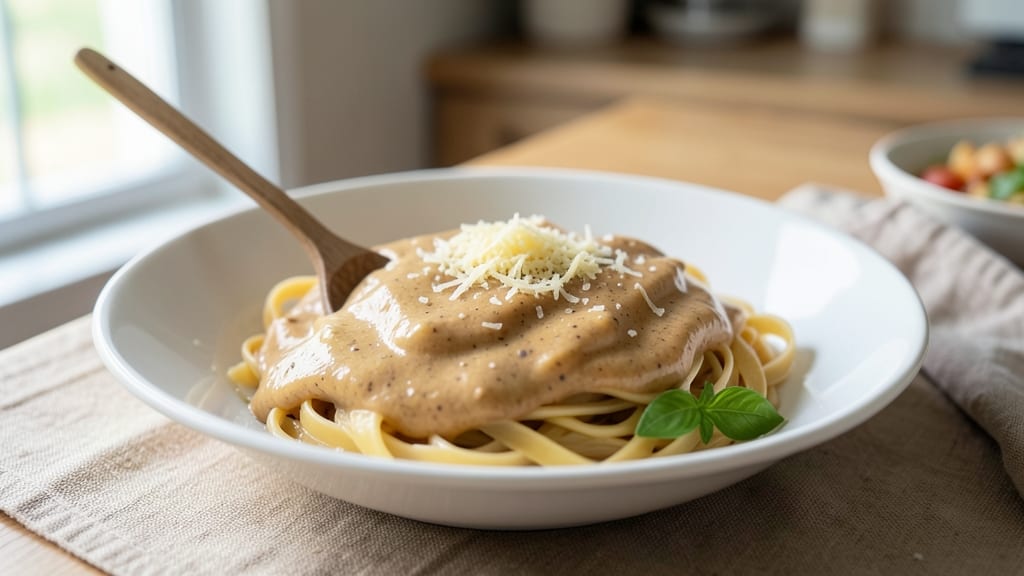
This tasty alfredo sauce recipe delivers ultra-creamy, velvety perfection without the risk of burning or breaking. The secret lies in proper technique—cooking the butter and flour just until golden, then gradually whisking in heavy cream and freshly grated Parmesan for a smooth, restaurant-quality finish. I've perfected this version after countless batches, and it never fails to impress.
The foundation of great alfredo sauce starts with a simple roux—equal parts butter and flour cooked until nutty but never browned. This creates the perfect base for the rich, velvety sauce that coats every noodle beautifully.
The key is patience: adding the cream and cheese gradually while constantly stirring ensures a silky texture without lumps.
What you'll end up with is a luxurious sauce that's perfectly balanced—creamy yet not overly heavy, rich without being greasy, and with just the right amount of cheesy depth. The sauce clings beautifully to fettuccine, chicken, or vegetables, making it versatile enough for any Italian-inspired dish.
This recipe also includes a simple variation with garlic and shallots for added flavor complexity, plus storage tips to keep your sauce fresh for up to 5 days. Let's create the creamiest alfredo you've ever tasted—without the stress of burning or breaking.
Ingredients for alfredo sauce recipe tasty
Six core ingredients plus a couple optional boosters for restaurant-quality alfredo perfection.
| Ingredient | Amount | Notes |
|---|---|---|
| Unsalted Butter 🧈 | ½ cup | Cold, cubed for even melting |
| All-Purpose Flour 🌾 | ½ cup | Sifted for smooth sauce |
| Heavy Cream 🥛 | 2 cups | Full-fat for maximum creaminess |
| Freshly Grated Parmesan Cheese 🧀 | 1 ½ cups | Block-grated, vibrant color |
| Garlic Cloves 🧄 | 3 cloves | Minced, for optional variation |
| Shallots 🧅 | 2 whole | Finely diced, for optional variation |
| Salt 🧂 | ½ tsp | Diamond Crystal preferred |
| White Pepper 🌶️ | ¼ tsp | Freshly ground for subtle flavor |
| Extra-Virgin Olive Oil 🫒 | 1 tbsp | For finishing, fruity variety |
The butter and flour combo is non-negotiable here—European-style butter like Plugrá or Land O'Lakes has higher fat content, which translates to richer sauce. For flour, King Arthur or Bob's Red Mill are my go-tos; they sift beautifully and create a smooth roux. The Parmesan makes or breaks this—Parmigiano-Reggiano from the deli counter (not pre-grated) is worth the splurge. If you're adding garlic and shallots, grab the freshest you can find—they should smell pungent, not stale. The heavy cream? Store-brand works fine, but if you've got a fancy brand like Organic Valley, use it.
No heavy cream? Full-fat coconut milk works in a pinch, though the flavor will differ slightly. Short on Parmesan? Add 1/4 cup freshly grated Gruyère for a nutty depth. The olive oil is optional but adds a lovely finish—California-grown brands like Corto have that bright, peppery kick. For the roux, don't rush the cooking—it should smell nutty but never brown. If you burn it, start over. The secret to silky texture is patience: whisk in the cream and cheese gradually, a splash at a time, until fully incorporated. No lumps allowed.
This sauce is best used fresh, but it keeps beautifully in the fridge for 4-5 days when stored in an airtight container with a thin layer of olive oil on top. For longer storage, freeze in ice cube trays—just thaw and reheat gently. The sauce reheats best on low heat with a splash of cream or milk to restore creaminess. Portion into containers for easy serving—perfect for meal prep. If you're making ahead, hold off on the olive oil finish until serving to keep it vibrant.
Why You'll Love This Recipe
- Five-Ingredient Magic: I swear, this sauce comes together with just butter, flour, cream, garlic, and Parmesan—no weird ingredients, no fancy techniques. The only "hard" part is grating that cheese, and honestly? Even my lazy college years could handle that.
- Rich Without Effort: That first hit of garlic in the butter? Pure flavor payoff with zero work. The heavy cream makes it velvety, and the Parmesan? It’s like a creamy, cheesy hug for whatever you toss it on—no measuring cups, no stress.
- Pasta Party Any Night: Dinner with friends? Date night? Tuesday at 9 PM? This sauce works for all of it. Dump it on fettuccine, toss it with chicken, or even drizzle it on roasted veggies—it’s the chameleon of sauces, and it never lets you down.
- Leftover Luxury: Make a double batch and refrigerate it—it actually tastes better the next day. Freezes like a dream too, so you’ve got a quick, creamy sauce ready for whenever cravings (or last-minute guests) strike. No waste, all win.
Step-by-step instructions for ultra-creamy alfredo sauce
Here's the foolproof method for velvety, never-scramble Alfredo that delivers restaurant-quality richness every time.
Create the Roux Foundation
Melt the 0.5 cup unsalted butter in a medium saucepan over medium-low heat—never rush this. You want gentle, even melting that coats the pan evenly without browning. Once fully melted, reduce heat to low and whisk in the 0.5 cup all-purpose flour all at once. This creates a roux that's the backbone of your sauce.
Cook the roux for 2-3 minutes, stirring constantly with a wooden spoon. You're looking for a pale golden color—not white, not brown. This ensures a smooth, flavorful base without any bitter notes. If it darkens too quickly, reduce heat immediately. The roux should smell nutty but not toasted.
Gradually Incorporate the Heavy Cream
Slowly pour in the 2 cups heavy cream while whisking vigorously to prevent lumps. Start with just a splash and gradually increase the stream as the mixture thickens. This gradual addition is critical—it prevents curdling and ensures a silky texture. Keep heat at medium-low throughout this process.
Simmer the mixture for 5-7 minutes, stirring frequently, until it thickens noticeably. You'll see it coat the back of a spoon and hold its shape when drizzled. The sauce should smell rich and creamy, with no raw flour taste remaining. If it thickens too quickly, whisk in 1-2 tablespoons of milk to adjust consistency.
Build Depth with Aromatics
Add the finely diced 2 whole shallots and minced 3 cloves garlic, stirring constantly for 1-2 minutes until fragrant but not browned. This step infuses subtle sweetness and complexity without overpowering the sauce. The aromatics should dissolve completely into the sauce, leaving no visible pieces.
Season with the 0.5 tsp salt and 0.25 tsp white pepper, then stir in the 1.5 cups freshly grated Parmesan Cheese. The cheese should melt smoothly into the sauce, creating a luxurious, cheesy texture. If you notice any graininess, strain the sauce through a fine-mesh sieve for perfect smoothness. Keep heat at low to prevent curdling.
Finish with Olive Oil and Perfect Timing
Remove the sauce from heat and stir in the 1 tbsp extra-virgin olive oil. This finishing touch adds brightness and prevents a greasy film from forming on top. The sauce should now be ultra-creamy, coating the back of a spoon thickly but still pourable. Taste and adjust seasoning—you might need a pinch more salt to balance the richness.
For best results, use the sauce immediately over hot pasta or hold it at 160°F for up to 2 hours in a slow cooker. The residual heat keeps it silky without breaking. Serve with extra grated Parmesan and freshly cracked black pepper for that final restaurant touch.
Pro Tips For Making Alfredo Sauce Recipe Tasty
- Melt Butter Slowly: I learned this the hard way—dumping cold butter into the pan and ending up with greasy lumps instead of a smooth roux. Warm the butter in the pot first (low heat, 2-3 minutes) until it’s just starting to foam, then whisk in the flour. This guarantees a silky texture instead of grainy bits.
- Grind Garlic Fine: Minced garlic burns fast and can turn bitter. Instead, finely grate the cloves (no need to peel first) straight into the sauce—it cooks faster and blends in without overpowering. Skip the garlic press; a microplane or knife does the job cleaner.
- Strain the Cream: Heavy cream can leave behind tiny fat globules that make the sauce look unappetizing. After heating the cream, pour it through a fine-mesh sieve into your saucepan. It’s an extra 10 seconds that makes the sauce look restaurant-worthy.
- Finish with Cold Cream: The moment you add Parmesan, the sauce thickens fast. Instead of dumping all the cream at once, reserve ¼ cup cold and stir it in at the very end—this cools the sauce slightly, prevents curdling, and keeps it glossy. (Yes, even if you’re impatient like me.)
Regional styles of this alfredo sauce recipe tasty
Classic Italian Style
This is the traditional version you'd find in Rome or Milan—simple, creamy, and all about the cheese. The key is using freshly grated Parmigiano-Reggiano (never pre-grated) and cooking it low and slow.
Italians often finish with a splash of dry white wine (like Pinot Grigio) to brighten the sauce before adding the cream. I've made this version countless times at home, and it's always a crowd-pleaser. 🧀
Garlic-Shallot Variation
For extra depth, add 3 minced garlic cloves and 2 finely diced shallots when incorporating the cream. Sauté them in the butter first for 1-2 minutes until fragrant but not browned.
This adds a subtle sweetness that elevates the sauce without overpowering it. I love this version with chicken Alfredo or mushroom fettuccine.
Creamy Vegan Option
Swap the butter for olive oil, use full-fat coconut milk instead of heavy cream, and replace Parmesan with nutritional yeast (½ cup) plus 1 tbsp lemon juice for a tangy depth.
The texture will be slightly lighter but still rich. I've tested this version with cashew cream (blended soaked cashews) for an even silkier result. 🌱
Spicy Pasta Alfredo
Add ½ tsp red pepper flakes with the garlic and shallots, or finish with a drizzle of hot honey for a sweet-spicy kick. For heat lovers, I recommend Calabrian chili paste (½ tsp) mixed into the roux.
This version works amazingly with spicy Italian sausage or crispy bacon bits on top.
Northern Italian Twist
In regions like Lombardy, they often add a splash of crème fraîche (about ¼ cup) at the end for a tangy richness. You can also stir in 1 tbsp Dijon mustard with the cream for a subtle depth.
This version pairs perfectly with wild mushroom risotto or seared scallops.
Southern Italian Fusion
For a brighter take, finish with 1 tbsp tomato paste (cooked into the roux) and a pinch of oregano. This works surprisingly well with shrimp Alfredo or grilled chicken. I first tried this version after a trip to Naples, and it became a family favorite. 🌶️
Nutrition facts
Frequently asked questions
Why does my Alfredo sauce turn out grainy or lumpy?
Graininess usually means the Parmesan didn't melt completely or the sauce was stirred too vigorously. Always use freshly grated cheese (never pre-grated) and stir gently over low heat. For extra smoothness, strain through a fine-mesh sieve after cooking. The sauce should be silky, not chunky!
Can I make Alfredo sauce without heavy cream?
Yes! For a lighter version, replace the heavy cream with whole milk (though texture will be thinner) or half-and-half. For richness without dairy, try cashew cream (blend soaked cashews with water) or coconut milk. The sauce will still be creamy but with a different flavor profile.
How do I prevent Alfredo sauce from breaking or curdling?
Breakage happens when sauce gets too hot or acidic ingredients (like lemon) are added too quickly. Always cook over medium-low heat and whisk gradually when adding liquids. If it starts to separate, whisk in 1 tbsp cold butter or a splash of cream to restore smoothness. Patience is key!
What's the best way to reheat leftover Alfredo sauce?
Reheat gently over low heat in a saucepan, stirring frequently. Add 1-2 tbsp milk or cream to restore creaminess if needed. Never microwave directly—it causes lumps. For extra richness, stir in 1 tbsp butter while warming. Store leftovers in an airtight container for up to 5 days.
Can I make Alfredo sauce ahead of time?
Make it up to 3 days ahead and store in the fridge. For longer storage, freeze in ice cube trays—thaw overnight in the fridge. When reheating, add a splash of cream or milk to maintain creaminess. The sauce actually tastes better the next day as flavors meld! Just avoid adding olive oil until reheating to keep it fresh.