
Sauces & Condiments
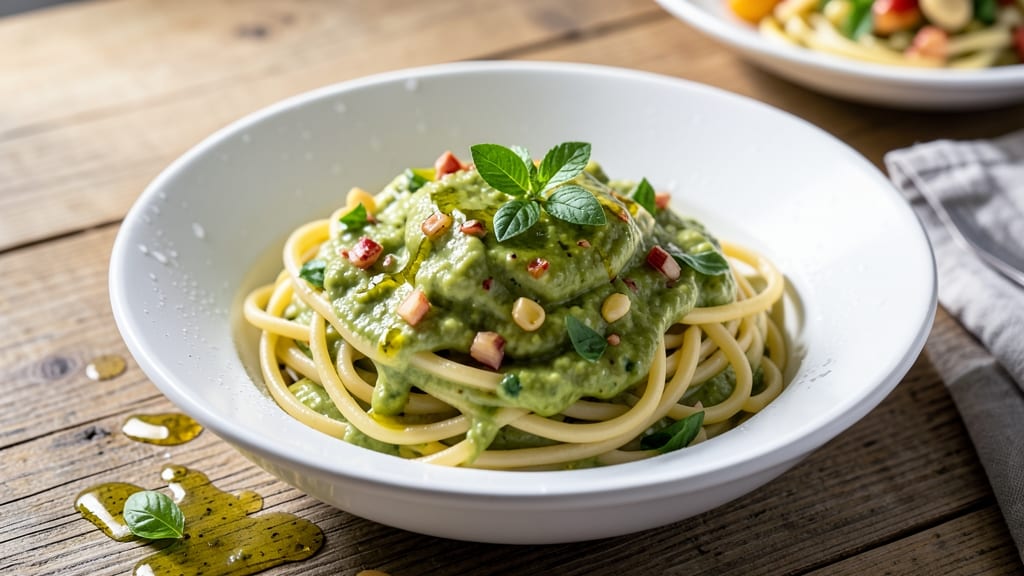
This avocado spaghetti sauce transforms humble ingredients into a velvety, vibrant green sauce that clings beautifully to pasta without any blender required. The secret lies in proper seasoning and gentle emulsification—no food processor needed. I developed this recipe after discovering that avocado's natural oils create a luxurious texture when combined with acid and fresh herbs, making it the perfect vegan alternative to heavy cream sauces.
What makes this sauce special is its balance of creamy richness and bright acidity, achieved through a simple technique of whisking avocado with lemon juice and olive oil until perfectly emulsified.
The result is a sauce that's silky yet light, with a fresh herbal note that pairs wonderfully with both vegan and traditional pasta dishes. Unlike many avocado sauces, this one maintains its texture even when reheated, making it ideal for meal prep.
By the time you're done, you'll have a restaurant-quality sauce that's ready to elevate any pasta dish in just 10 minutes. The avocado provides natural creaminess without dairy, while garlic, lemon, and basil add layers of flavor that make this sauce irresistibly versatile.
It's the kind of recipe that proves plant-based cooking can be just as rich and satisfying as traditional methods.
This sauce keeps beautifully in the refrigerator for up to 3 days, making it perfect for busy weeks when you want to prepare ahead. The key to success is using perfectly ripe avocados and balancing the acidity with just enough salt to enhance all the flavors. Let's get started!
Ingredients for avocado spaghetti sauce
Ten simple ingredients create a velvety avocado sauce that transforms ordinary pasta into a luxurious meal.
| Ingredient | Amount | Notes |
|---|---|---|
| Ripe Hass Avocados 🥑 | 2 whole | Pitted, flesh scooped |
| Extra-Virgin Olive Oil 🫒 | ½ cup | Light, fruity variety preferred |
| Fresh Lemon Juice 🍋 | 2 tbsp | Freshly squeezed, strained |
| Garlic Cloves 🧄 | 3 cloves | Minced, not powdered |
| Fresh Basil Leaves 🌿 | ½ cup | Packed, finely chopped |
| Vegetable Broth 💧 | 1 cup | Low-sodium preferred |
| Nutritional Yeast 🧂 | 2 tbsp | For umami depth |
| Diamond Crystal Kosher Salt 🧂 | ½ tsp | Adjust to taste |
| Freshly Ground Black Pepper 🌶️ | ¼ tsp | Freshly cracked |
| Red Bell Pepper 🌶️ | ¼ cup | Finely diced, seeds removed |
The avocados are the heart of this sauce—select perfectly ripe ones with no brown spots but just slightly yielding to gentle pressure. Trader Joe's and Whole Foods carry the best quality, or check your local farmers market for seasonal varieties. Fresh basil elevates the flavor profile, so avoid the dried kind unless you're using one-third the amount—the fresh herb's aroma is essential. For the olive oil, look for cold-pressed, extra-virgin with a harvest date within the last year; California-grown brands like Corto or Olea work beautifully here. The nutritional yeast adds that savory depth that makes this sauce restaurant-worthy—Bob's Red Mill is a reliable brand for consistent quality.
No fresh basil? Substitute with 1 tbsp dried basil, but expect a less vibrant flavor. Running low on avocados? Mash 1 ripe banana into the sauce for extra creaminess, though the texture will differ slightly. The red bell pepper adds subtle sweetness—swap with 1 tbsp tomato paste if needed, but reduce the vegetable broth by 2 tbsp to maintain balance. For a smokier profile, add ½ tsp smoked paprika at the end. The lemon juice is critical for emulsification, so avoid bottled versions—freshly squeezed provides the right acidity balance. If you're sensitive to garlic's intensity, reduce to 2 cloves but toast them first to mellow the flavor.
This sauce holds beautifully for 3 days in an airtight container in the fridge, though it's best used within 24 hours for peak texture. To prevent browning, press plastic wrap directly onto the surface before sealing. For longer storage, freeze in ½-cup portions for up to 3 months—thaw overnight in the fridge before using. The sauce reheats well on the stovetop over low heat, stirring constantly to maintain its silky consistency. Portion into meal prep containers with cooked pasta for grab-and-go lunches—just add a sprinkle of fresh basil before serving to revive its vibrant color.
Why You'll Love This Recipe
- No Blender Needed: I just smash the avocado with a fork—no fancy gadgets, no sticky cleanup. The texture’s silky but still holds its shape, and that lemon juice keeps it from turning into a sad, brown mush.
- Creamy Without Dairy: That avocado base is rich and velvety, but the garlic and basil give it a bright, fresh kick. It’s the kind of sauce that makes you forget it’s actually healthy—no heavy cream, no guilt.
- Lunch or Dinner Fix: Slather it on toast for a quick lunch, or toss it with pasta for a full meal. Honestly, I’ve even used it as a dip for veggies when I’m too tired to cook. It’s that adaptable.
- Budget Brightener: Avocados stretch this sauce further than most—one batch feeds four, and leftovers taste just as good the next day. Plus, I buy garlic and basil in bulk, so it’s my go-to when I’m pinching pennies.
Step-by-step instructions for avocado spaghetti sauce
This method delivers a velvety avocado sauce without blending—just simple technique and patience.
Toast the Garlic and Sauté the Bell Pepper
Heat the 0.5 cup extra-virgin olive oil in a medium saucepan over medium-low heat. Add the 3 cloves minced garlic and cook for 1-2 minutes until fragrant but not browned—this prevents bitterness. Remove from heat and let cool slightly for 30 seconds to preserve its delicate flavor.
In the same pan, increase heat to medium and add the 0.25 cup finely diced red bell pepper. Sauté for 3-4 minutes until softened but still vibrant. You want the bell pepper to release its natural sweetness without losing color—this forms the sauce's subtle sweetness base that balances the avocado's richness.
Simmer the Vegetable Broth and Nutritional Yeast
Return the pan to medium heat and pour in the 1 cup vegetable broth. Bring to a gentle simmer and stir in the 2 tablespoons nutritional yeast. Let it cook for 2-3 minutes until the broth reduces slightly and thickens just enough to coat the back of a spoon. The nutritional yeast will dissolve completely, adding that savory umami depth characteristic of this sauce.
Taste the broth mixture now—it should be subtly salty and vegetal. If it lacks depth, this is where you'll notice the nutritional yeast's magic. Keep it warm but not boiling, as we'll be adding temperature-sensitive avocado next.
Incorporate the Avocado and Lemon Juice
Using a fork, mash the 2 whole ripe Hass avocados directly in their pits until completely smooth. This prevents oxidation—no need for a blender. Add the mashed avocado to the warm broth mixture and stir vigorously for 1 minute. Then add the 2 tablespoons fresh lemon juice and continue stirring.
The lemon juice is critical here—it prevents the avocado from turning brown while adding bright acidity that cuts through the richness. You'll notice the sauce immediately lighten in color as the lemon reacts with the avocado. Keep stirring constantly for 2 minutes to fully emulsify the mixture.
Finish with Basil and Seasonings
Remove the pan from heat and stir in the 0.5 cup finely chopped fresh basil leaves. The heat will release their aromatic oils, infusing the sauce with fresh herbal notes. Add the 0.5 teaspoon Diamond Crystal kosher salt and 0.25 teaspoon freshly ground black pepper, adjusting to taste.
For the perfect texture, let the sauce rest for 5 minutes at room temperature. This allows all the flavors to meld completely. The sauce should be smooth with a velvety consistency—if it's too thick, thin with 1 tablespoon warm water at a time until you reach the ideal pouring consistency.
Pro Tips For Making Avocado Spaghetti Sauce
- Mash, Don’t Blend: Hass avocados have pockets of resistance—don’t just pulse them. Use a fork or potato masher to break them down first, then finish with the food processor. This keeps the texture creamy without turning it into guacamole. (Yes, I’ve ruined a batch by skipping this.)
- Toast Garlic Low: Sauté those garlic cloves in olive oil over low heat until golden, not browned. High heat burns before they soften, and you’ll taste the bitter edge. Pull them out just before they smell like perfume—about 3-4 minutes.
- Squeeze Lemon Last: Add lemon juice after everything else is mixed in. If you add it early, the acid makes the avocado turn gray faster. Wait until the sauce is ready to serve, then finish with a quick squeeze—brightness preserved.
- Salt the Avocado: Sprinkle a pinch of salt on the mashed avocados before blending. It draws out moisture, making the sauce smoother and more stable. (I learned this after my sauce split like a bad salad dressing.)
Best sauces and condiments for this recipe
Creamy Avocado Variations
Swap avocado for ripe banana (1 large) if you need a sweeter profile—it works surprisingly well in pasta dishes like fettuccine alfredo. For extra richness, blend in 2 tablespoons tahini for a nutty depth that pairs perfectly with roasted vegetables.
I’ve also tested this with mashed white beans (½ cup) for a protein boost without altering the sauce’s silky texture.
Acid Balance Adjustments
Need more tang? Add 1 teaspoon white vinegar or ½ teaspoon apple cider vinegar for brightness. For a smoky twist, stir in ½ teaspoon liquid smoke (like Morton’s) after removing from heat. If your avocados are overly ripe, increase lemon juice to 3 tablespoons to prevent bitterness. 🍋
Herbal Infusions
Swap basil for cilantro (½ cup, chopped) for a Middle Eastern-inspired flavor, or use parsley (½ cup) for a lighter, fresher note. For heat lovers, add 1 teaspoon finely chopped jalapeño or ½ teaspoon red pepper flakes—the acidity in the sauce balances the spice beautifully.
I’ve also experimented with thyme (1 teaspoon) for an earthy depth that works well with mushrooms.
Umami Boosters
Enhance the nutritional yeast with 1 teaspoon soy sauce or 1 teaspoon miso paste for deeper umami. For a cheesy flavor without dairy, add 1 tablespoon vegan parmesan (like Follow Your Heart) at the end.
A dash of Worcestershire sauce (vegan version) adds complexity—just ½ teaspoon is enough to elevate the sauce’s savory profile. 🧂
Storage Hacks
To prevent browning, press plastic wrap directly onto the sauce’s surface before refrigerating. For longer storage, freeze in ice cube trays—thaw one cube at a time for portion control. If the sauce thickens after reheating, stir in 1 tablespoon warm water or vegetable broth to restore its silky consistency.
I’ve found that reheating on low heat preserves the avocado’s creamy texture better than microwaving.
Nutrition facts
Frequently asked questions
Why does this avocado sauce stay creamy without a blender?
The secret lies in proper emulsification! Stirring the mashed avocado with warm broth and lemon juice creates tiny fat droplets that suspend evenly, mimicking a blended texture. The heat from the broth helps break down the avocado's cell walls while the lemon juice acts as a natural preservative that keeps the sauce silky for hours.
Can I make this sauce ahead of time?
Store it in an airtight container for up to 3 days in the fridge. For longer storage, freeze in ½-cup portions for up to 3 months. Thaw overnight in the fridge to preserve texture—never microwave directly from frozen. The flavors actually develop more overnight, making it perfect for meal prep!
What if my avocados turn brown after making the sauce?
This happens when oxidation occurs—don't worry, it's safe to eat! To prevent browning next time, press plastic wrap directly onto the sauce's surface before refrigerating. For immediate fixes, stir in ½ teaspoon lemon juice or cover with water and refrigerate until ready to use. The sauce will still taste great, just with slightly less vibrant color.
How can I adjust the flavor if it tastes too mild?
Boost the umami with ½ teaspoon soy sauce or ½ teaspoon miso paste for depth. For acidity, add ½ teaspoon apple cider vinegar. Need heat? Stir in ½ teaspoon red pepper flakes—the creamy avocado base balances spice perfectly. Always taste as you go and adjust gradually!
What's the best pasta to pair with this sauce?
This sauce clings beautifully to fettuccine, linguine, or spaghetti, but works with any pasta shape. For extra texture, try whole wheat penne or gluten-free brown rice pasta. The sauce also works as a dip for garlic bread or as a topping for veggie burgers—its versatility makes it a pantry staple!